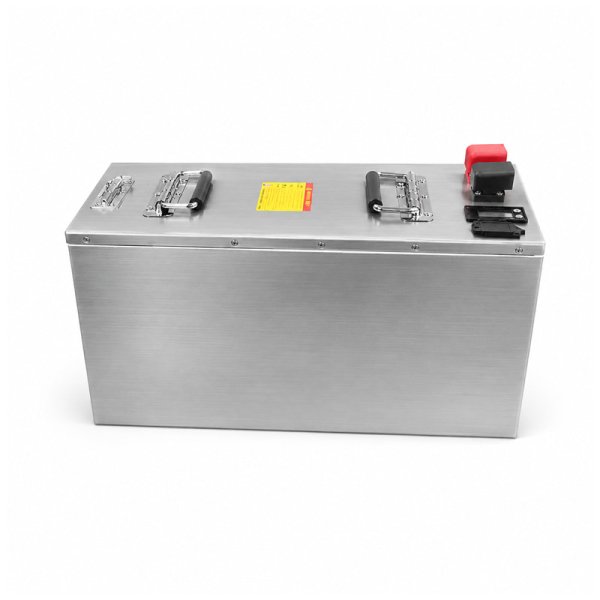
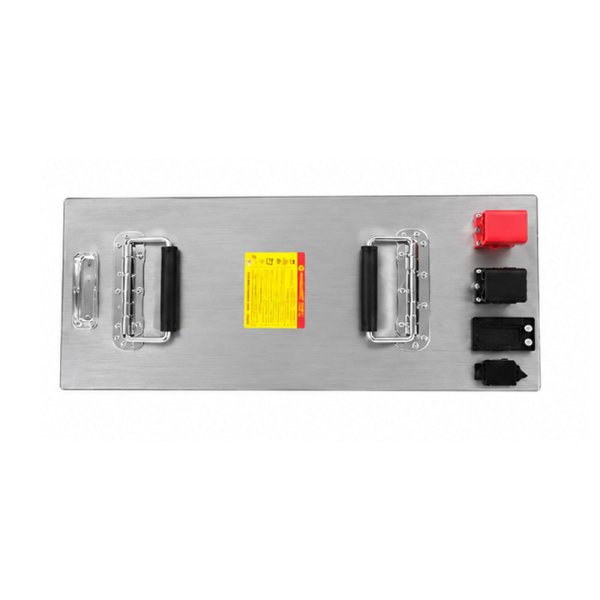
Commercial vehicle fleets and equipment manufacturers rarely struggle because they cannot find an OEM battery supplier. The harder problem is converting vehicle behavior, operating conditions, service expectations, and purchasing constraints into a specification that can survive engineering, prototype trials, and repeated production.
A credible OEM lithium battery project therefore starts before a price request. It defines what the vehicle must do, how the fleet actually works, what evidence will release the design, and how the supplier will control changes after launch. This guide follows that sequence from RFQ to supply agreement, with emphasis on uptime, standardization, production consistency, and total cost of ownership.
What Should an OEM Battery Project Define Before RFQ?
A useful RFQ is not a request for “the closest pack at the lowest price.” It is a controlled engineering brief. Before asking an OEM battery manufacturer for pricing, the buyer should establish the operating envelope and commercial assumptions that govern the project.
At minimum, the RFQ should define system voltage, usable energy, continuous current, peak current and duration, pack dimensions, weight limits, mounting points, connectors, CAN or RS485 requirements, enclosure/IP target, operating temperature, and expected cycle life. Each item should be tied to the vehicle rather than copied from an existing battery label.

The RFQ should also state annual volume, prototype quantity, pilot quantity, target production date, destination markets, required documentation, and service expectations. This power battery solution for B2B fleets can serve as an application reference when one OEM battery program covers motorcycles, three-wheelers, forklifts, golf carts, or other motive-power equipment.
Production evidence should be defined while the OEM battery is still being specified. Buyers should decide early whether incoming inspection records, end-of-line test data, serial traceability, firmware revision records, and engineering-change approval will be required at production release.
The aim is straightforward: engineering, procurement, quality, and operations should read the same RFQ and understand the same product.
How Should Fleet Duty Cycles Shape OEM Battery Specifications?
Nameplate capacity is a weak starting point. A fleet duty cycle is more useful because it shows how energy and current are consumed across a working day.
A delivery fleet may see frequent starts, steep short climbs, partial charging, and heavy afternoon loading. A warehouse forklift may run long low-speed shifts with recurring hydraulic peaks. A passenger e-rickshaw can face stop-and-go traffic, heat, and little recovery time between shifts. These profiles create different OEM battery demands even when nominal ratings look similar.
For an OEM battery for commercial vehicles, buyers should document route length, hours per shift, average and maximum payload, gradient, stop frequency, accessory loads, charging windows, and seasonal temperature. For three-wheel fleets, an electric rickshaw battery fleet guide shows how downtime and TCO can change the specification beyond simple capacity.

Product benchmarks can still clarify integration, but they should not drive the specification by themselves. A delivery three-wheeler and a sit-down forklift can require very different packaging, mounting, vibration resistance, cable routing, service access, and repetitive peak-current behavior even when procurement wants common engineering principles across the fleet.
A sound duty-cycle model prevents two costly errors: oversizing every OEM battery “for safety,” or undersizing a custom OEM battery until operators compensate with disruptive charging and early replacement.
What Vehicle Data Must OEM Buyers Provide to the Battery Manufacturer?
The manufacturer cannot engineer around information it never receives. Vehicle data should arrive as an integration package, not as scattered screenshots and informal messages.
| Buyer input | Why the OEM battery team needs it |
|---|---|
| Motor/controller ratings | Defines continuous and transient current demand |
| DC-bus operating limits | Prevents voltage and protection mismatch |
| Battery compartment CAD or drawings | Controls pack envelope, clearance, and service access |
| Mounting and retention method | Supports vibration and mechanical validation |
| Connector and cable specifications | Prevents interface and thermal bottlenecks |
| CAN/RS485 message requirements | Defines communication and diagnostics |
| Vehicle mass and payload | Influences energy demand and peak load |
| Route/shift data | Converts nominal capacity into usable-energy needs |
| Ambient and storage temperatures | Sets enclosure and protection requirements |
| Service procedure | Determines removability, access, and replacement time |
When data are incomplete, the OEM battery supplier should state assumptions explicitly and mark them for validation. Hidden assumptions are dangerous because they can survive prototype testing and become visible only when real fleet conditions diverge from laboratory conditions.
How Do Payload and Peak Power Affect OEM Battery Design?
Payload affects more than range. It changes acceleration demand, hill-climbing current, heat generation, voltage sag, and reserve power when the pack is partly discharged.
Peak current should be specified with duration and repetition. A two-second acceleration peak is not equivalent to a twenty-second climb at high load. A forklift hydraulic event may be brief but recur hundreds of times per shift. The OEM battery design must therefore distinguish continuous current, short peak current, repetitive peak duty, and protection thresholds.
Mechanical design enters the same calculation. Higher loads may require stronger retention, better vibration resistance, and tighter connector control. The correct OEM lithium battery is not the pack with the greatest energy; it is the pack whose electrical and mechanical margins remain credible under the worst realistic duty cycle.
This is also a TCO issue. A cheaper OEM battery operating near its limits can increase failures, service interventions, and vehicle downtime.
How Should OEMs Standardize Batteries Across Multiple Vehicle Models?
Fleet standardization should create a controlled battery platform, not a forced one-pack-fits-all compromise.
Consider an operator managing cargo tricycles, passenger e-rickshaws, and utility three-wheelers. Procurement may not need three unrelated designs. It may be possible to standardize connector families, communication protocols, diagnostic logic, mounting concepts, service procedures, and selected enclosure dimensions while allowing capacity or current variants where duty cycles genuinely differ.

This platform approach can reduce spare inventory, purchasing complexity, technician training, replacement time, and annual purchasing cost. It also gives the OEM battery manufacturer a clearer production architecture and component strategy. At product level, a three-wheel power battery pack reference can help teams compare enclosure, mounting, connector, and packaging decisions against the platform rules without treating one pack specification as universal.
The discipline is to define what is common and what is variant-controlled. Shared interfaces should be frozen; vehicle-specific settings should be documented in a configuration matrix. A custom OEM battery platform succeeds when interchangeability is intentional, validated, and traceable.
What BMS and Communication Requirements Should Be Defined?
The BMS is part of the vehicle interface, not an invisible component inside the pack. For an OEM battery for fleet projects, communication requirements should be defined as early as connectors and mechanical fit.
The buyer should specify CAN or RS485 protocol, message IDs, baud rate, state-of-charge reporting, current and voltage data, temperature reporting, alarms, fault history, contactor logic where applicable, wake/sleep behavior, and controller handshake. Diagnostic access and service-tool requirements should be agreed before software freeze.
Firmware control deserves equal attention. Every OEM battery should have an identifiable BMS firmware version linked to its serial number or production record. If thresholds, balancing logic, or communication behavior change, the buyer should receive an engineering change notice and determine whether vehicle revalidation is required.
Without this discipline, mechanically identical OEM battery packs can behave differently in the fleet.
How Should Prototype Batteries Be Validated Before Fleet Trials?
Prototype validation should answer engineering questions before the fleet is asked to discover them.
The first OEM battery prototypes should be checked for dimensional fit, mounting access, connector mating, cable routing, communication, protection behavior, current capability, thermal response, and charging compatibility. Vehicle tests should include maximum payload, representative gradients, repeated acceleration, accessories, low state of charge, and realistic ambient conditions.
Prototype validation is not production validation. A hand-built sample can perform well because experienced technicians give it exceptional attention. The next risk appears when the design is repeated across dozens, hundreds, or thousands of packs.
Before a broad fleet trial, buyers should agree a pilot batch built with intended production materials, work instructions, OEM battery firmware, inspection points, and test equipment. The pilot should confirm both vehicle performance and manufacturing repeatability.
Fleet validation should then measure route completion, charging behavior, temperature trends, fault frequency, operator complaints, service time, and early degradation. For industrial equipment, a forklift battery configuration reference can help validation teams check tray fit, repetitive peak loads, communication behavior, and service access against real equipment constraints. Pass/fail criteria must be written before the trial begins.
What Quality Controls Matter Before Mass Production?
Mass production should start only when the buyer can distinguish a good prototype from a controlled production process.
Incoming QC should cover critical cells, BMS assemblies, connectors, cables, enclosure parts, seals, and other safety- or performance-relevant components. Production controls should define torque, insulation, joining criteria, sealing, firmware loading, labeling, and process traceability. End-of-line testing should confirm electrical function, BMS communication, protection logic, and project-specific acceptance criteria. A lithium battery pack quality-control guide can be used here as a practical checklist for the evidence that should accompany production release.
Serialization is essential. Each OEM battery should be traceable to production date, key component lots, firmware revision, and test result. Without traceability, warranty analysis becomes anecdotal and containment becomes expensive.
Engineering change control should be fixed before purchase orders scale. Cell substitutions, BMS hardware changes, firmware revisions, connector changes, enclosure revisions, and critical process changes should trigger an agreed notification and approval path. A supplier’s internal change can have vehicle-level consequences.
Production release should then transition into a supply agreement covering MOQ, pilot quantity, production lead time, forecast requirements, safety stock, replacement availability, component end-of-life notices, warranty handling, and response time for field failures. At this stage, the OEM battery supplier becomes part of the fleet’s continuity plan rather than a one-time vendor.
Commercial proposals should be compared on lifecycle economics:
OEM battery TCO = pack price + integration + failure rate + downtime + replacement + spare inventory + engineering changes.
A lower unit price is rational only when the rest of that equation remains controlled. For commercial fleets, an immobilized vehicle or emergency redesign can erase purchase-price savings quickly.
Conclusion
A successful OEM battery project is not defined by whether a prototype powers the vehicle. It is defined by whether the specification can be understood, validated, repeated, serviced, and supplied economically across the fleet.
For commercial vehicle fleets and equipment manufacturers, the strongest projects connect RFQ data to real duty cycles, vehicle integration, BMS control, prototype evidence, pilot production, traceable quality, and supply continuity. That discipline turns an OEM lithium battery from a purchased component into a managed fleet platform.
The procurement decision should therefore consider more than pack price. When downtime, spare inventory, failure containment, engineering changes, and replacement availability are included, the most valuable OEM battery is the one that remains technically controlled and commercially supportable after mass production begins.
Frequently Asked Questions About OEM Batteries
Q: What information is required for an OEM battery quotation?
A: A useful RFQ should include vehicle duty cycle, usable energy, current demand, pack envelope, weight, mounting, connectors, BMS communication, IP target, temperature range, volume, and validation needs.
Q: Can one OEM battery platform support several vehicle models?
A: Yes, when interfaces and operating limits overlap. OEMs can standardize connectors, communication, diagnostics, mounting concepts, and selected dimensions while controlling capacity or current variants.
Q: How many prototype units are needed before fleet validation?
A: There is no universal number. The quantity should be large enough to test fit, performance, thermal behavior, communication, and repeatability before a pilot batch expands validation under real fleet conditions.
Q: What should OEM buyers check before approving mass production?
A: Buyers should verify pilot-batch consistency, incoming QC, end-of-line tests, serial traceability, firmware control, approved components, change-control rules, and documented acceptance criteria.
Q: How are OEM battery specifications controlled after production starts?
A: Use a controlled specification, revision history, BOM and firmware records, serialized test data, and an engineering-change process requiring notice and approval before critical production changes.