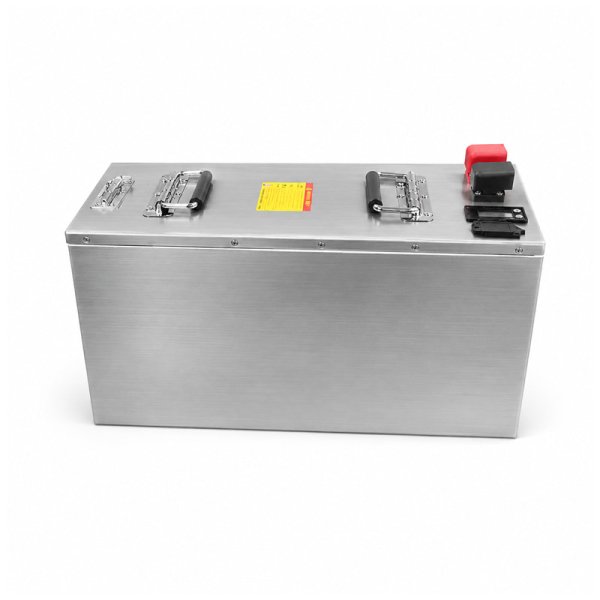
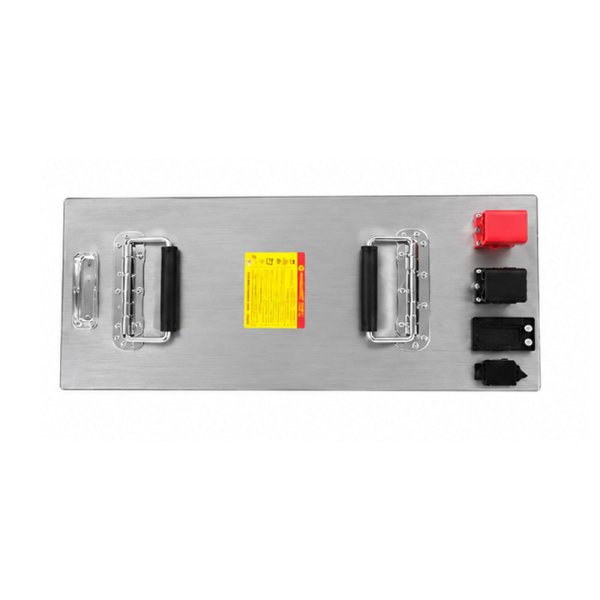
For a commercial e-rickshaw fleet, the correct electric rickshaw battery is not the pack with the largest headline capacity. It is the pack that completes the required route, carries the real passenger or cargo load, survives repeated peak-current events, and reaches the end of the shift without avoidable downtime. That matters to e-rickshaw fleet operators, passenger transport companies, last-mile delivery operators, vehicle assemblers, three-wheeler OEMs, battery procurement managers, and fleet integrators.
A fleet should therefore define duty cycle before battery specifications. Daily mileage, payload, gradient, stop-start frequency, usable energy, current demand, enclosure limits, BMS visibility, replacement interval, and spare inventory all affect the commercial result. An electric rickshaw battery should be selected as an operating asset, not an isolated component.
What Makes an Electric Rickshaw Battery Suitable for Fleet Use?
Fleet suitability begins with repeatability. One vehicle may look satisfactory during a short test, yet a fleet exposes weak margins quickly because vehicles operate every day under different drivers, loads, routes, and states of charge. A suitable electric rickshaw battery must tolerate that variation without frequent protection events, accelerated degradation, or inconsistent range.
Document route length, number of trips, stop frequency, passenger or cargo mass, steepest gradient, shift duration, road quality, and seasonal temperature. These inputs define usable energy and current demand more reliably than nominal capacity alone.
A custom battery solution for electric tricycle fleets can help translate vehicle constraints into pack dimensions, current limits, communication requirements, and serviceability targets. Buyers can also review this power battery solution framework when defining a wider motive-power project.
A fleet-ready electric rickshaw battery should also be serviceable at scale. Connectors, mounting points, enclosure geometry, BMS settings, labels, fault codes, and replacement procedures should be consistent enough that technicians can diagnose and replace packs without vehicle-specific improvisation.
How Should Route and Daily Mileage Define Battery Capacity?

Capacity planning should start from energy consumed per route, not an arbitrary amp-hour target. Measure actual energy use on representative vehicles across loaded and unloaded runs. Then calculate usable energy for the longest normal shift and add reserve for traffic, detours, aging, temperature, and route variability.
| Fleet input | Why it matters |
|---|---|
| Daily distance | Establishes baseline energy demand |
| Wh/km under real load | Converts route length into usable energy |
| Reserve margin | Covers traffic, aging, detours, and variability |
| Maximum planned DoD | Protects lifecycle assumptions |
| Shift pattern | Shows whether one pack must cover the full day |
For example, if a vehicle uses 45 Wh/km and travels 100 km per shift, the route consumes about 4.5 kWh before reserve. The final electric rickshaw battery specification should reflect the fleet’s usable-energy margin rather than simply increasing nameplate capacity.
The electric tricycle battery lifespan guide explains why real depth of discharge and duty intensity matter when estimating replacement intervals. An electric rickshaw battery for fleet use should be sized so routine operation does not repeatedly force the pack into its most stressful operating window.
How Do Passenger Load and Cargo Weight Affect Battery Demand?
Payload changes more than range. It changes acceleration current, hill-climbing demand, heat generation, voltage sag, and the frequency of high-current events. A passenger rickshaw with frequent stops may experience repeated acceleration peaks. A cargo rickshaw carrying dense loads may sustain higher current for longer, especially on gradients.
Fleet managers should separate passenger, cargo, and mixed-duty profiles. The same electric rickshaw battery may behave differently across these profiles even when daily mileage is similar.

For each vehicle class, record curb mass, typical payload, maximum payload, route gradient, acceleration pattern, and dwell time. Validate the pack under the heaviest credible combination rather than a lightly loaded workshop test. This is particularly important for last-mile delivery routes where vehicle mass changes through the shift.
What Continuous and Peak Current Does an E-Rickshaw Fleet Need?
Usable energy determines how long the vehicle can operate; current capability determines whether it can perform the work. Continuous current reflects sustained traction demand. Peak current covers acceleration, hill starts, sudden load changes, and short high-torque events.
An electric rickshaw battery with adequate energy but insufficient current headroom can trigger BMS protection, excessive voltage sag, connector heating, or poor hill performance. Overspecifying current capability without a real duty-cycle need can also increase cost, pack size, and design complexity.
The vehicle assembler or fleet integrator should provide motor rating, controller current limits, observed peak current, peak duration, gradient, payload, cable specification, and connector limits. An experienced electric rickshaw battery manufacturer should verify that cells, busbars, BMS, wiring, fusing, enclosure, and thermal behavior align with those demands.
How Can Fleet Operators Reduce Mid-Shift Battery Downtime?
Downtime is an operating metric. Track how many vehicles fail to complete a shift, how many unplanned pack swaps occur, how long each interruption lasts, and which faults repeat. Those figures show whether the electric rickshaw battery is under-sized, mismatched to current demand, or suffering from inconsistent maintenance.

Some routes need a full-shift pack. Others can use controlled opportunity charging or planned spare-pack rotation. The correct choice depends on depot workflow, route length, turnaround time, labor, and spare inventory.
Establish a minimum dispatch SOC, a return-to-base threshold, and clear criteria for removing a suspect electric rickshaw battery from service. This prevents drivers from repeatedly pushing weak packs into deep discharge and turning manageable capacity decline into roadside failure.
What Battery Life Should Commercial E-Rickshaw Fleets Expect?
Cycle-life claims are useful only when test conditions resemble fleet operation. Buyers should ask what depth of discharge, temperature, discharge rate, end-of-life threshold, and test method support the quoted figure. A laboratory cycle count cannot be converted directly into years without actual use data.
For budgeting, model the electric rickshaw battery in calendar terms. Estimate annual cycles, average DoD, peak-current frequency, operating temperature, and expected capacity-retention threshold. Then convert that into a projected replacement interval and annual replacement budget.
A lower purchase price can still create higher fleet TCO if replacement comes earlier. Cost then includes the pack, labor, vehicle downtime, and spare stock. An electric rickshaw battery supplier should therefore discuss lifecycle assumptions as clearly as initial price. Compare cost per operating year or completed route, not purchase price alone.
How Should BMS Data Support Fleet Maintenance?
The BMS should be a maintenance data source, not only a protection device. At fleet scale, visibility into SOC, temperature, current, fault events, over-current history, low-voltage events, and abnormal shutdowns can reveal patterns before they become widespread failures.
Useful records include fault timestamps, temperature excursions, over-current events, SOC at shutdown, and repeated protection triggers. When communication is available, CAN or RS485 data can support vehicle diagnostics, depot maintenance, and warranty analysis.
The objective is to identify whether a problem follows a route, driver, vehicle model, pack batch, or operating condition. An OEM electric rickshaw battery program should define which parameters are visible, how faults are logged, and how service teams retrieve records before mass deployment.
What Should Buyers Check Before Replacing Lead-Acid Batteries?
A lithium conversion should not be treated as a simple volume-for-volume replacement. Buyers must check battery compartment dimensions, mounting and retention, vehicle balance, cable size, connector rating, current demand, controller behavior, cutoff thresholds, operating temperature, and required communication.
The electric rickshaw battery must also fit the fleet’s service workflow. A lighter pack may alter mass distribution; a smaller enclosure may require new retention hardware; different discharge behavior may expose controller assumptions that were masked by lead-acid voltage sag.
Run a pilot on representative vehicles and routes. Validate range, peak-current behavior, enclosure security, temperature, BMS events, and end-of-shift SOC. A custom electric rickshaw battery should move to fleet rollout only after stable operation under the highest routine payload and hardest normal route.
How Can Fleets Standardize Batteries Across Multiple Rickshaw Models?
Mixed fleets often accumulate too many SKUs. Different vehicle years, battery bays, connectors, harness lengths, mounting points, and controller settings can leave procurement teams holding excessive spare stock.
Group vehicles by electrical requirement, battery-bay envelope, continuous and peak current, connector family, communication protocol, and mounting method. Then determine whether one electric rickshaw battery can cover several models through a common enclosure, adapter bracket, standardized connector position, or configurable BMS parameters.
The goal is the fewest practical battery variants, not one pack at any cost. Standardization can reduce spare inventory, simplify technician training, shorten replacement time, and make purchasing forecasts more predictable.
Three-wheeler OEMs and fleet integrators should freeze interface drawings, cable orientation, connector specification, communication mapping, label format, firmware version, and quality checkpoints before an electric rickshaw battery bulk order enters mass production.
What Should Fleets Prepare Before an Electric Rickshaw Battery Bulk Order?
A strong RFQ allows the electric rickshaw battery supplier to evaluate the application rather than guess. Buyers should provide pack dimensions, vehicle system voltage, daily mileage, route gradient, typical and maximum payload, continuous current, peak current and duration, fleet size, required quantity, communication protocol, installation constraints, target market, and UN 38.3 transport-testing requirements.
The procurement path should move through four gates: RFQ review, engineering confirmation, pilot build, and fleet validation. Only after those stages should an electric rickshaw battery bulk order be released, especially when several vehicle models will share the same pack.
For vehicle assemblers, an electric rickshaw battery manufacturer should also confirm dimensional tolerances, connector control, BMS parameter control, traceability, change management, and production testing. An OEM electric rickshaw battery program is easier to scale when technical specifications and acceptance criteria are frozen before serial production.
Conclusion
For commercial operators, the right electric rickshaw battery is defined by duty-cycle performance and fleet economics. Route, payload, continuous and peak current, usable energy, enclosure constraints, and BMS data establish the engineering baseline. Downtime, replacement frequency, spare inventory, standardization, and annual replacement budget determine whether that specification works commercially.
The strongest procurement process begins with fleet data, moves through engineering validation, and ends with a controlled pilot before mass production. When those steps are followed, the pack becomes easier to standardize, diagnose, replace, and budget across the fleet, supporting higher uptime, more predictable TCO, and scalable bulk procurement.
Frequently Asked Questions About Electric Rickshaw Batteries
Q: How long should an electric rickshaw battery last in fleet service?
A: An electric rickshaw battery lifespan depends on annual cycles, DoD, temperature, payload, current peaks, and maintenance. Fleets should budget from validated duty-cycle data, not a generic cycle claim.
Q: What battery capacity is suitable for a commercial e-rickshaw fleet?
A: Capacity should cover measured Wh/km, daily mileage, payload, route gradient, aging, and reserve. The best electric rickshaw battery is sized from usable shift energy rather than nominal Ah alone.
Q: Can a fleet replace lead-acid batteries with lithium batteries?
A: Yes, but the electric rickshaw battery must be validated for compartment size, retention, current demand, controller behavior, connectors, weight distribution, BMS settings, and route performance.
Q: How can operators reduce battery-related downtime across a fleet?
A: Track failed shifts, SOC at return, faults, temperature, and pack swaps. Standardize the electric rickshaw battery, define dispatch thresholds, keep planned spares, and act on recurring BMS events.
Q: What information should buyers provide for a bulk battery quotation?
A: Provide pack dimensions, system voltage, mileage, payload, gradients, continuous and peak current, fleet size, quantity, protocol, target market, and certification needs for an accurate quotation.