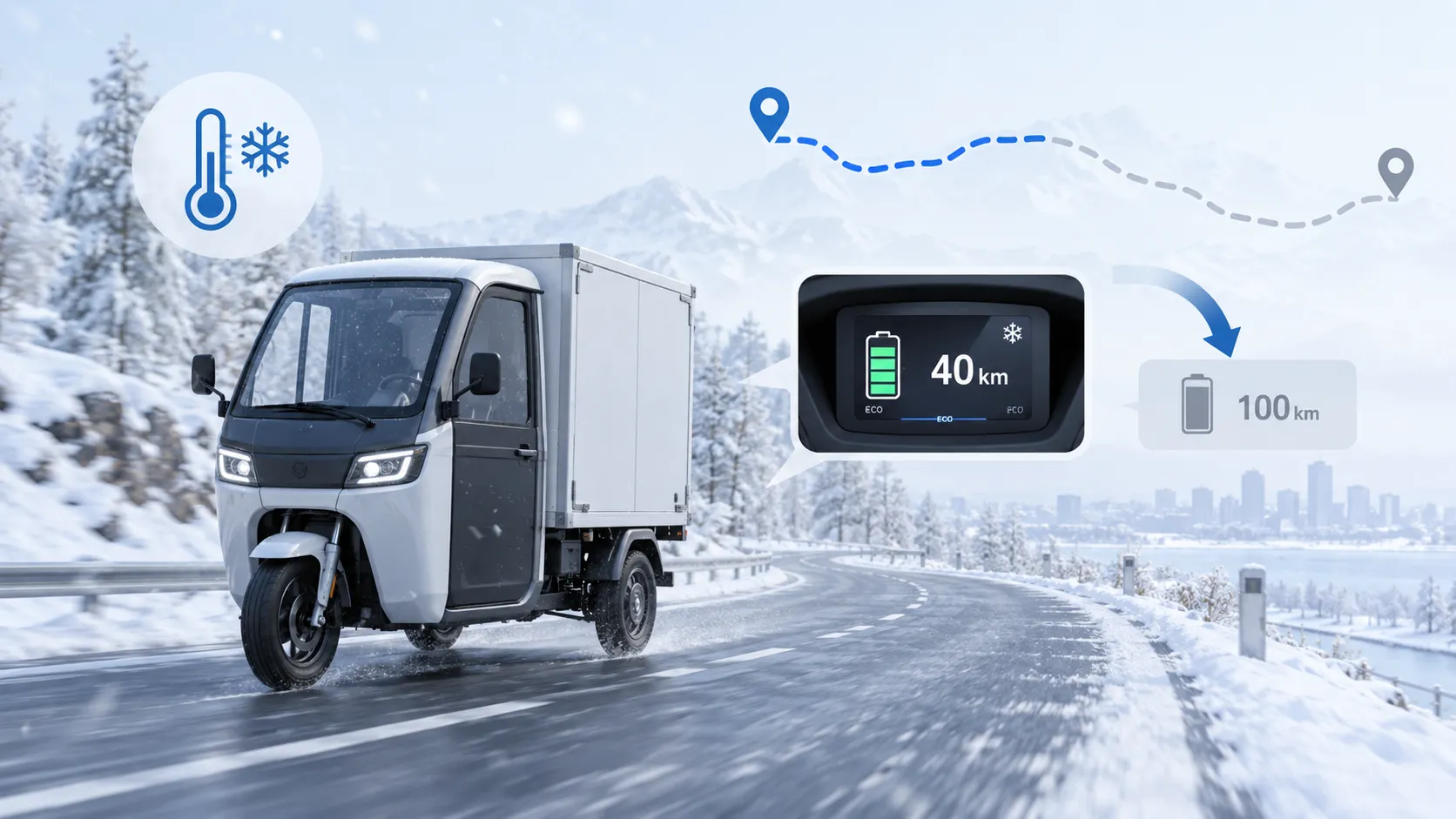
Cold weather changes the way an e rickshaw battery delivers usable energy. A fleet may see shorter route range, deeper voltage drops during acceleration, or more conservative state-of-charge readings even when the pack is not permanently damaged. For B2B operators, the practical question is not simply whether cold reduces capacity. It is whether the vehicle can still complete its assigned route with the required payload, gradient, stop-start frequency, and reserve margin.
That distinction matters for passenger rickshaws, cargo tricycles, delivery fleets, and other commercial three-wheelers. A battery that performs acceptably in mild weather can become operationally marginal after a cold soak if the original specification leaves little energy or power reserve. Cold-weather planning should therefore connect battery behavior with route design, fleet dispatch, BMS data, and pre-purchase validation.
For commercial e-rickshaw applications, LiFePO4 battery chemistry is often selected because it combines long cycle life, stable output, and safety performance under repeated daily operation.
Why Can Cold Weather Reduce E-Rickshaw Route Range?
Low temperature slows electrochemical processes and increases internal resistance. For an e rickshaw battery, this can temporarily reduce usable energy and discharge capability while making voltage drop more noticeable under load. The dashboard may therefore show faster state-of-charge decline or reduced remaining range during winter operation.
The key B2B implication is that nominal capacity is not the same as guaranteed route energy. A fleet should judge winter performance against the lowest expected operating temperature, the actual duty cycle, and the minimum reserve needed to avoid route interruption. If the battery warms during operation, some apparent capacity loss can recover, but dispatch planning should not depend on that recovery.
Why Do Payload and Hills Increase Winter Voltage Sag?
Payload, gradients, and repeated acceleration increase motor current demand. When an e rickshaw battery is cold, its higher internal resistance can amplify voltage sag at the exact moment the vehicle needs more power.

A lightly loaded passenger route may remain stable, while a cargo route with steep sections can approach controller or BMS protection thresholds much earlier.
Fleet buyers should therefore examine peak-current duration, continuous discharge demand, route gradients, vehicle mass, and stop frequency together. A winter complaint described as ‘the battery drops suddenly on hills’ may be caused by a combination of cold cells, high current demand, wiring loss, and an undersized power margin rather than by low nominal capacity alone.
How Much Winter Energy Reserve Should a Fleet Plan?
There is no universal winter reserve percentage for every e rickshaw battery. The correct margin depends on climate, chemistry, route length, payload, driving pattern, battery age, and the operator’s acceptable end-of-route SOC. A fleet that normally finishes a route with almost no reserve in warm weather is more exposed to winter failures than one designed with deliberate margin.
A useful procurement method is to calculate the energy required by the real route first, then validate how much usable energy the proposed pack can deliver at the target cold temperature. The buyer can then add reserve for traffic, detours, heavier payloads, cell aging, and abnormal weather. This approach is more defensible than increasing amp-hour rating without confirming pack current capability or vehicle efficiency.
For broader service-life planning, fleet teams can also review the electric tricycle battery lifespan guide so winter reserve decisions are considered together with cycle life, duty severity, and replacement planning.
How Should Cold-Soaked Batteries Affect Route Allocation?
Vehicles parked outdoors overnight may begin the first shift with a colder pack than vehicles stored indoors. For mixed fleets, route allocation can reduce risk without changing the battery. The most demanding routes—high payload, steep gradients, dense stop-start traffic, or long distance—should not automatically be assigned to the coldest vehicles if operating data shows a recurring winter margin problem.
Dispatch teams can compare battery temperature, starting SOC, expected route energy, and historical voltage-sag events before releasing vehicles. If a fleet operates in very cold regions, the procurement specification may also need battery heating, insulation, or a defined warm-up strategy. Those features should be selected from validated application needs rather than added as generic options.
What BMS Data Should Fleets Monitor in Cold Weather?
A connected BMS can turn winter complaints into measurable fleet data. Useful signals include pack temperature, minimum and maximum cell voltage, cell-voltage spread, current, SOC, low-temperature protection events, undervoltage events, and abnormal voltage sag during acceleration or hill climbing.
Patterns matter more than a single alarm. If the same e rickshaw battery repeatedly reaches a low-voltage threshold only on a particular route, the fleet can compare payload, gradient, temperature, and current history before replacing the pack. If many vehicles show the same issue at the same temperature, the fleet may need a specification or operating change rather than isolated battery replacement.
What Cold-Weather Specifications Should B2B Buyers Verify?
A cold-region battery quotation should contain more than nominal voltage and amp-hour capacity. B2B buyers should request application-specific evidence for the conditions their vehicles will actually face.
| Specification to Verify | Why It Matters in Cold Weather |
|---|---|
| Usable energy at target temperature | Shows whether route energy remains sufficient after cold soak |
| Continuous and peak current at low temperature | Checks power margin for payload, starts, and gradients |
| Charge and discharge temperature limits | Defines safe operating boundaries for the pack |
| BMS temperature and derating logic | Shows how protection changes as the pack gets colder |
| Cell-voltage and fault logging | Supports diagnosis of sag, imbalance, and cutoff events |
| Heating or insulation option | May be required for specific climates and duty cycles |
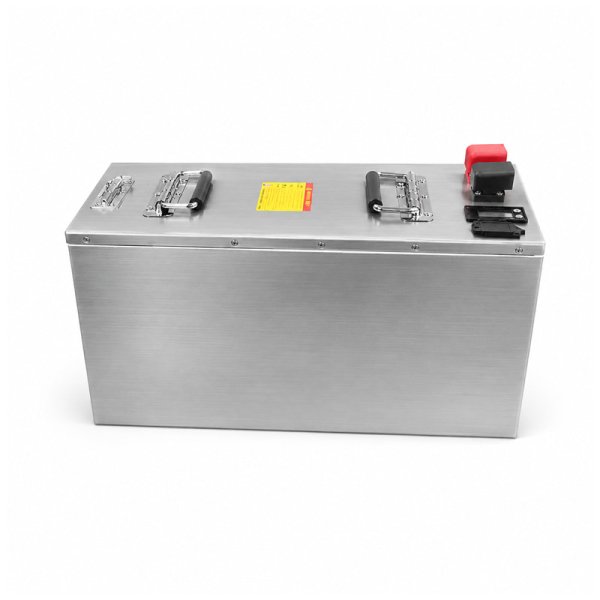
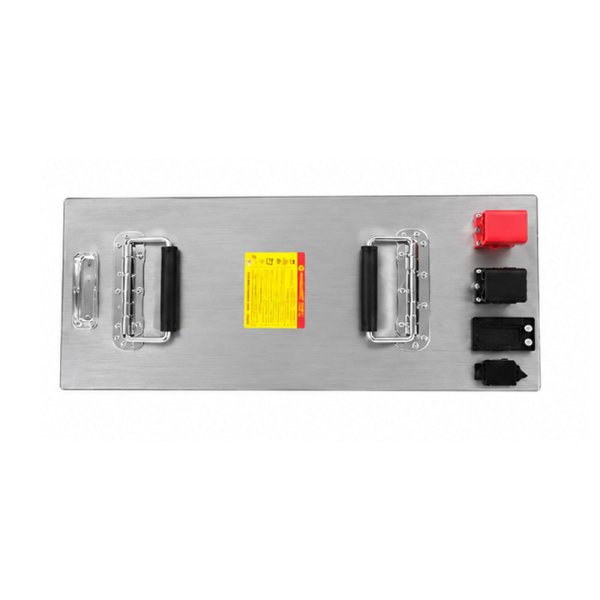
The supplier should also confirm pack dimensions, mounting, connectors, communication, vibration resistance, and environmental protection because winter operation does not remove the normal mechanical requirements of a commercial e rickshaw battery.
For the broader vehicle-matching checklist, use the e-rickshaw battery buying guide as the main selection reference, while this cold-weather article remains focused on climate-specific validation.
How Should OEMs Validate an E-Rickshaw Battery Before Fleet Deployment?
Before a bulk order, the most useful test is not a room-temperature bench result alone. OEMs and fleet buyers should validate the e rickshaw battery under a representative cold-soak condition and then reproduce the actual duty cycle as closely as possible.
A practical acceptance test can include full or representative payload, repeated acceleration, the steepest normal gradient, the longest planned route, and the expected starting battery temperature. During the test, record pack voltage, current, minimum cell voltage, temperature, SOC behavior, voltage sag, BMS events, and remaining energy at route completion.
The objective is not to prove that cold weather has no effect. It is to confirm that the pack still meets the fleet’s route-completion, power, protection, and reserve requirements. If the result is marginal, buyers can adjust energy capacity, current capability, thermal strategy, or route assignment before the battery enters mass deployment.
Frequently Asked Questions About E-Rickshaw Batteries in Cold Weather
Q: Why does an e rickshaw battery lose range in cold weather?
A: Cold temperatures increase internal resistance and can temporarily reduce usable energy. The effect becomes more visible when the vehicle carries heavy loads, climbs gradients, or accelerates frequently.
Q: Why does voltage sag increase under winter payloads?
A: A cold e rickshaw battery can have higher internal resistance, while payload and hills demand more current. The combination creates a larger voltage drop and may bring the pack closer to BMS or controller limits.
Q: Can an e rickshaw battery recover range after warming up?
A: Some cold-related performance loss is temporary. As the battery returns to a suitable operating temperature, available power and usable energy can improve, provided the pack has not been damaged or deeply depleted.
Q: What battery data should fleets monitor during cold weather?
A: Useful data includes battery temperature, pack voltage, minimum cell voltage, cell spread, current, SOC, undervoltage events, low-temperature protection events, and voltage sag under heavy demand.
Q: How should buyers test an e rickshaw battery for cold climates?
A: Validate the pack after a representative cold soak using realistic payload, gradients, stop-start driving, and route length. Record voltage, current, cell temperatures, SOC behavior, BMS events, and end-of-route reserve.
Plan Cold-Weather E-Rickshaw Battery Projects Around Real Duty Cycles
Cold-weather reliability depends on matching the battery to the vehicle, route, payload, current demand, and climate rather than selecting capacity in isolation. For OEM, fleet, or bulk battery projects, FEBATT can evaluate application data and configure a lithium power battery solution around the required operating conditions.