An electric moped battery is not simply a component purchased against a nominal rating. For delivery fleets and commercial e-moped programs, it is an operating asset that affects route completion, vehicle availability, pack handling, maintenance workload, spare-stock planning, and lifecycle cost.
For B2B buyers, the useful question is not “Which pack has the largest capacity?” It is “Which electric moped battery can repeatedly support the real duty cycle, fit the vehicle architecture, remain serviceable across the rollout, and deliver predictable fleet economics?” A credible RFQ should convert field conditions into measurable technical and commercial requirements before suppliers are asked to quote.
This guide focuses on the procurement pain points that matter most to fleet operators, OEMs, distributors, and project buyers: incomplete application data, unclear supplier capability, weak traceability, uncontrolled customization, difficult field support, and quotes that hide downstream operating costs.
Where Does an Electric Moped Battery Fit in Commercial Delivery Fleets?
In a commercial fleet, an electric moped battery sits at the intersection of vehicle engineering, operations, procurement, charging infrastructure, and after-sales service. A poor decision in any one of these areas can create downtime or service complexity that costs more than the original pack.
A delivery operator may prioritize route completion and active-vehicle availability. An OEM may focus on dimensional fit, communication compatibility, validation, repeatability, and engineering change control. A distributor may need one moped battery platform that can support several approved vehicle models without creating an unmanageable spare-parts inventory. Procurement has to reconcile these priorities before supplier selection.
That is why the electric moped battery should be specified as part of a complete motive-power system rather than as an isolated commodity. Buyers evaluating a broader power battery solution for commercial mobility should consider the pack, vehicle controller, charging method, BMS logic, connector architecture, environmental exposure, mechanical interface, and service process together.
For teams still defining the vehicle-side requirement, an electric two-wheeler battery selection guide for B2B programs can help structure the operating variables that need to be confirmed before an RFQ. The objective is not to over-specify the battery for a moped. It is to prevent suppliers from designing to assumptions that do not reflect the fleet.
What Fleet Data Should Buyers Capture Before Requesting an Electric Moped Battery Quote?
A useful RFQ starts with the route rather than the cell datasheet. Daily distance matters, but two vehicles covering similar mileage can place very different demands on an electric moped battery because payload, stop frequency, gradients, speed, road conditions, and operating temperature change both energy use and power demand.
Buyers should document representative and worst-case payload, stop-start frequency, average and peak speed, sustained gradients, acceleration demand, road surface, idle periods, and shift duration. Repeated starts with cargo can create frequent current peaks, while long climbs can create sustained thermal loading. These conditions often expose weaknesses that a simple range estimate misses.
Ambient temperature should be treated as an operating range, not a single design point. High temperatures can accelerate aging and increase thermal-management demands, while low temperatures can reduce available power and usable energy. Rain, dust, road splash, vibration, storage conditions, and cleaning practices should also be described when they are relevant to the fleet environment.
Shift structure changes the operating requirement. A single-shift fleet with a long overnight window has different needs from a multi-shift operation with short recovery windows. Depending on route intensity and scheduling, the electric moped battery may need more usable energy, stronger charge acceptance, a swapping strategy, or additional spare packs.
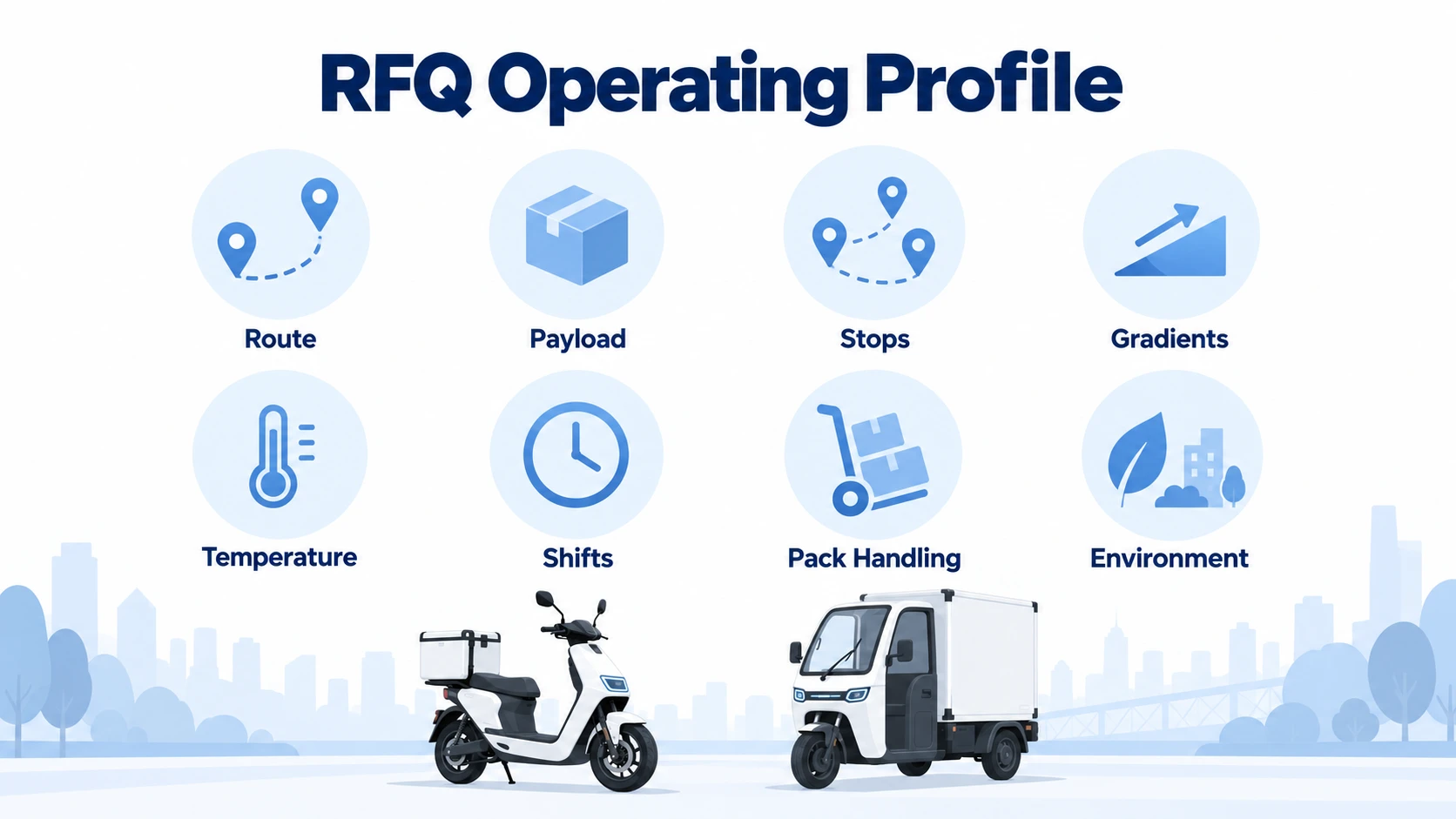
Pack-removal frequency is another practical input. A removable moped battery handled repeatedly faces different mechanical stress from a fixed pack. Handles, latches, guides, locking features, connector alignment, pack mass, and service ergonomics all become procurement variables. The moped battery charger must also match the real operating workflow, including connector durability, charger location, available power, ventilation, and the time actually available between shifts.
How Should Buyers Turn Fleet Duty Cycles Into an Electric Moped Battery Specification?
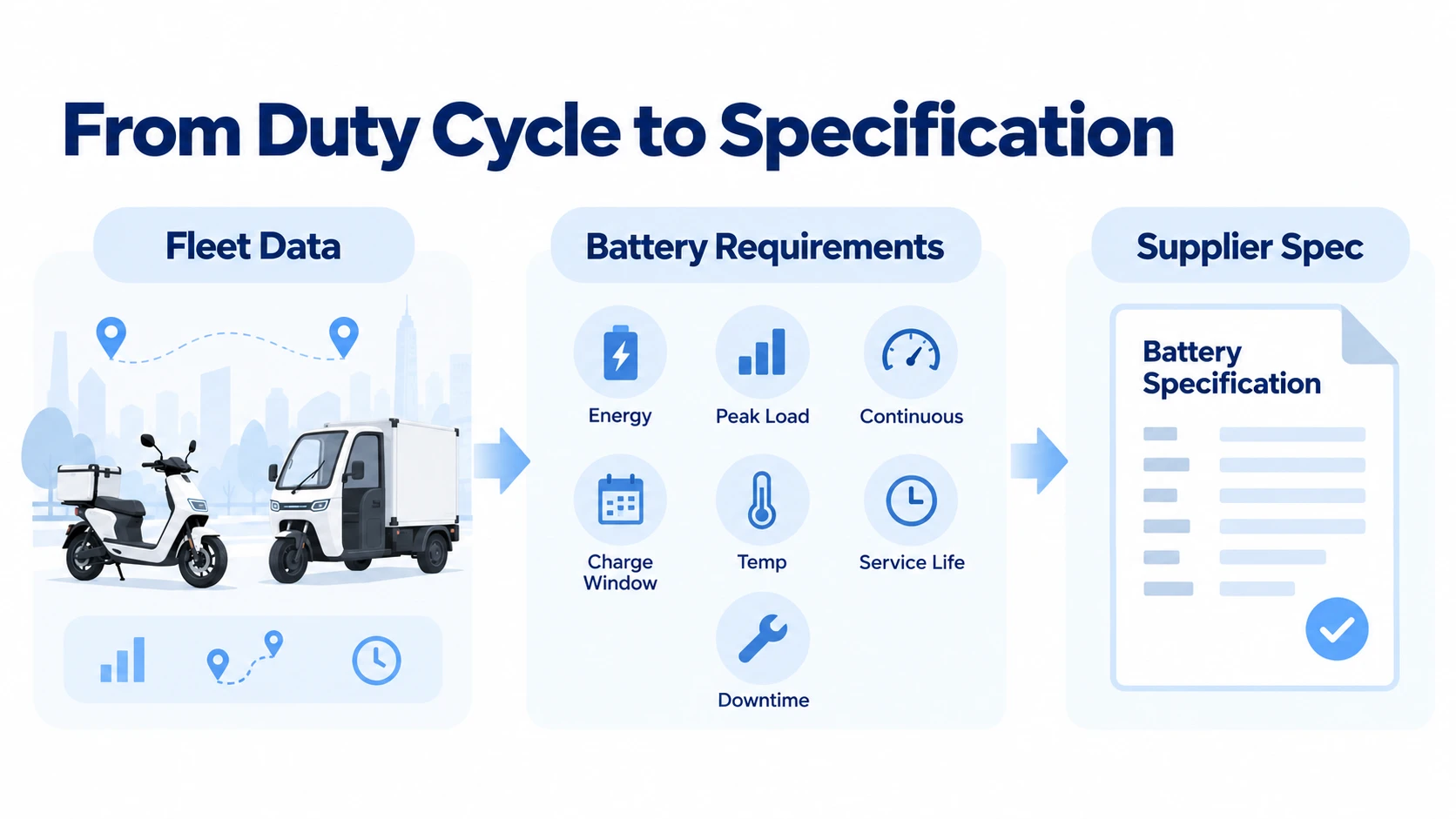
Once field data are collected, procurement should translate them into acceptance criteria. Terms such as “long range,” “fast charging,” and “heavy duty” are not specifications. The supplier needs a bounded operating envelope for the electric moped battery and a clear definition of what successful fleet operation looks like.
The specification should cover required usable energy, continuous and peak discharge demand, expected depth-of-discharge window, available charging periods, operating temperature range, annual utilization, route-completion target, expected service life, and acceptable downtime. Where possible, those limits should be tied to route data, vehicle logs, or pilot observations rather than assumptions.
BMS behavior should also be treated as part of vehicle operation. Current limiting, low-state-of-charge logic, temperature derating, balancing, fault reporting, communication, and recovery behavior all affect the driver experience and the ability of the fleet to complete routes consistently.
A commercial lithium ion battery specification should define an end-of-life criterion as well. The fleet may define replacement when usable energy falls below an agreed threshold or when the pack can no longer complete a representative route under the agreed conditions. This makes lifecycle and warranty comparisons more meaningful than an isolated cycle-life claim.
For platform-specific programs, a custom lithium battery packs sourcing guide for electric motorcycle fleets can help convert vehicle constraints into supplier deliverables. The electric moped battery RFQ should describe the operational problem the supplier must solve while identifying which requirements are mandatory and which remain open to engineering proposals.
Which Supplier Audits, Traceability Checks, and Pilot Tests Reduce Procurement Risk?
Supplier qualification should distinguish manufacturing capability from sales capability. A polished quotation does not prove that a factory can consistently manufacture an electric moped battery at fleet scale.
A supplier audit should examine incoming-cell controls, welding and interconnection, insulation, enclosure assembly, BMS programming, end-of-line testing, calibration, traceability, nonconformance handling, process documentation, and engineering change management. Buyers should also establish who owns pack engineering, firmware configuration, quality approval, and corrective-action responsibility.
Cell traceability is especially important for a fleet rollout. The supplier should be able to identify the approved cell manufacturer and model, relevant batch or lot information, incoming inspection records, production revision, and the pack serial numbers linked to those materials. For an electric moped lithium battery, uncontrolled cell substitution can change resistance, thermal behavior, aging, and field consistency even when nominal specifications appear similar.
Sample validation should reproduce the intended application. The electric moped battery should be checked for dimensional fit, connector mating, communication, peak-current response, route endurance, thermal response, vibration exposure, ingress risk, and repeated removal where the pack is designed to be swappable.
A pilot fleet should then confirm that the pack behaves predictably under realistic payload, route, temperature, handling, and charging conditions. The pilot is not an informal customer trial; it should have written acceptance criteria for route completion, faults, temperature behavior, SOC estimation, connector wear, charger interaction, and serviceability before volume release.
What Should Be Customized for Commercial Moped Fleet Applications?
Custom battery solutions should begin with vehicle and fleet constraints, not cosmetic changes. Every electric moped battery customization should have a defined operational reason, a verification method, and a controlled revision record.
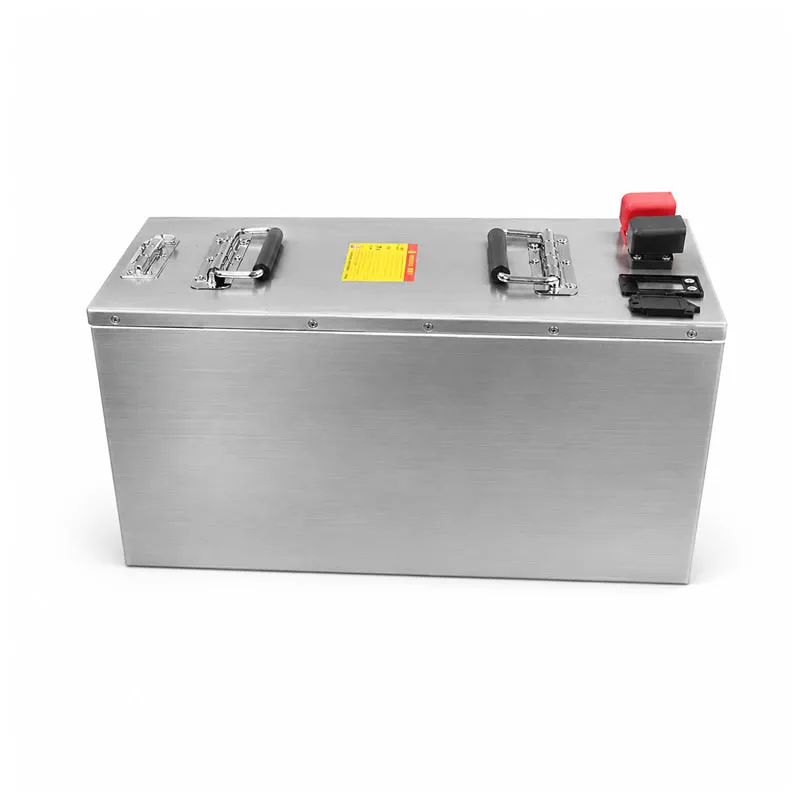
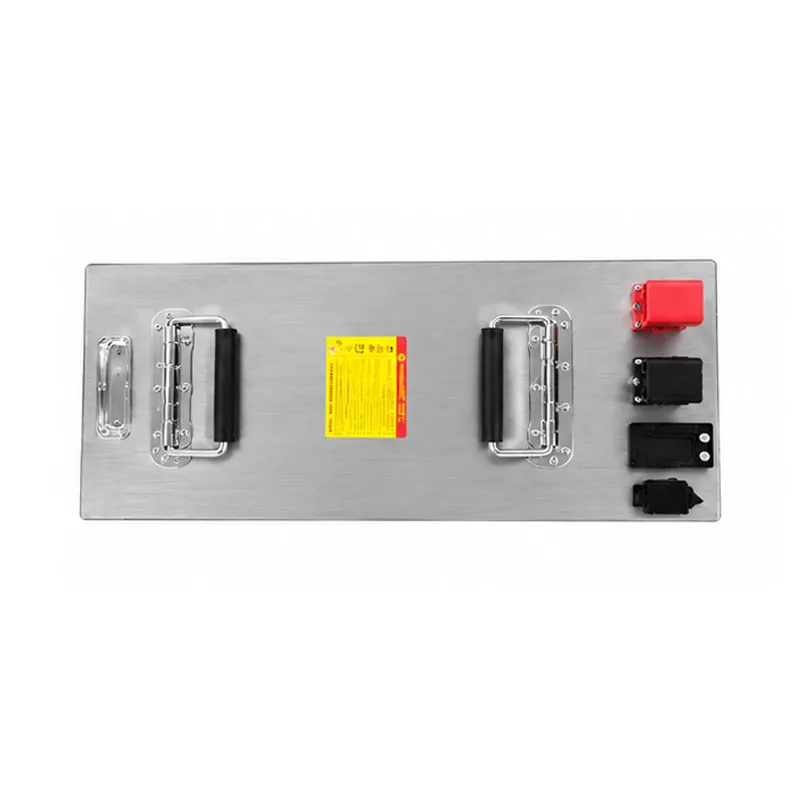
Mechanical customization may include pack dimensions, mounting points, slide rails, handles, locks, anti-vibration features, and removable-pack geometry. A custom electric moped battery may also need to work within an existing compartment or center-of-gravity target. Drawings and revision approval should control every fitment change.
BMS customization can cover current limits, temperature thresholds, SOC logic, CAN or RS485 communication, wake and sleep behavior, diagnostics, and charger interlocks. Buyers should clarify who controls firmware revisions and how future vehicle changes will be validated.
Connector choices should reflect current demand, mating cycles, sealing, anti-reverse design, operator handling, and regional service availability. Standardizing interfaces across approved vehicle models can reduce spare-part complexity, but only where electrical and mechanical requirements remain compatible.
The enclosure should be engineered for actual exposure to vibration, impact, water, dust, corrosion, and heat. The moped battery charger should likewise be validated with the pack and the fleet schedule. A faster charger is not automatically better if the electric moped battery, site electrical capacity, or operating timetable cannot use the added power efficiently.
The purpose of custom battery solutions is to reduce operational friction. If customization creates unique tooling, proprietary service parts, or additional failure points without a measurable fleet benefit, procurement should challenge whether it is necessary.
How Do MOQ, Tooling, Spare Stock, and Engineering Changes Affect Landed Cost?
The quoted unit price is only one part of landed cost. The commercial value of an electric moped battery also depends on engineering charges, tooling, MOQ, component stability, replenishment time, spare-stock requirements, logistics, and the cost of future revisions.
For a new program, non-recurring engineering costs should be separated from recurring product costs. Tooling, fixtures, validation samples, firmware work, custom connectors, packaging, and certification-related samples may be legitimate, but buyers should know which charges are one-time and which repeat with later orders.
MOQ should be considered against rollout stages. A supplier that supports prototypes, pilot quantities, controlled ramp-up, and later volume production may reduce inventory exposure even if the first-order unit price is higher. Conversely, a low MOQ has limited value if cells, connectors, or other critical parts change between batches.
Lead time should be broken into engineering, sample build, validation, component procurement, production, quality release, and logistics. This helps buyers identify where schedule risk actually sits. Spare-pack planning should be linked to repair turnaround, route criticality, observed reliability, and seasonal demand instead of applying a fixed percentage to every fleet.
Engineering change control deserves explicit commercial terms. Any change to cells, BMS hardware, firmware, enclosure material, connector, moped battery charger, or other critical supplier should trigger notification and, when relevant, revalidation. Without that discipline, a later electric moped battery delivery may not be functionally identical to the pack originally approved.
How Should Buyers Compare Electric Moped Battery Quotes on Uptime and Lifecycle TCO?
Quote comparison should move beyond cost per pack. Every electric moped battery proposal should be normalized to the same duty-cycle, route, service, and replacement assumptions so that suppliers are being compared on equivalent operating conditions.
Vehicle uptime is the first commercial filter. A lower-priced pack can become more expensive if it causes more thermal derating, connector faults, charger interruptions, service events, or premature replacement. Buyers should model how battery availability affects active vehicles, spare vehicles, spare packs, service labor, and operational continuity.
Maintenance burden should include inspection, connector replacement, diagnostic work, pack cleaning, firmware support, charger servicing, and pack handling. A well-integrated electric moped battery can lower this burden through durable interfaces, accessible diagnostics, consistent SOC estimation, and stable vehicle communication.
Warranty terms need measurable definitions: duration, throughput or cycle conditions where applicable, retained-capacity criteria, operating exclusions, response time, claim evidence, freight responsibility, and repair or replacement procedure. A long warranty headline is weak protection if its exclusions do not match the actual fleet duty cycle.
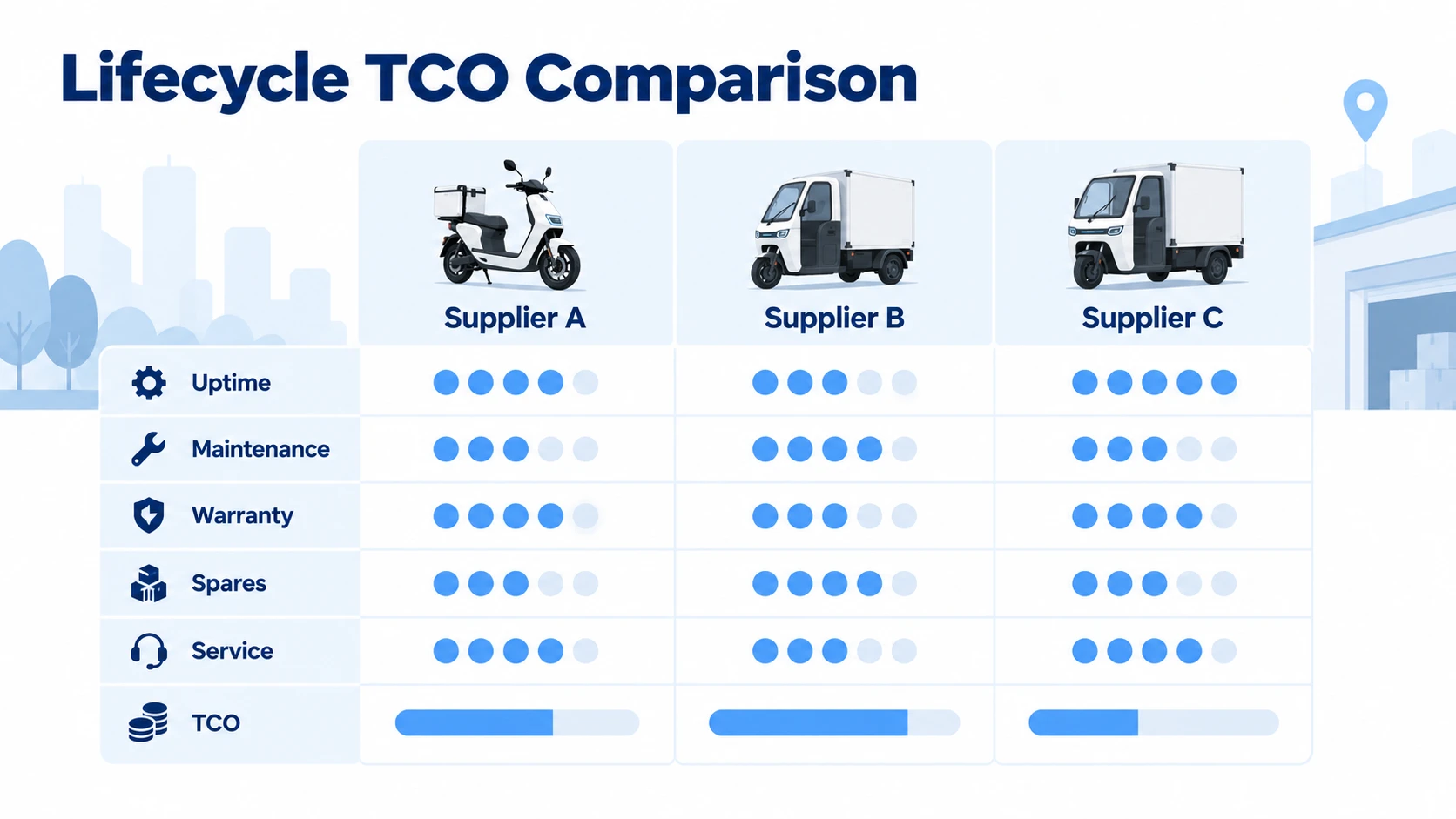
Lifecycle TCO should combine purchase price, charger and infrastructure cost, freight, duties, spare stock, expected replacements, maintenance labor, downtime, warranty recovery, and end-of-life handling. The strongest electric moped battery proposal is therefore not necessarily the cheapest. It is the one that combines credible manufacturing control, verified vehicle fit, predictable uptime, manageable field support, and transparent lifecycle economics.
Conclusion
Successful sourcing begins by treating the electric moped battery as a fleet operating asset rather than a catalog item. Route intensity, payload, charging windows, pack handling, environmental exposure, and service expectations should be converted into supplier acceptance criteria before price comparison begins.
For OEMs, distributors, and fleet operators, the strongest program combines application data, supplier audits, cell traceability, realistic sample testing, controlled customization, disciplined engineering changes, and lifecycle TCO analysis. The selected electric moped battery may not have the lowest initial price, but it should provide the most defensible path to stable uptime, predictable maintenance, and scalable commercial deployment.
Frequently Asked Questions About Electric Moped Battery
Q: What information should a commercial fleet provide for an electric moped battery quote?
A: Provide route distance, payload, gradients, stop frequency, shift hours, temperature, peak demand, charging or swap windows, pack space, connector, communication, expected volume, and service-life targets.
Q: How can procurement verify the electric moped battery manufacturer?
A: Audit the production site and confirm pack engineering, incoming-cell control, welding, BMS programming, end-of-line testing, serial traceability, calibration, quality records, and corrective-action ownership.
Q: Which tests should be completed before deploying an electric moped battery fleet?
A: Validate fit, connector and BMS communication, peak-current response, route endurance, thermal behavior, vibration, ingress exposure, repeated removal, SOC accuracy, charger interaction, and pilot reliability.
Q: Can a battery for a moped be customized for an OEM or fleet project?
A: Yes. Geometry, mounting, CAN or RS485 logic, current limits, connectors, enclosure protection, thermal design, and charger interface can be adapted when each change is documented and validated.
Q: Which warranty and field-support terms protect a commercial fleet rollout?
A: Define serial-level traceability, approved revisions, retained-capacity criteria, claim response time, spare-pack availability, replacement logistics, technical support, and responsibility for verified field failures.