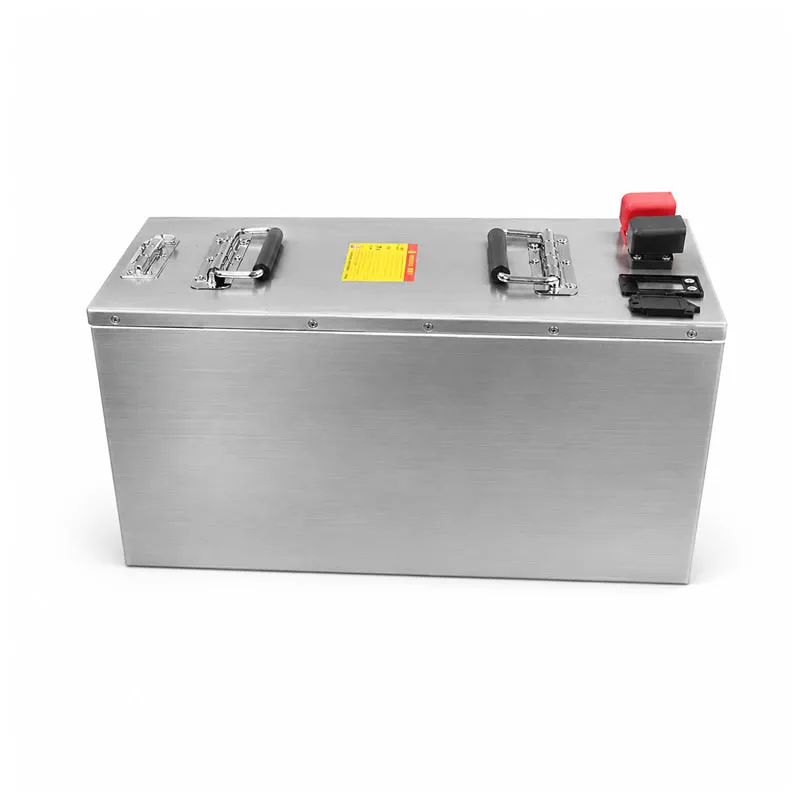
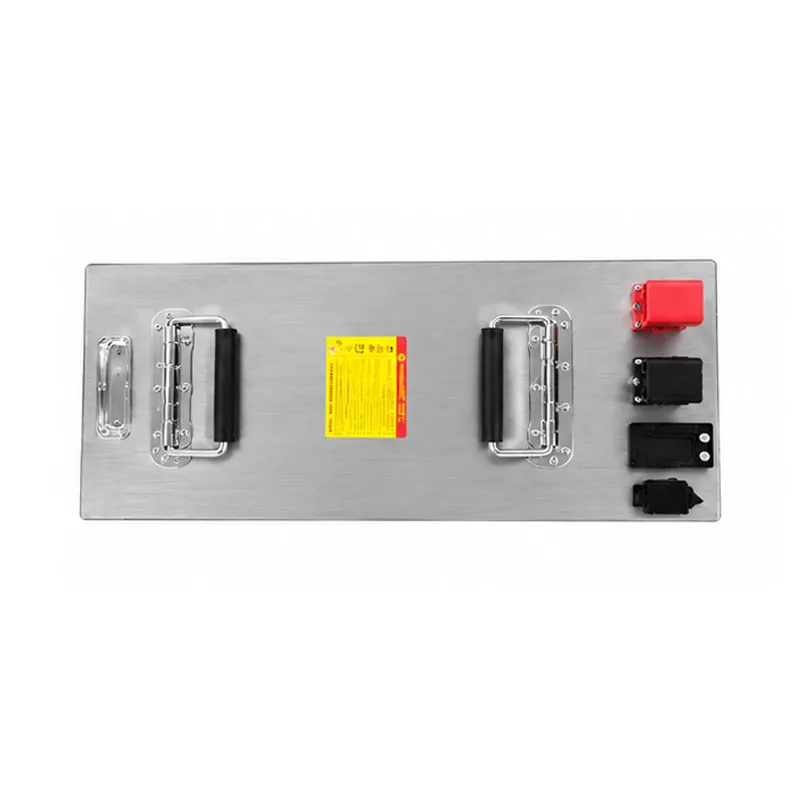
For commercial electric tricycle fleets, battery failure means more than lost range. A vehicle that stops mid-route can delay deliveries, interrupt agricultural work, increase service calls, and force operators to keep extra vehicles or spare packs. Battery maintenance should therefore be based on real duty conditions, not on a simple promise that a lithium pack will last a fixed number of years.
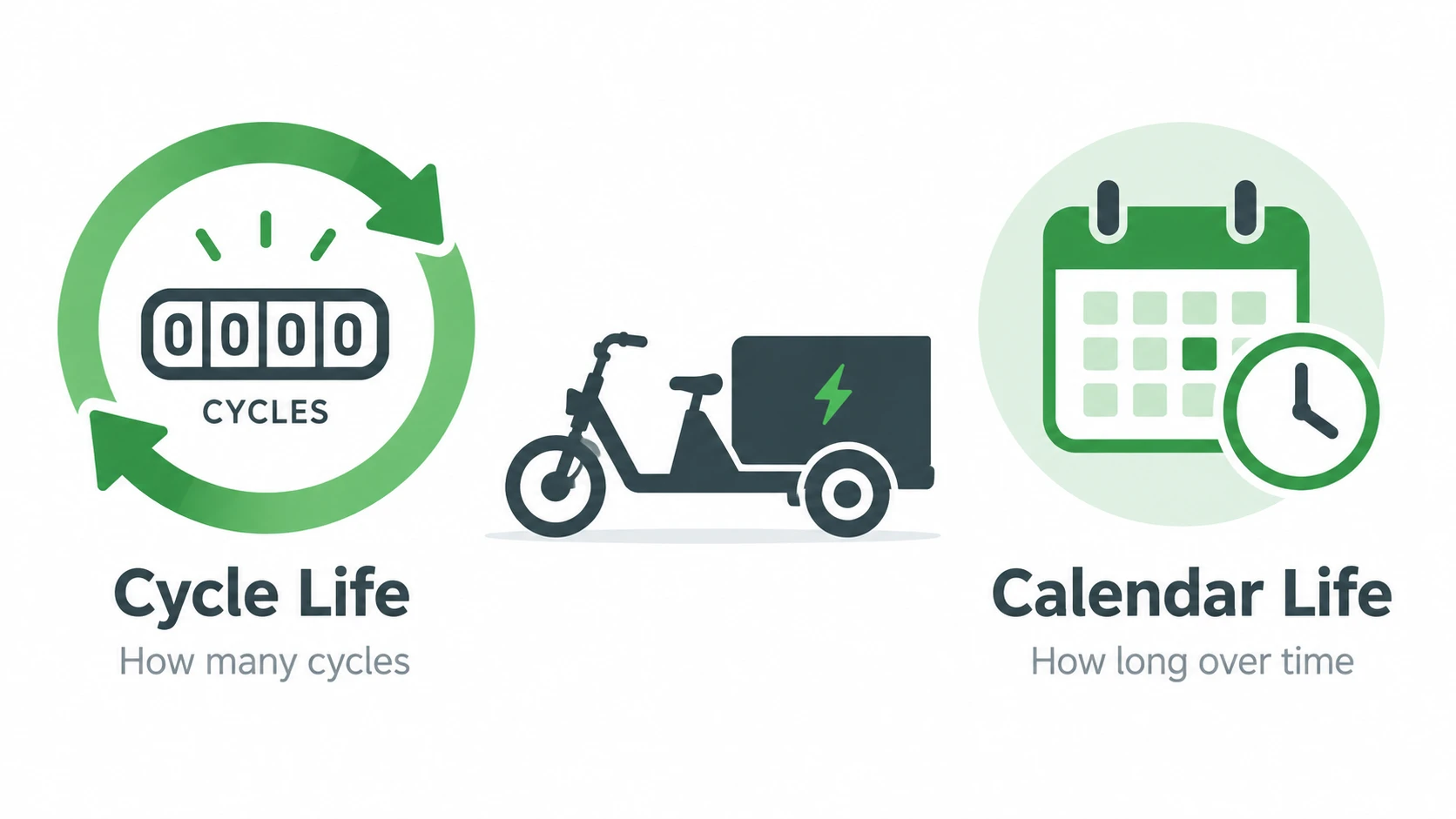
Two different clocks determine service life: cycle life and calendar life. For high-utilization delivery and utility fleets, LiFePO4 is often the stronger choice because its long cycling potential and thermal stability fit repeated daily use. Battery maintenance is what turns that chemistry advantage into predictable uptime. An application-matched power battery solution should connect the pack specification with payload, route, temperature, charging, and storage.
What Two Lifespan Clocks Should Fleets Track in Battery Maintenance?
Cycle life: use-based aging
Cycle life measures full-charge-equivalent use before a battery reaches a defined capacity-retention threshold. One cycle is not one plug-in event. Using 60% of capacity one day and 40% the next is roughly one full cycle. Battery maintenance should therefore track equivalent full cycles rather than simply counting how often a vehicle is connected to a charger.
Calendar life: time-based aging
Calendar life is aging that continues even when a battery is parked or stored. Chemical reactions still occur over time, and heat or unsuitable storage state of charge can accelerate capacity loss. Battery maintenance must consider elapsed time as well as cycling, especially for seasonal agricultural tricycles or backup fleet vehicles.
Why do both clocks matter?
A high-mileage delivery tricycle may accumulate cycles quickly, while a lightly used vehicle may age mainly through time and temperature. Battery maintenance should compare both clocks with the commercial requirement: can the pack still finish the route with the required payload, power, and reserve? FEBATT lists a 1,500-cycle lifespan for its 48V 45Ah LFP Power Battery Pack, but that figure is model-specific and should be read with its operating conditions.
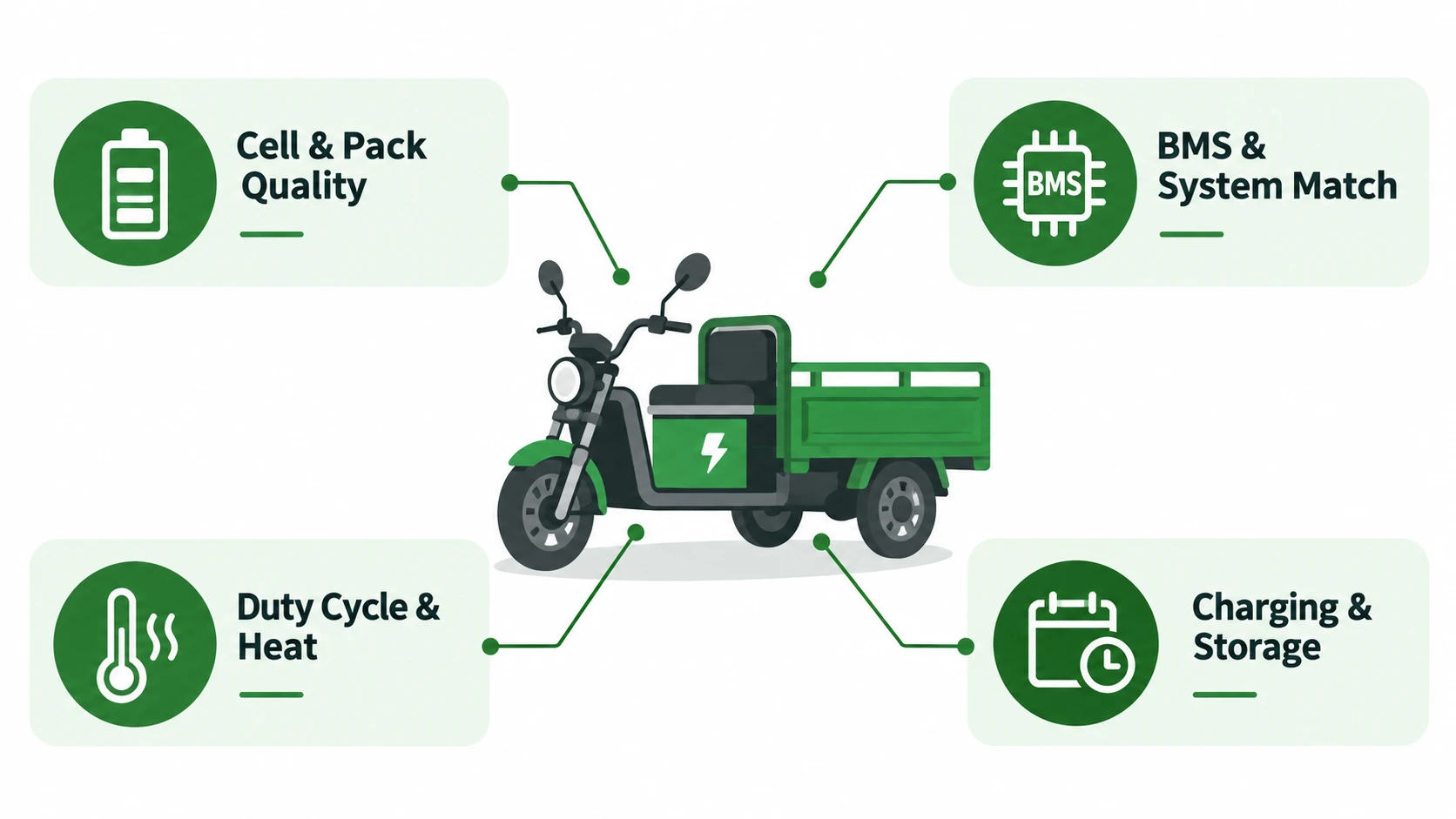
Why Can Battery Maintenance Results Differ Across Similar Fleets?
Cell and pack quality
Cell consistency, manufacturing control, interconnections, enclosure design, and thermal paths all affect aging. Battery maintenance cannot compensate for weak cells, mixed-quality cells, or an undersized pack. B2B buyers should ask for defined cycle-test conditions and capacity-retention criteria instead of relying only on a claimed number of years.
Payload, hills, current, and heat
Heavy cargo, repeated starts, steep grades, and long shifts increase current demand and internal heating. Sustained heat accelerates lithium battery aging, while an undersized pack may face deeper discharge on every route. The fleet maintenance record should include payload, route distance, road grade, operating temperature, stop frequency, and daily working hours.
BMS and system matching
A BMS can protect against over-current, over-discharge, short circuit, and unsuitable temperatures, but it cannot make a poorly matched pack durable. Repeated protection events may point to controller demand, wiring, connector, or sizing problems. Fleet condition monitoring should therefore include BMS fault history and load behavior rather than only checking whether the battery still powers the vehicle.
Charging and storage
Commercial fleets should use a charger profile matched to the lithium chemistry and pack limits. Long idle periods at very low state of charge, persistent heat exposure, or unsuitable storage can shorten service life. Battery maintenance should follow the pack manufacturer’s charging temperature, storage state-of-charge, and inspection guidance rather than applying one universal rule.
How Should Battery Maintenance Change for Heavy-Duty Tricycle Fleets?
Heavy-duty cargo tricycles should be managed by duty cycle, not calendar age alone. Battery maintenance for high-use fleets should track route completion, usable energy, voltage sag under load, temperature, BMS events, and end-of-shift reserve. A vehicle carrying light goods on flat roads should not use the same replacement threshold as a tricycle climbing ramps at maximum payload.
A practical battery maintenance routine starts with a baseline when the pack is new. Later checks should repeat similar routes and payloads. If the same route uses more energy, voltage sag increases, or pack temperature rises under comparable conditions, the fleet has evidence of degradation and can investigate before a route failure occurs.
When Should Battery Maintenance Trigger Replacement Planning?
Lithium batteries normally lose capacity gradually. Age or cycle count alone should not trigger replacement. Battery maintenance should schedule action when the pack can no longer meet route, payload, reserve, or power targets reliably, or when abnormal heat, repeated faults, swelling, physical damage, or other safety concerns appear.
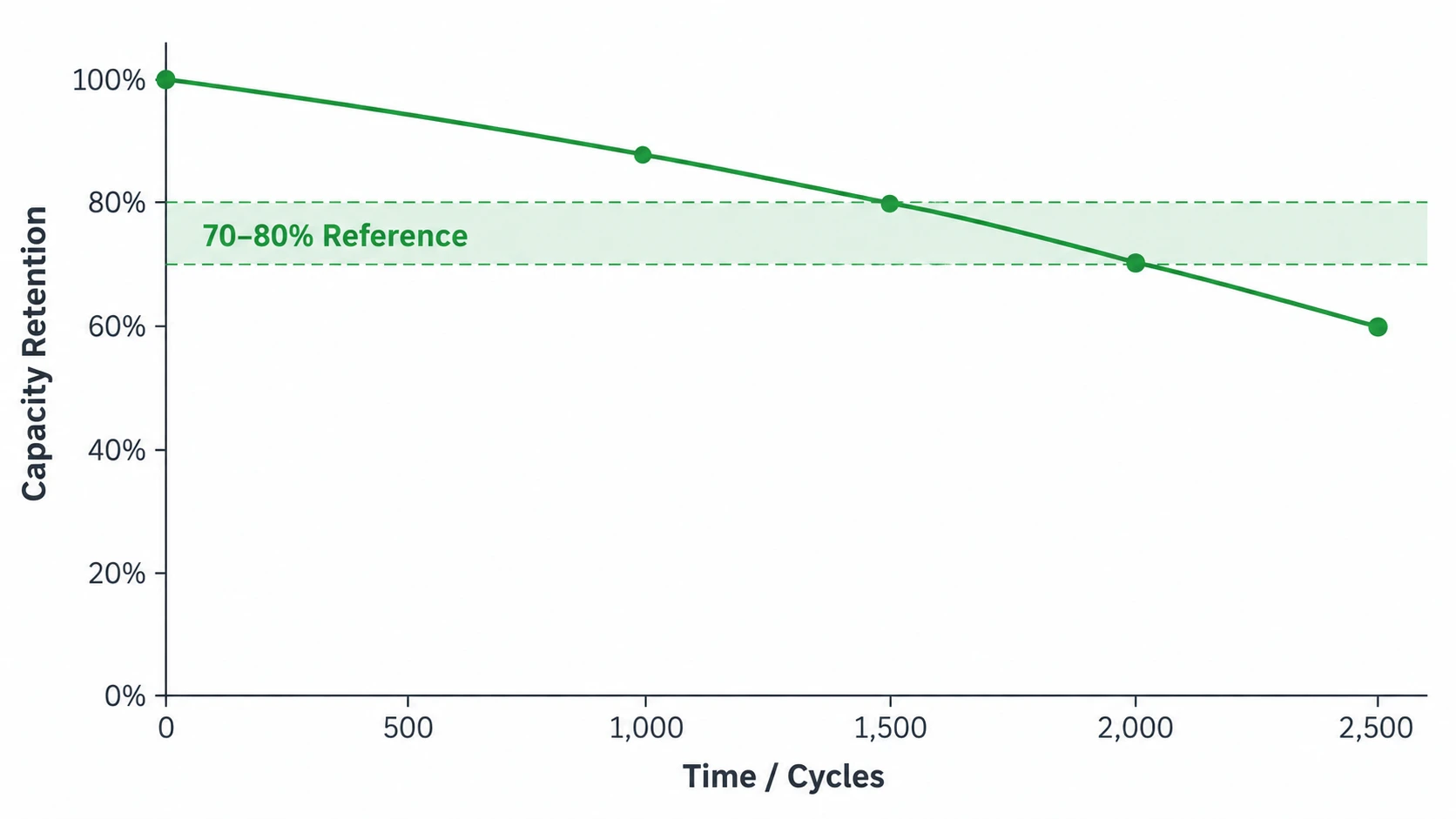
Around 70–80% of original capacity is often used as a vehicle-battery end-of-life reference, but it is not a universal rule for electric tricycles. A pack at 82% may already fail a demanding route, while another below 80% may still serve a short light-duty route. Replacement planning should tie capacity retention to the actual commercial job.
What Should B2B Buyers Ask About Battery Maintenance Before Ordering?
Procurement teams should request cell chemistry, cycle-test conditions, the capacity-retention endpoint, continuous and peak current capability, BMS protections, charger profile, temperature limits, dimensions, connectors, communication requirements, and warranty terms. Battery maintenance requirements should also be agreed before deployment, including which data will be reviewed and what condition triggers investigation.
For high-utilization electric tricycles, a properly sized LiFePO4 pack is often the better long-term choice when cycle life, thermal stability, uptime, and replacement frequency matter more than the lowest purchase price. Good battery maintenance then verifies that the pack continues to meet the agreed operating requirement throughout its service life.
Conclusion
Electric tricycle battery life is governed by two clocks: cycling and time. Battery maintenance should connect both with payload, temperature, charging, storage, BMS behavior, and route performance so fleets can plan service before downtime occurs.
For B2B fleets, choosing a properly sized LiFePO4 battery is often a sound long-term decision for frequent delivery and utility work. Matching the battery to the application first, then using battery maintenance data throughout its life, helps protect uptime and control total lifecycle cost.
Battery Maintenance FAQ for Electric Tricycle Fleets
Q: How long do lithium batteries last?
A: Lithium battery life depends on chemistry, temperature, depth of discharge, current demand, and calendar aging. Battery maintenance should compare the supplier’s cycle-test conditions with the fleet’s actual duty cycle rather than rely on one fixed number of years.
Q: What is a battery cycle?
A: A battery cycle is cumulative use equal to 100% of rated capacity. Using 60% one day and 40% the next is roughly one full cycle. Battery maintenance should track equivalent full cycles, not charging events alone.
Q: What is battery calendar life?
A: Calendar life is time-based aging that continues even while a battery is idle. Heat and storage state of charge can accelerate it, so planned battery maintenance still matters for seasonal or low-use fleets.
Q: How can a fleet extend lithium battery life?
A: Use a correctly sized pack, a matched charger and BMS, control heat, avoid unnecessary deep discharge, and follow storage guidance. Consistent battery maintenance also helps fleets identify abnormal stress before it becomes permanent performance loss.
Q: When should an electric tricycle battery be replaced?
A: Replace or rotate a pack when it can no longer meet route, payload, reserve, or power targets reliably, or when safety concerns appear. Battery maintenance records make that decision more objective than age alone.