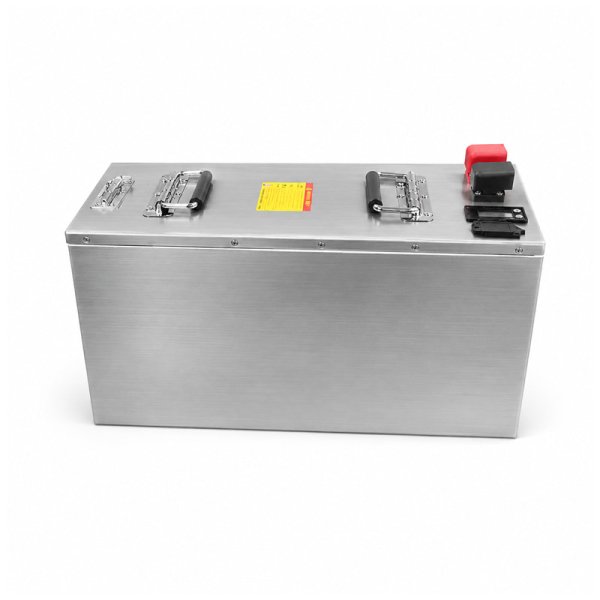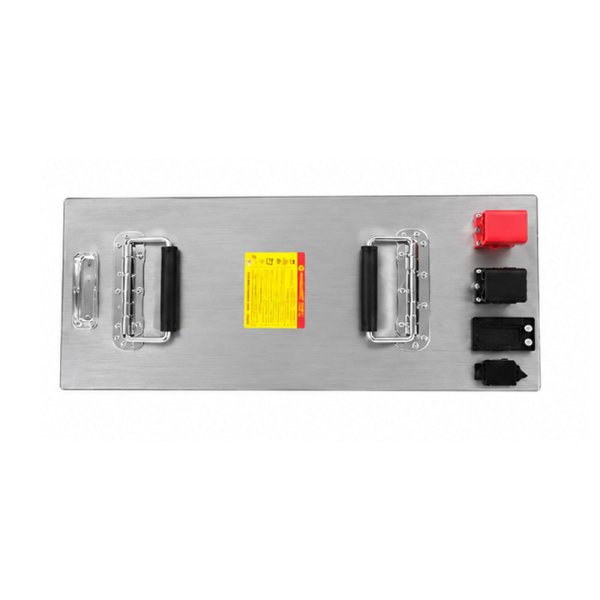
For fleet operators, vehicle OEMs, importers, and regional distributors, sourcing a motorcycle battery is not a simple component-buying exercise. The battery affects vehicle uptime, route completion, warranty exposure, spare-pack planning, service workload, and the economics of every operating kilometer. A low quotation can therefore become an expensive procurement decision if the supplier cannot control cell quality, BMS behavior, enclosure durability, traceability, engineering changes, or post-sale fault analysis.
A qualified supplier of custom lithium battery packs should be able to translate real fleet conditions into a controlled battery specification, prove how the pack is built, validate samples on the target vehicle, support project documentation, and maintain consistency when production scales. For B2B buyers, the practical question is not only whether a supplier can build a pack, but whether it can repeatedly deliver the same engineered result throughout the program lifecycle.
Before an RFQ is frozen, procurement teams should map the battery requirement to the complete commercial vehicle operating environment. This power battery solution overview can help buyers frame vehicle use, operating intensity, and project requirements before supplier comparison begins. For custom lithium battery packs, the sourcing process should then move from application data to technical evidence, pilot verification, commercial controls, and lifecycle cost.
What Should B2B Buyers Expect From a Qualified OEM Electric Motorcycle Battery Supplier?
A credible OEM electric motorcycle battery supplier should act as an engineering partner rather than a catalogue vendor. The supplier should first understand route length, payload, stop frequency, speed profile, road gradient, operating temperature, daily shifts, parking conditions, service expectations, and charging windows. These factors determine whether custom lithium battery packs are suitable for real fleet work rather than merely capable of powering a motorcycle in a short demonstration.
Buyers can also use this electric motorcycle battery selection guide for fleet applications to organize duty-cycle inputs before approving a specification. That makes supplier discussions more concrete and helps prevent quotations based on incomplete operating assumptions.
The commercial scope matters as much as the initial specification. For custom lithium battery packs, procurement scope should be defined before supplier comparison. A fleet may require hundreds of compatible units with predictable replacement planning, while a motorcycle OEM may also need pack geometry, mounting interfaces, connector architecture, communication protocols, charger coordination, branding, diagnostics, and future model revisions. In both cases, a custom motorcycle battery supplier should convert the application brief into a controlled technical specification with acceptance criteria that engineering, quality, procurement, and after-sales teams can all use.
For custom lithium battery packs, buyers should expect four practical capabilities. First, the supplier should provide an engineering review before quotation instead of offering only a nominal voltage-and-capacity combination. Second, it should document cell source, BMS functions, pack construction, and critical component revisions. Third, it should support sample, pilot, and production validation. Fourth, its quality controls should remain stable as the project moves from samples to an electric motorcycle battery bulk order.

A strong lithium motorcycle battery supplier should also be willing to reject unrealistic assumptions. If requested packaging, current demand, thermal conditions, or operating expectations are likely to create safety, durability, or service-life problems, the supplier should explain the trade-off and propose a workable alternative. For B2B buyers, that engineering discipline is more valuable than a supplier that agrees to every request without qualification.
How Can Buyers Distinguish a Manufacturer From a Trader or Reseller?
The distinction matters because the company issuing the quotation may not control battery engineering, process changes, production records, or root-cause analysis. A trader can still add commercial value, but buyers sourcing custom lithium battery packs need to know who actually owns the manufacturing and engineering responsibility.
For custom lithium battery packs, start with process ownership. Ask where incoming-cell inspection, battery assembly, conductor joining, BMS programming, enclosure assembly, insulation checks, end-of-line testing, aging, and final inspection are performed. Then ask who approves engineering changes and who can retrieve production records by serial number. A genuine manufacturer should be able to show a coherent workflow and connect each process to responsible engineering and quality personnel.

A useful motorcycle battery supplier audit should verify records rather than rely on factory photographs. Buyers should request examples of work instructions, calibration records, incoming-inspection criteria, non-conformance handling, end-of-line test records, sample traceability, and production lot identification. For custom lithium battery packs, these records show whether the approved design can be reproduced under controlled conditions.
For custom lithium battery packs, the audit should also test communication discipline. Ask which BMS firmware revision is installed in the current sample, how cell discontinuation would be handled, who approves an alternative connector, and how a process change is validated. If the sales team cannot connect these questions to engineering and quality owners, the buyer may not have direct access to the organization that controls the product.
Which Cell, BMS, Enclosure, and Traceability Evidence Should Be Reviewed?
Cell selection should be evaluated against the fleet duty cycle rather than the marketing reputation of a chemistry alone. Buyers should review manufacturer, model, grade, nominal capacity, impedance limits, charge and discharge capability, temperature limits, cycle-life test conditions, and incoming-inspection controls. For custom lithium battery packs, lot-to-lot consistency can be more important than an impressive laboratory specification from one sample batch.
BMS evidence is equally important because protection and control logic determine how the battery behaves under real operating stress. Buyers should review overcharge, over-discharge, overcurrent, short-circuit, temperature, balancing, state-of-charge estimation, communication, logging, sleep/wake logic, and fault-recovery behavior. The BMS selection guide for lithium-ion motorcycle packs gives additional context for matching protection and communication functions to motorcycle applications. In a professional motorcycle battery OEM service, firmware should have a controlled revision number and change history.
The enclosure converts the electrical design into a durable vehicle component. Buyers should examine ingress-protection strategy, venting, structural reinforcement, vibration resistance, thermal pathways, insulation spacing, connector retention, serviceability, and mounting interfaces. Commercial motorcycles may face poor roads, repeated connector cycles, rain, dust, heat soak, curb impacts, and long operating hours, so custom lithium battery packs must be reviewed as electromechanical systems rather than cell assemblies inside boxes.
Traceability closes the loop. Each production pack should be linked to a bill-of-materials revision, cell lot information, BMS hardware and firmware revision, assembly date, key process records, end-of-line test results, and serial number. When field problems occur, traceable custom lithium battery packs allow the supplier and fleet operator to isolate affected lots instead of treating an entire fleet as suspect.

How Should Sample Packs Be Tested Against the Real Vehicle Duty Cycle?
A sample that powers a motorcycle around a factory yard proves very little. Before approving custom lithium battery packs, buyers should create a validation profile based on the commercial route. Testing should reflect payload, acceleration demand, cruising speed, road gradient, stop-start density, shift duration, parking temperature, charging windows, and environmental exposure that the fleet will actually encounter.
This electric motorcycle battery selection guide for fleet applications can help procurement teams identify operating variables that should be captured before pack approval. The most useful sample program combines bench testing with vehicle testing. Bench work can characterize capacity, resistance, current limits, thermal response, protection behavior, communication, and charge acceptance. Vehicle testing then reveals interactions such as cable losses, controller behavior, mounting vibration, heat accumulation, and operational variability that are difficult to reproduce on a laboratory cycler.
For custom lithium battery packs, sample approval should be based on pass/fail criteria agreed before testing begins. Useful metrics include usable energy delivered over representative routes, minimum state of charge at shift end, maximum cell and connector temperature, voltage sag during peak demand, fault count, communication stability, and physical inspection after repeated operating cycles.
Do not move directly from one successful sample to a large order. A pilot fleet should be large enough to expose realistic variation in routes, riders, payloads, parking conditions, operating intensity, and service practices. The pilot should also verify diagnostic procedures, spare-pack planning, fault-reporting channels, and maintenance workload. Only after the evidence is stable should custom lithium battery packs be frozen for mass-production release.
Which Certifications and Shipping Documents Are Needed for Target Markets?
For custom lithium battery packs, compliance should be managed as a market-access matrix because requirements vary by destination, battery configuration, transport mode, vehicle classification, and customer contract. Buyers should ask which standards and documents apply, which party owns each deliverable, and whether the evidence covers the exact production configuration being purchased.
For international transport, lithium batteries commonly require UN 38.3 test evidence and a test summary. Depending on transport mode and route, shipments may also require safety data documentation, dangerous-goods classification, packaging, marks, labels, declarations, and carrier-specific paperwork. Product-market requirements may additionally involve electrical safety, EMC, environmental, recycling, labeling, or vehicle-integration obligations. A report for a similar battery should not automatically be treated as evidence for a materially different design.
B2B buyers should review model scope, document identifiers, test laboratory information where relevant, issue dates, and revision control. If the cell, BMS, enclosure, fuse, connector, or mechanical structure changes after qualification, the supplier should assess whether retesting or document updates are needed. For custom lithium battery packs, small component substitutions can create significant compliance and traceability questions.
The procurement contract should also state which party is responsible for destination-market obligations. A capable custom motorcycle battery supplier should support the evidence package, while the vehicle OEM, importer, or distributor may still hold market-specific responsibilities. The safer approach is to maintain a compliance checklist tied to the exact product revision rather than rely on generic claims such as “export ready.”
How Are Customization, MOQ, Tooling, Lead Time, and Change Control Managed?
For custom lithium battery packs, customization should begin with a requirements document, not a drawing alone. The specification should define the mechanical envelope, mounting, connectors, cable length, communication, charger interface, environmental conditions, peak and continuous load, service access, labeling, diagnostics, target service expectations, and acceptance tests.
MOQ should then be separated into development, pilot, and mass-production stages. A supplier may accept a small engineering batch but require higher quantities for custom enclosures, harnesses, labels, fixtures, or other dedicated materials. Buyers should ask what drives each MOQ and whether the minimum applies per design, firmware revision, shipment, or production batch. This reduces surprises when an electric motorcycle battery bulk order is divided across vehicle variants.
Tooling charges should be transparent. If a custom enclosure, fixture, test jig, conductor, or cable assembly requires non-recurring engineering expense, the quotation should state ownership, maintenance responsibility, expected service life, and what happens if the supplier relationship ends. For long-running fleet or OEM programs, tooling control can become part of supply continuity.
Lead time should also be broken into engineering review, sample design, material sourcing, tooling, qualification, sample build, pilot build, mass production, inspection, and transport. A single lead-time number can hide the true critical path. For custom lithium battery packs, procurement teams should identify long-lead components and approval dependencies before launch.
For custom lithium battery packs, change control protects the approved design. No cell, BMS, firmware, connector, conductor, enclosure material, fuse, adhesive, insulation part, or critical process should change without documented review. The agreement should define notification lead time, evidence required for approval, revalidation responsibility, and the buyer’s right to reject unauthorized substitutions.
What Warranty, Fault-Analysis, Spare-Part, and After-Sales Terms Should Be Included?
For custom lithium battery packs, a useful warranty is a technical operating agreement, not merely a number of years printed on a quotation. Buyers should define when the packs are considered defective, how operating data will be interpreted, which exclusions apply, who pays logistics, and what remedy is available.
The warranty should distinguish manufacturing defects from vehicle-side faults, charger mismatch, water ingress caused by installation, unauthorized modification, and operation outside agreed limits. Coverage may be linked to calendar time, cycle count, energy throughput, retained capacity, or a combination of agreed measures. For commercial fleets, a clear end-of-life definition can be more useful than a calendar term alone.
Fault analysis needs a defined response process. The supplier should state initial response expectations, data required for diagnosis, return-material procedures, root-cause methods, and corrective-action reporting. With traceable custom lithium battery packs, field failures can be connected to production lots, BMS logs, and component revisions, which supports targeted containment instead of unnecessary fleet-wide replacement.
For custom lithium battery packs, spare-part planning should be negotiated before launch. Depending on the design, service items may include connectors, harnesses, mounting hardware, communication adapters, seals, service covers, or replacement packs. Buyers should clarify availability period, pricing basis, storage recommendations, and compatibility across future revisions.
After-sales terms should also address repeated failures. If the same fault occurs across multiple vehicles, the contract should trigger escalation, fleet-wide analysis, corrective action, and an agreed remedy where responsibility is confirmed. A dependable lithium motorcycle battery supplier should be prepared to investigate systemic issues rather than treat every failed pack as an isolated case.
How Should Competing Quotations Be Compared on Lifecycle Cost Rather Than Unit Price?
Unit price is easy to compare because it fits in one spreadsheet cell. Lifecycle cost is harder, but it is more useful for a commercial fleet. When comparing custom lithium battery packs, procurement teams should include expected replacement frequency, downtime, service labor, spare-pack inventory, warranty risk, logistics, tooling, and the probability of premature field failures.
For custom lithium battery packs, a cheaper pack may require more replacements, more spares, or greater service intervention. A higher-priced battery can still deliver a lower cost per operating kilometer when it keeps more motorcycles available and reduces unplanned maintenance. The key is to compare all quotations against the same route and duty-cycle assumptions.
A practical lifecycle comparison should include purchase price, expected usable energy over service life, realistic degradation under agreed operating conditions, planned replacement interval, downtime per replacement event, spare inventory, warranty recovery assumptions, and end-of-life handling. Engineering and tooling charges should also be amortized over the expected project volume.
Risk should be priced as well. If one supplier cannot provide traceability, controlled firmware revisions, audit evidence, or rapid root-cause analysis, the quotation carries an operational risk premium even when the unit price is lower. A mature motorcycle battery OEM service can reduce hidden cost through stable production, faster containment, and predictable change management.
The final comparison should use a weighted scorecard rather than automatically selecting the lowest quotation. Technical fit, quality controls, compliance support, pilot performance, delivery reliability, warranty structure, engineering responsiveness, traceability, change control, and lifecycle cost should all influence the award. For fleet operators and OEMs, custom lithium battery packs are mission-critical vehicle assets and should be sourced with the same discipline applied to other high-impact systems.
Conclusion
Selecting an OEM battery source is fundamentally a risk-control exercise. The strongest supplier is not necessarily the company offering the highest claimed cycle life or the lowest price. It is the company that can convert fleet requirements into a stable design, manufacture that design repeatedly, support project documentation, validate pilots, control changes, and remain accountable when field data reveals a problem.
For B2B programs, custom lithium battery packs should be approved only after the supplier demonstrates technical transparency, controlled manufacturing, traceability, application-based validation, documentation discipline, and workable after-sales terms. Procurement teams that evaluate these factors before ordering are better positioned to protect uptime, warranty budgets, and long-term vehicle economics.
The objective is not to purchase a battery as cheaply as possible. It is to establish a supply system in which custom lithium battery packs remain consistent from prototype through pilot and mass production, while technical changes, compliance obligations, service parts, and field failures are managed with evidence rather than assumptions.
Frequently Asked Questions About Custom Lithium Battery Packs
Q: How do you verify a genuine OEM motorcycle battery supplier?
A: Confirm factory process ownership, engineering access, traceability, BMS revision control, end-of-line testing, calibration records, and serial-level production records during the supplier audit.
Q: What information should be included in the first RFQ?
A: Include vehicle use, route profile, payload, current demand, operating temperature, daily shifts, charging window, installation space, interfaces, project quantity, and target market.
Q: Should buyers order samples before a pilot fleet?
A: Yes. Controlled samples should verify vehicle fit, runtime, thermal behavior, protection logic, communication, connector performance, and service access before a larger fleet pilot begins.
Q: Which factory-audit evidence matters most for battery quality?
A: Prioritize incoming-cell controls, critical-process records, calibration, BMS programming, insulation checks, end-of-line tests, serial traceability, non-conformance handling, and change control.
Q: How should warranty responsibility be defined for an OEM project?
A: Define covered defects, operating limits, exclusions, claim evidence, logistics, diagnosis timing, repair or replacement remedies, repeated-failure escalation, and vehicle-integration responsibility.