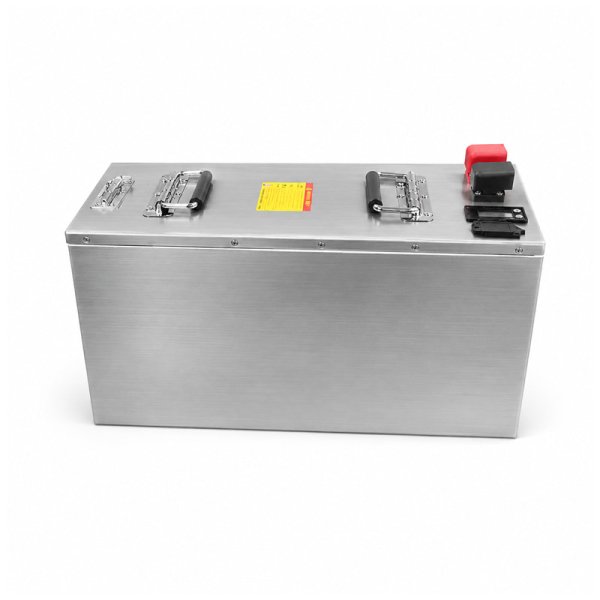
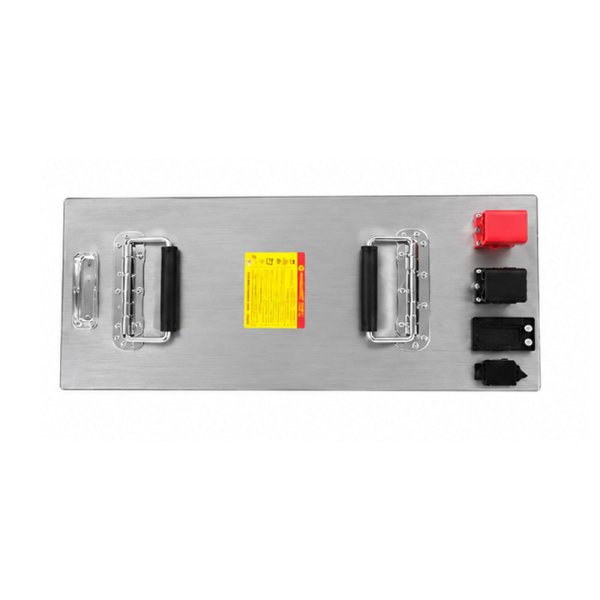
For a high-frequency delivery fleet, electric tricycle battery lifespan is not just a specification on a datasheet. It affects route completion, vehicle availability, replacement planning, maintenance labor, and the cost of every delivery. Cargo tricycles, commercial rickshaws, municipal utility vehicles, and other commercial three-wheelers often work under a combination of payload, stop-start traffic, heat, vibration, long operating hours, and repeated charging that is much harsher than a simple laboratory cycle test.
Fleet managers need more than a single number of years. The practical question is how long do electric tricycle batteries last while still delivering acceptable range, power, and reliability under the fleet’s own duty cycle. Heavy cargo, gradients, heat, and daily use can change that answer.
Improving electric tricycle battery lifespan requires a lifecycle approach. Battery chemistry matters, but so do usable capacity, depth of discharge, charge current, cell temperature, BMS calibration, mechanical integration, driver behavior, storage practice, and diagnostic discipline. The objective is to keep normal commercial stress within validated cell and pack limits.
What Determines Electric Tricycle Battery Lifespan in Commercial Fleets?
The first cause of premature aging is often a mismatch between the battery and the actual vehicle duty cycle. If daily energy demand is close to the pack’s usable capacity, the vehicle will repeatedly operate near its lower state-of-charge limit. If peak motor demand is close to the pack’s continuous current capability, high-current events will occur more often and internal heating will rise. Both conditions can shorten electric tricycle battery lifespan even when the battery is technically compatible with the vehicle. This operating match is central to long-term pack reliability.
Payload is another major variable. A heavier vehicle requires more traction energy during acceleration and climbing. In urban delivery work, the battery may experience hundreds of current transients each day. The resulting heat is not necessarily dangerous, but repeated elevated cell temperature can accelerate aging reactions and increase internal resistance over time.
B2B buyers defining voltage, capacity, current, BMS, dimensions, charging requirements, and operating environment can use FEBATT’s commercial power battery solutions as a framework for complete-system matching before finalizing a battery specification.
How Long Do Electric Tricycle Batteries Last Under Heavy Daily Use?
There is no universal service-life number that applies to every commercial pack. The answer to how long do electric tricycle batteries last depends on the cell chemistry, cell design, depth of discharge, average state of charge, temperature, charge and discharge rate, daily energy throughput, maintenance quality, and the capacity-retention threshold used to define end of life.
For lithium systems, suppliers should provide cycle-life data with test conditions rather than a headline number alone. A result measured at moderate depth of discharge, controlled temperature, and a low C-rate cannot automatically be applied to a delivery fleet that operates hot, carries heavy payloads, and uses nearly all available energy every day. The same principle applies to electric trike battery cycle life claims for lead-acid batteries.
Equivalent full cycles provide a more useful fleet metric than calendar age alone. Two partial discharge events can add up to roughly one equivalent full cycle, so tracking energy throughput helps buyers compare vehicles operating on different routes. Tracking equivalent cycles also makes electric tricycle battery lifespan easier to compare across vehicles.
The most credible way to estimate electric tricycle battery lifespan is therefore to combine verified supplier test data with the fleet’s measured duty cycle. Annual mileage, route energy consumption, payload, charging pattern, climate, and average depth of discharge should all be included.
Why Does LiFePO4 Often Support Longer Electric Trike Battery Cycle Life Than Lead Acid?
For high-frequency commercial operation, LiFePO4 is often attractive because it is well suited to repeated cycling and provides a stable discharge-voltage profile. Properly designed LiFePO4 systems can retain useful capacity over a large number of cycles under defined conditions, while conventional lead-acid batteries may experience more rapid capacity loss when repeatedly deep-cycled, undercharged, or operated at high temperature.
LiFePO4 does not remove the need for correct engineering. An undersized LiFePO4 battery that repeatedly reaches its current limit, operates at elevated temperature, or is driven to the lower BMS cutoff every day can also age prematurely. The practical advantage is greatest when the pack has adequate usable energy, appropriate current capability, suitable thermal margins, and a correctly configured BMS. These failure mechanisms explain why service life varies so widely between fleets.
For fleet buyers, electric tricycle battery lifespan should therefore be compared using complete-pack data and realistic operating conditions, not chemistry reputation alone.
How Does Repeated Deep Discharge Affect Electric Tricycle Battery Lifespan?
Repeated deep discharge increases the electrochemical range through which the cells must cycle. When a vehicle routinely returns with almost no usable charge remaining, the battery experiences a higher depth of discharge than a fleet that keeps a practical reserve. Over time, this can accelerate capacity fade and magnify differences between stronger and weaker cell groups. For intensive routes, electric tricycle battery lifespan improves when daily depletion is kept within the approved operating window.

The pack is limited by its weakest series cell group. As cells age at different rates, one group may reach the BMS low-voltage threshold first, causing an early shutdown while other groups still contain energy. This imbalance can reduce usable capacity and accelerate the decline in electric tricycle battery lifespan.
Fleet managers should avoid treating the BMS low-voltage cutoff as a normal daily target. A better approach is to size the pack around the actual route and maintain a reserve appropriate to the supplier’s recommended operating window. If vehicles consistently finish routes near cutoff, increasing usable capacity, changing route allocation, or using a planned mid-shift charge can be more economical than repeatedly extracting every available watt-hour.
Avoiding unnecessary full depletion does not mean that every fleet needs the same SOC limits. The correct operating window should come from the selected cell and pack specifications.
When Should Fleets Delay Charging After Heavy Cargo Operation?
After a long or heavily loaded route, the battery may be warmer than ambient temperature because current has flowed through cells, busbars, cables, connectors, and internal resistance. A compact battery compartment can retain that heat after the vehicle stops. Starting a high-current charge immediately can add further thermal load.
The decision should be based on measured battery temperature rather than an arbitrary waiting period. If cell temperature remains within the approved charging range, the system may permit charging immediately. If the pack is too hot, the BMS or charging procedure should reduce current or delay charging until temperature returns to an acceptable range. Temperature-aware charging is therefore a practical control for electric tricycle battery lifespan.
This temperature-based approach supports electric tricycle battery lifespan because it avoids unnecessary thermal stress without creating avoidable fleet downtime. It is especially important where many vehicles arrive together after a demanding delivery shift and charging infrastructure encourages operators to connect every vehicle at maximum available power.
How Do High Summer Temperatures Affect Commercial Rickshaw Battery Longevity?
Summer operation can expose a battery to several heat sources at once. Ambient temperature, solar loading, hot road surfaces, motor and controller heat, and battery-generated heat during acceleration can all raise pack temperature. The resulting thermal compounding is particularly relevant to commercial rickshaw battery longevity in regions with long hot seasons. Managing cumulative heat exposure is essential to electric tricycle battery lifespan in hot-climate fleets.
Elevated temperature generally accelerates aging reactions. Over time, increased side reactions can consume active lithium and contribute to rising internal resistance. Higher resistance then produces more heat under the same current, creating a feedback mechanism that can reduce electric tricycle battery lifespan if temperature remains poorly controlled.
Temperature limits are model-specific. Charging, discharging, and storage can have different approved ranges, so fleet procedures should use the actual battery specification rather than one universal temperature number.
What Maintenance SOPs Help Control Cell Imbalance in Commercial Packs?
Cell imbalance develops because cells and parallel groups do not age identically. Small differences in capacity, resistance, self-discharge, temperature exposure, and manufacturing variation can gradually increase over time. If the imbalance becomes persistent, the weakest group can reduce usable pack energy and shorten electric tricycle battery lifespan.
A useful maintenance SOP should include scheduled review of minimum and maximum cell voltage, cell-voltage delta at comparable SOC, temperature spread, charge throughput, recurring fault codes, and balancing behavior. Where supported by the battery system, internal resistance trends and state-of-health indicators can add context. Early imbalance detection helps protect electric tricycle battery lifespan before usable capacity falls sharply.

Trend analysis is more valuable than a single reading. A cell group that repeatedly becomes the highest-voltage group near full charge or the lowest-voltage group under load deserves attention, particularly if the deviation grows under comparable operating conditions. Connector and busbar inspection should also be part of the process because abnormal resistance outside the cells can create local heat and misleading voltage behavior.
How Does Aggressive Acceleration Reduce Electric Tricycle Battery Lifespan?
Rapid acceleration increases motor power demand and creates short-duration high-current pulses at the battery. A properly designed pack should handle its specified peak current, but repeated high-power events increase resistive heating and energy consumption. In a delivery route with frequent stops, the cumulative effect can become significant. Driving style is therefore a controllable input to electric tricycle battery lifespan.
Aggressive driving can also increase depth of discharge. A driver who repeatedly uses high acceleration may consume more energy to complete the same route, causing the vehicle to return with a lower state of charge. High current and deep cycling can then occur together, increasing the stress placed on electric tricycle battery lifespan.
Driver training is therefore a battery-management tool. Smooth acceleration, appropriate speed control, and avoiding unnecessary high-power events can reduce battery stress while preserving route productivity. Where telematics are available, fleets can compare high-current events with route, payload, driver, and battery-temperature data.

How Can BMS Diagnostics Identify Degradation Before a Pack Shutdown?
Modern diagnostics can reveal deterioration before a vehicle experiences a complete battery-related shutdown. For large fleets, this is important because an unplanned failure can interrupt deliveries, strand cargo, and create additional service labor.
Useful BMS and fleet data can include cell voltage, voltage delta, temperature, temperature spread, pack current, SOC, estimated SOH, energy throughput, balancing events, and fault history. The most valuable information is often the pattern rather than the absolute value. A cell group that consistently reaches low voltage earlier than its neighbors, or repeatedly runs hotter under similar current, may require investigation. Trend-based diagnostics can extend electric tricycle battery lifespan by enabling earlier intervention.
Voltage sag under acceleration is another useful indicator. If a module or cell group shows increasing voltage drop under a comparable load and then rebounds strongly when the load is removed, the trend can suggest rising resistance. Automated alerts can flag these patterns before they cause a route failure.
How Should Fleets Store Batteries During Off-Season or Low-Use Periods?
Seasonal downtime still contributes to battery aging. Cells continue to self-discharge and undergo calendar aging, while the BMS and connected vehicle electronics may consume a small amount of energy. A battery that is parked for months without inspection can eventually fall outside its recommended storage state of charge. Storage discipline is part of electric tricycle battery lifespan even when the vehicle is not operating.
To protect electric tricycle battery lifespan, the pack should be stored at the supplier-recommended SOC rather than automatically left completely full or nearly empty. There is no single storage percentage that is correct for every battery. The correct target and inspection interval depend on the specific cell and pack design.
The storage area should be dry, appropriately ventilated, and protected from direct solar heating, moisture, corrosive contaminants, and unnecessary electrical loads. Periodic checks should include SOC or pack voltage, BMS status, visible condition, connector condition, and any evidence of abnormal self-discharge.
How Should B2B Buyers Compare Lifecycle Cost Instead of Advertised Battery Life?
A battery with a lower purchase price does not necessarily deliver the lowest cost per delivery. B2B buyers should consider acquisition cost together with usable energy, expected equivalent full cycles, replacement frequency, maintenance labor, charging efficiency, downtime, diagnostic capability, and the cost of keeping spare vehicles or packs available. TCO analysis gives electric tricycle battery lifespan a direct commercial meaning.
Electric trike battery cycle life should therefore be translated into a business metric. If a battery provides more cycles but is undersized and causes repeated route interruption, its theoretical cycle advantage may not create economic value. Conversely, a larger pack that operates at a lower average depth of discharge may cost more initially but reduce wear and improve vehicle availability.
This approach keeps electric tricycle battery lifespan connected to the factors that matter commercially: predictable range, uptime, maintenance workload, and replacement planning.
What Should Buyers Verify Before Selecting an Electric Tricycle Battery?
Before approving a battery for a new vehicle or replacement program, buyers should verify the complete system requirements. Start with nominal and maximum voltage, usable energy, continuous and peak current, charger output, cell chemistry, BMS limits, and the vehicle controller’s acceptable voltage range.
Mechanical checks should include dimensions, mounting points, enclosure strength, vibration exposure, sealing, cable routing, connector type, service access, and vehicle weight distribution. Thermal requirements should cover the expected operating, charging, and storage environment rather than a single room-temperature specification.
For projects where electric tricycle battery lifespan is a procurement priority, request cycle-life test conditions, temperature limits, charge and discharge curves, BMS monitoring functions, balancing strategy, diagnostic access, and relevant product and transport documentation for the target market.
The best commercial battery is the pack whose electrical, thermal, mechanical, and operational limits match the fleet’s actual routes and workload.
FAQ About Electric Tricycle Battery Lifespan
1.How Long Will a Lithium Electric Tricycle Battery Last Under Heavy Daily Use?
There is no universal number of years or cycles for an electric tricycle battery. Service life depends on chemistry, depth of discharge, charge and discharge rate, temperature, daily energy throughput, payload, pack sizing, BMS control, and the capacity-retention threshold used to define end of life. To estimate how long do electric tricycle batteries last, B2B fleets should compare supplier cycle data under defined test conditions with their own measured duty cycle.
2.Why Can Lead-Acid Tricycle Batteries Fail Prematurely in Heavy-Duty Fleets?
Lead-acid tricycle batteries can fail prematurely when heavy deep cycling, chronic undercharging, high temperature, vibration, high-current operation, or poor maintenance occur repeatedly. The actual service life varies widely, so fleets should diagnose the failure mode instead of assuming a fixed number of months.
3.Does Fast Charging Every Day Reduce Electric Tricycle Battery Lifespan?
Frequent high-rate charging can accelerate aging if it raises cell temperature or exceeds the battery’s validated charging conditions. The effect depends on cell design, SOC, temperature, charger current, cooling, and BMS limits. Fast charging is not automatically harmful when the pack and charger are engineered and validated for that charge rate.
4.How Can Fleets Tell When an Electric Tricycle Battery Is Degrading?
Common signs include declining range under comparable routes, greater voltage sag under acceleration, earlier low-SOC shutdown, recurring BMS faults, increasing cell-voltage spread, abnormal temperature behavior, or a measurable decline in capacity during controlled testing. Physical swelling, damage, leakage, unusual odor, or excessive heat should trigger immediate removal from normal service and technical inspection.
5.What Temperature Range Should Electric Tricycle Batteries Operate Within?
There is no universal ideal temperature range for every electric tricycle battery. Fleets should follow the approved charging, discharging, and storage limits for the actual cell and pack. Charging limits can be narrower than discharge limits, and the BMS should restrict operation when temperature is outside validated thresholds.
Conclusion
Maximizing electric tricycle battery lifespan requires more than choosing a battery with an attractive cycle-life number. Commercial longevity is created by the interaction of chemistry, usable energy, payload, driver behavior, charging strategy, temperature, BMS protection, maintenance discipline, and storage practice.
LiFePO4 can be a strong fit for high-frequency delivery tricycles because its cycling characteristics and stable discharge behavior can support demanding duty cycles when the pack is correctly sized and managed. Yet even a high-quality lithium system will age prematurely if it is repeatedly depleted to its lower limit, operated hot, charged outside approved conditions, or allowed to develop persistent cell imbalance.
For fleet managers, the most effective strategy is preventive. Maintain a practical SOC reserve, monitor cell-level trends, manage temperature, match charge current to the battery specification, train drivers to reduce avoidable high-current stress, and use diagnostics to investigate emerging abnormalities before they become route failures.
When these controls are integrated into one lifecycle program, electric tricycle battery lifespan becomes more predictable. That allows B2B operators to reduce premature replacement, improve vehicle availability, and build a more reliable basis for long-term commercial rickshaw battery longevity.