For commercial electric fleets, the useful question is not simply “How many years will this battery last?” A pack can still switch on while usable energy, power reserve, hill-climbing ability, or route margin has already declined. Battery state of health gives B2B operators a better way to judge whether a lithium pack can still do the work it was purchased to do.
Battery state of health, often shortened to SOH, describes a battery’s present ability to store and deliver energy compared with its condition when new. For electric tricycles, motorcycles, golf carts, sightseeing vehicles, forklifts, and other motive applications, that makes SOH an asset-management metric rather than a consumer-style battery percentage.
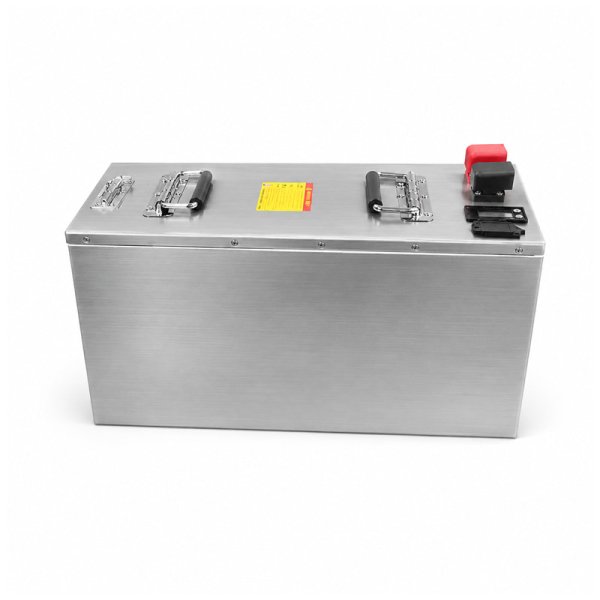
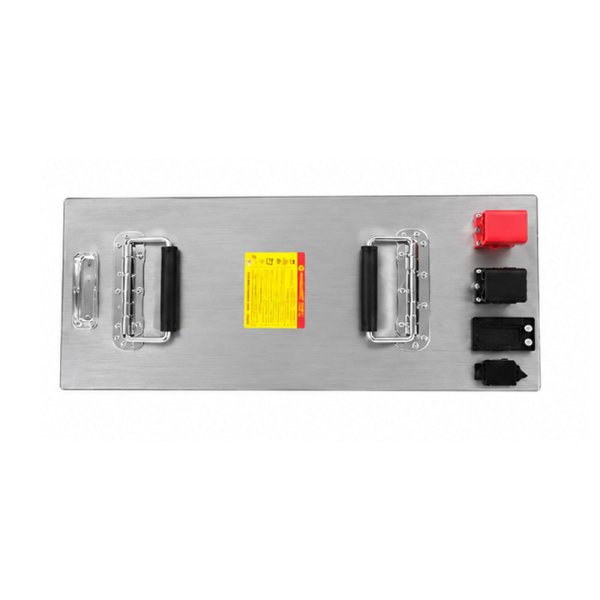
For high-utilization fleets, LiFePO4 is often a strong chemistry to evaluate because its thermal stability and cycling characteristics suit repeated commercial use when the pack is correctly sized and managed. This power battery solution follows the same application-first logic by matching capacity, current, installation, BMS, environment, and charging requirements before a pack is finalized.
What Does Battery State of Health Mean for a Commercial Fleet?
Battery state of health is different from state of charge. State of charge tells an operator how much energy is available now. Battery state of health tells the fleet how much capability the battery has retained relative to its reference condition.
A common capacity-based SOH estimate is:
Battery SOH (%) = current maximum usable capacity ÷ reference capacity × 100
Capacity is only part of the picture. A battery may retain acceptable energy while showing greater voltage sag, higher resistance, abnormal temperature behavior, or weaker peak-power delivery. Analog Devices describes SOH as a measure of a battery’s ability to store and deliver electrical energy compared with a new battery.
For fleet decisions, battery state of health should therefore be read together with power capability and operating evidence. Procurement teams should also ask what the supplier’s reported SOH value actually represents.
Why Is Battery State of Health More Useful Than Calendar Age?
Two batteries installed on the same date can age differently if one runs a light route while the other carries heavy payloads, climbs grades, operates in heat, and uses most of its available energy every shift.
The U.S. Department of Energy notes that lithium-ion capacity and power fade depend on cycling, time, temperature, chemistry, operating profile, and ambient conditions. That is why battery state of health is more useful than a fixed promise such as “five years.”

For cargo tricycle operators, the practical question is whether the pack still finishes the route with the required payload and reserve. This electric tricycle battery lifespan guide explains how payload, depth of discharge, temperature, current demand, charging, and vibration affect real fleet life.
Which Signals Should Fleets Track Alongside Battery State of Health?
A single battery state of health percentage becomes more useful when it is supported by repeatable operating data.
| Fleet indicator | What it tells the B2B operator |
|---|---|
| Usable capacity | Whether the pack still delivers enough energy for the assigned route or shift |
| Voltage sag under load | Whether power delivery is weakening during acceleration, lifting, or climbing |
| Cell-voltage spread | Whether one series group is becoming a limiting weak point |
| Battery temperature | Whether heat exposure or current demand is creating repeated stress |
| BMS faults | Whether the system is approaching current, voltage, or temperature limits |
| Route reserve | Whether the battery completes the job with an acceptable margin |
TI notes that battery-monitoring systems commonly measure current, pack and cell voltage, and cell temperature to support SOC and SOH estimation. Trend these signals under comparable routes instead of reacting to one isolated reading.
What Causes Battery State of Health to Decline Faster?
Four practical factors matter most in commercial use: cell and pack quality, BMS protection, operating load, and charging or storage practice. Battery state of health declines faster when the pack spends too much of its life near electrical or thermal limits.
Heavy payloads and gradients increase sustained current. Stop-start work creates repeated peaks. High cell temperature accelerates aging reactions. Repeated deep cycling consumes more of the operating window, while unsuitable storage adds calendar aging. An undersized pack can make several stresses occur together.

This is why LiFePO4 should be selected as part of a complete system rather than by chemistry name alone. A correctly sized LiFePO4 pack with suitable BMS limits, connectors, enclosure, thermal margin, and charger matching is a stronger starting point for high-cycle B2B duty than a low-cost pack that is routinely pushed to its limits.
How Should Fleets Interpret Battery State of Health in Operation?
Battery state of health should be treated as a trend, not a one-day pass/fail reading. Build a baseline when packs are commissioned, then compare similar vehicles by route, payload, temperature, energy throughput, and charging pattern.
If battery state of health declines faster in one vehicle than in the rest of the fleet, investigate the system before assuming the cells are defective. Possible causes include heavier grades, abnormal current demand, connector resistance, restricted cooling, unsuitable charger settings, or an undersized pack.
A scheduled battery health check can validate the trend with usable-capacity testing, voltage behavior under load, temperature, cell-group balance, and BMS history.
When Should Battery State of Health Trigger Replacement?
There is no universal replacement percentage for every motive battery. NREL literature often uses roughly 70% to 80% of original capacity as a vehicle-battery end-of-life reference, while recent Sandia work notes that 80% is a common reference point rather than a universal technical boundary.

For a commercial fleet, the threshold should be tied to the job. A pack at 85% battery state of health may already be unsuitable if a loaded route now ends with almost no reserve. Another pack with lower capacity retention may still work on a shorter, lighter assignment if power, temperature, and safety remain acceptable.
The B2B decision is therefore to keep, rotate, investigate, or replace a pack when battery state of health no longer supports the required route, payload, shift, or safety margin.
Why Is LiFePO4 a Strong Choice for Battery State of Health Management?
LiFePO4 does not make degradation disappear, but it is well suited to commercial motive applications where repeated cycling, thermal stability, and predictable service matter. NREL has described LiFePO4 cathode chemistry as having strong thermal and overcharge stability relative to common lithium-ion cathode chemistries.
The advantage is strongest when the battery is correctly engineered for the duty cycle. A high-quality LiFePO4 pack with adequate energy reserve and current margin can help a fleet maintain battery state of health more predictably than a poorly matched pack that is routinely overheated, deeply depleted, or driven into protection limits.
Do not turn chemistry into a fixed life promise. Battery state of health still depends on cell quality, pack design, temperature, depth of discharge, current, storage, BMS calibration, and vehicle integration.
What Should B2B Buyers Specify Before Ordering?
Battery state of health should be part of the RFQ before deployment. Ask the supplier to define reference capacity, the SOH estimation method, the end-of-life criterion used in cycle testing, test temperature and depth of discharge, and which BMS data can be exported.
Also specify vehicle type, payload, gradients, daily operating hours, continuous and peak current, usable energy, charging windows, installation space, ambient temperature, communication, warranty terms, sample quantity, and annual volume. These inputs define what “healthy enough” means for the business.
For a practical inspection workflow, this battery health check guide shows how capacity retention, route completion, voltage sag, temperature, BMS events, and required power can be reviewed together. Sample validation should be completed under representative load before bulk production.
Conclusion
Battery state of health gives electric tricycle fleets a better replacement-planning tool than calendar age alone. It connects degradation with route completion, payload capability, thermal behavior, uptime, and maintenance planning.
For high-use cargo and utility tricycles, LiFePO4 is often a strong starting point, but long-term battery state of health still depends on correct sizing, pack quality, BMS protection, charging, temperature, and validation. Track it early and plan replacement before the pack becomes an operational problem.
Frequently Asked Questions About Battery State of Health
Q: What is battery state of health?
A: Battery state of health estimates how much energy-storage and power-delivery capability a battery retains compared with its reference condition when new. Fleets should read it together with route performance and BMS data.
Q: How is battery state of health calculated?
A: A common capacity-based approach compares current maximum usable capacity with reference capacity. More advanced BMS algorithms can also use voltage, current, temperature, resistance, cycling history, and battery models.
Q: What is a good battery state of health?
A: There is no single percentage for every application. A good battery state of health is one that still supports the required route, payload, power, reserve, and safety margins.
Q: What is the difference between battery state of health and state of charge?
A: State of charge indicates how much energy is available now. Battery state of health describes how much capability the battery has retained as it ages.
Q: At what battery state of health should a lithium battery be replaced?
A: A 70% to 80% remaining-capacity range is commonly used as a vehicle end-of-life reference, but it is not a universal rule. Replace or reassign the pack when actual energy, power, reserve, temperature, or safety performance no longer meets the duty.