A robot’s battery may cost much less than its motors and control system, but a failed robot battery pack can interrupt an entire warehouse, delivery, or cleaning operation. According to the International Federation of Robotics, 117,500 transportation and logistics service robots were sold worldwide in 2025, representing 47% of professional service robot sales. For OEM buyers, the real issue is not simply robot battery pack price, but its impact on deliveries and uptime.

Why Can a Low-Cost Robot Battery Pack Cause Expensive Fleet Downtime?
A robot battery pack failure rarely ends with the cost of a replacement. The fleet operator may lose completed missions, while the OEM pays for diagnostics, technician visits, return shipping, and warranty administration. Even short shutdowns disrupt scheduled work.
Consider a hypothetical 100-robot fleet: just 30 minutes of battery-related disruption per unit adds up to 50 robot-hours of lost availability. This is an illustration, not an industry failure statistic.
Procurement teams should compare total delivered cost—not just the lowest unit quote. This guide to comparing B2B lithium battery quotations explains why engineering, testing, packaging, and warranty scope can change the final price.
Where Can Robot Battery Pack Problems Delay Mass Production?
A prototype may pass bench tests yet expose problems during pilot-fleet operation. Different shifts, payloads, and controllers may expose overlooked integration issues.
The costly scenario is a late change: an unsuitable connector, inconsistent production batch, or unexpected BMS message forces retesting after an OEM has committed to a launch date. A custom robot battery pack should therefore be approved against real missions and production-intent hardware, not an idealized specification alone.

During pilot approval, OEMs should verify BMS communication with the robot controller, continuous and peak-current capability, voltage stability under load, and protection responses during abnormal operation. Testing should also confirm that approved connectors, firmware, and battery configurations remain consistent before production release.
For multi-site deployments, define who approves revisions, who owns the test evidence, and how quickly replacements can reach field technicians. These decisions protect delivery schedules.
Why Choose a Lithium Robot Battery Pack for Commercial Fleets?
For many AGV/AMR and service-robot fleets, a properly engineered lithium robot battery pack offers practical advantages: compact energy storage, BMS-based monitoring, and less routine battery maintenance than traditional flooded lead-acid systems. LiFePO4 is often attractive where long service life and predictable daily operation matter, provided the pack meets the application profile.
Lithium is not an automatic guarantee of uptime. A robot battery pack must still handle actual loads, temperature limits, communication requirements, and the fleet’s operating schedule.

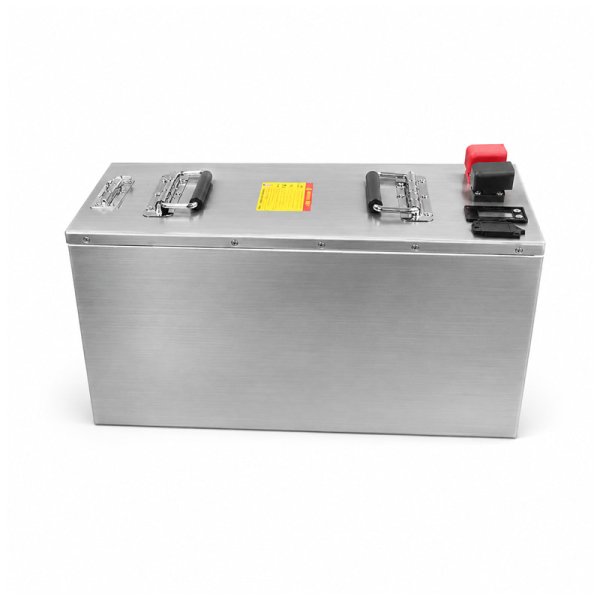
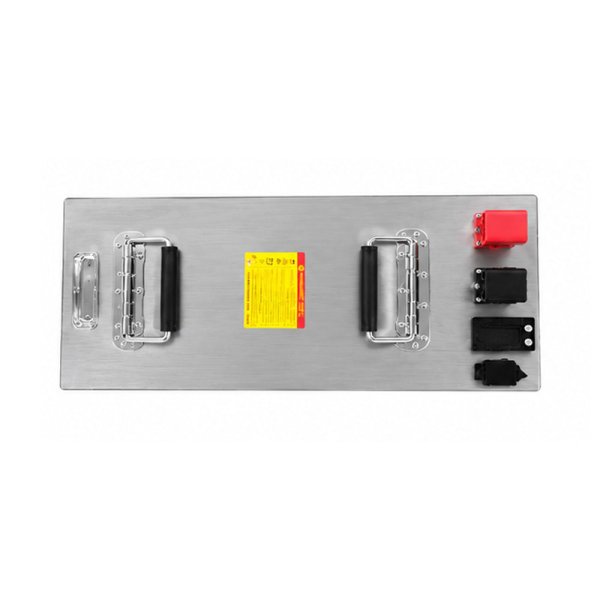
For a concrete product reference, FEBATT lists a lithium battery for logistics robots with 4.8 kWh nominal energy and RS485 communication. These published specifications do not guarantee fleet runtime.
How Can Export Requirements Disrupt a Robot Battery Pack Order?
A production-ready robot battery pack can still face shipping delays when required transport documents or market-specific evidence are missing. Lithium battery transport commonly involves UN 38.3 test documentation, while finished-robot safety and market-access requirements depend on the destination and application.
Before confirming a delivery date, specify the shipping configuration, importing country, responsible documentation owner, and any testing needed for the final equipment. The overview of UN 38.3 battery transport testing provides additional context.
Treat compliance as a milestone, not last-minute paperwork. A robot battery pack manufacturer should clarify exactly which documents it can supply.
How Can OEMs Reduce Robot Battery Pack Project Risks?
Ask suppliers to price the same acceptance scope and allocate responsibility before issuing a volume purchase order. For each robot battery pack program, document:
| Project checkpoint | What the OEM should confirm |
|---|---|
| Fleet operation | Loaded mission tests and acceptable downtime |
| Production release | Approved samples, revision control, and batch traceability |
| Commercial terms | Tooling, rework, warranty, and spare-pack responsibilities |
| International delivery | Required test records, shipping documents, and deadlines |
This power battery solutions for B2B applications cover OEM/ODM customization, BMS matching, application assessment, and bulk supply. Share actual duty cycles and deployment quantities so a proposed robot battery pack can be assessed against the project rather than a generic specification.
Frequently Asked Questions About Robot Battery Procurement
Q: How Much Does a Custom Robot Battery Pack Cost for OEM Orders?
A: There is no universal robot battery pack price. Chemistry, enclosure, BMS integration, tooling, verification, annual volume, and warranty scope all matter. Request separate prototype, pilot, and volume quotations to distinguish engineering expenses from unit costs.
Q: Is a Lithium Robot Battery Pack Better Than Lead-Acid for Fleets?
A: Often, yes, for mobile robots requiring compact power, BMS visibility, and low routine maintenance. However, the right robot battery pack depends on payload, shift pattern, temperature, and system design. Validate usable energy and lifetime cost under operating conditions before choosing the chemistry.
Q: How Long Should a Robot Battery Pack Last in Industrial Service?
A: There is no reliable universal service-life figure. Cycle depth, temperature, mission load, charging strategy, and maintenance practices affect results. Request the supplier’s test conditions and warranty terms, then translate the expected service life into your fleet’s actual working shifts.
Q: What Certifications Does a Robot Battery Pack Need for Export?
A: Requirements vary by shipment method, destination, and end-use equipment. UN 38.3 relates to lithium battery transport testing; it does not replace all applicable product-safety or regulatory assessments. Confirm the necessary documentation with your supplier and compliance team before production release.
Q: What Should OEMs Ask a Robot Battery Pack Manufacturer Before Bulk Ordering?
A: Provide robot type, fleet size, measured workload, operating environment, required interfaces, deployment market, and delivery schedule. Request production-intent samples, acceptance records, change-notification rules, lead-time commitments, and a documented warranty-response process. These terms reduce deployment surprises.
Ready to Plan a More Reliable Robot Battery Pack Program?
For AGV/AMR, logistics, and service-robot projects, FEBATT can discuss lithium battery customization against your operational requirements. Send your application, anticipated order quantity, fleet duty cycle, and target market to explore a suitable OEM solution.