A trolling motor may pass a showroom demonstration yet fail halfway through a survey run or fishing charter. Sustained thrust, weather, and repeated use expose battery weaknesses.
For boatbuilders and fleet operators, a lithium trolling motor battery system should be approved against the actual vessel mission, not merely its nominal voltage or advertised capacity. Before ordering, verify duty cycle, motor current, battery architecture, charging, marine exposure, safety documentation, and pilot performance.
Which Fleet Duty Cycles Must a Trolling Motor Battery Support?
Start with the mission. Fishing charters need predictable availability; research boats hold position while instruments operate; patrol tenders face sudden high-thrust maneuvers. Each places different energy, power, and reliability demands on the battery system.
Record thrust settings, payload, conditions, temperature, and minimum return-to-base reserve. Obtain the motor’s current demand under realistic loads. A lithium battery for trolling motor procurement decision based solely on nominal capacity overlooks what happens in adverse conditions.
Use a conservative energy budget:
Required usable energy (Wh) = average measured electrical load (W) × mission hours + agreed reserve (Wh).
For example, if measured battery-side power consumption averages 300 W over five hours, the mission requires approximately 1.5 kWh before adding operating reserves and allowances for aging or temperature-related capacity loss. This is an illustrative calculation, not a forecast for every boat. When specifying a lithium battery for trolling motor fleets, validate the estimate against logged voyages rather than marketing runtime claims.
This marine battery pack specification guide explains wider vessel-system requirements; trolling-motor approval still requires application-specific logs.

How Can OEMs Verify Motor Current, BMS Protection, and End-of-Shift Reserve?
A battery with adequate energy can still shut down if its battery management system (BMS) trips during a thrust spike. Specify continuous and peak current, trip thresholds, recovery logic, and low-charge behavior. The battery system needs predictable warnings, power limits, and shutdown behavior that the crew understands.
The motor model matters. Minn Kota’s published wiring and battery guide, for example, lists 56 A maximum draw for certain 80-lb-thrust models, while noting that maximum values may occur intermittently. This is a model-specific reference, not a universal design target. Verify the motor’s actual requirements before rating a lithium battery for trolling motor pack.
Qualification should reproduce three cases: normal station keeping, maximum-demand maneuvering, and operation close to the specified reserve. Log voltage sag, temperature, BMS alarms, and motor-controller reactions. Confirm that a lithium battery for trolling motor system does not suffer nuisance trips, uncontrolled restarts, or loss of steering functions when power is limited.

For each lithium battery for trolling motor model, define low-energy warnings, shutdown sequences, and crew recovery procedures. Such details matter more than a headline cycle-life claim.
Which Battery Architecture Makes Fleet Installation and Servicing Easier?
A 12V, 24V, or 36V platform is a compatibility requirement, not the starting point for fleet procurement. First identify motor variants, battery compartments, replacement procedures, and fleet configurations. Only then select the lithium battery for trolling motor architecture, with serviceability as an acceptance criterion.
| Architecture | Potential advantage | OEM validation priority |
|---|---|---|
| Single correctly rated pack | Fewer inter-pack connections and simpler replacement inventory | Handling weight, mounting, service access, fault isolation |
| Multiple 12V packs in an approved series bank | Modular replacement and possible reuse of existing spaces | Explicit series authorization, matched packs, bank-level fault behavior |
| Dedicated packs for different vessel classes | More precise mission matching | Spare-parts complexity and technician training |
A single battery pack simplifies wiring but is not inherently safer. Modular banks improve access yet add terminals and imbalance risks. Never assume ordinary 12V lithium units permit series connection; the battery manufacturer must expressly approve the arrangement.
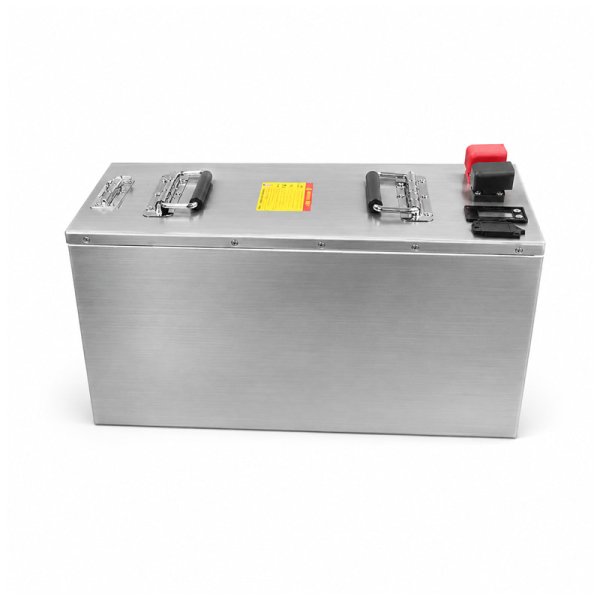
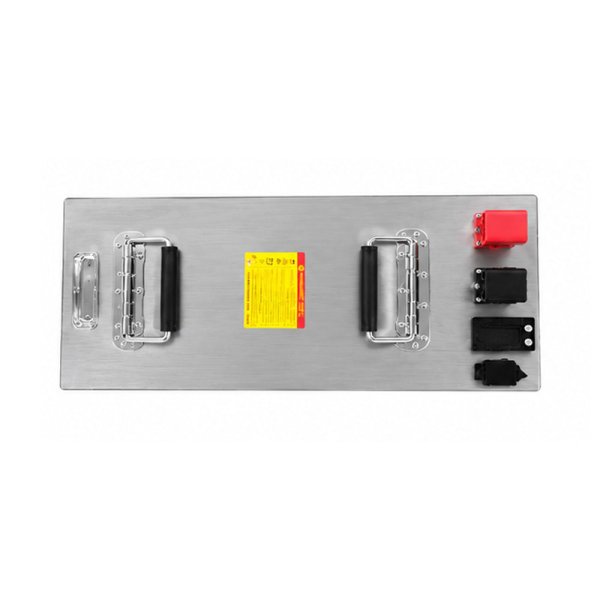
For a practical integration reference, FEBATT lists a 24V 100Ah trolling motor battery with 2.56 kWh nominal energy. However, voltage and capacity alone do not establish motor compatibility. OEM buyers should verify the specific pack’s continuous and peak discharge-current ratings, BMS protection limits, charger requirements, and installation conditions before approving it for a vessel program.
How Should OEMs Prevent Charger and Battery-Bank Compatibility Failures?
A matching plug does not establish charger compatibility. Compare charging stages, voltage, current, temperature limits, and termination with the supplier’s written specification. A lithium battery for trolling motor conversion often fails at the charger interface rather than during discharge.
For series-connected packs, verify whether independent, electrically isolated charger outputs are required and supported. Do not connect a multi-bank charger, alternator-driven device, or DC-DC converter without confirming the intended battery-bank topology. Check how the lithium battery for trolling motor BMS reacts to cold-charge inhibition or one pack reaching a protection threshold first.
Commissioning tests should cover:
- Correct charge voltage and termination under normal conditions.
- Cold-temperature charge inhibition and restart behavior.
- Power interruption, charger faults, and recovery without operator improvisation.
- Bank balance and fault isolation after repeated operating cycles.
For fleet standardization, document approved charger models and firmware or setting revisions alongside the lithium battery for trolling motor specification. Record whether the lithium battery for trolling motor bank shares circuits with house loads; shared wiring can affect protection and charging. A later charger substitution can invalidate pilot tests.
What Marine Exposure and Service Conditions Must the Installation Withstand?
Salt spray, bilge condensation, impacts, and vibration challenge marine installations. The relevant question is not whether a catalog calls a lithium battery for trolling motor product “marine grade,” but whether the installed assembly survives the specific vessel environment.
Verify ingress protection at connectors and cable entries, mounting, strain relief, corrosion resistance, and inspection clearances. Confirm the battery location will not trap water, obstruct emergency access, or create avoidable heat accumulation. A lithium battery for trolling motor installation used by seasonal charter operators also needs procedures for prolonged storage, reactivation, and damaged-pack isolation.
Pilot trials should assess vibration, appropriate salt exposure, and wet-weather operation under controlled conditions. Log faults by vessel and serial number. This turns the lithium battery for trolling motor program into a maintainable fleet asset rather than a collection of loosely specified replacements.
A standard lithium battery for trolling motor service checklist—labels, diagnostics, and spare-unit identifiers—reduces errors across mixed fleets.

Which Marine Standards and Documents Should Buyers Review?
No single certification proves that every lithium battery for trolling motor installation is fit for every boat. Applicability depends on vessel category, market, size of the battery system, and whether the motor is an auxiliary or safety-critical means of propulsion.
For relevant small-craft projects, review ABYC E-13, E-11, and A-31 (lithium batteries, electrical installations, and chargers). ISO 23625:2025 addresses lithium-ion system selection and installation above 500 Wh on small craft. IEC 62619:2022 provides industrial lithium-battery safety requirements, including marine-related applications. UN 38.3 concerns shipping test evidence, not vessel installation approval.
For each lithium battery for trolling motor configuration, demand reports identifying the exact revision. A lithium battery for trolling motor project should have controlled drawings, BMS specifications, test results, wiring instructions, and serial-level traceability. Agree any applicable authority or class requirements before sample approval.
For every lithium battery for trolling motor variant, track requirement → standard → evidence → owner → acceptance status, rather than accepting generic certification claims.
What Should a B2B Trolling Motor Battery RFQ and Pilot Trial Include?
A useful RFQ exposes assumptions about the lithium battery for trolling motor program. Send each bidder the same vessel profile, motor model, installation drawings, charger details, and operating temperature range. Request a configuration-specific response rather than a generic catalog quotation.
Minimum RFQ package:
- Mission and fleet scale: vessel classes, usage hours, duty curves, reserve policy, pilot quantity, and annual demand.
- Electrical interface: motor current envelope, usable energy, BMS fault logic, connectors, protection devices, and charger specifications.
- Marine integration: compartment drawings, mounting, ingress conditions, cable routing, and access for technicians.
- Evidence and supply: applicable reports, factory acceptance criteria, traceability, warranty, spare units, and change-control commitments.
Qualify the supplier through engineering review, actual motor-and-charger bench tests, vessel trials, and a controlled pilot batch. Measure mission completion, reserve at return, charging turnaround, alarms, and field-service time. A lithium battery for trolling motor design should not enter fleet-wide orders until pre-agreed pass/fail thresholds are met.
For supplier due diligence, see how marine OEMs evaluate battery manufacturers before fleet deployment. Include engineering sign-off, change control, and after-sales responsibilities in purchasing approval.
FAQ About Lithium Battery for Trolling Motor Projects
Q: Can a lithium battery be used with any trolling motor?
A: Not automatically. A lithium battery for trolling motor installation must match the motor’s operating voltage, current demand, and manufacturer guidance. Check BMS behavior and the approved wiring arrangement before deployment.
Q: Can a 24V trolling motor use two 12V lithium batteries?
A: Yes, if the lithium battery for trolling motor units are expressly approved for series operation and suitably matched. Validate bank charging, protection coordination, cable sizing, and the motor’s full load range.
Q: Is a single 36V lithium battery better than three 12V batteries?
A: Neither arrangement is universally better. A single lithium battery for trolling motor system reduces connections; three approved series packs may improve modularity. Test handling, service access, and failure response.
Q: What BMS current rating is required for a trolling motor?
A: There is no universal rating. Specify continuous output for the motor’s measured demand, plus validated transient capability. The lithium battery for trolling motor BMS must not nuisance-trip during intended maneuvers.
Q: Can an existing onboard charger charge a lithium trolling motor battery?
A: Only when its charge profile, voltage limit, current, and temperature controls match the battery maker’s specifications. Verify independent bank outputs and fault recovery if multiple packs are connected.
Q: What should boat builders test before bulk ordering trolling motor batteries?
A: Test representative runtime, peak thrust, BMS shutdown, charger interoperability, wet-weather installation, and service access. Approve the lithium battery for trolling motor design only after documented vessel trials.
Bring Your Trolling Motor Fleet Specification to FEBATT
Explore FEBATT’s power battery solutions for OEM marine applications for project-specific integration. Share your motor models, vessel duty logs, mounting drawings, existing chargers, target market, and expected quantities. A lithium battery for trolling motor proposal should begin with a verifiable fleet specification—and end with a testable supply agreement.