Lithium-ion battery self-discharge testing is an important quality-control process for industrial power cells, forklift battery packs, logistics fleets, and large-scale energy storage systems. A lithium-ion battery may look stable when it leaves the production line, but if the internal self-discharge rate is too high, the cell can lose voltage during storage, reduce usable capacity, create imbalance in a multi-cell pack, and shorten the practical service life of the final battery system.
Battery self-discharge refers to the spontaneous loss of charge when a cell rests without external load. In a single cell, abnormal self-discharge may appear as faster voltage drop, higher leakage current, or poor storage retention. In an industrial battery pack, one abnormal cell can affect the entire system. This is why lithium-ion battery self-discharge testing is useful not only for cell manufacturers, but also for B2B buyers evaluating forklift battery quality, BMS protection, long-term storage safety, and pack consistency.
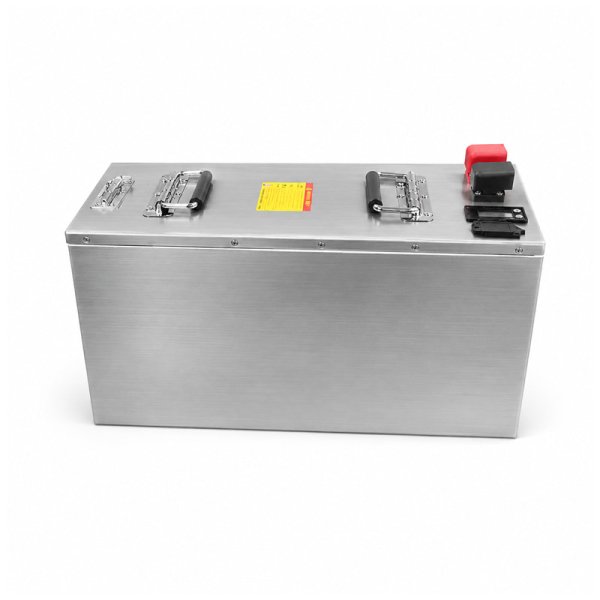
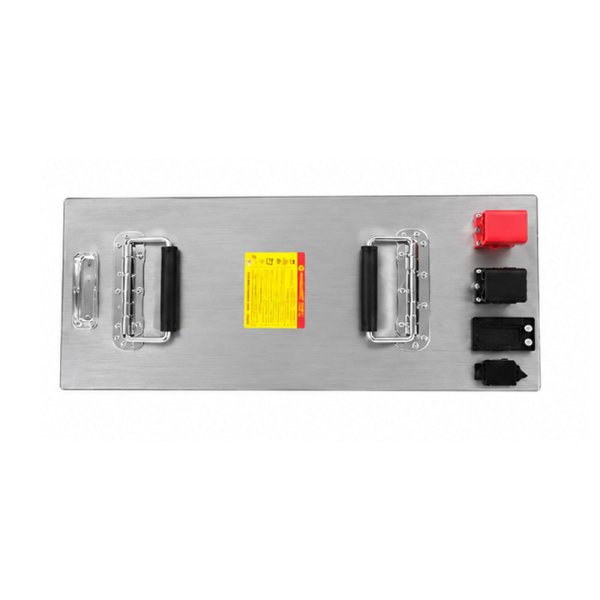
This guide explains the mechanism of self-discharge, the limitations of traditional OCV testing, the value of high-precision leakage current measurement, and the practical meaning of authentic experimental data. It also explains how lithium-ion battery self-discharge testing supports pack-level reliability for industrial applications such as forklift batteries. For B2B buyers evaluating industrial forklift battery reliability, FEBATT’s 48V 120Ah Forklift Battery can be used as a practical reference for pack-level capacity, BMS protection, charging compatibility, and cell consistency.
What Causes Lithium-Ion Batteries to Self-Discharge?
To understand lithium-ion battery self-discharge testing, it is necessary to identify the main causes of self-discharge. In engineering practice, self-discharge is usually divided into two categories: physical self-discharge and chemical self-discharge.
Physical self-discharge usually comes from internal structural defects. These may include microscopic metallic impurities, electrode burrs, local separator damage, or mechanical stress caused during cell manufacturing and cycling. These defects can create internal micro-short circuits, allowing small internal currents to flow through unintended paths. In the early stage, some capacity loss caused by physical self-discharge may be partly recoverable after normal charging. However, if micro-short circuits are not detected, they can develop into more serious internal faults and safety risks.
Chemical self-discharge is caused by side reactions inside the cell. These reactions may involve electrolyte oxidation, SEI layer decomposition and regeneration, direct corrosion of electrodes, current collector reactions, or consumption of active lithium ions. Compared with some physical self-discharge effects, chemical self-discharge often causes irreversible capacity loss because active materials are consumed during the reaction.
Lithium-ion battery self-discharge testing helps engineers separate normal storage behavior from abnormal cell behavior. This is important because abnormal self-discharge can reduce inventory quality, weaken battery consistency, and create downstream problems after pack assembly.
Physical Self-Discharge and Micro-Short Circuit Risk
Physical self-discharge is closely related to manufacturing consistency. In a high-quality cell, the separator should isolate the positive and negative electrodes while allowing lithium ions to move safely through the electrolyte. If metallic particles, burrs, or separator defects exist inside the cell, tiny current paths may form between electrodes.
These internal leakage paths may not cause immediate failure during basic voltage inspection. A cell can pass a simple OCV check and still show abnormal behavior after storage. This is one reason lithium-ion battery self-discharge testing is necessary for high-value industrial cells. By measuring leakage current or long-term voltage retention, engineers can identify cells that may have hidden internal defects.
For battery packs used in forklifts, AGV systems, industrial vehicles, and energy storage units, physical self-discharge is especially important. A hidden micro-short can create cell imbalance, increase heat generation, and reduce pack safety. If the weak cell reaches a voltage limit earlier than others, the BMS may shut down the entire pack even when other cells still have usable energy.
Chemical Self-Discharge and Side Reaction Mechanism
Chemical self-discharge is driven by internal electrochemical side reactions. Even when a battery is not connected to a load, the materials inside the cell remain chemically active. Electrolyte decomposition, SEI layer repair, transition metal dissolution, and lithium-ion consumption can gradually reduce available capacity.
This type of self-discharge is usually affected by temperature, SOC, cell chemistry, electrolyte formulation, electrode material quality, and storage duration. Higher temperature often accelerates chemical reactions, while higher SOC can increase electrochemical stress and promote parasitic reactions.
For lithium-ion battery self-discharge testing, chemical self-discharge is important because it directly affects storage life and long-term performance. A cell with high chemical self-discharge may lose capacity faster even if it does not have a physical micro-short. In industrial applications, this can result in lower pack retention, shorter runtime, and more frequent balancing demand.
Why Is Real-Time Testing Replacing Legacy OCV Methods?
Traditional self-discharge testing usually relies on long-term observation. Common methods include direct capacity loss measurement, open-circuit voltage decay testing, and capacity retention testing. These methods are useful, but they are slow and inefficient for modern production.
| Traditional method | Basic principle | Main limitation |
|---|---|---|
| Direct capacity loss measurement | Compares discharge capacity before and after storage | Requires long storage time |
| OCV decay measurement | Tracks voltage drop over time | Slow and affected by relaxation behavior |
| Capacity retention testing | Stores cells under controlled conditions and measures remaining capacity | Labor-intensive and not suitable for fast screening |
A healthy lithium-ion cell may self-discharge very slowly. This means traditional OCV testing may require weeks or months before useful differences appear. For manufacturers, this slows cell sorting, increases warehouse storage cost, and delays pack assembly.
Modern lithium-ion battery self-discharge testing increasingly uses real-time leakage current measurement. Instead of waiting for cell voltage to fall, the test system applies a stable constant voltage and measures the tiny current required to maintain that voltage. This current reflects the internal self-discharge current caused by side reactions or micro-short behavior. As a result, engineers can evaluate self-discharge within hours instead of waiting for long-term OCV decay.
How Does Constant-Voltage Leakage Current Testing Work?
High-precision lithium-ion battery self-discharge testing can use an online constant-voltage method. In this method, the testing device holds the cell at a fixed voltage. If the internal voltage naturally tends to decrease because of self-discharge, the tester supplies a tiny compensation current to keep the terminal voltage stable.

This compensation current is called leakage current, or LC. Under steady-state conditions, the external compensation current approximately matches the internal self-discharge current. By measuring LC directly, engineers can quantify self-discharge behavior more quickly and accurately.
At the beginning of the test, the measured current may be high because of electrode polarization, concentration polarization, and interface relaxation. As the test continues, the current gradually decreases. When the system reaches a more stable state, the remaining current mainly reflects internal leakage caused by side reactions or micro-shorts.
This method makes lithium-ion battery self-discharge testing more suitable for automated production lines, cell sorting, R&D comparison, and quality control for high-capacity industrial cells.
How Was the High-Precision Experiment Configured?
The benchmark experiment used a high-precision self-discharge tester designed for microampere and nanoampere current measurement. The instrument integrated a 16-bit Digital-to-Analog Converter (DAC) and a 24-bit Analog-to-Digital Converter (ADC). It provided a voltage control resolution of 1μV and a minimum current detection threshold of 37.5nA.
These hardware specifications matter because leakage current can be extremely small. Without high measurement resolution, environmental noise, power supply fluctuation, and equipment interference can hide the true signal.
The test sample was a commercial 100Ah prismatic power cell. This type of high-capacity cell is relevant for industrial battery packs because forklift batteries, energy storage systems, and other power batteries often depend on large-format prismatic cells for stable output and long runtime.
Two experimental designs were used for lithium-ion battery self-discharge testing:
| Test design | Test condition | Purpose |
|---|---|---|
| SOC impact test | 20% SOC and 100% SOC at 40°C for 65 hours | Compare leakage current at different charge levels |
| Temperature impact test | 20°C and 50°C after 1 day of thermal stabilization, then 65-hour testing | Compare leakage current under different thermal conditions |
The original data was retained because it provides useful evidence for how SOC and temperature influence self-discharge behavior.
What Do the Experimental Leakage Current Results Prove?
The experiment shows that leakage current changes clearly with SOC and temperature. This is valuable because lithium-ion battery self-discharge testing should not only identify whether a cell is abnormal; it should also help engineers understand the conditions that accelerate self-discharge.
At the start of constant-voltage testing, the current curve usually shows an initial relaxation stage. This is caused by polarization and interface adjustment after the cell is connected to the test system. As the system approaches equilibrium, the current decays and eventually reaches a steady-state leakage current.
The steady-state value is the most important result. It can help engineers compare cells, define sorting thresholds, identify high-leakage samples, and evaluate storage risk. In pack production, this data can support better cell matching and reduce the risk of imbalance after assembly.
The Effect of SOC on Leakage Current
The SOC test was performed at 40°C. The same 100Ah prismatic cell was tested at two charge levels: 20% SOC and 100% SOC. Both conditions used a 65-hour constant-voltage test.
| SOC condition | Test temperature | Test duration | Steady-state leakage current |
|---|---|---|---|
| 20% SOC | 40°C | 65 hours | LC = 553μA |
| 100% SOC | 40°C | 65 hours | LC = 1287μA |
The data shows that leakage current increased when SOC increased. At 20% SOC, the steady-state leakage current was 553μA. At 100% SOC, it increased to 1287μA.

This result is important for lithium-ion battery self-discharge testing because it confirms that a fully charged cell may show stronger self-discharge behavior. At high SOC, the graphite anode contains a higher concentration of intercalated lithium, and the potential difference between electrodes becomes larger. This increases electrochemical stress and can accelerate parasitic reactions such as electrolyte decomposition and SEI layer repair.
For industrial battery users, the practical meaning is clear: long-term storage at full charge should be avoided unless required by a specific operation plan. A moderate storage SOC can help reduce self-discharge stress and improve long-term battery stability.
The Effect of Temperature on Leakage Current
The temperature test used identical cell samples placed in environmental chambers at 20°C and 50°C. To reduce the influence of internal thermal gradients, the cells were allowed to rest for 1 day before testing. After stabilization, both groups underwent a 65-hour constant-voltage test.
| Temperature condition | Stabilization | Test duration | Steady-state leakage current |
|---|---|---|---|
| 20% | 1 day | 65 hours | LC = 142μA |
| 50°C | 1 day | 65 hours | LC = 620μA |
The leakage current increased sharply from 142μA at 20°C to 620μA at 50°C. This means elevated temperature accelerated internal self-discharge.

This correction is important: the value did not decrease. It increased significantly. For lithium-ion battery self-discharge testing, this result shows that temperature can strongly influence internal side reactions. High temperature increases molecular activity, accelerates electrolyte reactions, destabilizes the SEI layer, and can promote transition metal dissolution from cathode materials.
Cells exposed to high-temperature storage for a long time may suffer permanent microstructural and interfacial degradation. Even after returning to normal temperature, their leakage current may remain higher than that of cells that were not exposed to thermal stress. This is why thermal control is important during storage, transportation, cell sorting, and pack operation.
How Does Self-Discharge Impact Multi-Cell Industrial Packs?
The results of lithium-ion battery self-discharge testing are especially important for multi-cell industrial battery packs. A forklift battery pack or energy storage module contains many cells connected in series and parallel. If one cell has abnormal leakage current, it can lose energy faster than the others.
During passive storage, the high-leakage cell gradually falls behind neighboring cells. During charging, the BMS may need more time to balance the pack. During heavy discharge, the weak cell may reach the lower cutoff voltage earlier than the rest of the pack. When this happens, the BMS may stop the entire pack to protect that single weak cell.
In forklift operations, this can reduce runtime per charge, increase charging interruptions, and raise warranty risk. For example, a 48V 120Ah forklift battery pack must support traction motors, lifting systems, frequent acceleration, and opportunity charging during operator breaks. If the pack contains cells with inconsistent self-discharge behavior, daily productivity can be affected.
This is why lithium-ion battery self-discharge testing should be included before pack assembly. Cells with abnormal LC values can be flagged and removed before they create pack-level imbalance.
Practical Testing Checklist for B2B Battery Buyers
For B2B buyers, technical testing should be part of supplier evaluation. The article should not stop at cell chemistry theory; it should connect the test result to procurement, quality control, and fleet reliability.
| Testing item | Why it matters for forklift battery packs |
|---|---|
| Lithium-ion battery self-discharge testing | Detects high-leakage cells before pack assembly |
| Leakage current testing | Measures abnormal internal reactions faster than OCV testing |
| SOC testing | Shows how full-charge storage affects self-discharge |
| Temperature testing | Confirms high-temperature storage risk |
| Capacity testing | Verifies rated Ah and Wh output |
| Internal resistance testing | Supports cell matching and heat control |
| BMS validation | Prevents early cutoff and pack imbalance |
| Cell sorting | Improves consistency in multi-cell industrial packs |
| Charger compatibility testing | Confirms voltage, current, connector, and charging profile |
This table gives procurement teams a clearer way to discuss testing requirements with suppliers. A reliable supplier should explain which tests are performed at cell level, module level, and pack level.
How Does Lithium-Ion Battery Self-Discharge Testing Support BMS Protection?
The BMS protects the pack by monitoring voltage, current, temperature, cell balance, charge status, and safety limits. However, the BMS works best when the cells inside the pack are already consistent.
Lithium-ion battery self-discharge testing helps the BMS by filtering out cells that would create imbalance later. If high-leakage cells are assembled into a pack, the BMS must spend more time balancing them. Over time, the weakest cell may still limit the entire battery pack.
For example, cells that deviate strongly from expected leakage current ranges—such as the measured values around 553μA, 1287μA, 142μA, or 620μA under the tested conditions—should be reviewed carefully. This does not mean every higher-current value is automatically defective, because test conditions matter. But it does mean abnormal deviation should trigger additional inspection.
By combining lithium-ion battery self-discharge testing with BMS validation, manufacturers can improve pack safety, reduce runtime loss, and support more stable industrial operation.
What Should B2B Buyers Ask Suppliers?
Before purchasing industrial lithium battery packs, B2B buyers should ask suppliers about their testing process. A supplier that only provides voltage and capacity may not give enough information about real pack reliability.
Key questions include:
- Does the supplier perform lithium-ion battery self-discharge testing before pack assembly?
- What leakage current range is considered acceptable under defined test conditions?
- Are SOC and temperature effects considered during testing?
- How are high-leakage cells removed from production?
- Are capacity, internal resistance, and voltage consistency tested?
- Is BMS protection tested under charging and discharging conditions?
- Are chargers matched to the battery chemistry and voltage?
- Can the supplier provide inspection reports for bulk orders?
- Are pack-level balancing and aging tests included?
These questions help buyers evaluate whether a supplier has real quality-control capability or only basic assembly capacity.
Relevant Technical Q&A
1.What is the difference between physical and chemical self-discharge?
Physical self-discharge is usually caused by internal micro-short circuits, metallic impurities, electrode burrs, or separator defects. Chemical self-discharge is caused by parasitic reactions such as electrolyte decomposition, SEI layer repair, and active lithium consumption. Lithium-ion battery self-discharge testing helps identify abnormal behavior caused by both mechanisms.
2.Why does the constant-voltage method perform better than OCV decay testing?
The constant-voltage method directly measures leakage current instead of waiting for long-term voltage drop. This reduces test time and gives engineers faster quantitative data. For production screening, lithium-ion battery self-discharge testing based on leakage current is more efficient than waiting weeks or months for traditional OCV decay.
3.Why does higher SOC increase leakage current?
Higher SOC increases electrochemical stress inside the cell. In the experiment, leakage current increased from 553μA at 20% SOC to 1287μA at 100% SOC under 40°C testing. This shows that full-charge storage can increase self-discharge behavior.
4.Why does high temperature accelerate self-discharge?
High temperature accelerates internal chemical reactions, increases electrolyte activity, destabilizes the SEI layer, and may promote transition metal dissolution. In the experiment, leakage current increased from 142μA at 20°C to 620μA at 50°C. This proves that temperature control is important for storage and battery pack quality.
5.How does an abnormal cell affect a 48V 120Ah forklift battery?
A cell with abnormal self-discharge can lose energy faster than neighboring cells. In a 48V 120Ah forklift battery pack, this can create imbalance, reduce usable capacity, increase balancing time, trigger early BMS cutoff, and shorten actual runtime.
Final Testing Advice for Industrial Battery Buyers
Lithium-ion battery self-discharge testing provides a faster and more accurate way to evaluate internal cell stability than traditional long-term OCV methods. By measuring leakage current, engineers can identify abnormal cells, compare storage behavior, and improve cell sorting before pack assembly.
The authentic test data shows that both SOC and temperature affect self-discharge. At 40°C, leakage current increased from 553μA at 20% SOC to 1287μA at 100% SOC. Under temperature testing, leakage current increased from 142μA at 20°C to 620μA at 50°C. These results show why storage SOC, thermal control, and high-precision testing matter for industrial battery quality.
For forklift battery packs and other multi-cell systems, lithium-ion battery self-discharge testing is directly linked to runtime, BMS protection, balancing time, safety, and long-term reliability. Before choosing a supplier, B2B buyers should confirm whether cell-level self-discharge screening, capacity testing, internal resistance checks, BMS validation, charger compatibility testing, and pack-level balancing are included in the quality-control process. A well-tested battery pack is more likely to deliver stable operation, lower downtime risk, and longer practical service life in demanding industrial environments.