Material handling operations are under increasing pressure to improve warehouse throughput, reduce downtime, and control long-term operating costs. Forklift fleets are expected to work longer shifts, handle heavier workloads, and maintain stable performance across warehouses, factories, logistics centers, cold storage facilities, and industrial sites.
For many fleet managers and procurement teams, upgrading to a 72V 105Ah LiFePO4 forklift battery is no longer just a battery replacement decision. It is a practical investment in productivity, safety, charging efficiency, and long-term fleet performance.
Compared with traditional lead-acid batteries, a 72V 105Ah LiFePO4 forklift battery can offer faster charging, longer service life, stable voltage output, lower routine maintenance, and better energy efficiency. These advantages help businesses reduce battery-related interruptions and improve equipment availability during daily operations.
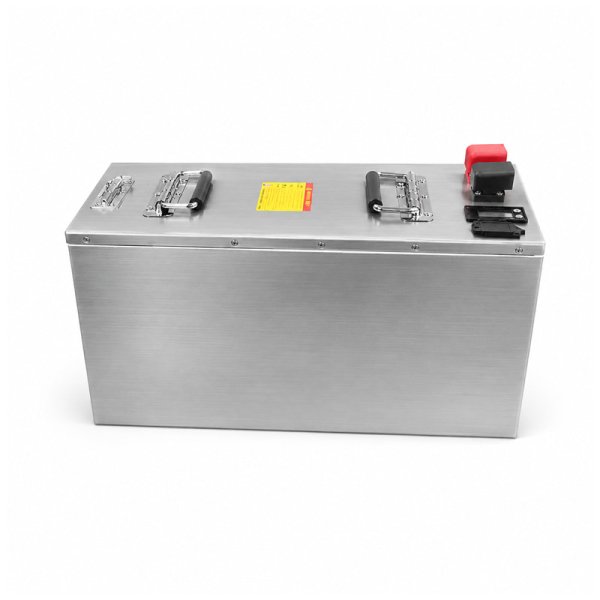
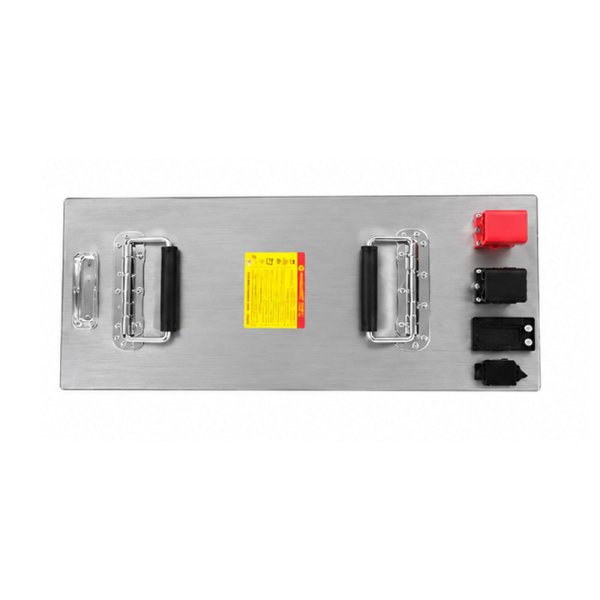
If you are evaluating lithium solutions for forklifts, you can also review this related 72V 105Ah forklift battery to understand a typical product application for industrial material handling.
What Is a 72V 105Ah LiFePO4 Forklift Battery?
A 72V 105Ah LiFePO4 forklift battery is a rechargeable lithium iron phosphate battery designed to power electric forklifts in demanding industrial environments. It operates at a nominal voltage of 72V and provides 105Ah capacity, making it suitable for medium-duty and selected heavy-duty forklift applications depending on the vehicle design and power requirements.
LiFePO4, also known as lithium iron phosphate, is widely used in industrial battery systems because of its strong thermal stability, long cycle life, and reliable safety performance. For forklift operations, these characteristics are especially important because batteries are exposed to frequent charging, heavy discharge, vibration, and long working hours.
A modern 72V 105Ah LiFePO4 forklift battery usually includes:
- Intelligent Battery Management System
- Cell balancing function
- Overcharge protection
- Over-discharge protection
- Overcurrent protection
- Short-circuit protection
- Temperature monitoring
- CAN or RS485 communication when required
- Fast charging compatibility
- Real-time battery status monitoring
These features help protect the battery pack, improve operational safety, and support more predictable forklift performance.
Why Are More Fleet Operators Choosing LiFePO4 Forklift Batteries?
More fleet operators are replacing lead-acid batteries with lithium solutions because warehouse operations now require higher uptime and less maintenance. In a busy warehouse, every hour spent on battery changing, cooling, watering, or troubleshooting can reduce productivity.
A 72V 105Ah LiFePO4 forklift battery helps reduce these interruptions by supporting faster charging and partial charging during breaks, shift changes, or low-demand periods. This charging flexibility allows forklifts to return to work faster without requiring complicated battery swap procedures.
Fleet operators also choose LiFePO4 because it can reduce routine battery maintenance. Lead-acid batteries often require water refilling, acid inspection, equalization charging, ventilation, and corrosion cleaning. A 72V 105Ah LiFePO4 forklift battery avoids many of these daily maintenance tasks, helping maintenance teams focus more on forklift performance and less on battery upkeep.
Another reason is energy efficiency. LiFePO4 batteries generally convert more charging energy into usable power, reducing energy waste and supporting lower operating costs over time.

How Does a 72V 105Ah LiFePO4 Forklift Battery Improve Productivity?
Warehouse productivity depends on stable equipment availability. Forklifts need to move pallets, load trucks, support production lines, and handle inventory without frequent power interruptions.
A 72V 105Ah LiFePO4 forklift battery improves productivity in several ways.
Consistent Power Output
Lead-acid batteries may experience voltage drop as they discharge, which can affect travel speed, lifting power, and hydraulic response. A 72V 105Ah LiFePO4 forklift battery provides more stable voltage during operation, helping forklifts maintain consistent performance throughout the shift.
For operators, this means smoother acceleration, more reliable lifting, and less performance decline near the end of the battery cycle.
Reduced Equipment Downtime
Fast charging and opportunity charging help reduce downtime. Instead of removing the battery and replacing it with a spare, operators can recharge during scheduled breaks or between tasks.
For warehouses running multiple shifts, this can reduce the need for extra batteries, battery rooms, and battery changing equipment.
Simplified Daily Operations
A 72V 105Ah LiFePO4 forklift battery can simplify daily fleet management because it does not require the same routine maintenance process as lead-acid batteries. There is no water refilling, no acid handling, and no regular equalization process.
This reduces labor requirements and helps create a cleaner, safer working environment.
Better Operator Experience
Stable power output helps operators work more confidently. Forklifts powered by a suitable 72V 105Ah LiFePO4 forklift battery can deliver smoother handling, steady lifting response, and more predictable performance during continuous warehouse use.

How Does Fast Charging Increase Warehouse Efficiency?
Fast charging is one of the most important advantages of lithium forklift batteries. Traditional lead-acid batteries often require long charging periods and additional cooling time. This can limit flexibility, especially in warehouses with continuous or multi-shift operations.
A 72V 105Ah LiFePO4 forklift battery can support shorter charging times when paired with a compatible lithium charger. This allows businesses to organize charging around normal workflow rather than adjusting the workflow around battery limitations.
Common charging opportunities include:
- Lunch breaks
- Shift changes
- Loading and unloading intervals
- Scheduled maintenance windows
- Low-demand operating periods
- Short pauses between warehouse tasks
This approach is especially useful for companies that want to reduce spare battery inventory. With proper charging planning, one lithium battery may support one forklift through extended daily operations.
Fast charging also improves facility space utilization. Lead-acid fleets often need battery rooms, ventilation areas, lifting equipment, and additional storage space. A 72V 105Ah LiFePO4 forklift battery can reduce dependence on these facilities, allowing businesses to use warehouse space more efficiently.
How Can a 72V 105Ah LiFePO4 Forklift Battery Reduce Operating Costs?
Although the initial purchase price of a lithium forklift battery may be higher than a lead-acid battery, the long-term cost structure can be more favorable.
A 72V 105Ah LiFePO4 forklift battery can reduce operating costs in several areas.
Lower Routine Maintenance
Lead-acid batteries require regular maintenance. This includes water refilling, acid management, cleaning, inspection, ventilation, and equalization charging. These tasks require labor time and increase operating complexity.
A 72V 105Ah LiFePO4 forklift battery has much lower routine maintenance needs. The sealed structure and intelligent BMS help reduce daily battery management work.
Longer Replacement Interval
Battery replacement is a major cost for forklift fleets. Under proper use, LiFePO4 batteries can often provide thousands of charge-discharge cycles. This helps extend replacement intervals and improves long-term asset planning.
For fleet managers, fewer replacements mean lower purchasing frequency, less downtime, and more predictable budget control.
Better Energy Efficiency
LiFePO4 batteries generally have higher charging efficiency than lead-acid batteries. More energy is stored and used, while less is wasted as heat. Over many charging cycles, this can contribute to lower electricity costs.
Higher Forklift Utilization
If forklifts spend less time charging, cooling, or undergoing battery maintenance, they can spend more time working. Higher equipment utilization improves the return on each forklift investment.
For warehouses with several forklifts, the cumulative benefit can be significant.
72V 105Ah LiFePO4 Forklift Battery vs Lead-Acid Battery
When choosing between lithium and lead-acid, buyers should compare more than the initial price. The real value depends on charging time, maintenance, service life, safety, and total cost of ownership.
| Comparison Item | 72V 105Ah LiFePO4 Forklift Battery | Lead-Acid Forklift Battery |
|---|---|---|
| Charging speed | Faster charging with compatible charger | Longer charging and cooling time |
| Maintenance | Low routine maintenance | Requires watering, cleaning, and inspection |
| Voltage stability | More stable power output | Voltage may drop during discharge |
| Opportunity charging | Supported when properly configured | Usually not recommended |
| Battery room | Often reduced or unnecessary | Commonly required |
| Cycle life | Longer under proper use | Shorter replacement interval |
| Energy efficiency | Higher charging efficiency | More energy loss |
| Safety management | BMS protection and monitoring | Requires acid and ventilation management |
| Long-term cost | Often lower total cost of ownership | Lower initial cost but higher maintenance |
A 72V 105Ah LiFePO4 forklift battery is not always the cheapest option at the beginning, but it can be more cost-effective for businesses that value uptime, lower maintenance, and long service life.
What Should Buyers Check Before Replacing Lead-Acid Batteries?
A 72V 105Ah LiFePO4 forklift battery may be used as a replacement for lead-acid batteries in suitable forklifts, but compatibility must be confirmed before purchase.
Buyers should check:
- Forklift voltage system
- Battery compartment size
- Battery weight and counterweight requirements
- Connector type
- Charger compatibility
- BMS communication requirements
- Mounting method
- Operating temperature range
- Required discharge current
- Certification and safety documentation
This step is important because forklifts rely on battery weight for balance and stability. If the lithium battery is significantly lighter than the original lead-acid battery, ballast or structural adjustment may be required.
A reliable supplier should help confirm these details before recommending a battery model.

What Role Does the BMS Play in Forklift Battery Safety?
The Battery Management System is one of the most important components inside a 72V 105Ah LiFePO4 forklift battery. It monitors and manages battery operation to protect the cells and the forklift system.
A good BMS helps manage:
- Cell voltage
- Pack voltage
- Charging current
- Discharging current
- Battery temperature
- Cell balancing
- Fault warnings
- Communication with charger or vehicle system
For B2B buyers, BMS quality should not be ignored. A weak BMS can limit battery performance, shorten service life, or increase operational risk.
When evaluating a 72V 105Ah LiFePO4 forklift battery, ask whether the BMS supports CAN Bus, RS485, Bluetooth, or other communication functions required by your forklift or fleet management system.
How Does a 72V 105Ah LiFePO4 Forklift Battery Support Fleet Management?
Modern warehouses increasingly rely on data-driven fleet management. Battery data can help managers understand equipment usage, charging habits, fault history, and maintenance needs.
A 72V 105Ah LiFePO4 forklift battery with communication capability can provide useful information such as:
- State of Charge
- State of Health
- Battery temperature
- Voltage status
- Charging history
- Fault codes
- Cycle count
- Remaining runtime
This information helps maintenance teams identify abnormal conditions earlier and plan service more efficiently. For large fleets, battery data can support better scheduling, lower downtime, and improved asset management.
How to Choose a Reliable 72V 105Ah LiFePO4 Forklift Battery Supplier?
Choosing the right supplier is as important as choosing the right battery. A 72V 105Ah LiFePO4 forklift battery must be supported by reliable engineering, stable manufacturing, strict quality control, and responsive after-sales service.
When evaluating suppliers, check:
- Experience in forklift battery projects
- Cell quality and source
- BMS design capability
- Certification documents
- Production capacity
- Customization ability
- Testing process
- Warranty policy
- Delivery stability
- Technical support response time
A professional supplier should be able to provide datasheets, test reports, charger recommendations, safety documents, and integration support.
For OEMs, distributors, and fleet buyers, private-label and customized battery solutions may also be important. A qualified manufacturer can customize casing dimensions, connectors, communication protocols, labels, branding, and BMS settings according to project requirements.
Where Can a 72V 105Ah LiFePO4 Forklift Battery Be Used?
A 72V 105Ah LiFePO4 forklift battery can be used in multiple material handling environments, depending on forklift compatibility and application requirements.
Common use scenarios include:
- Warehouses
- Distribution centers
- Manufacturing plants
- Cold storage facilities
- Retail logistics centers
- Food and beverage warehouses
- Ports and loading areas
- Industrial material handling sites
In these environments, stable power and fast charging can help businesses improve material flow and reduce operational interruptions.
FAQ About 72V 105Ah LiFePO4 forklift battery
1.Is a 72V 105Ah LiFePO4 forklift battery compatible with all forklifts?
No. A 72V 105Ah LiFePO4 forklift battery is not compatible with every forklift. Buyers must confirm voltage, battery compartment size, weight requirements, connector type, charger compatibility, discharge current, and communication requirements before installation.
2.How long does a 72V 105Ah LiFePO4 forklift battery last?
A 72V 105Ah LiFePO4 forklift battery typically lasts between 8 to 12 years, providing 3,000 to 5,000 full charge-discharge cycles. It depends on cell quality, BMS design, charging method, operating temperature, depth of discharge, and daily workload. Under proper use, a 72V 105Ah LiFePO4 forklift battery can provide a much longer service life than many lead-acid alternatives.
3.How long does it take to fully charge?
A 72V 105Ah LiFePO4 forklift battery takes approximately 1 to 4 hours to fully charge, depending on battery configuration, charger power, charging current, and safety settings. With a compatible lithium charger, a 72V 105Ah LiFePO4 forklift battery can usually charge much faster than traditional lead-acid batteries.
4.Can LiFePO4 batteries replace existing lead-acid batteries without modifications?
Sometimes, but not always. A lithium replacement must match the forklift’s electrical system, compartment size, counterweight needs, connector, charger, and communication requirements. It is best to confirm compatibility with the supplier before replacement.
5.Can OEM and private-label battery solutions be provided?
Yes. Many manufacturers can provide OEM and private-label solutions for a 72V 105Ah LiFePO4 forklift battery, including custom casing, connectors, labels, logo, BMS settings, communication protocols, and packaging.
Conclusion
A 72V 105Ah LiFePO4 forklift battery can help warehouses and industrial fleets improve productivity, reduce downtime, simplify maintenance, support faster charging, and lower long-term operating costs. For businesses using forklifts in demanding environments, the battery is not just a power source. It is a key part of equipment utilization and fleet efficiency.
Compared with lead-acid batteries, a 72V 105Ah LiFePO4 forklift battery offers stronger advantages in charging flexibility, voltage stability, maintenance reduction, energy efficiency, and service life. These benefits are especially valuable for multi-shift warehouses, logistics centers, manufacturing plants, and B2B fleet operators.
Before purchasing, buyers should confirm forklift compatibility, BMS functions, charger matching, certifications, supplier experience, warranty terms, and customization capability. Working with a professional supplier ensures that the 72V 105Ah LiFePO4 forklift battery fits the real application and supports long-term operational performance.