64V 105Ah and 72V 105Ah batteries are not interchangeable choices. The 64V pack stores about 6.72kWh; the 72V pack about 7.56kWh, or 12.5% more nominal energy. However, the correct voltage must match the forklift controller, motor and charger. A higher-voltage pack is not automatically a better upgrade.
Choosing the right forklift battery is not just about selecting a voltage number. That is why the comparison of 64V vs 72V 105Ah forklift battery options should be based on real operating needs, not only on a higher-voltage preference.
Both batteries use the same nominal capacity of 105Ah, but they do not store the same amount of energy. A 64V 105Ah forklift battery provides about 6.72kWh of nominal energy, while a 72V 105Ah forklift battery provides about 7.56kWh of nominal energy. This difference matters for fleets that need more power reserve, longer operating time, or stronger performance under higher workloads.
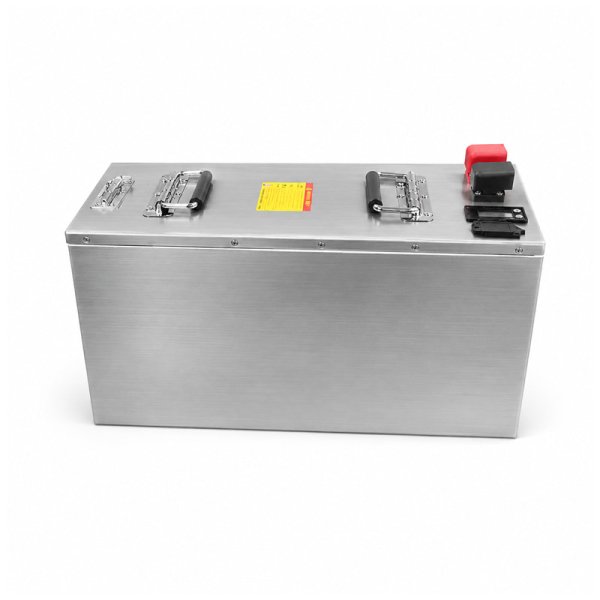
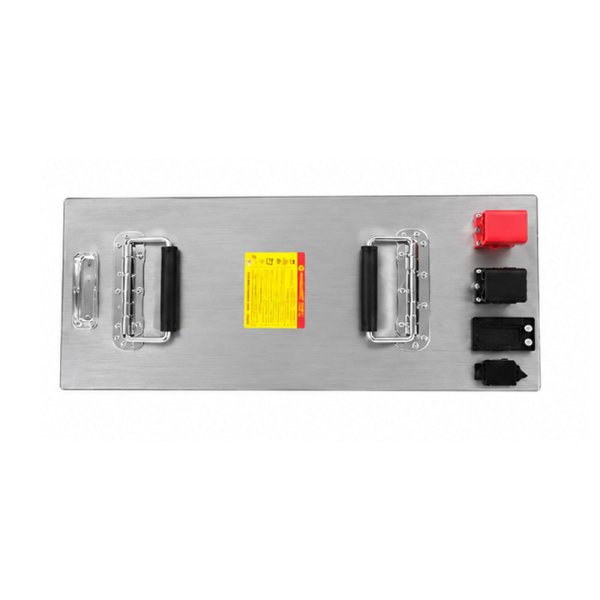
This guide compares 64V vs 72V 105Ah forklift battery options from a B2B fleet perspective. It covers energy calculation, voltage impact, runtime, application fit, charging, efficiency, total cost, compatibility, and supplier selection. For buyers comparing actual product options, FEBATT’s 64V 105Ah Forklift Battery and 72V 105Ah Forklift Battery can be reviewed as references for compatible forklift systems.
64V vs 72V 105Ah Decision Table
The main difference is voltage and total nominal energy. Both batteries have a 105Ah capacity rating, but the 72V battery stores more watt-hours because energy is calculated by multiplying voltage by amp-hours.
| Battery option | Calculation | Nominal energy |
|---|---|---|
| 64V 105Ah forklift battery | 64V × 105Ah | 6,720Wh / 6.72kWh |
| 72V 105Ah forklift battery | 72V × 105Ah | 7,560Wh / 7.56kWh |
The 72V 105Ah battery provides about 840Wh more nominal energy than the 64V 105Ah battery. In percentage terms, 7.56kWh is about 12.5% higher than 6.72kWh.
This does not mean the 72V option is automatically better for every fleet. The right choice depends on the forklift’s original voltage design, controller compatibility, charger, battery compartment, connector, load demand, duty cycle, and safety requirements. In the 64V vs 72V 105Ah forklift battery comparison, the first rule is simple: the battery voltage must match the forklift system.
In the 64V vs 72V 105Ah forklift battery comparison, the first rule is simple: the battery voltage must match the forklift system. A battery that does not match the system voltage can create charger faults, controller errors, communication problems, or serious equipment risk.
Can a 64V Forklift Be Converted to 72V?
Voltage affects how power is delivered to the forklift motor and control system. In general, higher voltage can support higher power delivery with lower current for the same power output. Lower current can help reduce electrical losses and heat in compatible systems. However, this only works when the forklift is designed for that voltage.
A 72V forklift system may support stronger torque response, better power reserve, and more stable performance under heavier workloads. This can be useful for higher-load handling, longer shifts, ramp operation, or more demanding industrial environments.
A 64V forklift system may be more suitable for medium-duty material handling, indoor warehouse movement, retail logistics, or predictable pallet transport where smooth control and cost balance are more important than maximum power output.
When evaluating 64V vs 72V 105Ah forklift battery options, voltage should not be treated as an upgrade that can be changed freely. It is a core system requirement. Using the wrong voltage may cause controller faults, charger mismatch, communication errors, or serious equipment damage.
Sample Approval Criteria Before Fleet Rollout
If both systems are properly designed, a 72V 105Ah forklift battery may provide stronger power output than a 64V 105Ah forklift battery because the voltage is higher. This can support better performance under high-load conditions, especially where the forklift needs more torque, faster travel response, or more stable lifting performance.
However, power output is not determined by voltage alone. It also depends on:
- Forklift motor design.
- Motor controller limits.
- Battery BMS discharge current.
- Cell quality.
- Connector and cable rating.
- Charger compatibility.
- Operating temperature.
- Load weight and lift frequency.
The 64V vs 72V 105Ah forklift battery decision should therefore focus on the whole forklift power system. A well-matched 64V battery can perform reliably in the right application. A 72V battery can only deliver its advantage when the forklift is designed to support 72V operation.
Which Forklift Applications Are Best for 64V Batteries?
A 64V 105Ah forklift battery is usually suitable for medium-duty applications where the forklift does not need the higher energy reserve of a 72V system. It can be a practical choice for fleets that want balanced performance, controlled cost, and reliable daily operation.
Typical 64V applications may include:
- Indoor warehousing.
- Retail logistics.
- Light manufacturing.
- Pallet distribution.
- Narrow-aisle handling where compatible.
- Medium-duty warehouse movement.
- Operations with predictable charging windows.
For medium-duty forklift projects, FEBATT’s 64V 105Ah Forklift Battery can be reviewed as a compact lithium option for compatible 64V forklift systems.
In the 64V vs 72V 105Ah forklift battery comparison, the 64V option is often stronger when the fleet wants practical cost control and the workload does not require higher voltage output.
Which Forklift Applications Benefit Most from 72V Batteries?
A 72V 105Ah forklift battery is usually better suited for applications with higher power demand, longer operating time, or heavier-duty cycles. Because it stores more nominal energy than the 64V option, it can provide more energy reserve when used in a compatible 72V forklift system.
Typical 72V applications may include:
- High-throughput warehouses.
- Manufacturing facilities.
- Larger distribution centers.
- Frequent lifting operations.
- Longer daily operating schedules.
- Higher load movement.
- Fleets where downtime is expensive.
For higher-power forklift applications, FEBATT’s 72V 105Ah Forklift Battery can be compared as a higher-voltage option for demanding duty cycles.
In the 64V vs 72V 105Ah forklift battery comparison, the 72V option is generally more suitable when the forklift is built for 72V operation and the fleet needs more power reserve.
In the 64V vs 72V 105Ah forklift battery comparison, the 72V option is generally more suitable when the forklift is built for 72V operation and the fleet needs more power reserve.

How Does Battery Runtime Compare?
Runtime depends on nominal energy and actual power consumption. Since a 72V 105Ah battery stores about 7.56kWh and a 64V 105Ah battery stores about 6.72kWh, the 72V option has a higher energy reserve on paper.
| Average forklift power demand | 64V 105Ah estimated runtime | 72V 105Ah estimated runtime |
|---|---|---|
| 1.5kW | About 4.5 hours | About 5.0 hours |
| 2.0kW | About 3.4 hours | About 3.8 hours |
| 2.5kW | About 2.7 hours | About 3.0 hours |
| 3.0kW | About 2.2 hours | About 2.5 hours |
| 4.0kW | About 1.7 hours | About 1.9 hours |
These figures are theoretical estimates based on nominal energy divided by average power demand. Actual runtime depends on payload, lifting frequency, travel distance, battery age, temperature, floor conditions, BMS limits, driver behavior, and safety reserve.

For real procurement, buyers should use actual forklift current draw data or test a sample battery before volume orders. The 64V vs 72V 105Ah forklift battery runtime decision should be based on daily workload, not only a calculation table.
Which Option Is More Energy Efficient?
Energy efficiency depends on the whole system, not just the battery. A 72V forklift system may operate with lower current for the same power output, which can help reduce resistive losses in cables, connectors, and motor control components. This may improve efficiency under heavier workloads.
A 64V system can still be efficient in medium-duty applications where the workload is moderate and the forklift system is optimized for 64V operation. For lighter-duty work, the difference between 64V and 72V may not justify changing fleet plans or paying for a higher-voltage configuration.
In the 64V vs 72V 105Ah forklift battery comparison, the more efficient choice depends on how the forklift is used. Heavy-duty operations may benefit more from 72V. Moderate-duty operations may find 64V more cost-effective.
How Does Charging Time Differ?
Charging time depends on charger current, battery chemistry, starting state of charge, BMS charging limit, temperature, and charging profile. A 72V 105Ah battery stores more energy than a 64V 105Ah battery, so it may require more energy input per full charge.
However, charging time should not be judged by voltage alone. The charger must match the battery voltage, lithium chemistry, connector, and BMS requirements. Using an unsuitable charger may damage the battery or trigger protection faults.
Important charging checks include:
| Charging factor | What to confirm |
|---|---|
| Charger voltage | Must match 64V or 72V battery system |
| Charger current | Must stay within BMS charging limits |
| Chemistry profile | Charger must support lithium/LiFePO4 if applicable |
| Connector | Must match battery and forklift charging interface |
| Temperature | Charging should follow supplier temperature limits |
| Charging plan | Must fit shift schedule and downtime window |
In the 64V vs 72V 105Ah forklift battery comparison, charging planning should be connected to the fleet’s actual shift schedule. A larger energy reserve is useful only when charging access and charger compatibility are properly planned.

Which Battery Lasts Longer?
Battery lifespan is mainly affected by chemistry, cell quality, BMS design, depth of discharge, charge/discharge current, temperature, workload, storage conditions, and charging habits. Voltage alone does not decide service life.
A 72V battery may experience lower current stress than a lower-voltage system under the same power demand, but this advantage only matters when the forklift system is correctly designed for 72V operation. A 64V battery can also provide reliable service life when used within its proper workload range.
For both 64V and 72V LiFePO4 forklift batteries, buyers should confirm:
- Cell quality.
- BMS protection.
- Cycle test conditions.
- Warranty terms.
- Recommended depth of discharge.
- Charging profile.
- Operating temperature limits.
- Maintenance and storage guidance.
The 64V vs 72V 105Ah forklift battery lifespan comparison should not rely on one fixed year claim. Exact service life must be confirmed from the supplier’s datasheet, warranty policy, and the fleet’s real operating conditions.
How Do Operating Costs Compare?
Operating cost includes more than purchase price. A battery with a lower upfront cost is not always cheaper over several years, while a more powerful battery is not always necessary for every forklift.
Cost factors include:
- Battery purchase price.
- Charger investment.
- Installation cost.
- Energy consumption.
- Maintenance labor.
- Downtime cost.
- Replacement frequency.
- Warranty coverage.
- Technical support.
- Spare battery requirement.
- Compatibility risk.
A 64V battery may offer better cost control for medium-duty operations. A 72V battery may offer better long-term value for high-utilization fleets that need stronger power, more runtime margin, and fewer interruptions.
The 64V vs 72V 105Ah forklift battery cost decision should be based on total cost of ownership, not only initial battery price. Buyers should compare battery cost, charger cost, maintenance savings, expected operating hours, and downtime impact.
Which Industries Prefer 64V Forklift Batteries?
Industries with moderate throughput and predictable material-handling needs may prefer 64V systems. These buyers usually value stable operation, lower initial investment, and practical compatibility.
Common 64V use cases may include:
- E-commerce warehousing.
- Retail distribution.
- Light manufacturing.
- Indoor pallet movement.
- Temperature-controlled storage where compatible.
- Medium-duty logistics operations.
For these industries, the 64V vs 72V 105Ah forklift battery decision may favor 64V when the forklift does not require higher voltage output and the fleet wants a balanced cost-performance solution.
Which Industries Commonly Use 72V Forklift Batteries?
Industries with heavier workloads and longer daily operating schedules may prefer 72V systems. These applications often need stronger power response and more energy reserve.
Common 72V use cases may include:
- Heavy manufacturing.
- Large distribution networks.
- Port logistics where compatible.
- Construction material handling.
- High-frequency pallet movement.
- Multi-shift warehouse operations.
- Operations with higher downtime cost.
For these industries, the 64V vs 72V 105Ah forklift battery comparison may favor 72V when the forklift system is designed for it and the workload justifies the higher voltage.
64V vs 72V 105Ah Forklift Battery: Side-by-Side Comparison
The best way to compare both options is to match battery performance with real application needs.
| Factor | 64V 105Ah Forklift Battery | 72V 105Ah Forklift Battery |
|---|---|---|
| Nominal energy | 6.72kWh | 7.56kWh |
| Energy difference | Baseline | About 12.5% more energy |
| Power output | Suitable for medium-duty use | Better for higher-demand use |
| Runtime margin | Moderate | Higher under similar workload |
| Cost | Usually lower | Usually higher |
| Charging demand | Lower energy input per full charge | Higher energy input per full charge |
| Best fit | Warehousing, retail logistics, light manufacturing | Heavy-duty work, longer shifts, higher load demand |
| Compatibility | Must match 64V forklift system | Must match 72V forklift system |
| Main advantage | Balanced cost and control | More power and energy reserve |
The 64V vs 72V 105Ah forklift battery decision should not be simplified into “higher voltage is always better.” The 64V option is practical when the fleet needs balanced cost and stable medium-duty operation. The 72V option is stronger when the forklift is designed for 72V operation and the fleet needs more runtime and power reserve.
FAQ About 64V vs 72V 105Ah Forklift Battery
1.Is a 72V 105Ah forklift battery always better than a 64V version?
No. A 72V battery provides more nominal energy and may support stronger power output in compatible forklift systems, but it is not always the better choice. A 64V battery may be more suitable for medium-duty forklifts, lower-cost fleet projects, and applications that do not require higher power output.
2.Can a 64V forklift be upgraded to a 72V battery?
In most cases, a 64V forklift should not be upgraded directly to a 72V battery. Buyers must confirm the controller voltage range, motor compatibility, charger, connector, wiring, BMS communication, battery compartment size, and OEM safety requirements before changing voltage. A voltage mismatch can create serious equipment risk.
3.Which battery offers the lowest total cost of ownership?
The lowest total cost of ownership depends on workload. A 64V battery may offer better cost control for medium-duty work. A 72V battery may offer better value in high-utilization fleets where runtime, torque, and downtime reduction are more important than the initial battery price.
4.Does a higher voltage battery increase lifting capacity?
No. A higher-voltage battery does not automatically increase the forklift’s rated lifting capacity. Lifting capacity depends on forklift design, hydraulic system, motor, controller, counterweight, structure, and OEM-rated load limit. Higher voltage may improve power delivery in compatible systems, but it does not change the official load rating by itself.
5.How many years can a LiFePO4 forklift battery typically last?
A LiFePO4 forklift battery typically lasts 7 to 10 years, delivering 3,000 to 4,000 charge cycles before losing 20% of its initial capacity. While it depends on cell quality, BMS design, depth of discharge, charging habits, temperature, workload, and warranty terms. Exact lifespan and cycle life should be confirmed from the supplier’s datasheet and warranty conditions.
Conclusion
The 64V vs 72V 105Ah forklift battery decision should start with forklift compatibility. Confirm whether the forklift is designed for a 64V or 72V battery system before comparing runtime, cost, or power output. Voltage is not a flexible upgrade item; it must match the forklift’s controller, charger, connector, BMS communication, and safety requirements.
Choose a 64V 105Ah forklift battery if your fleet needs balanced cost, medium-duty performance, stable control, and predictable indoor warehouse operation. Choose a 72V 105Ah forklift battery if your forklift system is designed for 72V operation and your fleet needs more energy reserve, stronger power response, longer shifts, or higher utilization.
The right choice is not simply the higher-voltage battery. The right choice is the battery that fits the forklift safely, supports the real workload, works with the correct charger, reduces downtime risk, and comes from a supplier that can provide technical documentation, warranty support, and stable B2B supply.