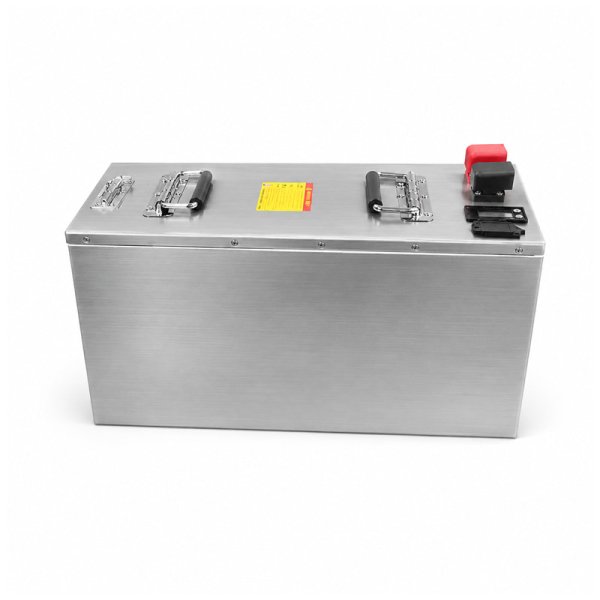
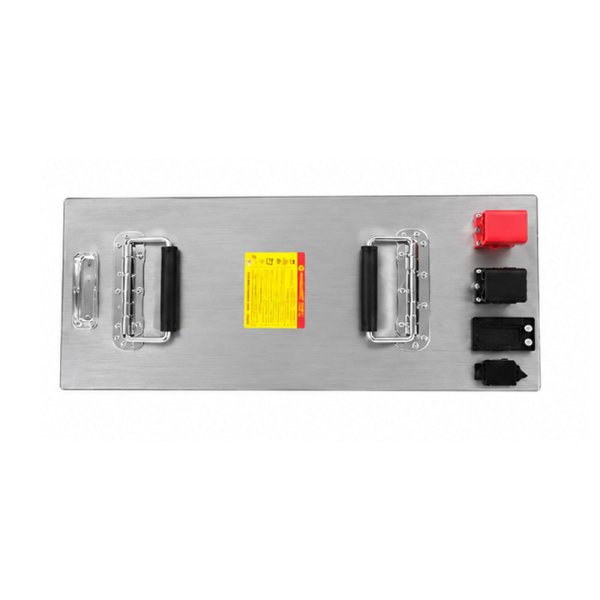
A golf course may have serviceable carts but aging lead-acid batteries that interrupt morning rounds. Resort shuttles must handle passengers, hills, and repeated journeys without losing power mid-shift. In both cases, a lithium golf cart battery pack can extend the useful life of existing vehicles—when matched to fleet requirements.
The purchase decision is not simply lead-acid versus lithium. It is whether a lithium golf cart battery pack can reduce interruptions without causing controller faults or costly retrofit changes. This power battery solution supports application-matched LiFePO4 designs, BMS integration, and OEM/ODM projects rather than generic specifications.
Why Replace Lead-Acid Batteries Instead of Retiring Serviceable Carts?
Golf courses, resorts, campuses, and utility fleets cannot justify replacing every cart when its chassis and drive system still perform reliably. An appropriate lithium golf cart battery pack offers a less disruptive upgrade path.
Compared with flooded lead-acid, LiFePO4 eliminates watering and acid-level checks, typically reduces battery weight, and maintains a flatter discharge-voltage profile. These benefits matter when maintenance teams support many vehicles or a late battery failure disrupts scheduled transport. A lithium golf cart battery pack can also accommodate opportunity charging when approved for the system.
However, “drop-in” must never mean universally interchangeable. Buyers need to establish whether the existing cart is a qualified candidate, rather than assume universal fit.

Which Operating Conditions Should Determine the Battery Pack?
A lithium golf cart battery pack for a flat 18-hole course faces different demands from one powering loaded resort shuttles or hilly sightseeing routes. Start with fleet duty, not advertised amp-hours.
- Golf courses: Specify enough usable energy for scheduled rounds, cart-path distances, and turnaround periods.
- Resorts and hotels: Check passenger loads, starts, gradients, and accessories.
- Rental and campus fleets: Prioritize consistent performance across vehicle ages.
- Utility carts: Verify current capability for cargo, towing where approved, and uneven ground.

Ask operators to record route length, daily trips, peak loading, available charging time, and failures on the existing lead-acid fleet. That record defines the real duty cycle for a lithium golf cart battery pack. This 51.2V golf cart lithium upgrade guide provides additional context for carts built around a 48V-class platform.
What Makes a Lithium Golf Cart Battery Pack Compatible With Older Carts?
Compatibility is more important than a familiar voltage label. A lead-acid bank and an LFP system can have different charge limits and discharge curves. An older controller, gauge, or charger may operate incorrectly with a lithium golf cart battery pack even when it physically fits.
| Existing fleet constraint | Procurement verification |
|---|---|
| Controller and dashboard | Operating voltage, low-voltage behavior, state-of-charge indication |
| Hills and repeated starts | Continuous current, peak current, pulse duration, BMS limits |
| Existing charging equipment | Charging profile, voltage/current limits, connector, BMS interactions |
| Battery bay and wiring | Mounting, restraints, cable/fuse ratings, access for inspection |
| Regenerative braking | Battery charge acceptance and controller behavior at high SOC |
For a documented third-party example, Trojan’s 51.2V, 105Ah OnePack specification lists a 40.48–58.40V operating range, 180A maximum continuous discharge, and 300A pulse discharge for 30 seconds. These are Trojan model-specific ratings, not FEBATT ratings or universal retrofit targets. The values illustrate why a lithium golf cart battery pack must be matched to actual controller demand.
A compatible lithium golf cart battery pack may retain some existing equipment; others require a new charger, mounting hardware, display calibration, or electrical changes. Do not promise a no-modification installation without model-level testing.
How Should Fleets Validate a Pack Before Bulk Replacement?
Before approving a lithium golf cart battery pack for 50 or 100 carts, test it on a representative vehicle from each controller or production variant. A trial on one newer cart cannot prove compatibility with every older unit.
Run the intended routes with normal and maximum permitted loads. Record usable energy, loaded voltage, peak current, temperature, charger behavior, BMS events, and dashboard indications. Repeat start-stop and hill-climb conditions that previously caused complaints.

The acceptance question is operational: can the lithium golf cart battery pack complete scheduled work with adequate reserve and without unexpected protection trips? Document any wiring, software, or charger changes before committing to the rollout.
This lead-acid-to-lithium conversion guide covers the wider installation and commissioning process; this project should remain focused on qualifying a particular golf-cart fleet.
How Can Lithium Reduce Fleet Costs Without Exaggerated ROI Claims?
A lithium golf cart battery pack generally costs more upfront than a basic lead-acid replacement. Its business case comes from fewer watering tasks, fewer battery-handling interruptions, longer cycle-life potential, and more predictable vehicle availability—not a guaranteed payback date.
Compare costs per available vehicle-day rather than purchase price alone. Include the pack, installation changes, compatible charging equipment, planned replacements, service labor, electricity, and lost bookings or transport capacity. A lithium golf cart battery pack can produce stronger value in high-utilization fleets than on seldom-used carts.
Published cycle figures are conditional: temperature, depth of discharge, current, and charging settings all influence actual service life. Ask lithium golf cart battery pack suppliers for test conditions and warranty boundaries instead of applying competitor cycle-life claims universally.
What Should Buyers Include in a Fleet Battery RFQ?
Specify the cart make, model, year, controller revision, current battery arrangement, charger model, battery bay, fleet quantity, duty cycle, destination climate, and delivery schedule. Require the supplier to identify which configurations are validated and which still need a pilot.
For each proposed lithium golf cart battery pack, request usable energy, continuous and peak current, BMS protection thresholds, physical drawings, charging requirements, test reports, traceability, and documented change control. Confirm which support is available if field tests expose incompatibility.
Choose LiFePO4 for its practical operating advantages, but approve the lithium golf cart battery pack on demonstrated fleet fit. The right quotation is one that reduces lifetime disruption—not merely the one with the lowest price or largest Ah figure.
For fleet-wide lithium upgrades, share your cart models, existing battery configurations, duty cycles, and project quantity with FEBATT to evaluate battery compatibility, customization requirements, and pilot validation before bulk ordering.
Frequently Asked Questions About Lithium Golf Cart Battery Packs
Q: Can you replace lead-acid golf cart batteries with lithium?
A: Yes, when the lithium golf cart battery pack matches the cart’s operating limits, current demand, installation, and charging system. Some vehicles need additional modifications; model-level validation comes first.
Q: Can a lithium golf cart battery use the original charger?
A: Only if the charger profile and electrical limits are approved for that lithium golf cart battery pack. A lead-acid equalization program or incompatible cutoff can make the original charger unsuitable.
Q: How long does a lithium golf cart battery pack last?
A: Life depends on cells, cycling, temperature, and operation. Request cycle-test conditions and warranty terms for the exact lithium golf cart battery pack, rather than assuming one universal lifespan.
Q: Is LiFePO4 better than lead-acid for fleet golf carts?
A: Often, yes: LiFePO4 reduces routine watering, typically weighs less, and provides stable output. A lithium golf cart battery pack still needs compatible controls and verified performance for the route.
Q: What should a fleet test before ordering lithium golf cart batteries?
A: Test the lithium golf cart battery pack under representative passenger loads, hills, repeat journeys, and charging windows. Confirm BMS behavior, vehicle gauges, connectors, and safe operation before ordering fleet-wide replacements.