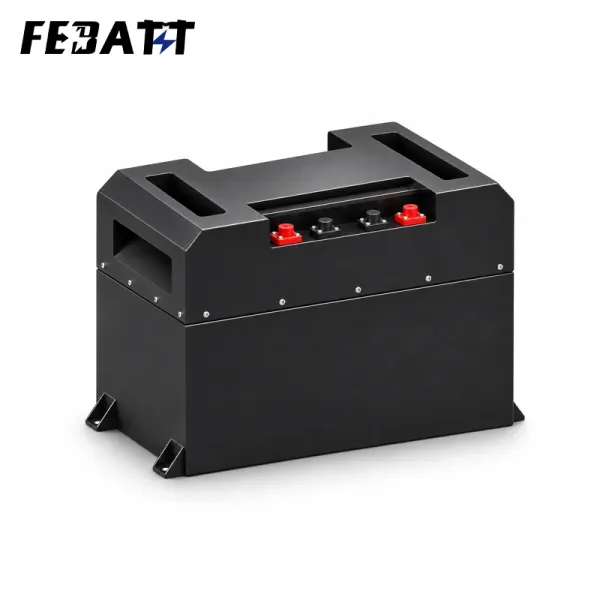
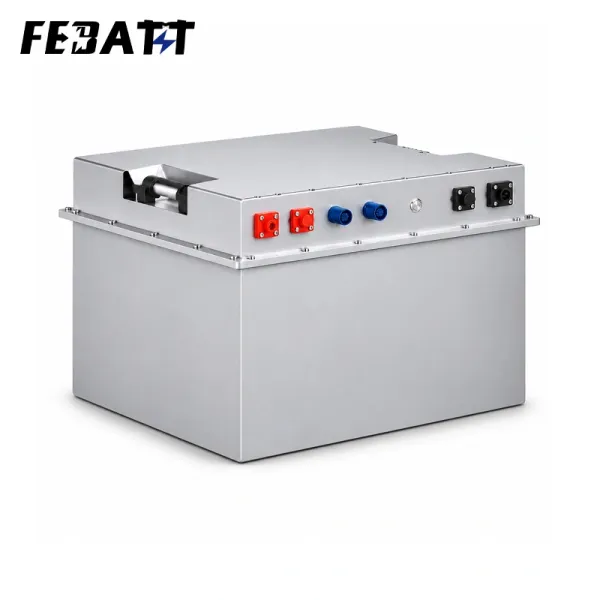
A USV battery has one job that a generic boat pack cannot be assumed to perform: keep an unmanned survey mission predictable from launch through recovery. Hull space, propulsion demand, sonar operation and return-to-base reserves all compete for limited energy. For an OEM or fleet operator, an incorrect specification can mean incomplete survey lines, lost field time or a vessel that needs retrieval.
The U.S. NOAA Office of Coast Survey reports that its small battery-powered uncrewed surface vehicles can operate for up to eight hours, depending on the platform. That is a real deployment reference, not a universal USV battery runtime guarantee.
Why Does a USV Battery Need a Mission Profile?
A USV battery must serve several consumers, not just propulsion. Multibeam or side-scan sonar, GNSS, communications, onboard computing and control electronics can remain active during slow survey passes. Strong currents, repeated turns and transit between work zones change the propulsion load. Fleet buyers should request a time-stamped duty cycle instead of sizing solely from an advertised maximum range.
| Mission phase | Typical demand | Battery-related risk |
|---|---|---|
| Transit to survey area | Propulsion and navigation | Reserve consumed before surveying |
| Survey transects | Propulsion plus sensors and data systems | Payload left running longer than planned |
| Return and recovery | Variable propulsion, communications and control | Low-charge power limits interrupt retrieval |

For broader crewed-vessel considerations, the electric workboat battery planning guide covers operating profiles. A USV battery specification needs an additional rule: when must the autonomy controller stop collecting data and initiate a supervised return?
How Much Energy Should a USV Battery Reserve?
Consider an illustrative six-hour mission averaging 500 W across propulsion and electronics. It needs 3.0 kWh at the loads. Reserving 25% of nominal energy would imply at least 4.0 kWh before allowances for conversion losses, aging, temperature and usable state-of-charge limits. This is an arithmetic planning example, not a measured vessel result or a FEBATT product rating.
A dependable USV battery budget separates survey energy, outbound transit, return transit and contingency. Ask the integrator to model adverse current, an incomplete survey requiring another pass, and communications interruptions. Set conservative mission-abort triggers with the vessel controls team; a fixed low-charge percentage is rarely enough for every route.

Why Choose Lithium for a USV Battery Fleet?
A purpose-built lithium USV battery can reduce weight and maintenance compared with a similarly usable lead-acid installation, leaving more payload allowance for sensors while supporting repeated deployment cycles. LiFePO4 is attractive where thermal stability, cycle durability and operational consistency matter, provided the design meets the vessel’s energy and weight targets. Lithium is not automatically the best chemistry for every USV battery: qualification, charge limits and the complete pack design still decide suitability.

The motive power battery solution outlines FEBATT’s approach to custom enclosures, BMS protection, connectors and OEM integration. In procurement, compare usable energy at the mission load, documented service life and replacement cost—not just quoted ampere-hours.
How Should a USV Battery Signal Mission Risks?
A USV battery cannot simply shut down without warning when a mission is offshore. The BMS should expose verified state of charge, temperature, current, fault states and any power limits through a protocol the vessel controller supports. The autonomy system—not the battery alone—then decides whether to abandon a survey line, reduce nonessential loads or request recovery.
Fleet engineers can use the marine battery management system guide for underlying protection concepts. For a USV battery, insist on testing low-charge alarms, lost communications, sensor-load spikes and fault handling with the actual controller software, not just a BMS bench demonstration.
What Must OEMs Validate Before Fleet Deployment?
Water exposure, condensation, corrosion and vibration can disable a USV battery even when nominal capacity is sufficient. Verify enclosure sealing in the installed configuration, connector durability, cable strain relief, heat dissipation, mounting clearances and service access. Record what is tested, the test conditions and the limits; an IP claim for an empty enclosure is not equivalent to qualification of the assembled installation.
FEBATT publicly lists an unmanned-boat battery example rated at 84 V and 49 Ah with CAN communication and an aluminum-alloy case. Those figures demonstrate a documented configuration, not proven endurance for a particular survey fleet. A marine lithium battery product example can also illustrate available pack formats; its suitability for a USV battery must be verified against the actual hull, mission and controller.
What Should Buyers Include in a USV Battery RFQ?
Give suppliers the mission profile, sensor inventory, route duration, worst-case return requirements, battery-space drawing, mass limit, expected annual vessel quantity and service climate. Specify the BMS data map, fault-response requirements, charger interfaces, sample acceptance tests and traceability between production batches. Before a fleet order, require a representative sea trial that repeats the longest survey-and-return cycle and records energy use and alarms.
A well-specified USV battery is not necessarily the largest pack. It is the pack whose usable energy, protective behavior and integration evidence help the fleet finish missions consistently—with a predictable path from prototype to repeat orders.
FAQs About USV Battery Procurement
Q: What battery type is best for a survey USV?
A: A lithium USV battery, including LiFePO4 where appropriate, can offer low maintenance and useful weight savings. Choose chemistry only after checking mission energy, peak loads, compartment limits, marine protection and validated cycle performance.
Q: How long can a USV battery run a survey vessel?
A: Runtime depends on propulsion, currents, sensor duty cycle, temperature and reserved energy. NOAA documents small battery-powered survey USVs with endurance up to eight hours, but an OEM must confirm runtime using its own mission profile.
Q: Can one USV battery design support different sensor payloads?
A: Possibly. Validate each payload’s continuous and transient draw, power-conversion needs and effect on return reserve. A shared pack is practical only when every approved configuration stays within the verified limits.
Q: What information should the USV controller receive from the battery?
A: At minimum, agree on state of charge, relevant temperatures, current, active faults and permitted power limits. Verify the interface and loss-of-communication behavior during integrated tests.
Q: What should OEMs test before ordering USV batteries in bulk?
A: Require a representative duty-cycle test, installation checks, environmental verification, controller-alarm tests and a supervised survey-return sea trial. Define acceptance thresholds and manufacturing change control before scaling production.
Developing a survey USV or upgrading an unmanned marine fleet? FEBATT can discuss custom lithium battery configurations, enclosure requirements, BMS communication and OEM/ODM supply based on your vessel’s operating needs.
Share your USV model, propulsion and sensor power requirements, target mission duration, return-energy reserve, battery installation space, operating environment and expected production volume. The engineering team can review battery specifications and discuss prototype validation before volume supply.