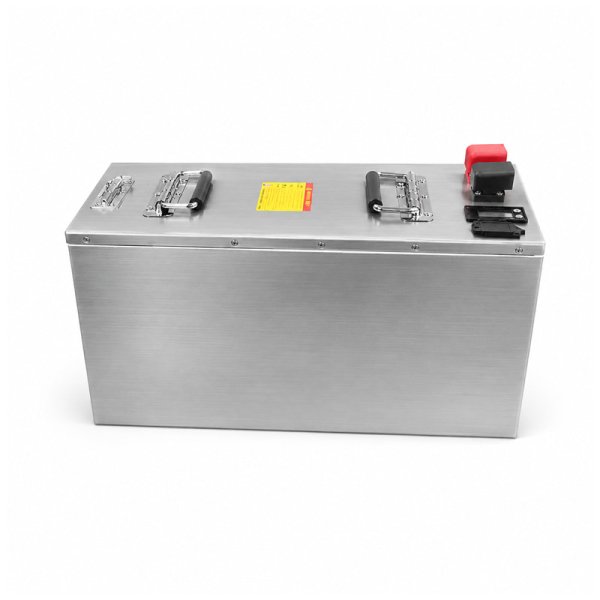
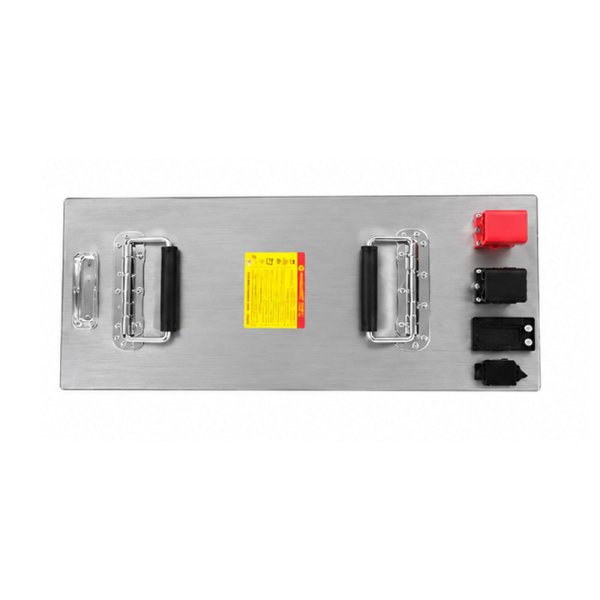
For a golf course or resort fleet, a battery failure is rarely just a battery problem. A stalled cart can delay guest transfers, disrupt patrols, and force another vehicle into service. A properly matched 48V 100Ah golf cart battery should be evaluated for reliable daily operation rather than inflated mileage promises.
The right 48V 100Ah golf cart battery should support the fleet’s real routes, passenger loads, outdoor conditions, and maintenance schedule. Here is what buyers should assess before bulk procurement.
Why Do Busy Golf Cart Fleets Benefit from Lithium Power?
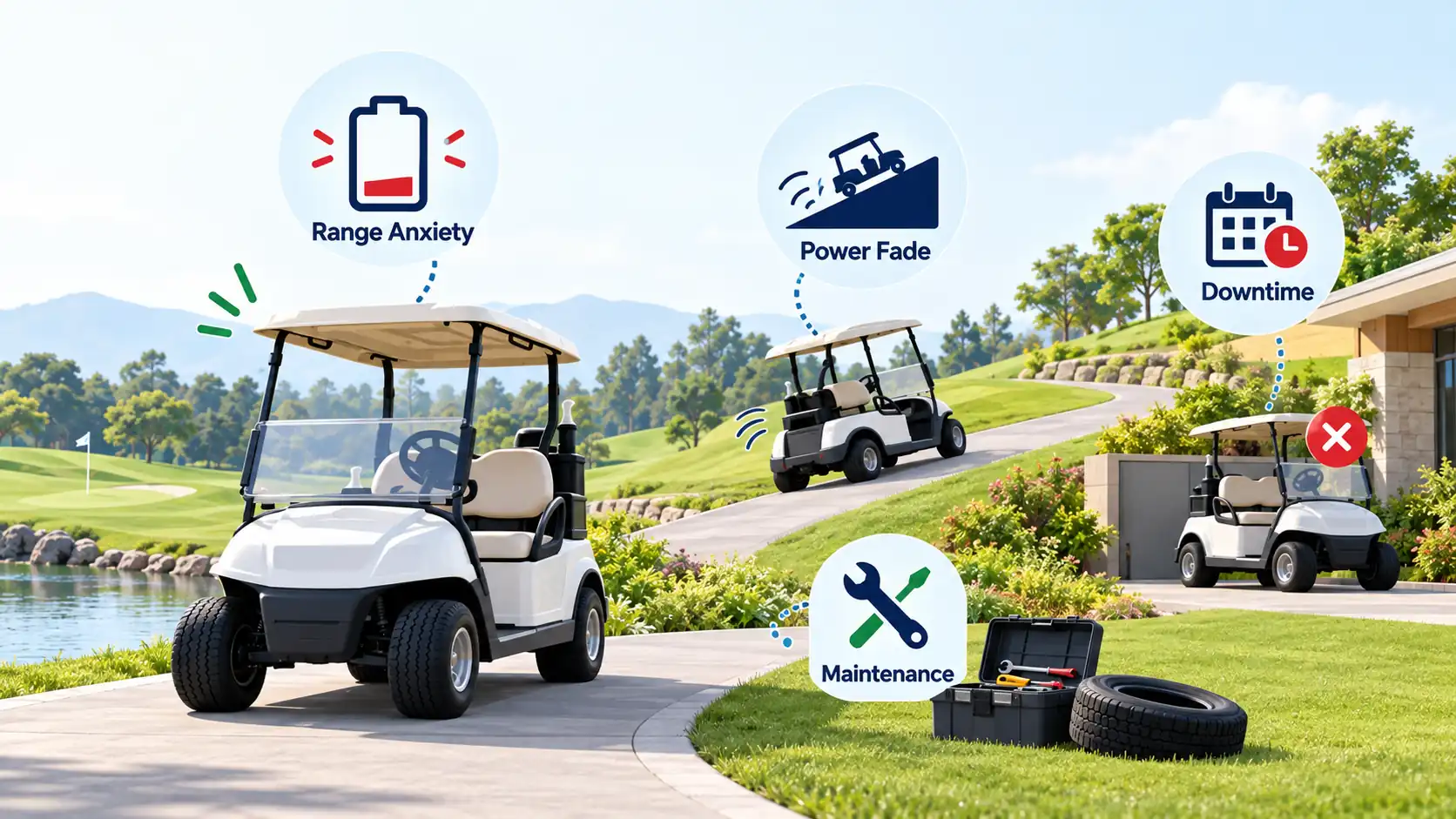
Lead-acid fleets can lose productive hours to watering, terminal corrosion, long charging windows, and declining performance as batteries age. A properly engineered 48V 100Ah golf cart battery using lithium iron phosphate (LiFePO4) avoids routine electrolyte watering and can deliver steadier power through much of its usable charge range.
For operators, that translates into fewer avoidable workshop visits and more predictable daily dispatch. Lithium packs also weigh less than equivalent-energy lead-acid installations in many applications, reducing vehicle weight. Compare complete pack specifications before promising operational gains.
A 48V 100Ah golf cart battery makes sense when reliability and uptime outweigh the lowest purchase price.
Where Does a 48V 100Ah Golf Cart Battery Fit Best?
A 48V 100Ah golf cart battery is worth evaluating across several commercial duty cycles, but operating hours vary by route.
| Fleet application | Typical operational pressure | What to verify |
|---|---|---|
| Golf courses | Repeated rounds, hills, maintenance carts | Route distance and loaded climbing current |
| Resorts and sightseeing sites | Frequent passenger transfers | Stop-start demand and turnaround time |
| Property and security fleets | Scheduled patrols across large grounds | Daily operating hours and charging access |
| Industrial campuses | Utility carts carrying equipment | Payload, vibration, and available installation space |
A 48V 100Ah golf cart battery may serve a flat golf course differently from a heavily loaded hillside resort. Review trip logs, passenger loads, and gradients before fleet-wide replacement. For detailed route-based planning, see this golf cart battery range guide.
What Performance Can Buyers Expect from a 48V 100Ah Golf Cart Battery?
The nominal energy of a battery depends on its specified chemistry and voltage. FEBATT’s 51.2V 100Ah LFP golf cart battery lists 5.12 kWh of nominal energy (51.2 V × 100 Ah). It serves commercial and utility fleets. The widely used “48V” label may describe a vehicle system class, not the exact nominal voltage of its lithium pack.
A 48V 100Ah golf cart battery should not be sold with a universal claim such as “all-day driving” or a fixed mileage improvement. Results depend on payload, terrain, speed, weather, drivetrain efficiency, and depth of discharge.
More importantly, a 48V 100Ah golf cart battery must handle acceleration and hill-climbing current without unnecessary BMS shutdowns. Request continuous-current and peak-current specifications, along with evidence from a representative loaded-route test.
Why Is LiFePO4 a Strong Choice for Commercial Operations?
A LiFePO4 48V 100Ah golf cart battery combines cycle-life potential, low maintenance, and stable power when correctly integrated. Compared with service-intensive flooded lead-acid configurations, it can simplify inspections and reduce the labor associated with watering and corrosion control.

FEBATT’s listed 51.2V 100Ah product advertises 4,500 cycles, but a fleet buyer should request the test conditions, including depth of discharge, ambient temperature, charge rate, and end-of-life capacity threshold. This is a supplier-stated specification, not a promise of 4,500 identical working days.
The initial price of a 48V 100Ah golf cart battery may be higher than a lead-acid replacement. Its business case improves when lower maintenance, fewer interruptions, and replacement frequency are evaluated together. This golf cart battery cost guide covers the broader fleet-budget calculation.
How Should a 48V 100Ah Golf Cart Battery Handle Outdoor Conditions?
Golf courses expose carts to heat, rain, spray, uneven ground, and frequent vibration. For an outdoor 48V 100Ah golf cart battery, enclosure design and electrical protection deserve as much attention as capacity.
Ask suppliers to document enclosure ingress protection, mounting strength, connector sealing, vibration testing, and permitted charging and discharging temperatures. A BMS should monitor voltage, current, and temperature and respond safely to overcharge, over-discharge, overcurrent, and short-circuit conditions. A temperature protection function does not make cold-weather charging unrestricted or eliminate thermal hazards.

For a 48V 100Ah golf cart battery, confirm the mechanical fit and charger compatibility on the actual cart model. Do not treat “drop-in replacement” as proof that every legacy installation can use the same pack unchanged.
What Should B2B Buyers Confirm Before a Bulk Order?
For a 48V 100Ah golf cart battery, request an application-specific quote covering:
- Fleet size, vehicle models, expected daily trips, typical payload, and terrain.
- Required current output, charger profile, BMS functions, and display compatibility.
- Enclosure dimensions, mounting positions, connector layout, and environmental exposure.
- Sample-validation plan, warranty terms, technical documentation, and delivery schedule.
Where relevant to the vehicle category and destination market, discuss the scope of the UL 2271 standard for light electric vehicle batteries; ask for model-specific evidence rather than accepting an unsupported compliance claim.
This power battery solutions cover application matching, BMS integration, OEM/ODM customization, and bulk supply. Before a full rollout, test a 48V 100Ah golf cart battery on a representative vehicle through its busiest working day. The pilot should demonstrate runtime, hill starts, safe charging, and repeatable performance.
Frequently Asked Questions About 48V 100Ah Golf Cart Batteries
Q: How many kWh does a 48V 100Ah golf cart battery provide?
A: A theoretical 48 V × 100 Ah calculation gives 4.8 kWh. A 51.2 V nominal LiFePO4 version provides 5.12 kWh. Confirm the actual pack rating and usable energy rather than relying only on the “48V” category label.
Q: How long can a 48V 100Ah golf cart battery run a commercial cart?
A: There is no universal hourly or mileage figure. Test with representative loads, hills, stops, and speeds, retaining energy for unexpected trips.
Q: Can a 48V 100Ah golf cart battery replace lead-acid batteries?
A: Potentially, but only after checking controller voltage limits, charger settings, battery dimensions, connections, weight distribution, and BMS current limits. An electrically or mechanically mismatched pack is not a safe replacement.
Q: Is a 48V 100Ah golf cart battery suitable for resort and sightseeing fleets?
A: It can be, particularly for predictable routes and frequent daily dispatch. Hilly or high-payload vehicles need validation of peak output, energy consumption, and available time between trips.
Q: What should a 48V 100Ah golf cart battery supplier provide?
A: A serious B2B supplier should provide a model-specific specification sheet, discharge limits, charger requirements, safety and transport documentation as applicable, sample-testing support, and a clear process for consistent bulk delivery.