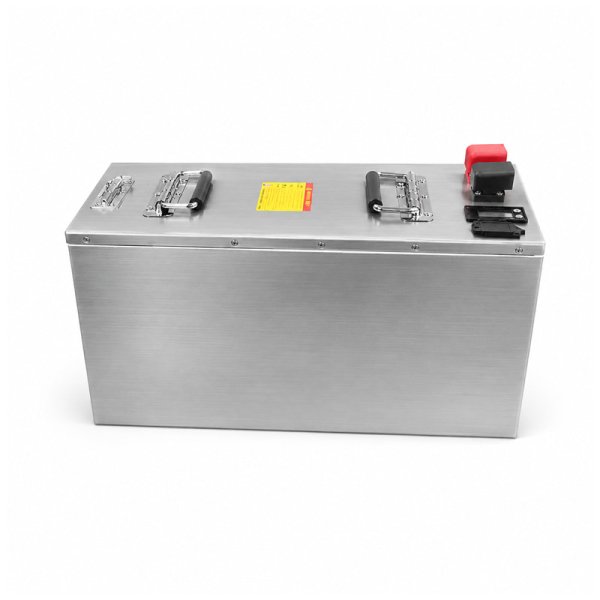
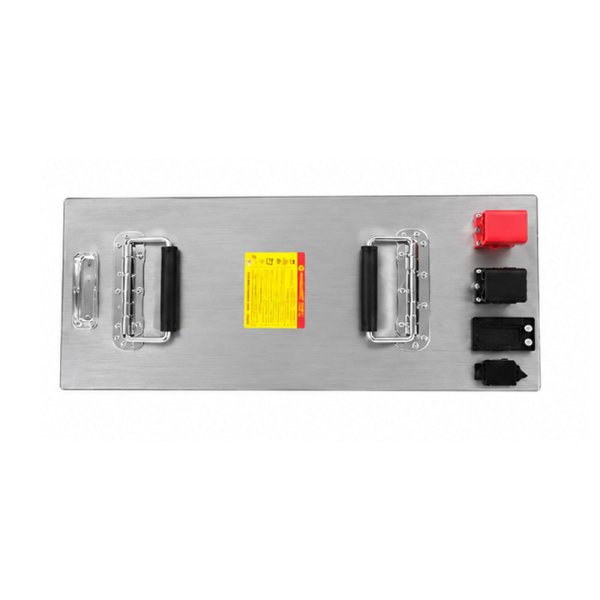
For B2B fleets, replacing lead-acid with lithium should not be treated as a simple battery swap. A successful lead acid to lithium battery conversion changes the energy source, charging behavior, protection logic, vehicle mass, and sometimes the communication architecture. When those elements are engineered together, lithium can reduce routine battery service, increase usable energy, support more flexible charging, and improve vehicle availability.
The opportunity is especially relevant to forklifts, golf carts, electric tricycles, electric motorcycles, RV auxiliary systems, and other power-driven commercial equipment. These applications often expose the weaknesses of flooded lead-acid systems: watering, terminal corrosion, long charging windows, voltage sag under load, heavy battery banks, and frequent replacement in high-utilization service.
Why Are Commercial Fleets Moving from Lead Acid to Lithium?
High fleet utilization is the clearest reason to consider lithium. Flooded lead-acid batteries can require watering, cleaning, equalization, and controlled charging. In U.S. powered-industrial-truck applications, OSHA also requires designated charging areas and adequate ventilation for fumes from gassing batteries. A lead acid to lithium battery conversion removes electrolyte watering and hydrogen generation associated with lead-acid charging, although the new system still requires correct electrical protection and installation.
Lithium also provides a flatter discharge-voltage profile. When correctly sized, this can support more consistent vehicle response through much of the usable SOC range, helping delivery tricycles, golf carts, and material-handling equipment avoid the pronounced late-shift voltage sag associated with aging or heavily loaded lead-acid packs.
Weight can be another advantage where the battery is not required as ballast. A lithium conversion for utility vehicles can reduce battery mass and free payload margin, especially for electric tricycles and motorcycles. Forklifts require a separate check because battery mass can contribute to counterbalance.
Charging flexibility can add further value. Many commercial lithium systems support partial or opportunity charging when the cells, BMS, charger, connectors, and thermal design are validated for it, helping multi-shift fleets reduce long uninterrupted charging windows.
For buyers defining voltage, capacity, current, communication, enclosure, charger, and installation requirements together, FEBATT Power Battery Solutions provides an application-oriented starting point. The conversion should still begin with the original vehicle data and duty cycle rather than selecting a catalog battery first.
What Must Match Before a Lead Acid to Lithium Battery Conversion?
Compatibility is the foundation of every lead acid to lithium battery conversion. Matching only the nominal voltage printed on the battery is not enough. The vehicle, battery, charger, controller, wiring, communication, and mechanical interface must operate as one system.
1. Match the Full Voltage Window
Lithium battery voltage matching starts with the controller and vehicle design. Record the original battery-bank configuration, the controller minimum and maximum DC input voltage, the low-voltage cutoff, and any DC/DC converter limits. A 48V lead-acid bank and a lithium pack marketed for a 48V application can have different full-charge and low-SOC voltages. The new pack must stay within the equipment design window at every operating state.
Do not increase pack voltage simply to obtain more speed or range. Moving a vehicle from a 48V architecture to 60V or 72V changes controller, motor, DC/DC, charger, wiring, and protection requirements. A lead acid to lithium battery conversion should preserve the approved electrical architecture unless the whole vehicle is being re-engineered.
2. Size Usable Energy, Not Ah Alone
The old lead-acid Ah rating is useful historical information, but it should not automatically become the lithium Ah target. Capacity should be selected from usable energy. Record daily operating hours or route distance, average Wh/km or kWh/shift, payload, gradients, auxiliary loads, desired reserve, temperature, and charging opportunities.
A practical starting calculation is required usable energy = expected energy consumption × operating requirement + reserve. For road-going utility vehicles, use Wh/km × required range. For forklifts and other industrial equipment, use average kW × operating hours and verify current peaks separately. This approach makes a lead-acid to LiFePO4 retrofit more accurate than generic “50Ah for light duty” or “200Ah for heavy duty” tables.

3. Match Continuous, Peak, and Regenerative Current
The motor and controller determine current demand. Confirm continuous current, acceleration or lifting peaks, duration of those peaks, and regenerative current where applicable. The cells, BMS, contactors, fuse, busbars, cables, and connectors must all support the same profile. An undersized BMS can cause nuisance shutdowns even when the battery fits perfectly in the compartment.
4. Verify the Charger
Do not keep the original lead-acid charger unless the charger manufacturer or battery supplier has verified a compatible lithium profile. Lead-acid chargers may use absorption, float, or equalization behavior that does not match LiFePO4 requirements. Confirm maximum charge voltage, charge current, temperature behavior, termination logic, connector, polarity, and any CAN or other communication needed between the charger and battery.
How Should a Lead-Acid to LiFePO4 Retrofit Be Sized and Packaged?
A B2B lead acid to lithium battery conversion must fit the vehicle mechanically as well as electrically. Record battery-compartment length, width, height, mounting points, cable exit direction, connector position, service access, enclosure clearance, and allowable weight. The new pack should not move under acceleration, braking, lifting, vibration, or rough-road operation.
Ingress protection and vibration resistance matter for electric tricycles, motorcycles, outdoor golf carts, and industrial vehicles. A standard pack may work when the compartment and duty cycle are common. A custom enclosure may be necessary when connector position, cable length, sealing, mounting, or available space differs from a standard design.
Weight reduction is usually a benefit in mobile utility equipment, but it is not universally beneficial. Counterbalanced forklifts are the clearest exception. Commercial forklift lithium batteries may use built-in counterweight or ballast so the replacement stays within the truck manufacturer’s minimum and maximum battery-weight requirements. Never approve a forklift conversion based only on electrical compatibility.
How Should Industrial Battery Conversion Wiring Be Verified?
Verify polarity before energizing the system. Confirm that cable cross-section, fuse rating, connector continuous current, contactor rating, and grounding or isolation strategy match the new pack’s current capability. A higher-performance lithium pack can expose weak connectors or aged cables that were marginal but tolerated by the old battery.
Communication must also be checked. Some vehicles use CAN, RS485, key-switch wake lines, interlocks, SOC displays, charger enable signals, or controller power-limit messages. A lead acid to lithium battery conversion can be electrically correct at the main terminals yet still fail operationally if these interfaces are ignored.
What Installation and Commissioning Process Should B2B Fleets Use?
- Document the original system before removal. Record voltage, battery configuration, mass, tray dimensions, connector, cable size, charger model, controller limits, communication, and any vehicle data-plate requirements.
- Isolate the vehicle and inspect the battery compartment. Qualified personnel should follow the equipment manufacturer’s electrical isolation and battery-handling procedures. Correct corrosion, damaged wiring, loose terminals, and structural problems before installing the new pack.
- Install and mechanically secure the lithium pack. Use approved mounting points and restraints. Verify connector orientation, cable bend radius, clearance, sealing, and access for service. For forklifts, confirm required battery mass or ballast before the truck returns to service.
- Configure the battery and charging interfaces. Confirm BMS limits, charger settings, communication parameters, SOC display behavior, wake/sleep logic, and any controller interface before the first operational test.
- Commission under controlled load. Check pack voltage, current, temperature, connector temperature, BMS alarms, peak-current behavior, regenerative current, SOC reporting, and charger termination. Confirm there are no unexpected power limits or nuisance trips.
- Validate one pilot before fleet rollout. A pilot vehicle can reveal fit, communication, display, charger, or operating issues before the same conversion is repeated across dozens of assets.
What Mistakes Cause Lead Acid to Lithium Battery Conversion Problems?
Choosing Higher Voltage for More Range
Higher voltage is not a simple range upgrade. It can exceed the limits of the motor controller, DC/DC converter, lighting, instruments, and charger. Increase range by adding validated usable energy within the approved system voltage, not by arbitrary overvoltage.
Assuming the Same Nominal Voltage Means Drop-In Compatibility
A battery can have the right nominal voltage and still be wrong for the vehicle because of full-charge voltage, peak current, connector rating, communication, mounting, temperature, or BMS behavior. A lead acid to lithium battery conversion must be approved as a complete system.
Using an Unverified Lead-Acid Charger
Some programmable chargers can support both chemistries, but that capability must be confirmed. An unsuitable float or equalization profile can create incomplete charging, repeated BMS trips, or battery stress. Use a charger profile that is explicitly compatible with the selected lithium pack.
Ignoring Vehicle Weight and Stability
A lighter battery improves payload in many tricycles and motorcycles, but it can change axle loading, ride, or stability. Forklifts require particular care because the battery can form part of the counterweight. Mechanical integration belongs in the conversion approval process.
How Does the Conversion Change by Commercial Application?
Forklifts and Material Handling
A forklift lead acid to lithium battery conversion should start with the truck data plate, compartment dimensions, minimum battery weight, current demand, connector, charger strategy, and communication requirements. High-utilization warehouses can benefit from eliminating watering and using validated opportunity charging, but ballast and current-carrying interfaces must be engineered for the truck.
Golf Carts and Resort Fleets
Golf carts are a common lead-acid to LiFePO4 retrofit because one integrated pack can replace a multi-battery lead-acid bank. The upgrade can reduce routine maintenance and vehicle mass while providing a flatter voltage profile. Verify voltage, tray size, charger, cable length, hill-climb current, and seasonal storage requirements.
Electric Tricycles
For an electric tricycle, payload and daily route energy are central. Lower battery mass can create cargo margin while stable voltage supports predictable loaded performance. Confirm hill-start current, vibration, sealing, connector position, charging access, and end-of-shift range reserve.
Electric Motorcycles
Electric motorcycles benefit from lithium because mass and packaging directly affect handling and range. The pack must remain within the controller and motor voltage envelope and be sized for peak acceleration current, temperature, charging, mounting, and communication requirements.
RV Auxiliary Power Systems
An RV lead acid to lithium battery conversion can increase usable stored energy and reduce mass, but the charging system must be reviewed as a whole. Verify shore charging, solar controllers, alternator or DC/DC charging, inverter demand, low-temperature protection, storage guidance, and BMS standby consumption.

When Does a Commercial Fleet Lithium Upgrade Deliver the Best ROI?
From a B2B perspective, lithium creates value by reducing recurring operational friction. A lead acid to lithium battery conversion can remove watering labor, reduce corrosion-related service, support more flexible charging, provide stable voltage, and reduce replacement frequency when correctly sized and operated.
The business case is strongest in high-utilization fleets such as multi-shift forklifts, frequently rented golf carts, delivery tricycles, and utility vehicles where battery maintenance or downtime has a measurable cost. In these applications, labor, charging workflow, spare batteries, lost operating hours, and replacement frequency can matter more than purchase price alone.
Lead-acid can remain financially reasonable for lightly used equipment with existing infrastructure and low downtime impact. The lithium advantage should therefore be demonstrated with TCO: battery price, charger changes, installation, maintenance, downtime, replacement events, energy use, spare inventory, recycling logistics, and ownership period.

After the duty cycle and compatibility requirements are defined, buyers can review FEBATT’s commercial power battery category for application-oriented pack formats or use a custom design when enclosure, current, communication, ballast, or thermal requirements fall outside a standard model.
What Information Should You Send to a Lithium Battery Supplier?
A supplier can only engineer a reliable lead acid to lithium battery conversion when the vehicle and operating data are complete. For a fleet project, send the same information for every vehicle type so the solution can be standardized and documented.
- Vehicle/application type and fleet quantity
- Original lead-acid voltage, Ah rating, battery-bank configuration, dimensions, and total battery mass
- Motor/controller rated voltage and power, plus minimum and maximum DC input voltage
- Continuous current, peak current, peak duration, and regenerative-current requirements
- Daily mileage or operating hours, route/shift energy, payload, gradients, and auxiliary loads
- Existing charger manufacturer/model, available charging windows, and facility power
- Battery compartment dimensions, mounting points, connector, polarity, cable length, and ingress environment
- CAN, RS485, SOC display, wake/sleep, or other communication requirements
- Operating and storage temperature range
- Destination market, transport documentation, product-compliance requirements, warranty expectations, and annual volume
These details allow the supplier to decide whether a standard LiFePO4 pack is suitable or whether the project needs a custom enclosure, BMS configuration, ballast, communication protocol, low-temperature heating, charger change, or additional vehicle integration work.
Technical Relevant FAQ
1.Can I replace a lead-acid battery directly with a lithium battery?
In many commercial applications, yes, but not automatically. A lead acid to lithium battery conversion requires verification of the full voltage window, continuous and peak current, charger, BMS, connector, mounting, communication, temperature limits, and vehicle-weight requirements. A nominal-voltage match alone does not prove compatibility.
2.Do I always need a new charger for a lead-acid to LiFePO4 retrofit?
Often a lithium-specific charger is required, but a programmable existing charger may be usable if its manufacturer and the battery supplier verify the correct lithium profile. Check maximum charge voltage, current, termination behavior, temperature limits, connector, and communication before commissioning.
3.Will a lead acid to lithium battery conversion increase vehicle range?
It can increase usable runtime when the lithium pack provides more usable watt-hours, lower voltage sag, or lower vehicle mass, but there is no universal percentage. Calculate range from usable energy under the real load, vehicle efficiency, payload, route, temperature, and reserve requirement rather than comparing Ah alone.
4.Does lithium automatically increase torque or power?
No. A correctly sized lithium battery can reduce voltage sag and support more consistent power delivery, but motor torque is limited by the motor, controller, battery current capability, BMS settings, SOC, and temperature. The conversion should meet the original drivetrain design unless the entire system is being re-engineered.
5.Is a lighter lithium battery always better for a forklift?
No. Forklift battery mass can contribute to counterbalance and truck stability. Some lithium forklift systems include built-in counterweight to meet minimum and maximum truck-weight requirements. Verify the truck data plate and manufacturer requirements before approving a lighter replacement.
6.How long can a commercial LiFePO4 conversion last?
Commercial LiFePO4 batteries can be designed for thousands of cycles, but service life is not guaranteed by chemistry alone. Actual life depends on cell design, depth of discharge, charge and discharge rate, temperature, SOC window, BMS control, storage, and the end-of-life capacity threshold. Ask for cycle-life data with the test conditions.
7.What documents should B2B buyers request?
Request cell and pack traceability, electrical specifications, BMS limits, charger requirements, end-of-line test records, warranty terms, and the compliance documents required for the destination market. For transport, lithium cells and batteries must meet the applicable UN38.3 tests; UN38.3 should not be presented as a complete product-safety certification.
8.Is a commercial fleet lithium upgrade always worth the higher upfront cost?
No universal ROI applies. The case is strongest where high utilization, maintenance labor, charging downtime, battery replacement, payload, or vehicle availability create measurable costs. Compare the complete TCO of keeping lead-acid with the battery, charger, installation, maintenance, downtime, and replacement costs of the lithium conversion.
Conclusion
A successful lead acid to lithium battery conversion is a vehicle-integration project first and a battery purchase second. Lithium can reduce routine service, lower mass in suitable vehicles, support flexible charging, provide stable voltage, and offer long-cycle potential when the pack is matched to the duty cycle.
For FEBATT’s target applications, LiFePO4 is especially attractive where fleets cycle frequently, cannot tolerate long downtime, or want to reduce watering and repeated lead-acid replacement. The conversion must still preserve the approved voltage architecture and meet current, charging, mechanical, temperature, communication, and market requirements.
Before requesting a quote, prepare the original battery data, controller limits, daily energy requirement, peak current, compartment dimensions, connector information, charging window, environment, fleet quantity, and destination market. That information turns a lead acid to lithium battery conversion from a generic product swap into a repeatable commercial engineering solution.