For warehouses, factories, cold-chain facilities, and distribution centers, battery selection affects labor planning, charging space, equipment availability, energy use, maintenance workload, and total fleet cost. This is why more operators are evaluating lithium forklift batteries as an alternative to flooded lead-acid systems.
The answer is not automatically yes for every business. Lithium technology normally requires a higher initial investment, and conversion depends on voltage, capacity, compartment dimensions, battery weight, connectors, charger selection, communication, and operating temperature. In high-utilization or multi-shift fleets, however, lithium forklift batteries can create value through reduced routine maintenance, opportunity charging, consistent power delivery, and fewer battery-change interruptions.
This guide explains the technology, safety and compatibility requirements, service-life factors, and a practical ROI method. It is written for B2B buyers, fleet managers, dealers, integrators, and OEM teams considering a lithium ion battery for forklift applications or a forklift battery replacement project.
What Makes Lithium Forklift Batteries Different?
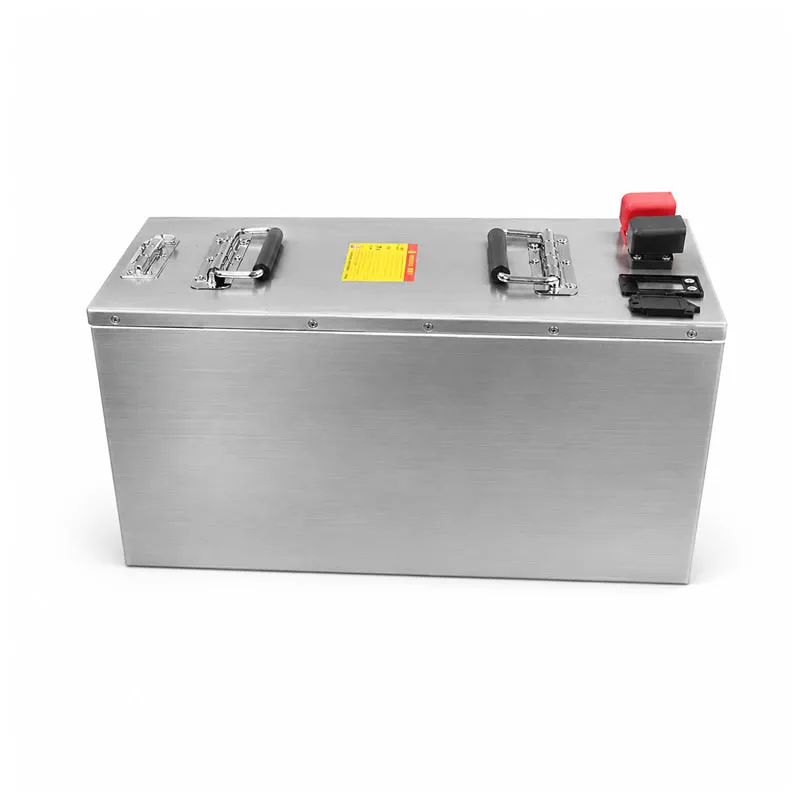
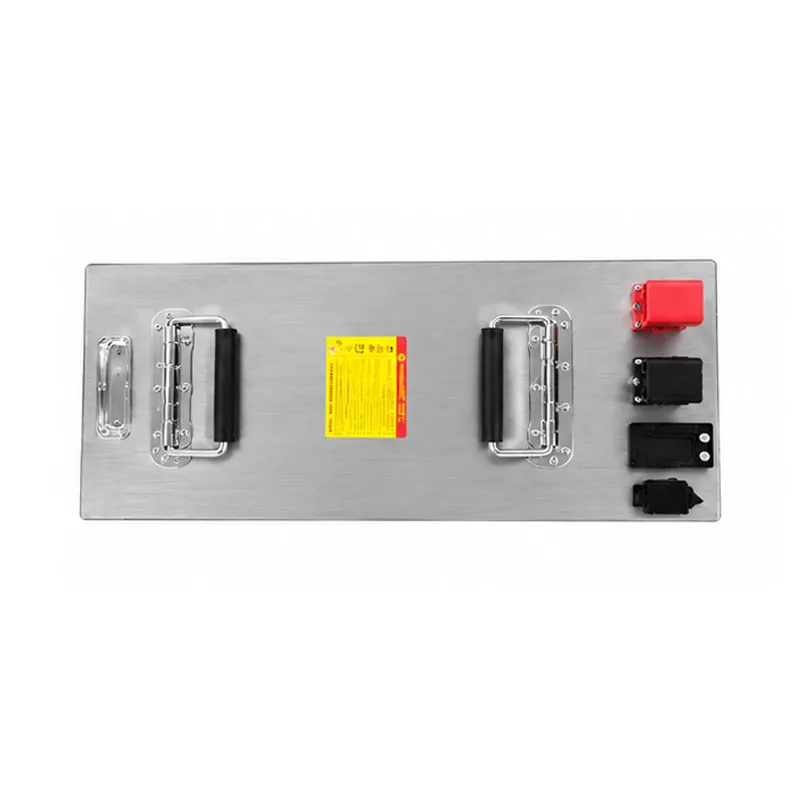
The main difference between lithium forklift batteries and lead-acid batteries is not simply cell chemistry. A modern industrial lithium battery combines cells, electrical protection, a Battery Management System (BMS), enclosure design, connectors, communication functions, and a matched charging strategy.
The BMS monitors parameters such as cell voltage, pack current, temperature, state of charge, and abnormal operating conditions. Depending on the design, it may control contactors, balance cells, record faults, limit charging or discharging, and communicate with the forklift or charger. These functions do not make a battery risk-free, but they provide active supervision throughout operation.
Lithium iron phosphate, or LiFePO4, is widely used in industrial motive-power applications because it offers comparatively strong thermal stability and long service potential. Chemistry alone does not establish safety. Cell consistency, mechanical protection, fusing, cable sizing, software limits, manufacturing controls, thermal design, and charger compatibility all affect the reliability of lithium forklift batteries.
A lithium ion battery for forklift use also maintains a relatively stable voltage through much of its usable charge range. This can support more consistent travel and lifting performance, although actual results depend on the truck, load, current demand, temperature, and battery sizing.
How Do Lithium Forklift Batteries Compare With Lead-Acid Batteries?
Lead-acid technology remains practical for some fleets because it is familiar, widely supported, and less expensive to purchase. Its disadvantages become more significant when a facility operates several shifts or requires high equipment availability.
Flooded lead-acid batteries usually require watering, cleaning, electrolyte inspection, equalization, and controlled charging. Charging can produce hydrogen gas, so the charging area must follow applicable workplace and fire-safety requirements. OSHA guidance for powered industrial trucks specifically addresses ventilation and safeguards for charging batteries that may release gas.
Lithium forklift batteries do not require electrolyte watering and do not produce routine hydrogen gassing in the same way as flooded lead-acid batteries. This can simplify battery care and reduce some acid-handling infrastructure. It does not remove the need for a designated charging area, electrical protection, operator training, fire-risk assessment, and local regulatory compliance.
| Factor | Flooded Lead-Acid | Industrial Lithium |
|---|---|---|
| Initial purchase cost | Usually lower | Usually higher |
| Routine watering | Required | Not required |
| Equalization charging | Commonly required | Generally not required |
| Battery swapping | Often used for multi-shift work | May be reduced through opportunity charging |
| Charging emissions | Hydrogen may be produced | No routine hydrogen gassing in normal operation |
| Energy efficiency | Generally lower | Generally higher |
| Power delivery | Voltage declines more during discharge | More stable across much of the charge range |
| Monitoring | Limited or added separately | BMS monitoring is normally integrated |
| Weight | High and often part of counterbalance | Often lighter; compatibility must be engineered |
| Routine maintenance | Higher | Lower, but inspections remain necessary |
Battery weight requires special attention. The battery can form part of a forklift’s counterweight. Installing a lighter pack without confirming minimum battery weight, center of gravity, restraint, and rated capacity may create a safety and compliance problem. A forklift battery replacement plan must therefore treat weight as a design requirement, not merely a handling advantage.
Why Are Fleet Managers Switching to a Lithium Forklift?
The strongest reason to adopt a lithium forklift is operational continuity. Traditional battery management may require spare batteries, changing equipment, charging rooms, dedicated labor, and carefully controlled schedules. These resources can keep a lead-acid fleet running, but they also add recurring cost and complexity.
Lithium forklift batteries allow many operators to keep one battery installed and add charge during planned breaks. This may reduce battery swaps and simplify scheduling, especially in logistics, food distribution, manufacturing, and other operations running two or three shifts.
Maintenance reduction is another practical driver. The correct claim is not “zero maintenance.” Cables, connectors, mounting points, enclosure condition, charger performance, BMS warnings, and communication functions still require inspection. The difference is that lithium systems remove watering, acid-level checks, and equalization tasks.
Where supported, BMS records can also help managers review state of charge, temperature exposure, fault events, and usage behavior. This information can reveal an undersized battery, unsuitable charging schedule, or abnormal truck current before the issue becomes a major interruption.
How Does Opportunity Charging Reduce Forklift Downtime?
Opportunity charging means connecting the battery to an approved charger during normal pauses, such as meal breaks, shift changes, loading delays, or scheduled cleaning. Instead of waiting for one long charging period, the fleet recovers energy through shorter sessions.
Lithium forklift batteries are well suited to this approach because partial charging does not require the routine equalization associated with flooded lead-acid technology. A matched battery and charger can recover useful energy during a short break and return the truck to work without an extended cooling period. The amount of energy added depends on battery capacity, charger output, temperature, electrical supply, and BMS limits.

The operational benefits may include fewer spare batteries, less battery-changing labor, higher equipment availability, and more flexible peak-hour scheduling. These savings should be calculated from actual shift data. A facility with few breaks, inadequate electrical capacity, or poorly located chargers may gain less than a site designed around frequent charging windows.
The charger is not a generic accessory. A lithium ion battery for forklift operation should use a charger approved for its voltage, current, charge profile, connector, and communication protocol. An incompatible charger can cause faults, incomplete charging, excessive stress, or unsafe conditions.
Are Lithium Forklift Batteries Safe for Indoor Warehouses?
Lithium forklift batteries can be suitable for indoor warehouses when the complete system is correctly designed, installed, charged, and maintained. Their sealed architecture avoids routine acid handling and does not create hydrogen gassing during normal charging in the same way as flooded lead-acid batteries.

Safe use still depends on several protection layers. A commercial pack should include appropriate cells, BMS limits, contactors, current protection, temperature monitoring, insulated high-current connections, secure mounting, and an enclosure suited to the environment. The charger, cables, connector, truck electrical system, and charging area must also be compatible.
LFP chemistry is often selected for lithium forklift batteries because of its thermal stability. It should not be marketed as impossible to ignite or incapable of thermal runaway. Severe damage, internal defects, external short circuits, incorrect charging, water intrusion, uncontrolled heat, or improper service can still create hazards. A lower-risk chemistry is not a risk-free battery.
Site conditions also matter. Cold stores may require low-temperature charging controls or integrated heating. Washdown areas need suitable enclosure and connector protection. Hazardous or classified locations require specifically approved equipment. A site-specific safety review is more credible than assuming one pack is suitable for every warehouse.
How Long Do Lithium Forklift Batteries Last in Heavy Use?
There is no universal cycle-life number for all lithium forklift batteries. Service life varies with cell quality, depth of discharge, charge rate, temperature, current demand, sizing, calendar age, and the BMS operating window. A credible supplier should state the test conditions behind any cycle-life claim and the remaining-capacity threshold used to define end of life.
A battery cycle represents cumulative energy use equal to its rated capacity. Two 50 percent discharges are approximately one equivalent full cycle, not two full cycles. This distinction matters because opportunity charging may involve several partial charges during one day.
Correct sizing strongly affects longevity. An undersized pack may experience deeper discharge, higher current relative to capacity, greater heat, and more frequent charging. An oversized pack may add unnecessary cost, weight, or space. The correct design balances runtime, peak current, charging opportunities, compartment dimensions, minimum battery weight, and future operating changes.
Temperature is equally important. Low temperature can temporarily reduce power and charging capability. Charging below the permitted cell temperature can increase the risk of lithium plating, so the BMS should restrict charging or activate a suitable heating function. High temperature can accelerate aging and must be managed through design and operating limits.
For heavy-use fleets, lifetime energy delivered and productive hours supported are more useful than calendar years alone. Lithium forklift batteries may create stronger lifetime value when they reduce replacement frequency and support more operating hours, but the expected result should be verified against the duty cycle and warranty conditions.
What Should You Check Before a Forklift Battery Replacement?
A safe forklift battery replacement begins with the truck data plate, original battery specification, and actual operating profile. Selecting only by nominal voltage and amp-hour capacity is not sufficient. The replacement must work mechanically, electrically, thermally, and operationally with the forklift.
Before ordering, confirm:
- Rated voltage and permitted voltage range.
- Peak, continuous, lifting, and regenerative current.
- Battery compartment dimensions and cable exit position.
- Minimum and maximum permitted battery weight.
- Center of gravity, restraint method, and structural support.
- Connector type, polarity, cable size, and fuse coordination.
- Charger voltage, current, charge profile, and communication.
- CAN or other interfaces among the battery, truck, and charger.
- Temperature, moisture, vibration, dust, and cold-store exposure.
- Required certifications, local codes, and manufacturer approval.
Many electric forklifts can be converted from lead-acid to lithium, but the work should not be described as an automatic drop-in swap. Engineered ballast may be required when the original battery provides essential counterweight. Newer trucks may also require software or communication integration.
Businesses planning a forklift battery replacement can review FEBATT lithium forklift battery solutions. Final selection should be based on the forklift model, duty cycle, environment, charger, and project requirements rather than a product-page rating alone.
How Can You Calculate the ROI of Lithium Forklift Batteries?

The purchase price is only one part of the decision. Lithium forklift batteries should be compared with lead-acid systems through Total Cost of Ownership over the same period and operating assumptions.
Lifetime TCO = battery purchase + chargers and infrastructure + electricity + maintenance labor + battery-changing labor + downtime + replacement batteries + disposal or recycling costs.
Lithium ROI = lead-acid lifetime TCO – lithium lifetime TCO.
The payback period can be estimated by dividing the additional initial lithium investment by expected annual operating savings. Because the result depends on the facility, no responsible supplier should promise one universal payback period.
Start with battery inventory. A multi-shift lead-acid fleet may need more than one battery per truck, while a lithium system may use fewer batteries when opportunity charging is practical. Then calculate labor for watering, cleaning, equalization, inspections, battery changes, and record keeping. Include only the changing equipment, ventilation, wash facilities, floor space, and other infrastructure genuinely required by the present setup.
Energy should be measured from charger input, not only battery nameplate capacity. Charging losses, tariffs, demand charges, and charging time can affect the result. Value downtime conservatively by counting only productive time the operation can realistically recover.
Lithium forklift batteries often produce the strongest ROI in high-throughput sites with multiple shifts, frequent battery changes, high labor costs, or limited charging-room space. The case may be weaker for a single-shift warehouse where trucks run only a few hours and the existing lead-acid process is inexpensive and well managed.
When Is a Lithium Forklift Battery Not the Best Choice?
Lithium forklift batteries are not automatically the best option for every application. Conversion may be difficult where the truck depends on a very heavy battery for counterbalance, the compartment cannot accommodate a compliant pack, the electrical system cannot communicate with the BMS, or an approved charger cannot be installed.
The financial case may be limited when utilization is low. Existing lead-acid infrastructure can remain practical when it is safe, fully depreciated, and supported by disciplined maintenance.
Environmental requirements can change the decision. Cold applications need batteries designed for low-temperature charging and operation. Hazardous locations may require approved equipment, while high-temperature or washdown sites need appropriate enclosures, connectors, and thermal controls. The correct solution is the one validated for the application, not the chemistry with the strongest marketing claim.
FAQ About Lithium Forklift Batteries
1.How should fleet operators select the correct voltage and capacity?
The rated voltage must match the forklift electrical system and permitted operating range. Capacity should be calculated from actual energy consumption, shift length, load intensity, travel distance, lifting frequency, available charging windows, and the required reserve margin. Choosing the largest amp-hour rating is not always the best solution because pack weight, dimensions, current capability, and cost must also remain compatible with the truck.
2.Are lithium forklift batteries suitable for multi-shift operations?
Yes, when the battery is correctly sized for the duty cycle and the operation includes planned charging periods. Multi-shift sites can benefit from reduced battery swapping, more consistent voltage under load, and lower routine maintenance. The business should still validate peak demand, daily energy throughput, temperature conditions, and expected idle periods before deciding whether one battery per truck can support the required schedule.
3.Can one battery design be used across a mixed forklift fleet?
Not always. Different forklift classes may use different voltages, battery weights, compartment sizes, connector positions, current demands, communication protocols, and counterbalance requirements. A supplier may standardize cells, modules, BMS functions, or enclosure components across a fleet, but each truck group should be reviewed separately. Standardization is useful only when it does not compromise safety, fit, or performance.
4.What customization options matter most for OEM and fleet projects?
Relevant options include voltage, capacity, enclosure dimensions, required pack weight, mounting structure, connector type, cable routing, BMS logic, CAN communication, telematics, display functions, low-temperature heating, thermal management, ingress protection, labeling, branding, and service access. The most valuable customization is not cosmetic; it is the engineering needed to make the battery integrate reliably with the vehicle and operating environment.
5.How should a company compare lithium and lead-acid total cost of ownership?
Use actual fleet data rather than purchase price alone. Compare battery quantity, spare-battery inventory, watering labor, inspection time, battery-change labor, energy consumption, equipment downtime, replacement frequency, facility requirements, handling equipment, and end-of-life costs. Lithium forklift batteries often show the strongest financial case in high-utilization fleets, but the result should be calculated for the customer’s own shifts, labor rates, electricity costs, and replacement cycle.
6.How should a fleet plan a phased forklift battery replacement?
Begin with a representative group of trucks rather than converting the entire fleet at once. Select vehicles with measurable duty cycles, record baseline lead-acid costs and downtime, install the new system, and monitor runtime, current demand, temperature, charging behavior, operator feedback, and maintenance requirements. After the pilot confirms fit, safety, and business value, the fleet can scale the forklift battery replacement by truck model, site, or operating shift.
Conclusion
Lithium forklift batteries are often worth the investment for fleets that operate intensively, need high equipment availability, or want to reduce watering, battery changes, and charging interruptions. Their value comes from opportunity charging, lower routine maintenance, consistent power delivery, BMS supervision, and the potential to use fewer spare batteries.
The strongest business case is based on verified operating data. Fleet managers should compare lifetime cost rather than purchase price alone and validate battery weight, voltage, current, charger, communication, environment, and manufacturer requirements before conversion. A correctly engineered system can improve productivity and predictability; an incorrectly selected pack can create integration, safety, and warranty problems.
For B2B buyers, the final question is not whether lithium forklift batteries are universally better than lead-acid batteries. It is whether the proposed system solves the fleet’s downtime, maintenance, charging, and lifecycle-cost challenges. When the application is demanding and the complete system is properly matched, lithium forklift batteries can provide a credible, measurable long-term return.