For electric forklifts, golf carts, electric tricycles, and other fleet equipment, battery selection affects thermal risk, charging procedures, service planning, and the consequences of a fault inside a vehicle or facility. LiFePO4 battery safety is therefore a major reason many B2B buyers select lithium iron phosphate, or LFP, when predictable operation and long service life matter more than maximum energy density.
LFP is generally more thermally stable than NCM523, NCM622, and NCM811. Its cathode structure often produces lower heat release and less severe reactions during abuse tests. It does not make an LFP pack fireproof: damage, internal short circuits, overcharging, incompatible chargers, defects, or poor pack engineering can still create dangerous conditions. LiFePO4 battery safety must therefore be separated from the protection supplied by the BMS, enclosure, wiring, fuses, contactors, and charger.
This guide explains LiFePO4 battery safety without universal temperature claims or absolute guarantees. It compares LFP and NMC chemistry, discusses NMC thermal runaway and vent-gas hazards, and translates those differences into sourcing criteria for fleet operators and manufacturers.
What Does LiFePO4 Battery Safety Actually Mean?
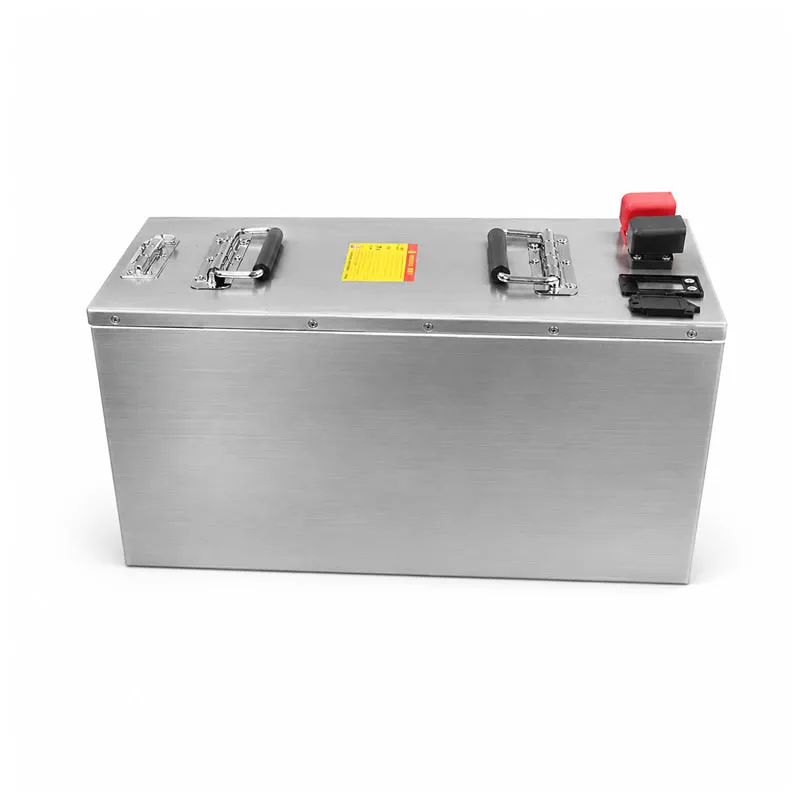
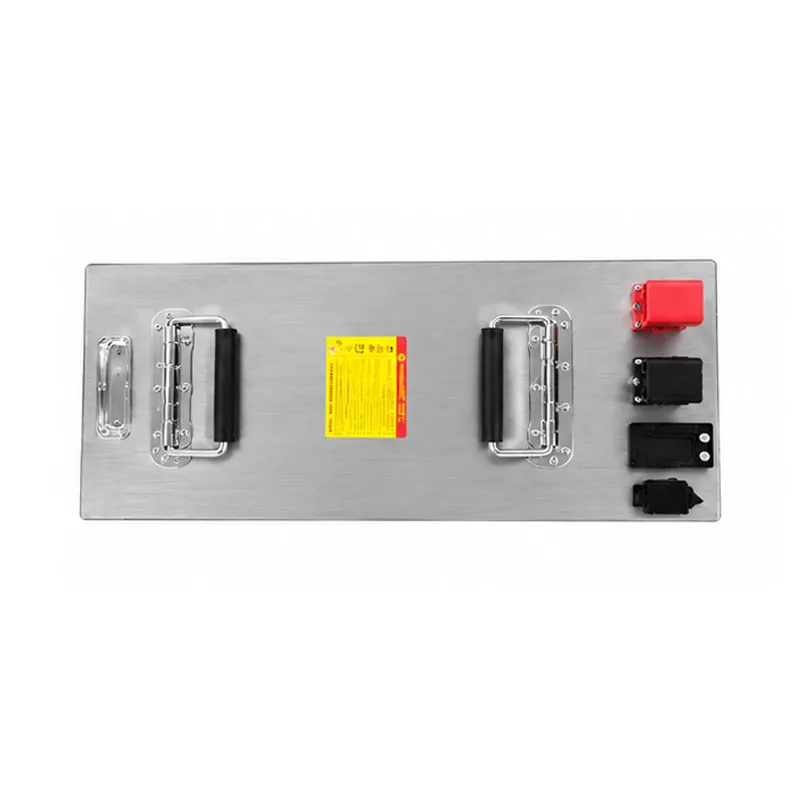
LiFePO4 battery safety refers to the combined chemical, thermal, electrical, and mechanical characteristics that help an LFP cell or battery pack resist failure and limit the severity of a failure if one occurs. At cell level, the phosphate-based cathode is comparatively stable at elevated temperature. At pack level, safe operation still depends on voltage monitoring, current protection, temperature sensing, cell balancing, insulation, suitable connectors, and a mechanically robust enclosure.
For procurement teams, LiFePO4 battery safety is a system property, not a marketing label. Packs using the same chemistry can differ when cell quality, interconnects, fusing, thermal sensing, or charger compatibility vary. Chemistry provides a margin; engineering determines how effectively it is used.
- Cell chemistry and cell quality, including consistency between cells.
- Battery management system limits for voltage, current, and temperature.
- Pack-level protection, including fuses, contactors, insulation, and pre-charge design where applicable.
- Mechanical protection against vibration, impact, water, dust, and connector damage.
- Charger compatibility and correctly defined charging voltage and current.
- Validation under the actual duty cycle, ambient temperature, load, and charging strategy.
Why Is the LFP Cathode More Thermally Stable?
The olivine structure and strong phosphate bonding
The foundation of LiFePO4 battery safety is the olivine crystal structure of the lithium iron phosphate cathode. Strong phosphorus-oxygen bonds help retain oxygen as temperature rises, reducing the cathode’s tendency to support combustion compared with many layered nickel-rich oxides. The result is a more stable response under many thermal and electrical abuse conditions, not zero reaction.
This characteristic is often described as lithium iron phosphate heat resistance. The phrase should not be interpreted as a single guaranteed temperature threshold. Laboratory results vary with cell format, state of charge, age, heating rate, trigger method, and measurement location. Research comparing LFP and NMC cells nevertheless commonly identifies LFP as the more thermally stable chemistry, with lower normalized heat release in many test configurations.
Why is NMC more reactive under severe abuse?
NMC cathodes use a layered oxide structure containing nickel, manganese, and cobalt. As temperature and state of charge increase, the structure can become unstable and release oxygen. The risk is generally more pronounced in high-nickel formulations because increasing nickel content can improve energy density while reducing thermal stability. During NMC thermal runaway, released oxygen can intensify electrolyte combustion and accelerate the reaction.
This does not mean every NMC cell is unsafe or every LFP cell is safe. NMC remains useful where energy density, package size, and range are critical. Safe use depends on cell design, thermal management, pressure relief, monitoring, and propagation control. LiFePO4 battery safety usually starts with a more stable cathode, while NMC often requires tighter thermal controls to reach the same pack-level target.
How Should Thermal Runaway Be Compared?
Thermal runaway is a self-accelerating failure in which heat generated inside a cell drives additional exothermic reactions. It can be initiated by internal short circuit, overcharge, external heating, crushing, penetration, or other abuse. Once the rate of internal heat generation exceeds the rate at which heat can be removed, temperature rises rapidly and the cell may vent, ignite, rupture, or transfer heat to adjacent cells.
LiFePO4 battery safety is often promoted using fixed “runaway temperatures.” Those figures are only meaningful when the exact cell and test method are provided. Studies show that state of charge and the trigger method can change gas production, mass loss, maximum temperature, and reaction rate. A procurement article should therefore compare tendencies rather than present one universal threshold for every LFP or NMC product.
| Safety characteristic | LFP tendency | NMC tendency |
|---|---|---|
| Cathode thermal stability | Generally higher | Generally lower, especially for high-nickel variants |
| Oxygen release from cathode | Lower tendency during decomposition | Greater tendency under severe heating |
| Heat-release severity | Often lower in comparative tests | Often higher in comparative tests |
| Vent-gas volume | Hazardous gas still possible | Often greater in comparable tests |
| Propagation potential | Can propagate without effective barriers | Can propagate rapidly without effective barriers |
| Required pack protection | BMS and full pack protection required | BMS and full pack protection required |
This qualitative comparison better represents LiFePO4 battery safety than a table of unsupported temperature ranges. It prevents buyers from assuming that chemistry alone determines the final risk level. A poorly engineered LFP pack may present more operational risk than a well-engineered and thoroughly validated NMC pack.
What Happens During a Cell Fire or Severe Failure?
Heat release and ternary lithium combustion
During severe failure, both chemistries can release heat, flammable vapor, and toxic or corrosive gases. Ternary lithium combustion is often more energetic because layered NMC cathodes can release oxygen as they decompose, supporting combustion even when external air is limited. High-nickel cells may therefore show faster temperature rise and greater heat transfer to nearby cells.
LFP cells generally release less heat and are less likely to sustain the same combustion intensity under comparable conditions. This difference supports LiFePO4 battery safety in equipment that operates near personnel, inventory, or passenger areas. It does not justify statements such as “LFP cannot burn” or “LFP only releases harmless smoke.” Those claims are technically incorrect and unsafe.
Vent gases are hazardous for both chemistries
Battery vent gases may include hydrogen, carbon monoxide, carbon dioxide, hydrocarbons, electrolyte vapor, and fluorinated compounds. A 2023 comparison reported more gas from the tested NMC cells than from LFP, but the LFP gases were still hazardous. Smoke from any failed lithium-ion battery should be treated as toxic and potentially flammable.
LiFePO4 battery safety lowers the probability or severity of some failure scenarios, but it does not remove the need for ventilation, detection, emergency response, and trained personnel. Damaged cells should not be handled, recharged, or returned to service until evaluated by qualified technicians.
Cell-to-cell propagation
In a multi-cell pack, the key question is whether heat from one failed cell can trigger its neighbors. Propagation depends on spacing, barriers, enclosure design, state of charge, cooling, vent direction, and module energy. LFP often provides a lower heat burden, but a densely packed LFP system can still transfer enough heat to adjacent cells.
For this reason, LiFePO4 battery safety must include pack-level testing. Buyers should ask whether the supplier has evaluated abnormal charging, short circuit, vibration, impact, water ingress, and thermal propagation at the relevant cell and pack configuration—not merely whether the cell chemistry is LFP.
Why Dose Golf Cart Battery Safety Favor LFP?
Golf carts and low-speed utility vehicles often operate in warm climates, carry passengers, climb slopes, and remain parked or charged near clubs, resorts, warehouses, or residential areas. These operating conditions make golf cart battery safety a practical fleet-management issue rather than a theoretical specification. Packs may experience repeated acceleration, opportunity charging, seasonal storage, vibration, moisture, and inconsistent charging habits across multiple users.
LiFePO4 battery safety is attractive in this environment because LFP chemistry combines good thermal stability with a long cycle-life potential and relatively flat discharge behavior. A properly matched pack can also reduce routine maintenance compared with flooded lead-acid batteries. However, safe conversion or replacement requires more than matching the nominal voltage. The charger, controller, cable size, current limits, mounting, and low-voltage cutoff must all be compatible.

B2B buyers evaluating golf cart battery safety should request cell traceability, BMS protection logic, enclosure ingress protection, vibration validation, charger specifications, and clear installation instructions. FEBATT offers configurable solutions for commercial and utility fleets through its
How Could LFP Reduce Forklift Battery Fire Risk?
Forklifts operate beside personnel, racking, packaging, and high-value inventory. They may also work across multiple shifts with opportunity charging and high current demand. A battery fault can interrupt material flow and, in the worst case, create a fire inside a densely occupied facility. Forklift battery fire risk therefore depends on chemistry, pack design, charging-area controls, maintenance, and operator behavior.
LiFePO4 battery safety provides a useful starting point for industrial vehicles because the chemistry generally releases less heat during thermal runaway than comparable NMC cells. This can reduce the thermal load placed on the enclosure and neighboring modules. The benefit is particularly important where a pack is enclosed inside the forklift chassis and where evacuation or firefighting access may be limited.

LiFePO4 battery safety does not excuse poor engineering. The chemistry’s lower intrinsic reactivity still requires robust pack design. Forklift packs need correctly sized fuses, insulated high-current connections, temperature sensors, current limits, secure mounting, vehicle communication where required, and a matched charger. Damaged connectors, loose terminals, water intrusion, impact, or bypassed protection can increase forklift battery fire risk regardless of chemistry.
Fleet managers should also define procedures for abnormal odor, smoke, swelling, repeated BMS faults, overheating, or impact damage. The vehicle should be removed from service and isolated when severe symptoms appear. FEBATT provides industrial configurations through its
Why Does LFP Still Require a Complete Safety System?
The strongest mistake in battery procurement is to treat LiFePO4 battery safety as a substitute for engineering. A robust pack should use independent protection layers so a single fault does not escalate. The architecture varies by voltage, current, vehicle type, and market requirements.
- A BMS that monitors cell voltage, pack current, and relevant temperatures.
- Overcharge, over-discharge, overcurrent, and short-circuit protection.
- Fuses, contactors, pre-charge circuits, and service disconnects where required.
- An enclosure designed for vibration, impact, moisture, dust, and controlled venting.
- Connectors, busbars, and cables sized for continuous and peak current.
- A charger with the correct voltage profile, current limit, and communication strategy.
- Validation of the battery with the actual motor, controller, duty cycle, and environment.

Transport compliance is separate from vehicle validation. Lithium cells and batteries for transport are subject to UN Manual of Tests and Criteria subsection 38.3. Passing UN 38.3 confirms performance under a defined transport sequence; it does not prove suitability for every vehicle or operating environment. LiFePO4 battery safety claims should distinguish transport testing, certification, and vehicle-level validation.
When Can NMC Still Be the Right Choice?
LFP is not automatically the best chemistry for every project. NMC offers higher gravimetric and volumetric energy density, which can be important when the battery compartment is small or vehicle mass strongly affects performance. Premium motorcycles, long-range passenger vehicles, and some mobile equipment may accept the additional thermal-management burden in exchange for more energy within a limited package.
LiFePO4 battery safety should be weighed against energy density through a documented trade-off. If maximum range and minimum mass dominate, NMC may be justified. If frequent cycling, long service life, lower heat-release severity, and predictable operation are the priorities, LiFePO4 battery safety often provides a better fit. Cost analysis should include cooling, insulation, monitoring, warranty exposure, and replacement intervals—not only cell price.
A responsible supplier should explain both advantages and limitations. Claims that NMC is inherently unusable or that LFP eliminates all fire risk are not credible. The technically defensible position is that LFP generally offers a wider thermal-safety margin, while both chemistries require disciplined cell selection and pack integration.
B2B Procurement Checklist for Safer Battery Packs
Procurement teams can translate LiFePO4 battery safety into measurable supplier requirements. The following questions help distinguish a complete battery system from a pack marketed primarily by chemistry name.
- Which cell manufacturer, model, grade, and production lot are used?
- What are the continuous and peak current limits, and under what temperature conditions?
- How are fusing, contactors, pre-charge, insulation, and service disconnection implemented?
- What vibration, impact, ingress, overcharge, short-circuit, and thermal tests have been completed?
- Is the charger validated with the exact battery configuration?
- What diagnostic data, CAN communication, fault logs, and maintenance instructions are available?
- Which transport and target-market documents can the supplier provide?
- How are production consistency, serial traceability, and end-of-line testing controlled?
These questions make LiFePO4 battery safety auditable by replacing broad promotional language with evidence that engineers, fleet managers, and purchasing teams can review.
Relevant Technical FAQ
1.What exactly is LiFePO4 battery safety?
LiFePO4 battery safety combines LFP chemistry’s relative thermal stability with pack-level controls that prevent, detect, isolate, and limit failure. The chemistry generally retains oxygen more strongly than layered NMC cathodes, which can reduce reaction severity. A safe pack still requires a suitable BMS, fuses, thermal and mechanical design, compatible charging, controlled production, and correct installation.
2.Why is LiFePO4 battery safety generally better than NMC?
The strong phosphate bonding and olivine cathode structure provide greater thermal stability than the layered oxide structure used by NMC. Comparative research often reports lower heat release from LFP and greater vent-gas production from NMC cells. Actual results depend on cell design, state of charge, age, and test method, so the comparison should be treated as a chemistry tendency rather than a universal numerical guarantee.
3.At what temperature does an LFP battery become unsafe?
There is no single temperature that defines every LFP battery as safe or unsafe. Warning limits and shutdown temperatures must come from the specific cell and pack manufacturer. Thermal-runaway measurements vary with cell format, state of charge, heating rate, trigger method, and sensor position. Operators should follow the product limits in the technical documentation and investigate any repeated overheating or temperature fault.
4.Can an LFP battery catch fire under extreme conditions?
Yes. Severe overcharge, internal short circuit, crushing, penetration, external fire, manufacturing defects, or inappropriate charging can cause an LFP battery to vent, ignite, or enter thermal runaway. The reaction is often less energetic than comparable NMC failure, but the smoke and gases remain hazardous. LiFePO4 battery safety reduces risk and potential severity; it does not eliminate them.
5.Does LFP remove the need for a BMS?
No. Every traction or industrial LFP pack requires appropriate electronic and electrical protection. A BMS monitors cell voltage, current, temperature, state of charge, and cell balance, while fuses and contactors provide additional protection. The BMS settings must match the cell data, charger, controller, and real duty cycle.
6.Why do commercial fleets often prioritize LFP?
Commercial fleets often value cycle life, thermal stability, predictable power, and low maintenance more than maximum energy density. LiFePO4 battery safety can reduce risk in forklifts, golf carts, electric tricycles, and other regularly cycled equipment. The final decision should still compare weight, space, energy demand, charging time, and total cost of ownership.
Conclusion
LiFePO4 battery safety is a strong reason to choose LFP for commercial vehicles and industrial equipment, but the advantage must be stated accurately. The olivine cathode generally provides higher thermal stability, lower heat-release severity, and less aggressive oxygen-supported combustion than NMC, making propagation control easier in many designs.
Chemistry is only the first layer. A safe product also requires qualified cells, a calibrated BMS, fusing, robust connections, a compatible charger, environmental protection, and realistic testing. The same principle applies to golf cart battery safety and forklift battery fire risk: the pack must be engineered for the vehicle and facility, not selected solely by chemistry name.
For B2B buyers, the most reliable approach is to request traceable data, test evidence, and clear operating limits. Combined with LFP’s thermal advantages, LiFePO4 battery safety becomes a practical fleet benefit rather than an unsupported promise.