For a commercial electric-tricycle fleet, battery procurement is an uptime, route-completion, safety, maintenance, and replacement-planning decision. The right lithium battery for vehicle must be specified around actual routes, payloads, working hours, road conditions, and service expectations rather than nominal voltage or catalogue capacity.
A stronger buying process starts with the work the vehicle must complete. Procurement captures the fleet duty cycle, engineers translate it into measurable electrical, thermal, mechanical, and communication limits, and suppliers are compared against the same acceptance criteria. This makes a lithium battery for vehicle easier to evaluate on operating risk instead of quotation price alone.
For buyers defining the wider application, this power battery solution explains how commercial power-battery requirements change by vehicle and operating scenario. That application context helps teams avoid treating one battery architecture as suitable for every fleet.
Where Does a Lithium Battery for Vehicle Fit in Commercial Electric-Tricycle Procurement?
In a cargo or passenger tricycle, the battery sits at the intersection of vehicle productivity and fleet economics. A lithium battery for vehicle influences route completion, dispatch availability, charging windows, maintenance intervention, and the quantity of spare packs that a fleet may need to hold.
That is why the pack should be treated as a vehicle subsystem rather than a stand-alone energy box. Procurement must consider the motor and controller, charger, wiring, payload, speed profile, regenerative braking where applicable, mounting space, vibration, water or dust exposure, and service access together.
For teams working specifically on three-wheelers, this electric three-wheeler battery guide for OEM and fleet buyers provides a vehicle-focused reference for payload, route, packaging, and operating-duty decisions.
Two quotations can show similar nominal ratings while hiding different usable-energy windows, current limits, thermal derating, cell sourcing, connector ratings, BMS logic, or warranty exclusions. For the fleet buyer, the objective is a lithium battery for vehicle that supports predictable utilization with reasonable margin for route variation, aging, seasonal temperature change, and normal operating mistakes.
Which Operating Data Should Fleets Capture Before the RFQ?

A credible RFQ begins with evidence from vehicles and routes. The supplier should not be asked to recommend a lithium battery for vehicle from voltage alone. Procurement should provide a compact operating profile that exposes the conditions most likely to create insufficient range, nuisance cutoffs, accelerated aging, or maintenance problems.
| RFQ input | What the buyer should capture | Why it matters |
|---|---|---|
| Vehicle & integration | Cargo or passenger tricycle, motor/controller limits, curb mass, mounting envelope | Defines electrical, mechanical, and installation constraints |
| Payload | Typical, minimum, and maximum loaded mass | Changes current demand, heat generation, and route energy |
| Route | Daily distance, longest route, gradients, stop density | Sets usable-energy and peak-power requirements |
| Road conditions | Urban roads, broken pavement, industrial yards, water/dust exposure | Drives vibration, mounting, connector, and ingress requirements |
| Climate | Typical and extreme ambient temperatures | Affects charge acceptance, power delivery, derating, and aging |
| Operating pattern | Shifts per day, idle time, acceleration frequency, average speed | Defines duty-cycle severity and service availability |
| Charging window | Depot time, charger availability, opportunity charging, battery swapping | Shapes charge-rate and spare-pack strategy |
| Service target | Required uptime, planned life, maintenance resources | Connects battery design with fleet TCO |
Road quality deserves specific attention. Electric trike batteries mounted under a cargo bed can experience shock, fastener loosening, connector strain, splash exposure, and repeated vibration. Steep routes may add frequent high-current acceleration and regenerative events. These details affect enclosure, mounting, current capability, and BMS behavior.
For cell-level controls behind the pack, this rechargeable lithium cell sourcing guide for commercial two- and three-wheelers outlines the importance of batch identity, screening, and traceability before pack assembly.
For application-level sizing, the RFQ should model the worst credible working day, not only the average day, so the lithium battery for vehicle retains usable reserve when conditions become more demanding.
How Should Buyers Turn Fleet Duty Cycles Into Supplier Specifications?
Once operating data is available, it must become engineering limits that different EV battery suppliers can quote against consistently. Start with daily energy consumption from representative vehicles, then add a realistic reserve for route variation, aging, temperature, and dispatch uncertainty.
A lithium battery for vehicle specification should define usable energy, continuous current, short-duration peak current, expected peak duration, charging window, regenerative-current conditions where applicable, and low-temperature charging rules. It should also state the expected service-life target and the fleet’s acceptable downtime risk.
BMS behavior should be measurable. If protection disconnects during legitimate acceleration, the vehicle becomes unavailable even when the cells are healthy. If limits are too permissive, degradation or safety margin can suffer. The lithium battery for vehicle therefore needs intervention thresholds, fault behavior, and recovery logic that match the controller and duty cycle.
Thermal requirements should cover high-temperature derating, sensor placement, diagnostic-event storage, and low-temperature charging restrictions. The final RFQ should require the supplier to demonstrate that the lithium battery for vehicle meets these limits under representative load profiles rather than simply confirming nominal ratings.
Which Manufacturer Audits, Cell Traceability, and Sample Tests Reduce Sourcing Risk?
Supplier qualification should distinguish manufacturing capability from sales capability. A custom battery manufacturer should be able to show how cells are received, screened, grouped, assembled, welded, insulated, programmed, tested, serialized, and released. Procurement should verify the process and records, not only presentations.
Cell traceability is essential for fleet-scale fault analysis. Buyers should ask whether each lithium battery for vehicle can be traced from the finished-pack serial number to cell model, supplier batch, production lot, incoming-inspection results, BMS revision, and key process records.
Factory evidence checklist
- Incoming cell and component quality controls
- Welding, torque, insulation, and assembly controls
- BMS programming, calibration, and software revision control
- End-of-line testing and finished-pack serialization
- Engineering-change management and retained process records
- Warranty-failure analysis and root-cause support
If a seller cannot show where the lithium battery for vehicle is assembled or how records are retained, the buyer should treat the sourcing model accordingly.
Sample validation must represent commercial use. Check fit, connectors, communication, charger interoperability, current capability, thermal response, BMS protection, vibration or ingress needs, and loaded-route performance. The strongest EV battery suppliers can connect cell-level evidence with pack-level and vehicle-level results.

What Can Be Customized for Commercial Electric Tricycles?
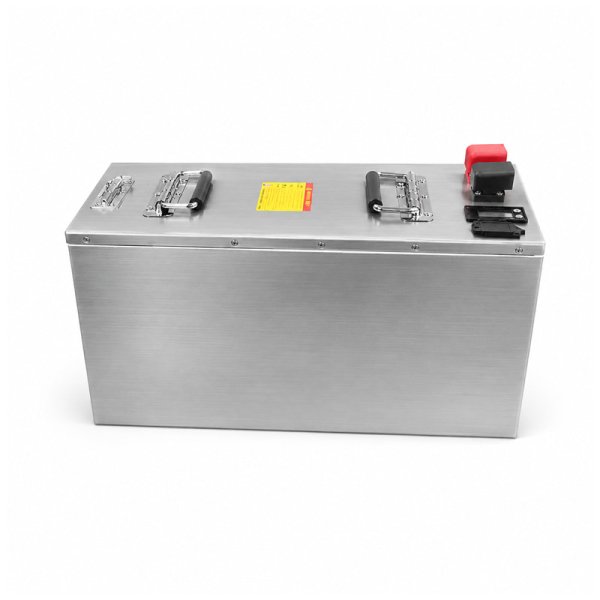
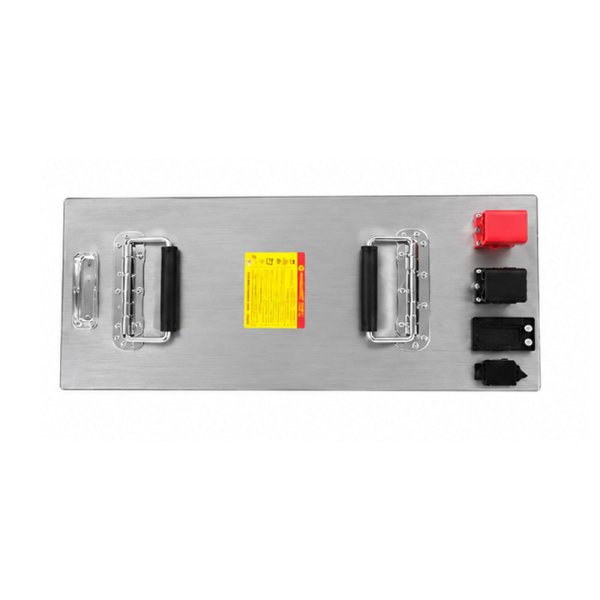
Commercial tricycles often have packaging or service constraints that make catalogue packs impractical. A lithium battery for vehicle may need a custom envelope, mounting points, cable-exit direction, connector position, service access, communication protocol, enclosure geometry, or charger interface.
Fitment comes first. A custom battery manufacturer should work from a controlled drawing or 3D envelope covering tolerances, mounting loads, cable clearance, service removal, and vehicle-side obstructions. The aim is repeatable installation across production vehicles rather than a one-off prototype fit.
BMS customization can include current thresholds, SOC calibration, CAN or RS485 communication, wake/sleep logic, contactor control, fault reporting, temperature limits, and data logging. The lithium battery for vehicle should communicate in a way that supports both vehicle control and fleet maintenance.
Connectors and enclosure design need the same discipline. Electric trike batteries may require keyed connectors, anti-loosening features, service disconnects, ingress or impact protection, and corrosion-resistant hardware. Some buyers use the shorthand “e trike battery,” but the approved design still needs controlled drawings, validation, and revision history.
Every bespoke feature can affect tooling, validation, spare-part compatibility, lead time, and future engineering changes. Procurement should require a revision-controlled specification so the qualified lithium battery for vehicle cannot be altered silently after approval.
How Do MOQ, Tooling, Lead Time, Spare Stock, and Changes Affect Landed Cost?
The lowest unit price rarely represents the lowest program cost. A lithium battery for vehicle quotation may exclude tooling, prototypes, communication development, special connectors, validation work, freight, spare packs, or engineering-change fees.
MOQ should be tested against demand volatility and fleet expansion plans. A high MOQ may reduce piece price while increasing cash tied up in inventory and the risk of holding obsolete packs after a vehicle revision. Very small orders can create higher conversion cost and less predictable production scheduling.
Tooling ownership should be explicit. Buyers need to know who owns molds, fixtures, firmware, drawings, and test programs, whether they can be transferred, and what happens if the supply relationship ends. Those terms become more important after a fleet standardizes on one lithium battery for vehicle envelope.
Lead time should be separated into engineering, sample, validation, pilot, and mass-production phases. Spare stock also needs a defined replenishment policy because packs, connectors, chargers, and BMS units may have different lead times. A replacement lithium battery for vehicle needs a known service path before fleet launch.
Engineering changes require formal control. Changes to cell source, cell grade, BMS hardware, firmware, enclosure material, sealing method, connector, busbar, or welding process should trigger notification and revalidation where necessary. Stable configuration is part of landed cost, not an administrative extra.

How Should Quotes Be Compared on Uptime, Warranty, and Lifecycle TCO?
Quotation comparison should move beyond price per pack. A lithium battery for vehicle creates value only when it keeps the tricycle available for productive work. Buyers should compare offers using the same operating horizon, duty cycle, and service assumptions.
A practical comparison should include usable energy, expected cycle life under stated conditions, charging time within the fleet’s window, diagnostics, maintenance burden, replacement lead time, warranty coverage, spare-stock policy, and failure-response process. A cheaper lithium battery for vehicle can cost more if it causes route failures, repeated resets, or excessive spare inventory.
Warranty terms should explain how capacity retention is measured, which operating conditions are excluded, what evidence is needed for claims, who pays freight, and how quickly replacement decisions are made. The warranty for a lithium battery for vehicle should be administrable under real fleet conditions rather than dependent on laboratory conditions that are hard to reproduce.
Lifecycle TCO should combine acquisition, installation, chargers, spares, maintenance, replacements, energy, downtime, logistics, and end-of-life handling. When procurement compares lithium battery packs for electric vehicles, those costs should be normalized to the same commercial electric-tricycle duty cycle so broad EV assumptions do not distort the decision.
Supplier responsiveness also has value. Clear fault codes, remote data review, available spares, and a defined escalation route can outweigh a small purchase-price discount. The strongest lithium battery for vehicle proposal is the one whose performance, service model, and commercial terms remain credible across the fleet’s real operating life.
Conclusion
Commercial electric-tricycle procurement works best when the battery is specified from the route backward. The fleet defines the work; engineering converts it into electrical, thermal, mechanical, communication, and validation limits; procurement then compares suppliers on equal terms.
A well-qualified lithium battery for vehicle should fit the tricycle, sustain the defined duty cycle, integrate with the charger and controller, provide useful diagnostics, remain traceable through production, and be supported by workable warranty and spare-stock processes.
For fleet and OEM programs, electric trike batteries should be purchased as controlled vehicle subsystems rather than interchangeable commodities. When specification, factory verification, sample testing, change control, and TCO analysis are aligned, a lithium battery for vehicle becomes a predictable operating asset instead of an uncertain sourcing risk.
Frequently Asked Questions About Electric Scooter Battery
Q: What type of electric scooter battery is best for fleets?
A: Provide vehicle data, payload, route, gradients, stops, temperature, shifts, charging window, pack space and interfaces so the lithium battery for vehicle can be specified to real work.
Q: How long does an electric scooter battery last?
A: Audit the production site, incoming cell control, welding, BMS programming, end-of-line testing and records. Confirm each lithium battery for vehicle is linked to controlled manufacturing data.
Q: Is LiFePO4 a good electric scooter battery chemistry?
A: Validate fitment, current capability, BMS protection, charger compatibility, thermal response, vibration or ingress needs, and loaded-route performance for the lithium battery for vehicle.
Q: Which electric scooter battery chemistry works better in cold weather?
A: Yes. A custom battery manufacturer can adapt fitment, BMS logic, CAN/RS485, connectors, enclosure and charger interface, but the lithium battery for vehicle design should remain revision-controlled.
Q: Can a tricycle use the same chemistry as an electric scooter battery?
A: Compare total program cost, including MOQ inventory exposure, tooling ownership, sample and validation fees, lead time, spares, freight, and future engineering-change charges.