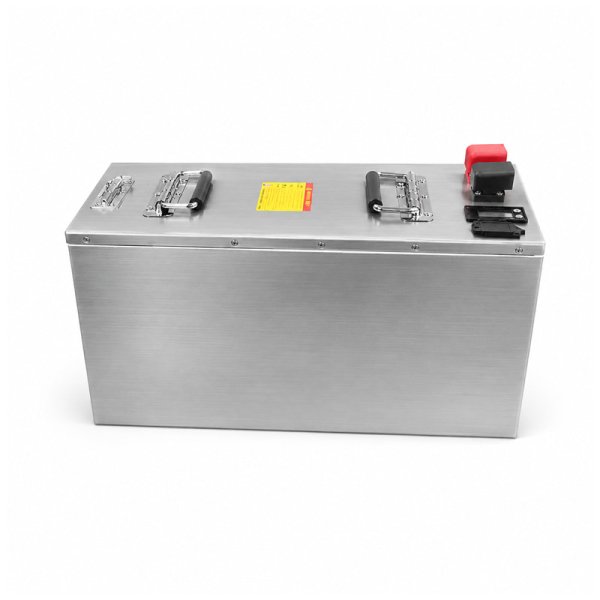
For a commercial two- or three-wheeler fleet, battery reliability is not decided by one impressive specification on a datasheet. It depends on whether every rechargeable lithium cell in the pack can deliver predictable performance under repeated acceleration, payload changes, heat, vibration, partial charging, and long operating shifts. A cell that looks acceptable in a laboratory can still create field failures when batch consistency, thermal behavior, pack integration, or supplier traceability is weak.
B2B buyers should therefore evaluate a rechargeable lithium cell as one element of a complete traction-battery system. The practical objective is not to purchase the cheapest cell, but to secure a battery pack that maintains usable energy, power delivery, safety margin, and service life across a fleet. Buyers planning larger programs can first define application requirements through a broader power battery solution framework before approving cells, BMS settings, enclosure design, charging strategy, and production controls.
This guide explains how sourcing and engineering teams can qualify cells without losing sight of the issues that matter most to fleet operators: uptime, replacement frequency, warranty exposure, maintenance burden, and total cost of ownership.
Which Cell Specifications Matter Most for Commercial Two- and Three-Wheeler Battery Packs?
A rechargeable lithium cell should never be selected from nominal capacity alone. In commercial light EVs, the most useful specifications are those that describe how the cell behaves under the vehicle’s real duty cycle. That includes usable capacity at the intended discharge rate, continuous and pulse current capability, DC internal resistance, cycle life under realistic depth of discharge, temperature performance, charge acceptance, and consistency from cell to cell.

For delivery motorcycles, the rechargeable lithium cell population may experience dozens or hundreds of acceleration events per shift. Cargo tricycles add another stressor: payload varies significantly between routes, and repeated starts under load can produce high current demand even when average energy consumption appears modest. A rechargeable lithium cell with low measured capacity variation but unstable resistance can therefore create more operational risk than a slightly lower-capacity cell with tighter production consistency.
Procurement teams should translate vehicle use into a pack-level requirement first, covering route distance, payload, gradients, stop frequency, temperature, shift length, charging windows, and expected service years. Once those parameters are defined, the rechargeable lithium cell can be judged against the actual application rather than a generic specification sheet.
This systems approach is especially important when the battery is customized around a vehicle platform. A practical reference is the custom lithium battery pack design guide for electric motorcycles, where cell choice must be coordinated with BMS limits, mechanical space, motor demand, connectors, thermal design, and charging conditions. In other words, cell approval should support pack reliability, not become a separate purchasing exercise.
Every headline figure should carry its test conditions. Cycle-life and rechargeable lithium-ion cell performance claims are meaningful only when depth of discharge, temperature, current, and end-of-life criteria are disclosed.
How Should Buyers Compare Cylindrical, Prismatic and Pouch Cell Formats?
Cell format affects thermal pathways, mechanical protection, assembly complexity, repair strategy, and failure propagation. For that reason, the best rechargeable lithium cell format depends on the vehicle architecture and operating environment rather than on a universal ranking.
Cylindrical cells offer mature automated production, strong containment, and flexible pack geometry. Their higher cell count, however, makes welding quality, current sharing, thermal uniformity, and matching especially important.
Prismatic cells reduce cell count and can simplify busbar architecture, which may suit regular battery compartments in commercial tricycles. Buyers still need to examine swelling tolerance, compression, thermal gradients, and enclosure restraint.
Pouch cells can improve packaging efficiency and reduce weight, but they demand disciplined mechanical support against puncture, swelling, and uneven pressure. Pack engineering therefore becomes particularly consequential.
For fleet buyers, the decision should be framed around field consequences. If a battery is expected to operate in high-frequency delivery, industrial hauling, or shared mobility, the format must support repeatable production and predictable aging. The commercial electric tricycle battery guide illustrates why payload, route intensity, charging opportunities, and downtime cost should influence battery architecture before a purchase order is placed.
The correct question is not “Which cell format is best?” but “Which rechargeable lithium cell format gives this fleet the most robust pack when manufacturing capability, thermal control, repairability, vibration, and cost are considered together?”
What Cell Grade, Production Date and Traceability Evidence Should a Supplier Provide?
“Grade A” is widely used in battery sales, but the phrase has limited value unless the supplier defines the acceptance criteria behind it. A B2B buyer should require objective evidence showing what qualifies a rechargeable lithium cell for the intended production lot.
At minimum, the supplier should provide manufacturer identity, model, lot code, production date, rated capacity, test method, and quality-record traceability. Fleet programs should also document storage duration and whether different lots may be mixed in one shipment or pack.
Production date matters because storage history affects state of charge, self-discharge, impedance, and consistency. An older cell is not automatically unsuitable, but mixed or undocumented production lots deserve scrutiny.
Traceability becomes commercially important when failures occur months after deployment. If a fleet experiences abnormal capacity loss in a subset of vehicles, the supplier should be able to identify which rechargeable lithium cell lot was used, which pack serial numbers contain that lot, and whether production records show any deviation. Without that chain of evidence, warranty investigations become slow, expensive, and contentious.
For mass-production programs, buyers should also request change-control commitments. A supplier should not silently replace the approved rechargeable lithium cell with a nominally similar alternative because of price or availability. Any change in cell manufacturer, model, chemistry, separator, electrolyte formulation, production site, or other material characteristic should trigger engineering review and, where appropriate, revalidation at pack level.

How Should Capacity, DCIR and Self-Discharge Be Checked Across a Sample Batch?
A rechargeable lithium cell sample batch should be treated as a distribution, not as a collection of isolated pass/fail units. The key question is how tightly the rechargeable lithium cell population behaves around the target value and whether any outliers indicate manufacturing or storage problems.
Capacity testing should use a controlled charge-rest-discharge-rest procedure at specified temperature and current. Buyers should compare the mean, range, standard deviation, and weakest samples; a strong average can still conceal poor consistency.
DCIR deserves equal attention because resistance affects voltage sag, heat generation, current sharing, and power delivery. In high-frequency fleets, resistance mismatch can accelerate imbalance and cause the BMS to protect the weakest part of the pack earlier than expected.
Self-discharge testing can expose latent defects and storage instability. After controlled charging and storage, unusually rapid loss of voltage or capacity should be investigated rather than hidden inside a production pack.
The lithium cell voltage reading is useful as a screening variable, but it should not be interpreted in isolation. Voltage depends on chemistry, state of charge, rest time, temperature, and recent load history. A narrow lithium cell voltage spread after a controlled rest can support screening, yet it does not replace capacity, DCIR, or self-discharge measurements.
For rechargeable lithium-ion cell samples, buyers should request both acceptance limits and the actual statistical distribution, not only a pass/fail statement.
Which Discharge, Temperature and Cycle Tests Best Reflect Real Vehicle Duty Cycles?
Laboratory testing becomes useful to a fleet only when the test profile resembles field operation. A rechargeable lithium cell tested at a gentle constant current may show excellent life while performing much less favorably in a vehicle that experiences frequent acceleration, regenerative current, heat soak, partial charging, and irregular rest periods.

The first step is an application-derived load profile. Delivery motorcycles may face repeated short power peaks and frequent stops; cargo tricycles may spend longer under high load and accumulate more heat, especially on loaded routes.
Discharge testing should therefore include both continuous current and representative pulses. Engineers should record delivered capacity, temperature rise, voltage sag, and recovery behavior. The lithium ion cell discharge curve can help identify how voltage responds through the usable state-of-charge window, especially under different loads and temperatures. A useful lithium ion cell discharge curve is one generated under conditions close to the intended application, not merely copied from a generic datasheet.
Temperature testing should reflect the markets where vehicles operate. Hot-climate fleets need evidence on heat generation and aging; cold-region fleets need evidence on charge acceptance and available power. Enclosure thermal design and BMS logic must be validated with the cell, not separately.
Cycle tests should reproduce realistic depth of discharge and charging behavior. Fleets using opportunity charging may be better represented by partial cycles, periodic high-load events, temperature variation, and realistic dwell times than by repeated full laboratory cycles.
For B2B approval, the purpose is not to generate the largest possible cycle-life number. It is to estimate whether a rechargeable lithium cell and the finished pack will retain sufficient energy and power through the contracted service period with acceptable warranty risk.
How Much Cell-to-Cell Variation Is Acceptable Before Pack Matching Becomes Risky?
There is no single universal percentage that defines acceptable variation for every chemistry and pack architecture. The acceptable window depends on the rechargeable lithium cell model, series-parallel configuration, BMS balancing capability, current demand, thermal design, and service-life target.
What matters operationally is the interaction between parameters. Capacity mismatch changes how quickly different cells reach charge or discharge limits. DCIR mismatch changes heat generation and voltage drop under load. Self-discharge mismatch changes balance during storage. A lithium cell voltage difference may be a symptom of these issues, but the root cause must be identified before cells are accepted or rejected.
For commercial fleets, matching should be designed around the weakest-cell principle. The pack cannot use the theoretical energy of its strongest rechargeable lithium cell if another cell group reaches the BMS cutoff first. As imbalance grows, the fleet may see reduced range, inconsistent state-of-charge estimation, unexpected power limitation, or more frequent balancing time during charging.
Matching windows should come from process capability data rather than arbitrary marketing tolerances. Incoming lots should be compared with the approved baseline, and materially different production populations should not be mixed without validation.
This is where B2B buyers should distinguish between “all cells passed” and “the cell population is suitable for series production.” The second standard is more demanding, but it is also far more relevant to a fleet operating hundreds or thousands of vehicles.
How Should Incoming Inspection and Lot Sampling Be Designed for Mass Production?
Incoming inspection should protect production without turning every shipment into a full laboratory qualification exercise. The most effective approach is risk-based: verify the identity and condition of every lot, then apply sampling intensity according to supplier history, application criticality, lot size, and recent quality performance.
The first layer is documentation. Each rechargeable lithium cell shipment should match the approved manufacturer, model, chemistry, lot code, production period, and agreed packaging condition. Visual checks should look for deformation, corrosion, damaged wraps or terminals, contamination, and shipping damage. Packaging labels and cell markings should agree with traceability documents.
The second layer is rapid electrical screening: open-circuit voltage, impedance or DCIR, dimensions, mass, and selected capacity checks. Lithium cell voltage can flag gross anomalies, but storage state and temperature must be controlled.
The third layer is periodic deeper verification using capacity, pulse-power, self-discharge, temperature, and cycle checks. Stable suppliers may earn reduced inspection; changes or repeated deviations should trigger tighter control.
Sampling plans should define the response to failure: expanded sampling, quarantine, investigation, sorting, or rejection. Replacing only the failed sample can conceal a wider distribution problem.
For fleets, good incoming rechargeable lithium cell quality control protects more than factory yield. It reduces the probability that marginal cells enter packs, survive end-of-line testing, and fail only after vehicles are deployed across multiple regions. That downstream failure is far more expensive than rejecting a questionable lot before assembly.
How Can Buyers Compare Cell Cost Against Yield, Warranty Risk and Pack-Level TCO?
The lowest quoted cell price is rarely the lowest battery cost. A rechargeable lithium cell should be compared through its effect on pack yield, assembly complexity, warranty frequency, usable energy retention, fleet downtime, and replacement interval.
A lower-priced supplier may still cost more if wider capacity or resistance variation requires extra sorting, lowers pack yield, increases balancing burden, or causes earlier field failures. A higher cell price can be economically preferable when process control is stronger.
A practical TCO model should include cell purchase cost, yield loss, pack manufacturing and quality-control cost, warranty/service cost, and fleet operating cost. If an unreliable rechargeable lithium cell contributes to a battery failure, the customer may incur towing, missed deliveries, replacement labor, spare-vehicle use, route disruption, and lost revenue.
Battery aging also changes the economics. A rechargeable lithium cell that retains usable capacity and acceptable resistance for longer can postpone replacement. In high-utilization fleets, that benefit may outweigh a modest reduction in initial procurement price.
Supplier responsiveness also has economic value. Strong traceability enables faster root-cause analysis and targeted containment; weak traceability can force unnecessary inspection or replacement across a wider vehicle population.
The most useful purchasing metric is therefore not cost per cell. It is cost per reliable unit of fleet service. A rechargeable lithium cell earns its place in a commercial pack when it supports high pack yield, predictable service life, manageable warranty exposure, and stable vehicle availability.
Conclusion
Commercial two- and three-wheeler buyers do not purchase cell specifications in isolation; they purchase vehicle uptime. That distinction should shape every stage of sourcing. The rechargeable lithium cell must be evaluated through the finished battery pack and the operating environment in which the fleet will earn revenue.
A disciplined program begins with the application: route intensity, payload, acceleration demand, ambient temperature, charging window, expected life, and service model. It then connects those requirements to rechargeable lithium cell selection, supplier traceability, batch statistics, pack matching, BMS protection, thermal design, production inspection, and field monitoring.
This prevents procurement teams from overvaluing one attractive number. Capacity, lithium cell voltage, a lithium ion cell discharge curve, and cycle-life data are useful only when they help predict whole-pack behavior across repeated production lots.
For OEMs and fleet operators, the strongest sourcing decision is therefore the one that balances technical evidence with business risk. A rechargeable lithium cell should not merely pass initial testing. It should contribute to a battery pack that can be manufactured consistently, supported efficiently, and operated at a defensible total cost over its planned service life.
Frequently Asked Questions About Rechargeable Lithium Cell
Q: What makes a rechargeable lithium cell suitable for commercial light EVs?
A: A rechargeable lithium cell should combine consistent capacity and DCIR, suitable power capability, thermal stability, traceable production, and validated cycle life under the vehicle’s real payload, route, and charging conditions.
Q: Should buyers request original cell test reports and batch codes?
A: Yes. Test reports, batch codes, production dates, and manufacturer traceability help buyers confirm that the approved rechargeable lithium cell matches production supply and enable faster containment if a fleet issue appears later.
Q: How many cells should be sampled before approving a production lot?
A: There is no universal number. Sampling should reflect lot size, supplier history, application risk, test cost, and prior defects. New or changed rechargeable lithium cell lots normally justify tighter inspection than proven stable lots.
Q: Why does DCIR variation matter in a motorcycle or tricycle battery pack?
A: DCIR variation changes voltage sag, heat generation, and current sharing. Excessive spread can make one rechargeable lithium cell group reach BMS limits earlier, reducing usable range and accelerating imbalance across the pack.
Q: When is a cylindrical cell better than a prismatic or pouch cell?
A: Cylindrical cells may suit compact, modular, highly automated packs, while prismatic or pouch formats can reduce cell count or improve packaging. The best rechargeable lithium cell format depends on duty cycle and pack architecture.
Q: How should rejected or outlier cells be handled during incoming inspection?
A: Outliers should be segregated, documented, and investigated rather than mixed back into production. Repeated rechargeable lithium cell failures should trigger expanded sampling, lot quarantine, supplier corrective action, or rejection.