For a warehouse operator, a battery defect can stop an AGV in a narrow aisle and delay downstream work. The real challenge for an AGV battery pack factory is not building one successful prototype; it is delivering repeatable performance across an entire robot fleet.
An AGV battery pack factory must connect cell selection, PACK assembly, BMS communication and production testing to the customer’s operating requirements. For OEMs, this reduces integration and fleet-expansion risks.
What Should OEMs Check Before Production Starts?
A dependable AGV battery pack factory begins with incoming inspection, not final assembly. Cells should be checked for approved chemistry, capacity grouping, open-circuit voltage and internal resistance. Components must match the approved bill of materials (BOM).
Unapproved substitutions can change voltage sag, heat or fit. Before approving an AGV battery pack factory, request the approved drawings, component revisions and incoming-inspection criteria.

For multi-shift fleets, LiFePO4 lithium batteries are often a practical alternative to flooded lead-acid batteries: they avoid watering, support suitable partial-charge schedules and offer long cycle-life potential. Results depend on duty cycle and integration.
How Does PACK Assembly Affect Fleet Reliability?
In an AGV battery pack factory, cells are positioned and secured before electrical connections, BMS wiring and enclosure assembly. Polarity confirmation, weld or joint inspection, insulation and connector seating should be checked at the relevant production steps.
Loose connections can trigger faults during repeated starts or vibration. Critical assembly checks should be recorded at each relevant production stage rather than relying solely on final visual inspection.
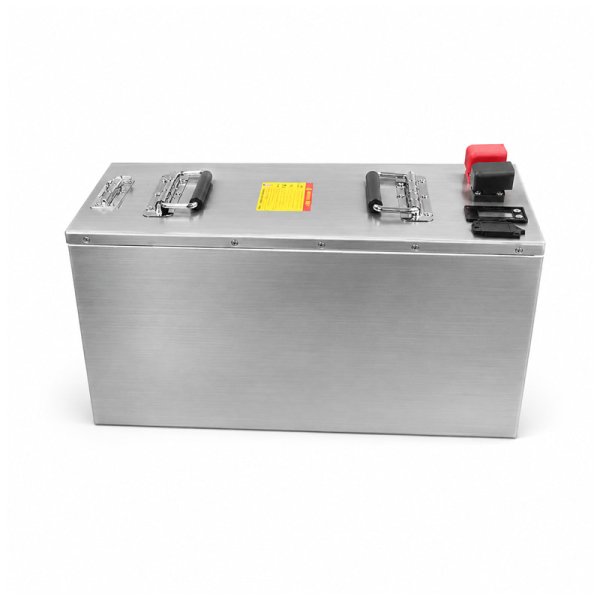
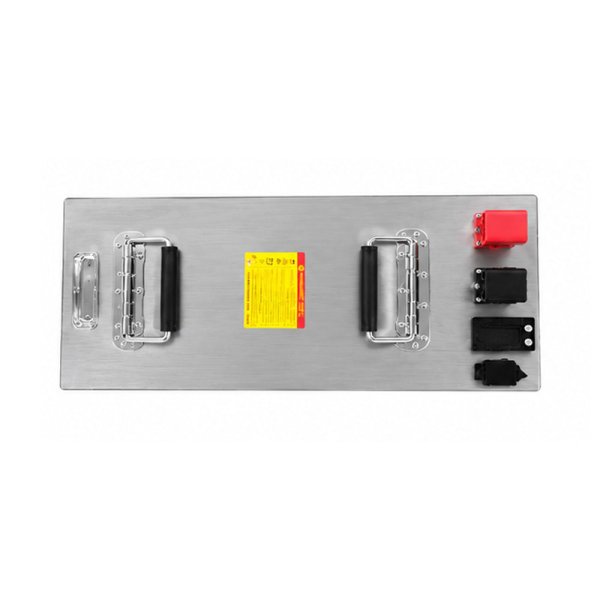
This LiFePO4 AGV battery with CAN/RS485 communication illustrates why mechanical fit and control interfaces need to be agreed before repeat production, not corrected after installation.
Why Does BMS Communication Need Production-Level Control?
Robot downtime can come from communication errors even when cells pass electrical tests. An AGV battery pack factory should verify the specified CAN or RS485 interface, message definitions, state-of-charge reporting, protection thresholds and firmware revision.
These checks must match the robot controller. A battery that reports the wrong fault state or fails to wake correctly can disrupt automated missions. Ask the manufacturer for documented communication acceptance results using the agreed protocol.

This South Korean AMR integration project provides a concrete example: the customer requested a 60–70Ah LiFePO4 pack, RS485 communication and a 1C charging target. Packs and charging stations were validated before mass production. These were project requirements, not universal guarantees.
Which Tests Should Be Completed Before Shipment?
After assembly, an AGV battery pack factory should use agreed end-of-line (EOL) checks to find assembly and functional defects before shipment. Depending on the approved design, these include pack voltage, insulation, charge/discharge response, BMS protection, temperature sensing and communication status.
Aging or controlled cycling may be included in the production plan. Separate extended qualification tests from routine production checks. An AGV battery pack factory should define which tests apply to every pack and which are performed on representative samples.
| Control point | Buyer concern | Evidence to request |
|---|---|---|
| Incoming cells | Uneven fleet performance | Cell screening and lot records |
| PACK assembly | Intermittent shutdowns | Connection and in-process checks |
| BMS/EOL testing | Controller errors | Protocol logs and pass/fail results |
| Batch release | Repeat-order variation | Serial numbers and approved revisions |
For more on qualification versus routine checks, see this industrial lithium battery testing guide.
How Can Buyers Prevent Batch-to-Batch Differences?
An AGV battery pack factory should link each serial number to relevant cell lots, key parts, BMS software and final inspection results. Records help isolate affected units if shutdowns recur.

Before an OEM releases a bulk purchase order, the AGV battery pack factory and customer should agree on change notification, sampling rules, nonconformance handling and replacement support. A lower unit price is rarely attractive if inconsistent packs interrupt automated workflows.
For supplier qualification, OEM buyers should request representative incoming-inspection records, end-of-line test reports, batch traceability documentation, and evidence of production change control. These records help buyers evaluate whether approved sample quality can be maintained during repeat manufacturing.
How Can FEBATT Support OEM Fleet Deployment?
FEBATT’s power battery solutions include LiFePO4 configurations and application-based BMS integration for AGV/AMR and other industrial fleets. Buyers can provide route loads, peak-current records, robot controller requirements, installation drawings and planned quantities for engineering discussion.
When comparing suppliers, ask each AGV battery pack factory to confirm what it will test, document and control between approved samples and bulk shipments. The right lithium battery solution is not simply a lighter replacement; it is a repeatable power system that supports reliable fleet operation.
Frequently Asked Questions About AGV Battery Pack Factories
Q: What should I look for in an AGV battery pack factory?
A: Check manufacturing controls, relevant robot-battery experience, change management and batch traceability. An AGV battery pack factory should provide clear inspection criteria, EOL results and a process for reviewing design changes before volume production.
Q: Can an AGV battery pack factory customize lithium batteries?
A: Yes, a capable AGV battery pack factory can support project-specific size, connectors, power output and BMS interfaces. OEMs should confirm these requirements through sample integration tests before placing repeat orders.
Q: What tests are required for AGV battery packs?
A: An AGV battery pack factory should agree on electrical, protection and communication checks for each approved design. Environmental, transport and endurance requirements depend on the destination market and robot application, so request model-specific evidence.
Q: Are lithium batteries better than lead-acid batteries for AGVs?
A: LiFePO4 lithium batteries can reduce routine maintenance and support suitable charging windows in busy fleets. Ask the AGV battery pack factory to verify the duty cycle, BMS, charger compatibility and lifecycle cost instead of relying on chemistry alone.
Q: How do I order AGV battery packs in bulk?
A: Send the AGV battery pack factory installation drawings, operating profile, interface specifications, target quantity and test requirements. Approve samples and a production baseline first; then confirm quality records, lead times and change-control terms.