Electric motorcycle performance depends on more than motor wattage and battery capacity. Motorcycle battery voltage defines the electrical architecture connecting the battery, BMS, controller, motor, charger, DC-DC converter, wiring, protection devices, and vehicle software. A poor choice can create excessive current, avoidable heat, charging incompatibility, or an expensive redesign.
A 60V-class system is often practical for urban commuting, delivery scooters, and moderate-power commercial motorcycles. A 72V-class platform can provide more electrical headroom for higher-power motors, heavier loads, steep terrain, and sustained output. The correct motorcycle battery voltage must be selected from the complete duty cycle rather than from a marketing label alone.
This guide explains the engineering differences between 60V and 72V lithium iron phosphate systems. It also answers how many volts are motorcycle batteries, what volt battery is in a motorcycle, and how a multimeter for motorcycle battery testing should be used around higher-voltage packs. It is intended for OEMs, fleet operators, integrators, and procurement teams evaluating scalable electric two-wheel platforms.
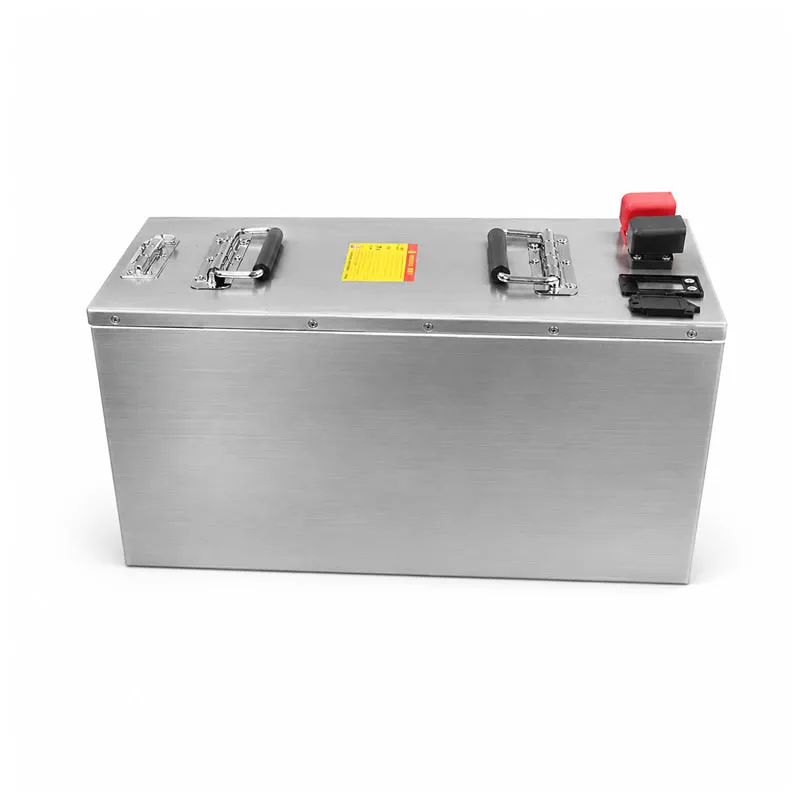
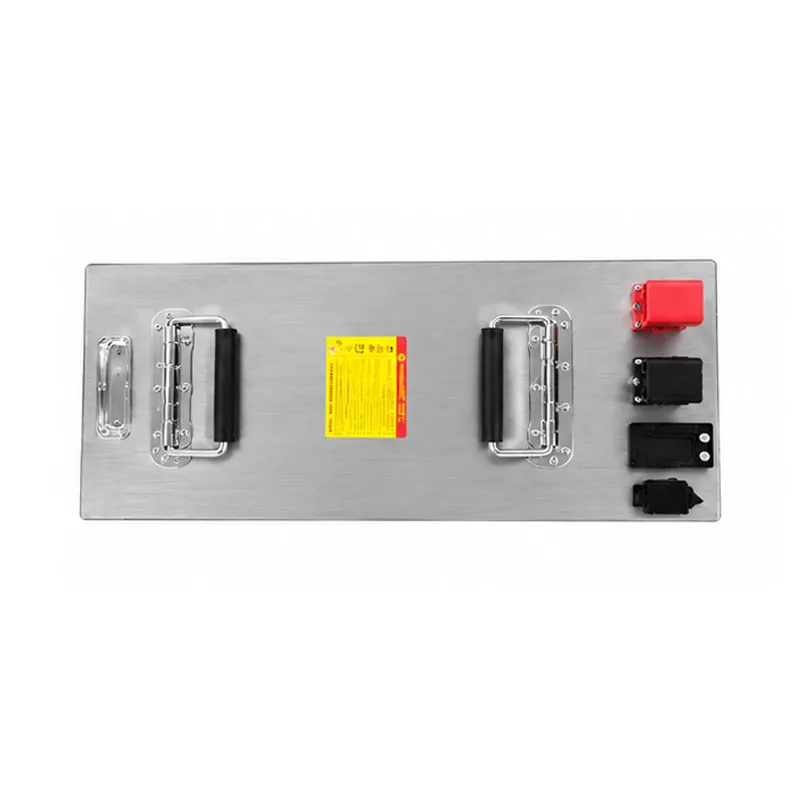
For available platforms and custom development, explore FEBATT electric motorcycle battery solutions. Final specifications should be confirmed against the motor, controller, charger, chassis, environment, and target-market requirements.
For procurement teams, the voltage specification should be documented as a complete operating window rather than a single nominal value. The document should identify maximum charge voltage, minimum discharge voltage, continuous and peak current, regenerative-braking limits, charger output, and the interfaces shared by the BMS, controller, and vehicle. This reduces ambiguity before tooling, prototype validation, and production approval.
Why Is Motorcycle Battery Voltage Crucial for Performance?
Motorcycle battery voltage is the electrical potential that drives current through the powertrain. Power equals voltage multiplied by current. For the same power output, a higher voltage allows lower current.
An idealized 3,000W demand requires about 62.5A at 48V, 50A at 60V, and 41.7A at 72V. Real vehicles include conversion losses and changing loads, but the comparison shows why voltage matters. Because conductor heat follows I²R, reducing current can lower resistive losses in cables, connectors, contactors, and power electronics.
Higher motorcycle battery voltage does not automatically create more torque, range, or speed. Those results depend on controller limits, motor design, gearing, battery discharge capability, vehicle mass, cooling, and software calibration. Every connected component must also support the pack’s actual minimum and maximum voltage, not only its nominal label.
In practical vehicle development, motorcycle battery voltage should be frozen only after the OEM has defined peak wheel power, continuous power, maximum controller current, expected acceleration time, gradeability, payload, ambient temperature, and charging conditions. Engineers should then model voltage sag at low state of charge and confirm that the motor controller still has enough operating margin during the most demanding route segment. A motorcycle battery voltage that looks adequate at full charge may behave differently near the lower BMS limit, especially when the pack is cold, aged, or carrying a heavy load. This validation prevents late-stage changes to cables, connectors, cooling, and software calibration.
How Many Volts Are Motorcycle Batteries?
When buyers ask how many volts are motorcycle batteries, they must distinguish starter batteries from traction batteries. Most gasoline motorcycles use a 12V starter battery for ignition, lighting, and accessories. Some older motorcycles used 6V systems. These batteries do not continuously drive the vehicle.

Electric motorcycles use traction packs. Common platform labels include 36V, 48V, 60V, and 72V, while more powerful vehicles may use higher architectures. Lightweight scooters often use 48V; urban commercial motorcycles commonly use 60V-class packs; cargo, touring, or performance designs may move toward 72V-class systems.
Therefore, what volt battery is in a motorcycle depends on the propulsion system and application. OEM specifications should state chemistry, actual nominal voltage, full-charge voltage, usable voltage window, energy in watt-hours, and current capability instead of relying only on a broad platform name.
60V vs. 72V LFP: What Is the Practical Difference?
A 60V-class LFP pack generally offers a balanced architecture for moderate-power urban vehicles. A 72V-class system reduces current further at the same power demand and gives the controller more voltage headroom, but every connected component must tolerate the higher maximum voltage.
Motorcycle battery voltage must be evaluated with capacity. Voltage multiplied by ampere-hours gives nominal energy. A nominal 60V 55Ah pack contains about 3,300Wh, while a nominal 72V 35Ah pack contains about 2,520Wh. The first pack stores more energy despite its lower voltage, showing why voltage alone cannot predict range. The selected motorcycle battery voltage should also leave margin for aging, voltage sag, and regenerative braking.
For a fair 60V-versus-72V comparison, OEMs should hold the required wheel power, route, payload, usable energy, and ambient conditions constant. Comparing packs with different watt-hours without normalizing the duty cycle can lead to the wrong conclusion about range or efficiency. A platform should be selected only after both architectures are modeled against the same vehicle requirements.
| Factor | 60V class | 72V class | Selection note |
|---|---|---|---|
| Typical use | Urban and commercial | Higher-power or heavy-duty | Validate the full duty cycle |
| Current at equal power | Lower than 48V | Lower than 60V | Actual values include losses |
| Range | Depends on usable Wh | Depends on usable Wh | Voltage alone is insufficient |
| Integration | Moderate voltage window | Higher maximum voltage | Match every connected component |
Why Are Manufacturers Moving Beyond Lower-Voltage Systems?
Higher motor power can force a low-voltage system to deliver very high current. This increases cable loss, connector stress, controller heating, and the demand on parallel cell groups. Larger conductors can reduce those effects, but they add cost, weight, and packaging pressure.
A higher motorcycle battery voltage can provide better thermal margins during acceleration, hill climbing, cargo transport, and repeated stop-and-go use. It may also support future motor upgrades without demanding disproportionately high current from the battery.
Still, moving to 72V only to claim a larger number is poor engineering. If the vehicle has modest power requirements, a well-optimized 60V platform may provide simpler integration, lower component cost, and sufficient performance.
What Makes a 60V System Suitable for Urban Fleets?
A 60V-class platform is often a practical middle ground for commuter motorcycles, delivery scooters, shared-mobility vehicles, and other urban applications. These vehicles face frequent starts, variable payloads, limited charging windows, and high daily use.

Compared with 48V, a 60V motorcycle battery voltage can reduce current at the same power level and provide useful powertrain headroom. When paired with the correct motor and controller, it can support responsive acceleration, moderate gradients, and predictable fleet operation without unnecessary system complexity.
LFP chemistry is widely selected for thermal stability, cycle durability, and consistent discharge behavior. Actual service life still depends on depth of discharge, charging rate, temperature, cell quality, BMS calibration, and operating discipline. Any cycle-life claim should be linked to defined test conditions.
When Should an OEM Choose a 72V System?
A 72V-class architecture becomes more attractive when the vehicle needs higher continuous power, stronger acceleration under load, repeated hill climbing, higher cruising speed, or extended demanding operation. Cargo motorcycles, premium commuters, touring models, and some performance platforms can benefit from the lower current associated with higher motorcycle battery voltage.

The decision should be supported by modeling of motor power, controller efficiency, current, voltage sag, cell temperature, route gradient, vehicle mass, payload, ambient temperature, and charging opportunity. A 72V system is justified when it improves the complete powertrain, not merely the battery specification.
The charger, controller, DC-DC converter, contactors, fuse, pre-charge circuit, display, wiring, connectors, and service equipment must tolerate the full voltage window. Regenerative braking must also be checked because it can raise bus voltage during deceleration.
Serviceability should also be reviewed at the architecture stage. Higher system voltage may require different isolation procedures, warning labels, connectors, test equipment, and technician training. These requirements affect not only vehicle design but also dealer support, fleet maintenance, and total lifecycle cost.
How Does Higher Voltage Affect Efficiency and Heat?
At fixed power, a higher motorcycle battery voltage allows lower current. Since resistive loss increases with current squared, this can reduce heat in cables, busbars, connectors, contactors, and semiconductor switching paths. Compact motorcycles benefit because cooling space is limited.
For a simplified 4,000W demand, current is about 66.7A at 60V and 55.6A at 72V. That is roughly a 17% current reduction. If conductor resistance remains the same, the I²R loss falls by more than 17% because current is squared.
Motor efficiency does not improve automatically. Motors operate across efficiency maps that depend on speed, torque, winding design, switching strategy, and temperature. The goal is a coordinated design that keeps cells, conductors, switching devices, and the motor within their intended limits.
How Does Voltage Affect Motorcycle Range?
Range depends mainly on usable battery energy and vehicle consumption. Nominal energy is voltage multiplied by ampere-hours, while usable energy is lower after BMS limits, voltage sag, temperature, aging, and reserve margins. Speed, aerodynamics, payload, tires, gradients, and traffic also affect consumption.
Motorcycle battery voltage influences range indirectly. Lower current at equal power can reduce electrical losses, but a 72V pack with fewer watt-hours can still travel less far than a 60V pack with more usable energy. Performance and range are separate outcomes.
Fleet range should be validated with representative payload, speed, temperature, and route elevation. When buyers ask what volt battery is in a motorcycle with long range, the answer must include usable watt-hours, vehicle efficiency, discharge capability, and duty cycle.
What Are Nominal and Fully Charged LFP Voltages?
LFP cells are commonly treated as approximately 3.2V nominal and about 3.65V at maximum charge. A pack’s actual motorcycle battery voltage depends on the number of cells connected in series, so the same market label can describe different configurations.
A 19-series pack is about 60.8V nominal and 69.35V at 3.65V per cell. A 20-series pack is about 64.0V nominal and 73.0V fully charged. In the 72V class, 23S is about 73.6V nominal and 83.95V fully charged, while 24S is about 76.8V nominal and 87.6V fully charged.
This is why a controller described only as “72V” cannot be selected without checking its real maximum input rating. OEM documentation should list series count, charging cutoff, discharge cutoff, current limits, communication, and permitted regenerative voltage.
| Configuration | Nominal voltage | Approx. full charge |
|---|---|---|
| 19S | 60.8V | 69.35V |
| 20S | 64.0V | 73.0V |
| 23S | 73.6V | 83.95V |
| 24S | 76.8V | 87.6V |
Important: Use the battery supplier’s specified BMS limits rather than cell-count calculations alone.
How Should a Multimeter Be Used on a Motorcycle Battery?
A multimeter for motorcycle battery checks can confirm pack voltage or charger output in an approved service procedure, but it cannot independently prove battery health. Higher-voltage lithium packs present shock, arc, short-circuit, and residual-energy hazards, so testing should be limited to trained personnel.
Before measurement, confirm that the instrument and probes are rated for the expected DC voltage. Inspect the leads, select the correct function and range, secure the vehicle, follow service-disconnect procedures, and keep conductive objects away from exposed terminals. Never open a sealed pack or bypass the BMS to obtain a reading.
A multimeter for motorcycle battery testing may show normal open-circuit voltage while the pack still has capacity loss, cell imbalance, high internal resistance, temperature faults, or BMS events. Complete diagnosis may require CAN data, manufacturer software, insulated tools, and a battery analyzer.
Can Motorcycle Battery Voltage Be Customized for an OEM Chassis?
Yes, but customization should start with the vehicle requirements rather than a preferred voltage label. FEBATT can evaluate motor power, controller limits, battery compartment dimensions, target energy, payload, route, charging time, communication, environment, and production volume.
Motorcycle battery voltage is one design variable among series-parallel configuration, cell format, BMS logic, CAN communication, contactors, pre-charge, connectors, enclosure, mounting, service access, ingress protection, and vibration resistance.
A disciplined OEM process covers requirements, electrical architecture, mechanical integration, prototypes, bench testing, vehicle validation, pilot production, and manufacturing control. The pack should be tested with the intended controller, motor, charger, wiring, and software. During prototype validation, motorcycle battery voltage should be recorded under charging, acceleration, hill climbing, and regenerative braking.
Why Choose LFP for 60V and 72V Platforms?
LFP is widely used where thermal stability, cycle durability, and consistent power delivery are priorities. It does not eliminate risk; safety still depends on cell quality, pack construction, BMS protection, electrical isolation, mechanical protection, charging compatibility, and vehicle-level validation.
For commercial motorcycles, LFP is often evaluated through operating cost rather than maximum energy density alone. A well-engineered pack can support frequent use, predictable charging, and stable discharge while reducing routine maintenance compared with lead-acid alternatives.
FEBATT can support 60V- and 72V-class systems with voltage, capacity, BMS functions, communication, connectors, and enclosure adapted to the project. The recommended motorcycle battery voltage should be based on the validated duty cycle, not on a universal preference for one platform.
FAQ About Motorcycle Battery Voltage
1.How do I match the motor controller to the motorcycle battery voltage?
Match the controller to the battery’s complete operating window. Confirm maximum charged voltage, minimum operating voltage, continuous and peak current, regenerative-braking voltage, and communication requirements. Validate the battery, BMS, motor, controller, charger, DC-DC converter, and protection devices as one system.
2.Does a higher-voltage battery pack weigh more?
Not necessarily. More cells may be connected in series, but fewer parallel strings may be used for the same energy. Final weight depends mainly on watt-hours, cell chemistry, current requirements, enclosure, BMS, contactors, connectors, and mechanical or thermal protection.
3.Can a 60V system be upgraded to 72V later?
Not through a battery-only swap. The controller, charger, motor limits, DC-DC converter, wiring, connectors, contactors, fuse, pre-charge circuit, display, BMS, regenerative braking, and software may require redesign or revalidation.
4.What is the nominal versus fully charged voltage of an LFP pack?
It depends on series count. Using about 3.2V nominal and 3.65V maximum per cell: 19S is approximately 60.8V/69.35V, 20S is 64.0V/73.0V, 23S is 73.6V/83.95V, and 24S is 76.8V/87.6V. Use the supplier’s specified limits.
5.Are 72V systems safe for daily commuter mopeds?
A properly engineered 72V-class system can be suitable, but safety depends on the complete vehicle. The battery, BMS, charger, controller, wiring, connectors, insulation, enclosure, protection, thermal design, software, and vehicle tests must meet the applicable requirements.
6.How many volts are motorcycle batteries in electric fleets?
There is no single standard. Common platforms include 48V, 60V, and 72V classes. Selection depends on power, payload, route, speed, energy, charging infrastructure, chassis space, and component compatibility.
7.Can a multimeter for motorcycle battery testing find a weak cell?
Usually not by itself. A standard meter can confirm pack voltage, but cell-level faults may require BMS data, CAN tools, internal-resistance testing, temperature history, a battery analyzer, and manufacturer-approved procedures.
Conclusion
Selecting motorcycle battery voltage is a powertrain decision, not a battery-only choice. A 60V-class LFP system can suit urban fleets with moderate power requirements, while a 72V-class architecture can provide lower current and more headroom for higher-power motors, heavy loads, steep terrain, and sustained output.
Neither platform is automatically better. Compare usable watt-hours, continuous and peak current, controller limits, full-charge voltage, motor characteristics, thermal performance, chassis space, charging strategy, route data, and target-market requirements. The questions how many volts are motorcycle batteries and what volt battery is in a motorcycle are useful only when the vehicle and duty cycle are defined.
For OEM projects, validate the battery, BMS, charger, controller, motor, DC-DC converter, protection devices, communication, and mechanical integration as one system. Use a multimeter for motorcycle battery testing only within a documented procedure, and rely on diagnostic data and vehicle testing for a complete assessment.
FEBATT can support custom 60V- and 72V-class LFP systems for electric motorcycles, mopeds, cargo vehicles, and commercial fleets, helping projects move from requirements and prototypes toward validated, repeatable production. A documented motorcycle battery voltage specification also reduces interface ambiguity between battery, controller, charger, and vehicle teams.