Electric motorcycles are now widely used in delivery fleets, commuter mobility, rental operations, logistics services and light commercial transport. For these applications, the battery is not just one component inside the vehicle. It directly affects range, acceleration, charging time, safety, vehicle weight, operating cost and customer satisfaction.
For manufacturers, distributors and fleet operators, choosing a high-performance E-motorcycle battery requires more than comparing capacity or price. A battery may look strong on paper, but if it has weak discharge performance, poor BMS protection, slow charging, limited cycle life or unstable quality, it can create serious problems in real use.
A reliable battery should match the vehicle’s voltage platform, motor power, controller requirements, daily route distance, payload, charging schedule and operating environment.
In this comprehensive guide, the defining characteristics of a high-performance E-motorcycle battery are examined from a practical, business-oriented perspective, with attention to the factors that matter most to OEMs, fleet operators, and B2B buyers seeking durable, scalable, and economically sound energy solutions.
What Defines a High-Performance E-Motorcycle Battery?
A high-performance E-motorcycle battery is not defined by one specification alone. It is defined by how well the full battery system performs under real operating conditions.
A good electric motorcycle battery should provide stable energy output, support strong acceleration, handle repeated charging and discharging, work safely in different temperatures and maintain usable capacity over time. For commercial users, consistency matters as much as peak performance.
Key features usually include:
- Suitable lithium chemistry
- Correct voltage platform
- Enough Ah and Wh capacity
- Strong continuous discharge current
- Reliable peak discharge current
- Stable voltage output
- Fast and safe charging capability
- High-quality BMS protection
- Good temperature performance
- Reasonable weight and size
- Long cycle life
- Clear safety documentation
- Supplier support for OEM or fleet projects
A battery with large capacity but poor current output may still feel weak during acceleration or hill climbing. A battery with good power but weak thermal design may age too quickly. A battery with good cells but poor BMS protection may create safety or after-sales risks.
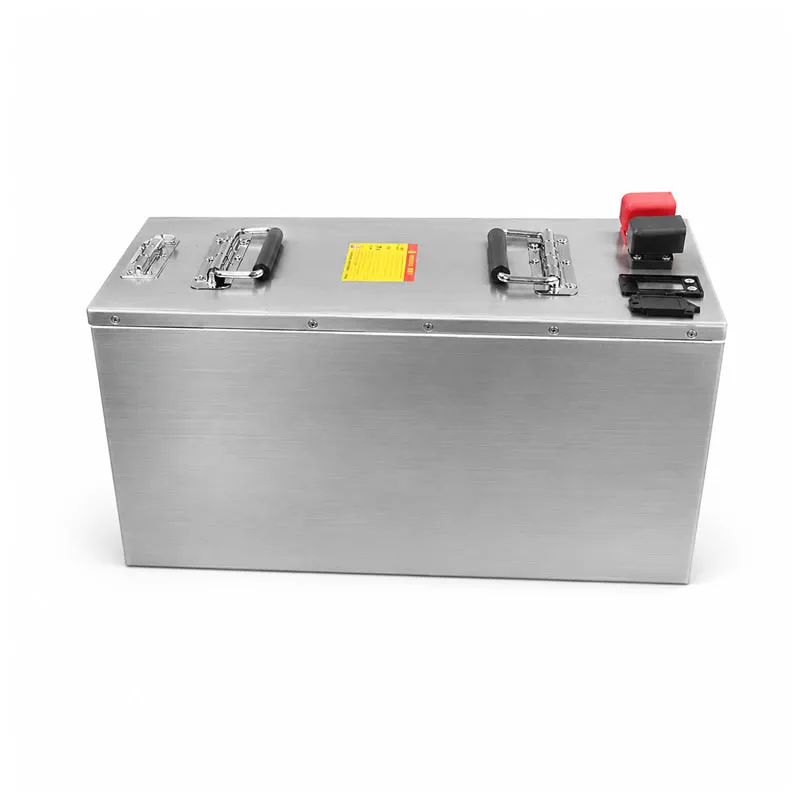
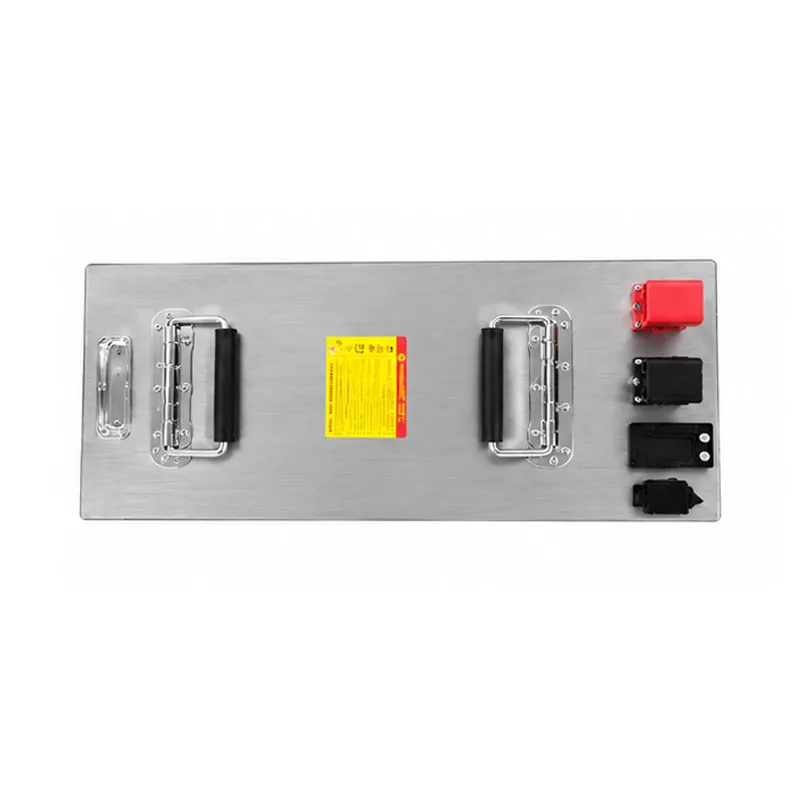
For available solutions, buyers can review FEBATT’s electric motorcycle battery solutions based on voltage, capacity and vehicle application.
Is Battery Chemistry the Most Important Feature?
Battery chemistry is one of the first points to check because it affects safety, lifespan, discharge performance, energy density and cost. In a high-performance E-motorcycle battery, chemistry sets the foundation for the whole system.
Lithium iron phosphate, also known as LiFePO4 or LFP, is widely used in B2B electric motorcycle projects because it offers strong thermal stability, long cycle life and good safety performance. It is especially suitable for delivery motorcycles, fleet vehicles and commercial applications that require frequent charging and discharging.
Other lithium chemistries may provide higher energy density, which can help reduce battery size and weight. However, they may require stricter thermal management and tighter safety control. Lead-acid batteries are generally less suitable for high-performance electric motorcycles because they are heavier, less efficient, slower to charge and usually have shorter service life.
For B2B buyers, the best chemistry depends on the application. If the project needs long cycle life, reliable safety and stable daily use, LiFePO4 can be a strong choice. If the project prioritizes compact size and maximum energy density, another lithium chemistry may be considered. The final decision should match the motorcycle’s use case, budget, safety requirements and expected service life.
Why Does Voltage Matter for Electric Motorcycles?
Voltage strongly affects electric motorcycle performance. A high-performance E-motorcycle battery must match the motor, controller and vehicle design. If the voltage is too low for the application, the motorcycle may feel underpowered. If the voltage is too high for the system, it can create compatibility and safety risks.

Common electric motorcycle battery platforms include 48V, 60V and 72V. Each voltage level fits different use cases.
| Voltage Platform | Common Use Case | Typical Buyer Focus |
|---|---|---|
| 48V | Light electric motorcycles, urban mobility, short-distance use | Lower cost, moderate power, simple system |
| 60V | Mid-range electric motorcycles, delivery use, stronger performance | Balance of power, range and cost |
| 72V | Higher-power electric motorcycles, commercial routes, heavier loads | Stronger acceleration, longer range, better load handling |
A 48V system may be enough for light commuting or moderate-speed urban riding. A 60V or 72V system is often more suitable for delivery fleets, cargo use or higher-power motorcycles.
For example, a 48V 45Ah LFP power battery pack can fit lighter or mid-range vehicle applications, while a 72V 50Ah battery for electric motorcycles may be better for higher-power electric motorcycle projects.
Can the Battery Deliver Strong Power Output?
A high-performance E-motorcycle battery must supply enough current to support real riding conditions. Capacity tells you how much energy the battery stores, but discharge current tells you how much power the battery can deliver at a given moment.

Buyers should check two important numbers:
Continuous Discharge Current
This shows how much current the battery can safely deliver over a longer period. It affects cruising, climbing, carrying cargo and operating under load.
Peak Discharge Current
This shows how much current the battery can deliver for short bursts. It matters during acceleration, hill climbing, sudden speed changes and heavy-load starts.
For commercial electric motorcycles, peak current is especially important. Delivery riders often work in stop-and-go traffic, carry goods and accelerate frequently. If the battery cannot support peak demand, the motorcycle may feel weak or trigger BMS protection.
A good high-performance E-motorcycle battery should maintain stable voltage and current output under load. It should not show severe voltage sag, overheating or sudden power drop during normal use.
What Should Buyers Know About Charging Performance?
Charging performance affects fleet efficiency. A battery that charges too slowly can reduce vehicle availability. A battery that charges too aggressively without proper control can age faster or create safety issues.
A high-performance E-motorcycle battery should support efficient charging while protecting battery health. The charger must match the battery voltage, chemistry, charging current and BMS requirements.
Important charging factors include:
- Charging voltage
- Charging current
- Charger compatibility
- Charging temperature range
- BMS charging protection
- Fast charging support
- Charging connector design
- Charging time under real conditions
Fast charging can be useful for delivery fleets and rental operators, but it should not be treated as the only goal. The battery must be designed to handle the charging current safely. If the charger is mismatched, it may reduce battery life or cause protection shutdowns.
For B2B buyers, charging strategy should match daily operation. Some fleets may rely on overnight charging. Others may need daytime opportunity charging. The best battery and charger combination depends on route length, vehicle count, charging space and available electrical infrastructure.
Why Is a Battery Management System Critical?
The Battery Management System, or BMS, is one of the most important parts of a high-performance E-motorcycle battery. It protects the battery pack and helps maintain safe operation.
A strong BMS should include:
- Overcharge protection
- Over-discharge protection
- Overcurrent protection
- Short-circuit protection
- High-temperature protection
- Low-temperature protection
- Cell balancing
- Voltage monitoring
- Current monitoring
- Charging and discharging control
Cell balancing is especially important for long-term performance. If cells become unbalanced, the battery may lose usable capacity, charge unevenly or age faster. A good BMS helps keep cells working within a healthy range.
For commercial buyers, the BMS is not a small detail. It affects safety, warranty risk, battery life and customer satisfaction. A battery with weak BMS protection may work at first, but problems can appear after repeated daily use.

How Does Battery Weight Affect Vehicle Performance?
Battery weight affects acceleration, handling, braking, range and vehicle structure. A high-performance E-motorcycle battery should provide enough energy without adding unnecessary weight.
A lighter battery can improve:
- Riding agility
- Energy efficiency
- Acceleration response
- Braking behavior
- Vehicle balance
- Payload flexibility
- Mechanical stress on the frame
This is one reason lithium batteries are widely used in electric motorcycles. Compared with lead-acid systems, lithium batteries can provide more usable energy with much lower weight.
However, buyers should not choose the lightest battery without checking safety and durability. A high-performance E-motorcycle battery also needs a strong structure, vibration resistance, proper casing and reliable thermal design. The best solution balances weight, capacity, discharge current and safety.
For commercial motorcycles that carry goods, the weight of the battery also affects how much payload the vehicle can handle. A lighter and more efficient battery system can support better operating flexibility.
How Important Is Temperature Performance?
Temperature performance is important for any high-performance E-motorcycle battery, especially when vehicles operate in different climates or under heavy daily use.
High temperature can increase battery stress and accelerate aging. Low temperature can reduce available capacity and limit charging performance. If a battery is not designed for the operating environment, it may show unstable range, slow charging or reduced power output.
Buyers should check:
- Charging temperature range
- Discharging temperature range
- Storage temperature range
- Low-temperature charging protection
- High-temperature shutdown protection
- Thermal design of the pack
- Whether heating function is needed for cold regions
For B2B buyers, this is especially important when selling into different markets. A battery used in a hot region may need stronger heat resistance. A battery used in cold conditions may need low-temperature protection or a heating option.
A battery that works well only under ideal conditions is not enough for commercial use. It must perform reliably in the real environment where the motorcycle will operate.
What Features Matter Most for Fleet and Commercial Operators?
Fleet buyers care about uptime, safety, cost control and consistency. A high-performance E-motorcycle battery for commercial use must support daily operation, not just short-term performance testing.
The most important features for fleet operators include:
- Long cycle life
- Stable discharge performance
- Fast and safe charging
- Strong BMS protection
- Low maintenance needs
- Consistent quality between batches
- Clear warranty policy
- Reliable supplier support
- Battery health monitoring
- Compatibility with fleet chargers
- Good total cost of ownership
Fleet operators should also consider diagnostics and monitoring. If the battery can provide state-of-charge, voltage, current, temperature and fault information, it becomes easier to manage vehicles and prevent unexpected downtime.
For delivery fleets, every hour of downtime matters. A low-cost battery that fails early or charges slowly can become more expensive than a higher-quality battery with better long-term performance.
How to Choose the Best High-Performance E-Motorcycle Battery?
Choosing the right high-performance E-motorcycle battery should start with the vehicle’s real operating needs. Buyers should avoid choosing only by price, voltage or Ah rating.
A practical selection process should include:
1.Define the Application
Is the motorcycle used for commuting, delivery, rental, cargo transport or OEM production? Different applications need different voltage, capacity and discharge performance.
2.Confirm Voltage Platform
The battery must match the motor and controller. Common platforms include 48V, 60V and 72V.
3.Calculate Capacity
Check both Ah and Wh. Wh gives a clearer picture of total energy.
Wh = Voltage × Ah
For example, a 72V 50Ah battery stores about 3,600Wh.
4.Check Discharge Current
Make sure the battery can support both continuous current and peak current required by the motor.
5.Confirm Charger Compatibility
The charger must match battery voltage, chemistry and charging profile.
6.Review BMS Protection
A strong BMS is essential for safety, reliability and long cycle life.
7.Check Size and Mounting
The battery must fit the motorcycle frame or battery compartment. Confirm length, width, height, cable position and connector type.
8.Review Certification and Documents
For commercial and international projects, check documents such as UN38.3, MSDS, CE and other required certifications where applicable.
9.Evaluate Supplier Capability
The supplier should offer consistent quality, customization options, technical support and clear warranty terms.
FAQ About High-Performance E-Motorcycle Battery
1.How Long Should a High-Performance E-Motorcycle Battery Last?
A high-performance E-motorcycle battery can last several years when used correctly. Actual lifespan depends on cell chemistry, depth of discharge, charging habits, temperature, BMS protection, vehicle load and daily usage. For commercial fleets, long cycle life is one of the most important buying factors.
2.How Many Charge Cycles Should a High-Performance E-Motorcycle Battery Provide?
A high-performance E-motorcycle battery should provide strong cycle life for repeated daily use. The exact cycle number depends on chemistry, cell quality and working conditions. LiFePO4 batteries usually offer longer cycle life than many traditional battery types when properly designed and charged.
3.What Voltage Is Best for Commercial Electric Motorcycles?
For commercial electric motorcycles, 60V and 72V systems are often used because they can support stronger power and better load handling. A 48V system may be suitable for lighter applications. The best voltage depends on motor power, controller design, payload, speed requirement and daily route conditions.
4.How Long Does It Take to Fully Charge an E-Motorcycle Battery?
Charging time depends on battery capacity, charger current, BMS limits and temperature. A larger battery usually takes longer to charge if the charger power stays the same. Fast charging is possible for some systems, but the battery and charger must be designed for it.
5.Can LiFePO4 Batteries Improve Fleet Operating Costs?
Yes, LiFePO4 batteries can help reduce fleet operating costs by offering long cycle life, stable performance, lower routine maintenance and good safety. The actual savings depend on usage frequency, charging strategy, battery quality and replacement cost.
6.Can e-motorcycle batteries be customized for OEM projects?
Yes. B2B buyers can often customize voltage, capacity, casing, connectors, BMS communication, discharge current, dimensions and labeling. Customization is useful when the battery must fit a specific motorcycle platform.
Conclusion
A high-performance E-motorcycle battery should provide more than basic energy storage. It should support stable power output, safe operation, suitable voltage, reliable charging, strong BMS protection, good temperature performance and long service life.
For B2B buyers, the right battery depends on real operating conditions. Delivery fleets, OEM projects, rental operators and commercial motorcycles all have different requirements. Before purchasing, buyers should check chemistry, voltage, Ah, Wh, continuous discharge current, peak discharge current, charger compatibility, BMS design, temperature range, physical dimensions, certifications and supplier support.
The best battery is not always the cheapest or the largest. The best high-performance E-motorcycle battery is the one that matches the vehicle platform, supports the workload and reduces long-term operating risk.