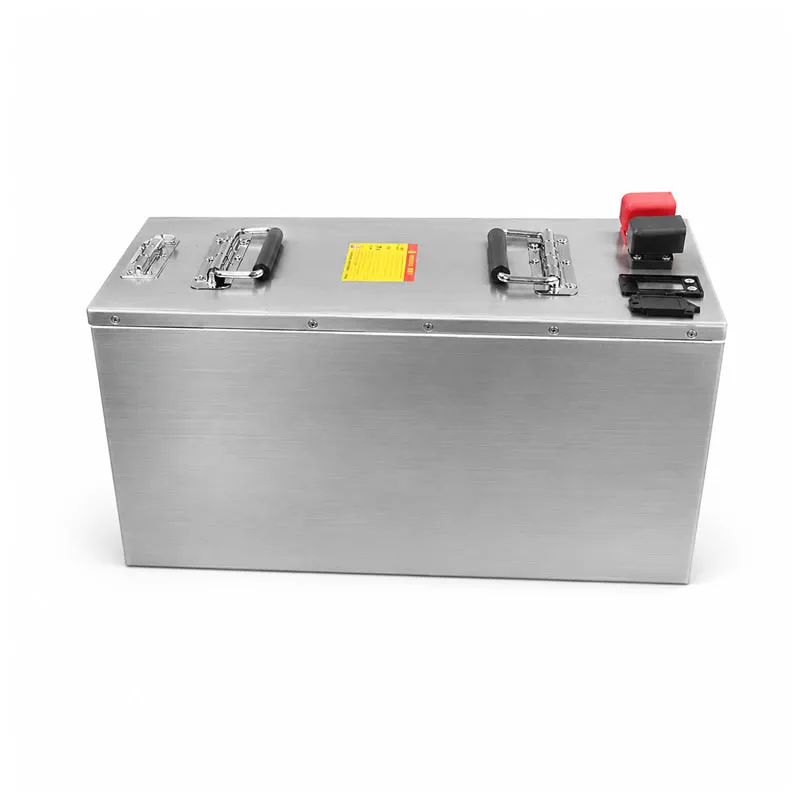
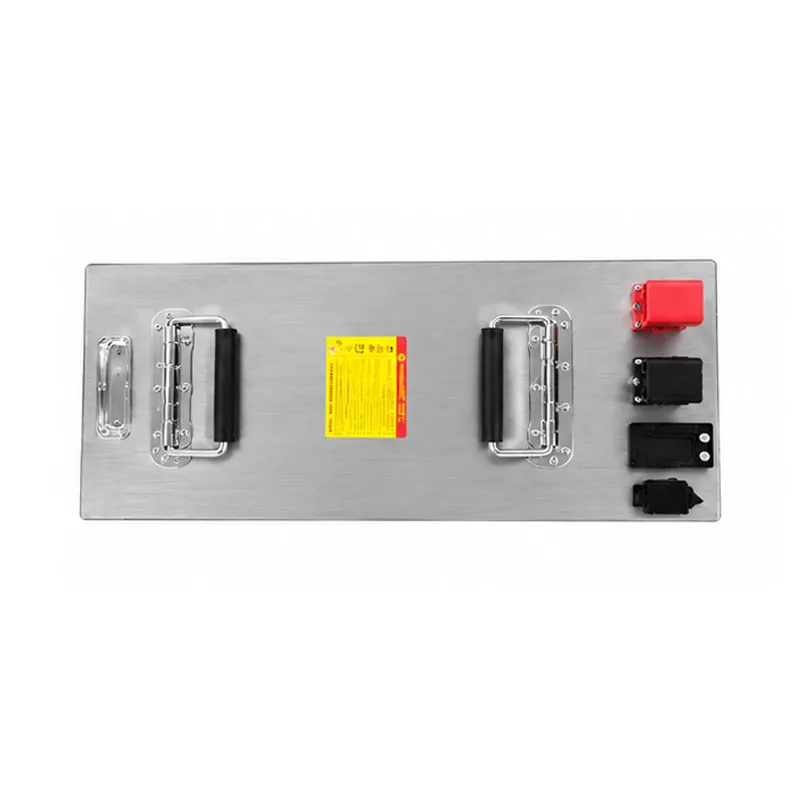
For an electric motorcycle manufacturer, battery selection is not only an electrical decision. The pack must fit the frame, support the required power, maintain stable handling, allow safe cable routing, and remain accessible for production and service. For this reason, motorcycle battery dimensions should be defined together with voltage, capacity, discharge current, enclosure structure, and operating environment.
There is no single universal size that fits every electric motorcycle. Cell format, chemistry, capacity, current capability, mounting method, connector position, ingress protection, and thermal design can all change the final enclosure. A useful motorcycle battery size chart therefore provides reference values rather than a promise that one pack will fit every platform.
This guide explains how OEM teams should evaluate motorcycle battery dimensions before prototype approval. It also shows how to read reference drawings, compare motorcycle battery sizes, reserve installation clearance, and decide when a customized enclosure is necessary. The goal is to reduce redesign, shorten validation, and support repeatable production.
Why Do Motorcycle Battery Dimensions Matter for OEM Projects?
Electric motorcycles have limited packaging space. The battery often sits near the structural center of the frame, where it competes with the controller, onboard electronics, cable routes, suspension movement, body panels, and rider ergonomics. Even a small dimensional mismatch can prevent the pack from being installed or serviced correctly.

Accurate motorcycle battery dimensions influence frame geometry, ground clearance, seat height, center of gravity, suspension loading, and assembly sequence. They also affect how the battery is restrained during acceleration, braking, vibration, and road impact. A pack that fits only on a static drawing may still interfere with cable bends, mounting hardware, covers, or adjacent components during real assembly.
OEM teams should define a dimensional envelope rather than only three nominal measurements. The envelope should include the enclosure body, handles, connectors, protective caps, mounting feet, fasteners, cable bend radius, and service-removal path. This complete view helps mechanical and electrical engineers work from the same requirements.
Are There Standard Motorcycle Battery Sizes?
There are familiar voltage and capacity combinations in the market, but there is no universal set of standard motorcycle battery sizes for customized lithium packs. Two batteries with the same voltage and amp-hour rating can have very different shapes because manufacturers may use different cells, internal layouts, enclosure materials, BMS designs, connectors, and protection structures.
This is why a motorcycle battery size guide should not be treated like a fixed consumer replacement chart. For an OEM project, the correct size is the size that meets the vehicle’s electrical duty while fitting the approved installation envelope. Length, width, and height must be confirmed on a controlled drawing, together with tolerances and all external features.
Reference motorcycle battery dimensions help engineers judge whether a voltage-capacity target is realistic within the frame and whether a larger enclosure or new mounting system may be required.
The safest procurement approach is to use a motorcycle battery size chart as an early comparison tool and then request a project-specific dimensional drawing before sample production. Final motorcycle battery dimensions should be approved by both the battery supplier and the motorcycle engineering team.
How Should You Read a Motorcycle Battery Size Chart?
A professional motorcycle battery size chart should show more than length, width, and height. At minimum, it should identify the model or project code, nominal voltage, rated capacity, enclosure dimensions, weight, connector location, cable exit direction, mounting points, and tolerance. For higher-power projects, continuous current, peak current, communication interface, and environmental protection should also be listed.

Length, width, and height must be read in the same orientation shown on the drawing. Rotating a pack inside a frame can change connector access, cooling surfaces, center of gravity, and mounting loads. Engineers should not assume that a rectangular pack can be installed in any orientation unless the supplier has approved it.
Weight and tolerance belong in the same review. A compact but heavy pack can still create handling or structural problems, while a nominal dimension without tolerance is incomplete for production planning. The design must accommodate the worst acceptable combination of battery, frame, bracket, coating, and body-panel variation.
A practical motorcycle battery size guide should also distinguish between enclosure size and required installation space. Installation space is always larger because the vehicle needs room for cables, connectors, insulation, fasteners, vibration isolators, airflow, and service access.
What Do FEBATT's Reference Dimensions Show?
FEBATT primarily develops customized and OEM lithium iron phosphate battery packs, so its motorcycle battery dimensions vary by voltage, capacity, cell format, enclosure, and the motorcycle’s available housing. The following motorcycle battery dimensions are reference examples supplied for current product discussions; they are not universal standards and should be confirmed against the final approved drawing.
| Reference configuration | Reference dimensions | Application note |
|---|---|---|
| 72V compact lithium pack | 206 × 85 × 62 mm or 192 × 85 × 52 mm | Two compact form factors; confirm capacity, connector position, and enclosure orientation before selection. |
| 72V 30Ah LiFePO4 pack | 329.5 × 154 × 297.3 mm | Reference packaging for a 72V 30Ah project; final case construction and mounting may change the envelope. |
| 72V 50Ah LiFePO4 pack | 473 × 405 × 314 mm | Larger-capacity reference requiring careful review of frame space, weight distribution, and restraint. |
Table 1. Reference FEBATT dimensions supplied for current product discussions; final drawings control.
The first compact reference was supplied with a “72V 5A” designation. Because battery capacity is normally stated in amp-hours, OEM buyers should confirm whether the intended rating is 5Ah or another project-specific value before using the dimensions in a design.
These examples show why motorcycle battery dimensions cannot be predicted from voltage alone. The 72V 30Ah and 72V 50Ah packs differ significantly because capacity, cell count, current demand, internal spacing, and enclosure requirements influence the result. Even within one rating, different cell formats or connector layouts can produce different motorcycle battery sizes.
FEBATT can customize enclosure dimensions, case shape, cable exit, connector position, mounting features, BMS communication, and other integration details when the project volume and engineering requirements justify a custom design. Buyers should provide a frame drawing or measured installation envelope before requesting a final quotation.
How Do Voltage and Capacity Affect Pack Dimensions?
Voltage determines the number of cells connected in series, while capacity is created by cell capacity and the number of parallel paths. Increasing either value can increase the number of cells, although the effect on motorcycle battery dimensions depends on the chosen cell format and internal arrangement.
A higher-voltage or higher-capacity pack still needs insulation, busbars, BMS sensing, contactors, fusing, and service clearances. Power demand also changes busbar, terminal, cable, and thermal requirements, so comparing motorcycle battery sizes only by watt-hours can be misleading.
OEM teams should provide the motor rating, controller limits, expected peak current, continuous load, target range, duty cycle, and charging strategy. The supplier can then balance electrical performance with motorcycle battery dimensions instead of forcing an unsuitable electrical design into a fixed box.
How Do Dimensions Affect Frame Fit and Weight Distribution?
The battery is usually one of the heaviest components in an electric motorcycle. Its geometry and position influence center of gravity, steering response, braking behavior, and suspension loading. Low and central placement is often desirable, but the final location must also protect the pack from impact, water, heat sources, and road debris.
A tall pack may raise the center of mass, a wide pack can affect rider ergonomics or body panels, and a long pack may shift weight or complicate removal. Engineers should review the battery center of mass and ensure that mounting loads transfer into appropriate frame members.
Digital packaging models are useful, but a physical fit check remains important. A sample enclosure or dimensional mock-up can reveal installation problems that are easy to miss on a screen, including tool access, connector engagement, cable routing, and removal clearance. Validating motorcycle battery dimensions early is much cheaper than modifying finished tooling.
How Much Installation Clearance Should Engineers Allow?
There is no single clearance value suitable for every battery. Required space depends on voltage, connector design, cable size, enclosure tolerance, vibration isolators, cooling method, sealing strategy, frame tolerance, and service requirements. Fixed figures should not be copied from unrelated high-voltage systems.
The mechanical envelope should allow the pack to enter and leave the frame without scraping, pinching cables, or removing unrelated structural parts. Space is also needed to operate latches, tighten fasteners, disconnect terminals, and inspect the enclosure. Connector clearance must include the full mating body and cable bend radius, not only the connector face.
For production, tolerance analysis should compare the maximum battery size with the minimum frame opening, including coatings, weld distortion, pads, labels, and covers.
A supplier drawing should state the controlled motorcycle battery dimensions and external features. The motorcycle manufacturer should define the installation envelope and validate clearance under vibration, temperature change, and manufacturing variation.
How Do Enclosure and Mounting Choices Affect Size?
Enclosure material and construction directly affect motorcycle battery dimensions. Metal housings can provide structural strength, impact resistance, shielding, and heat spreading, but wall thickness, corner radii, welds, and fasteners add to the external envelope. Molded polymer cases may support complex shapes, yet they still require ribs, inserts, sealing features, and sufficient material thickness.
Mounting feet, rails, handles, latches, and covers can enlarge the installation envelope. Brackets and isolators must restrain the pack under vibration, acceleration, braking, and impact; cables and connectors must never serve as restraints.
When comparing motorcycle battery sizes, OEM buyers should ask whether listed dimensions include handles, connectors, brackets, and protective caps. This simple question prevents many fitment errors.
How Do Dimensions Affect Thermal Management?
Battery cells, busbars, connectors, and electronic components generate heat during operation. The amount depends on current, internal resistance, ambient temperature, and duty cycle. Motorcycle battery dimensions affect how heat moves through the pack and how much surface area is available for dissipation.
A compact enclosure can improve packaging, but excessive internal density may reduce airflow and make temperature uniformity harder to control. A larger enclosure can create more thermal space, yet it may increase weight and conflict with the frame. The correct design balances cell spacing, conduction paths, sensor placement, enclosure material, and the expected operating profile.
Thermal performance must be validated under representative acceleration, climbing, ambient temperature, and sustained-use conditions. The installation should preserve required cooling surfaces, avoid uncontrolled heat sources, and document any thermal interface materials.
When Should OEMs Request Custom Motorcycle Battery Dimensions?
Custom motorcycle battery dimensions are appropriate when a standard enclosure cannot meet the frame, performance, or production requirements without compromise. Common reasons include a narrow central frame, unusual body geometry, strict center-of-gravity targets, specific cable exits, high current, low-temperature operation, high ingress protection, or a shared battery architecture across several models.
Customization should begin with a clear engineering input package. FEBATT needs the available envelope, target voltage and capacity, continuous and peak current, connector specification, communication protocol, mounting concept, operating temperature, protection level, target quantity, and applicable market requirements. Three-dimensional files or detailed two-dimensional drawings are more reliable than informal measurements.
A custom project may adjust cell arrangement, enclosure size, case material, mounting points, connector position, cable routing, BMS functions, and labeling. The final shape must still preserve structural strength, service access, and thermal paths.

Buyers can review FEBATT’s electric motorcycle battery solutions and learn more about FEBATT’s manufacturing and engineering background. These pages support the technical discussion but do not replace project-specific validation.
How Should Teams Validate Dimensions Before Prototyping?
The validation process should begin before the battery sample is manufactured. The battery supplier and motorcycle engineering team should exchange controlled drawings and confirm orientation, datum points, tolerance, mounting holes, connector location, cable direction, and service access. Any unresolved item should be recorded rather than assumed.
Compare the approved motorcycle battery dimensions with the complete vehicle model, including suspension travel, steering, body panels, assembly sequence, and service removal. A dimensional mock-up can then confirm fit, mounting, connector space, and approximate weight distribution before the real sample is tested.
Changes after sample testing must be reflected in updated drawings and revision records. This document control is important for repeatable production. A motorcycle battery size guide is useful for initial planning, but only the approved project drawing should control mass production.
B2B Procurement Checklist for Motorcycle Battery Sizes
Before requesting a quotation, prepare the following information:
- Motorcycle brand, model, project code, and target market.
- Available installation length, width, and height, including tolerance.
- Frame drawings, photographs, and preferred battery orientation.
- Required nominal voltage, capacity, range target, and duty cycle.
- Continuous and peak current requirements.
- Maximum acceptable battery weight and preferred center of mass.
- Connector type, cable exit, polarity, and communication protocol.
- Mounting method, service-removal path, and vibration environment.
- Operating temperature, water and dust exposure, and protection target.
- Forecast quantity, sample schedule, and production timeline.
This information helps prevent a quotation for a pack that is electrically suitable but mechanically incompatible.
FAQ About Motorcycle Battery Dimensions
1.Do Higher-Capacity Batteries Always Have Larger Dimensions?
Not always, but greater capacity normally requires more cell material. The final motorcycle battery dimensions depend on cell format, chemistry, energy density, current capability, internal layout, enclosure structure, and thermal requirements. A higher-capacity design may keep one dimension similar by increasing another dimension or using different cells. OEM buyers should compare approved drawings rather than assume that amp-hour rating alone determines size.
2.How Do I Measure a Motorcycle Battery Compartment Accurately?
Measure the usable internal length, width, and height from fixed frame datums, then record the minimum available dimensions after considering welds, coatings, brackets, body panels, and manufacturing tolerance. Also map connector space, cable bend radius, mounting points, removal direction, and tool access. Photographs and three-dimensional files should accompany measurements when possible. Do not order from a simple three-number measurement without confirming the complete installation envelope.
3.How Much Clearance Is Needed Around a Motorcycle Battery?
There is no universal clearance value. The required space depends on enclosure tolerance, frame tolerance, vibration isolation, connector size, cable routing, cooling method, service access, and applicable insulation requirements. The supplier should define the battery envelope, while the motorcycle manufacturer validates the final installation under worst-case tolerance and operating conditions.
4.Can FEBATT Customize Motorcycle Battery Dimensions?
Yes. FEBATT can develop custom motorcycle battery dimensions for suitable OEM and commercial projects. Customization may include enclosure size and shape, cell arrangement, mounting points, connector position, cable routing, case material, protection level, BMS communication, and labeling. Feasibility depends on voltage, capacity, current, safety, thermal requirements, project quantity, and available frame space.
5.Do Listed Dimensions Include Connectors and Mounting Hardware?
Not always. Some specifications show only the main enclosure, while others include handles, feet, connectors, or protective covers. Buyers should request a controlled dimensional drawing that clearly identifies everything included in length, width, and height. The vehicle design must reserve space for all external features and the service-removal path.
6.Can the Same Battery Size Be Used Across Several Motorcycle Models?
It may be possible when the models share compatible voltage, current, frame envelope, mounting structure, connector system, and weight-distribution requirements. A common pack can reduce tooling and inventory complexity, but each model still needs fitment and performance validation. Standardization should not be approved solely because the motorcycle battery sizes appear similar.
7.What Should Be Confirmed Before Approving a Battery Sample?
Confirm the controlled motorcycle battery dimensions, weight, center of mass, mounting interfaces, connector and cable direction, electrical limits, BMS communication, protection level, operating temperature, and service access. The sample should then be tested in the actual motorcycle under representative mechanical, electrical, thermal, and environmental conditions before production approval.
Conclusion
The correct battery is not simply the smallest pack or the highest-capacity option. Motorcycle battery dimensions must support electrical performance, frame integration, handling, thermal control, production tolerance, maintenance, and long-term reliability.
Reference motorcycle battery sizes help compare concepts, but they are not universal fitment standards. Final selection should rely on a project-specific drawing and validation process.
For OEM buyers, the most effective approach is to define the available envelope and duty cycle early, share accurate vehicle information, and involve the battery supplier before tooling is finalized. A well-structured motorcycle battery size chart and a practical motorcycle battery size guide can reduce uncertainty, but engineering collaboration determines whether the pack will perform reliably in production.
When standard products do not match the frame, FEBATT can evaluate customized motorcycle battery dimensions around the project’s voltage, capacity, current, mounting, connector, BMS, environmental, and production requirements. This process helps manufacturers reduce redesign and develop a battery system that fits both the motorcycle and the commercial plan.