A forklift that works safely in an ordinary warehouse may not be suitable for a chemical plant or a dust-handling facility. In these environments, a spark, hot surface, or electrical fault can turn routine material handling into a serious operational risk. Fleet buyers therefore need more than a standard lithium replacement: an explosion proof forklift battery must be assessed as part of an appropriately approved truck system.
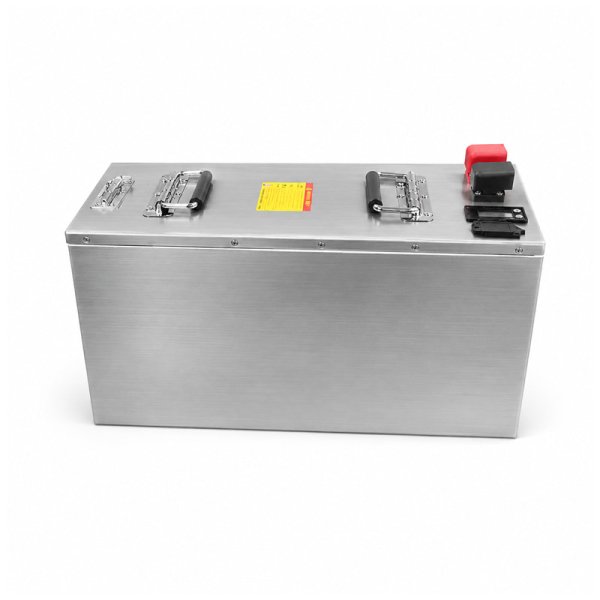
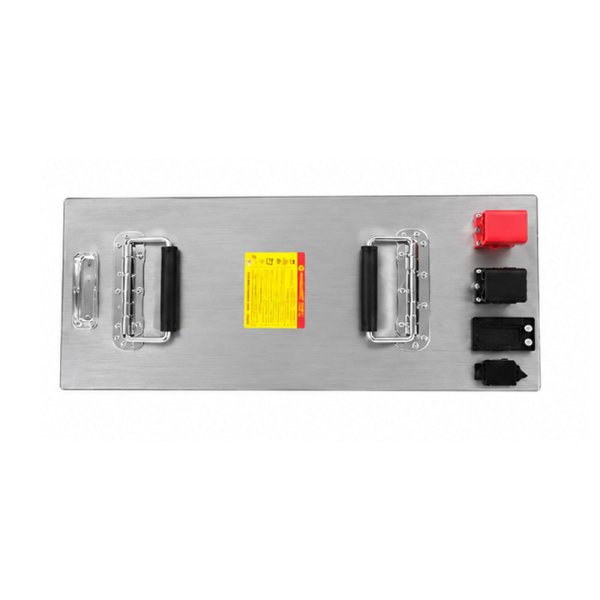
Lithium remains an attractive choice for demanding industrial fleets because it reduces routine battery handling and supports consistent power delivery. This power battery solutions include application-matched forklift packs, BMS integration, and OEM customization. For standard capacity and interface selection, consult this electric forklift battery buying guide. Hazardous-area requirements must still be verified separately.
FEBATT can review lithium battery requirements for industrial forklift projects, but suitability for classified hazardous locations must be independently established for the proposed battery and complete vehicle configuration before deployment.
Where Do Industrial Fleets Need Explosion-Protected Forklift Batteries?
Potentially explosive atmospheres may occur in solvent-handling plants, paint facilities, petrochemical operations, and workplaces processing combustible dust. The relevant hazards depend on the materials present and how often a hazardous atmosphere can arise—not simply on whether the facility is called a factory.

For a fleet manager, the challenge is practical: the truck must move loads reliably without introducing an unacceptable ignition source. Selecting a hazardous area forklift battery begins with the site’s documented classification and the truck’s permitted operating locations.
Why Can Lithium Be a Better Choice Than Lead-Acid for These Fleets?

Traditional lead-acid fleets face watering, electrolyte-handling, and battery-change tasks that consume labor and introduce exposure risks. OSHA identifies corrosive acid and hydrogen released during lead-acid charging as hazards requiring controls. Lithium systems can remove routine watering and acid-spill concerns, while properly engineered BMS functions support fault monitoring and controlled power delivery. This lithium-ion battery safety guide covers general pack risks; hazardous-area suitability requires separate verification.
| Fleet pain point | Potential lithium advantage | Essential qualification |
|---|---|---|
| Labor-intensive battery upkeep | No routine electrolyte topping-up | Inspections and preventive maintenance remain necessary |
| Interruptions from battery handling | Fewer changeovers may improve equipment availability | Depends on shift demand, runtime, and approved operating procedures |
| Limited visibility into battery condition | BMS can report temperature, current, and fault status | Vehicle communication and protective functions must be validated |
Lithium batteries also require assessment of their own electrical, thermal and fault-related ignition hazards. Reduced maintenance and intelligent BMS protection do not, by themselves, demonstrate explosion protection.
A suitable explosion proof forklift battery can therefore help a commercial fleet pursue more predictable operations, but lithium chemistry alone never establishes explosion protection.
What Makes a Forklift Battery Suitable for Hazardous Areas?
An explosion-protected truck must be evaluated against its actual environment. In European markets, ATEX Directive 2014/34/EU addresses equipment intended for potentially explosive atmospheres; IECEx provides an international equipment certification system. Gas zones and combustible-dust zones have different protection requirements.
For US projects, OSHA’s 29 CFR 1910.178 defines industrial truck designations, including E, ES, EE and EX. The required designation depends on the classification of the operating location, so ATEX terminology should not be treated as interchangeable with US truck approvals.

Buyers should ask for evidence covering the complete installed configuration, including the battery, enclosure, connectors, wiring, control electronics, and vehicle integration. A standard IP rating, UN38.3 transport test, or generic lithium safety claim does not substitute for hazardous-area approval.
For an ATEX forklift battery project, check the equipment marking, applicable gas or dust group, temperature class, certificate scope, and any conditions of use. Hazardous-area compliance requires a project-specific assessment.
How Should OEMs Check Battery and Truck Compatibility?
Retrofitting an explosion-protected forklift is not a drop-in battery exchange. Changes in battery weight, retention, wiring, switching devices, or electronics can affect both vehicle safety and its original approval.
Before specifying an explosion proof forklift battery, engineering and EHS teams should jointly review the truck model, duty cycle, peak current, compartment dimensions, counterweight requirements, BMS communication, and the certification consequences of any modification. The truck manufacturer and relevant approval body may need to authorize the proposed configuration.
Charging arrangements also require review. A battery’s ability to accept faster charging does not mean charging is permitted inside a classified area.
What Should B2B Buyers Include in a Supplier RFQ?
A useful request for quotation should give suppliers enough information to screen feasibility before discussing price:
- Site location and documented hazardous-area classification.
- Forklift make, model, fleet quantity, load profile, and shift pattern.
- Installation space, mass and counterweight constraints, and vehicle interfaces.
- Required certification jurisdiction, markings, and documentary evidence.
- Commissioning responsibilities, inspection plan, warranty, and service support.
FEBATT can discuss application-specific lithium forklift pack requirements through its existing power battery offering. Any proposed explosion proof forklift battery must still be assessed for the intended hazardous location, with certification and truck-level approval confirmed before deployment.
Frequently Asked Questions About Explosion Proof Forklift Batteries
Q: What is an explosion proof forklift battery?
A: It is a battery system intended for a forklift operating in a specified hazardous environment, with an explosion-protection approach and approval appropriate to the complete installation. The phrase alone is not a certificate or universal safety guarantee.
Q: Can lithium batteries be used in explosion-proof forklifts?
A: Yes, where the battery system and forklift configuration have been assessed and approved for the relevant environment. LiFePO4 can offer maintenance and operational advantages, but it is not automatically suitable for hazardous areas.
Q: Does an ATEX-certified battery make the whole forklift ATEX-compliant?
A: No. A battery certificate does not automatically cover the motor, controls, cabling, connectors, or a modified vehicle. Buyers must verify the complete equipment configuration and applicable approval scope.
Q: Can an explosion-protected lead-acid forklift be converted to lithium?
A: Possibly, but only after engineering review and any required manufacturer or certification approval. Battery mass, electrical interfaces, protective systems, and the truck’s original approval may all be affected.
Q: Can forklift batteries be charged inside a hazardous area?
A: Not by default. Charging locations and procedures must follow the site’s area classification, equipment approvals, and applicable regulations. Fleet operators should confirm permitted arrangements before planning shift schedules.
For B2B fleets, lithium is worth evaluating for reduced routine upkeep, better monitoring, and dependable power. The purchasing decision, however, must begin with hazardous-area suitability—not a battery label or a promised saving.