Choosing the right electric forklift battery is a strategic decision for warehouses, logistics centers, manufacturing plants, distributors, and industrial equipment buyers. The battery directly affects operating hours, charging efficiency, lifting performance, workplace safety, maintenance cost, and total cost of ownership. A forklift may look well specified, but if the battery is not matched to the workload, the fleet can still face downtime, reduced productivity, and higher operating expenses.
For B2B buyers, an electric forklift battery should not be selected only by price. Voltage, capacity, chemistry, charger compatibility, physical dimensions, battery weight, BMS protection, and forklift application all matter. A poorly matched electric forklift battery can cause charging problems, reduced runtime, installation issues, or unstable performance under load.
This guide explains how to choose an electric forklift battery for commercial and industrial use. It compares lead-acid and LiFePO4 options, explains voltage and capacity selection, reviews safety features, and gives practical guidance for forklift compatibility. Buyers looking for commercial lithium options can explore FEBATT’s forklift battery solutions for warehouse and industrial equipment applications.
What Is an Electric Forklift Battery?
An electric forklift battery is a rechargeable energy storage system designed to power electric forklifts used in warehouses, production facilities, logistics hubs, ports, retail distribution centers, and other material handling environments. Unlike diesel or propane forklifts, electric forklifts rely on battery power to operate the motor, hydraulic lifting system, controls, and onboard electronics.
In many forklifts, the electric forklift battery also functions as part of the counterweight system. This means the battery must provide not only power but also the correct weight and fit for safe lifting balance. A battery that is too light, too heavy, or incorrectly sized can affect vehicle stability and safety.
A reliable electric forklift battery should deliver steady power output, strong discharge capability, long service life, safe charging behavior, and stable performance under daily workload. For fleet managers, the battery is not simply a replaceable part. It is a core factor in equipment uptime and warehouse productivity.

What Types of Electric Forklift Batteries Are Available?
The two most common electric forklift battery options are lead-acid batteries and lithium batteries, especially LiFePO4 batteries. Each type has advantages and limitations, so the best choice depends on workload, budget, charging schedule, maintenance capability, and long-term operating goals.
Lead-Acid Forklift Batteries
Lead-acid batteries have been used in forklifts for many years. They are widely available, familiar to maintenance teams, and usually have a lower upfront purchase price. For operations with light daily use, limited budgets, or existing charging infrastructure, a lead-acid electric forklift battery may still be acceptable.
However, lead-acid batteries require more maintenance. They may need watering, equalization charging, ventilation, acid handling procedures, and longer charging times. They can also lose performance as they discharge, which may reduce forklift consistency near the end of a shift.
LiFePO4 Forklift Batteries
LiFePO4 batteries, also called lithium iron phosphate batteries, are increasingly used in modern forklift fleets. A LiFePO4 electric forklift battery usually offers faster charging, low maintenance, better energy efficiency, longer cycle life, and more stable voltage output than lead-acid alternatives.
For high-use warehouses and multi-shift operations, LiFePO4 can reduce battery swapping and charging downtime. It also supports opportunity charging, allowing operators to recharge during breaks or shift changes. For many B2B buyers, a lithium electric forklift battery is attractive because it improves uptime and reduces maintenance labor.
Other Lithium-Ion Chemistries
Other lithium-ion chemistries are available, but LiFePO4 is often preferred for forklifts because safety, thermal stability, and durability are critical in industrial environments. A forklift battery must work reliably under heavy loads, frequent acceleration, lifting cycles, and repeated charging.
Why Are More Businesses Switching to Lithium Forklift Batteries?
Businesses are switching to lithium forklift batteries because the buying decision is shifting from lowest upfront cost to lowest total cost of ownership. A lithium electric forklift battery may cost more at the beginning, but it can reduce downtime, charging labor, maintenance work, and replacement frequency over time.
A lithium electric forklift battery supports flexible charging. Operators can recharge during lunch breaks, shift changes, or short idle periods. This can reduce the need for spare batteries and battery-changing rooms in some operations. For warehouses with tight schedules, that flexibility can be valuable.
Lithium batteries also require less routine maintenance than lead-acid systems. There is no regular watering, no acid spill risk, and no need for equalization charging in the same way lead-acid batteries require. For fleet managers, this means fewer service tasks and fewer interruptions.
Most importantly, a lithium electric forklift battery can maintain more stable voltage during discharge. This helps forklifts operate more consistently across a shift, especially in high-throughput warehouses where performance stability affects workflow speed.
How Do You Choose the Right Battery Voltage?
Voltage must match the forklift’s electrical system. Common forklift voltages include 24V, 36V, 48V, 72V, and 80V. Smaller warehouse trucks often use lower-voltage batteries, while larger forklifts and heavier-duty equipment may require higher-voltage systems.
When selecting an electric forklift battery, buyers should begin with the forklift data plate, equipment manual, or manufacturer specification. The recommended battery voltage is not optional. Using the wrong voltage can damage components, reduce performance, or create safety risks.
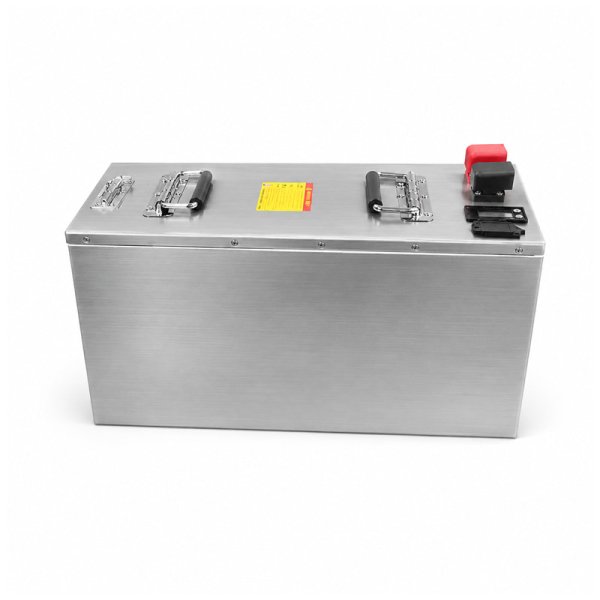
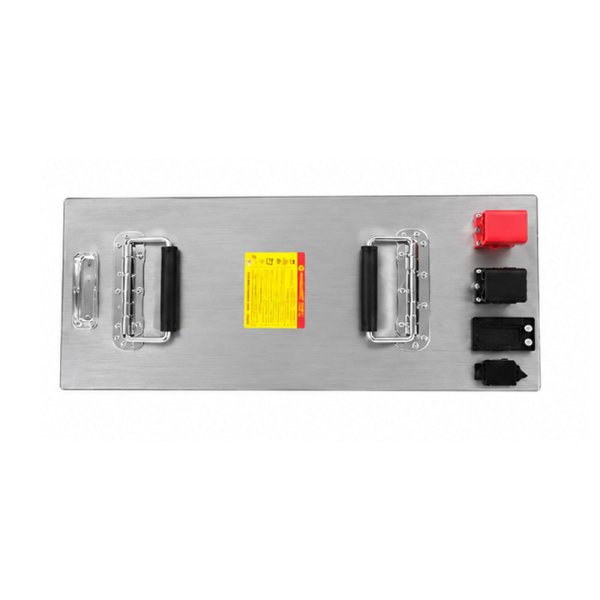
A higher voltage is not automatically better. The right electric forklift battery voltage depends on the forklift model, controller design, motor system, and workload. For many medium-duty warehouse applications, a 48V platform is common. For example, the 48V 120Ah Forklift Battery can be considered for compatible electric forklift applications that require a practical LiFePO4 power solution.
How Do You Determine the Right Battery Capacity?
Battery capacity is usually measured in amp-hours, or Ah. Capacity determines how much energy the battery can store and how long the forklift can operate before recharging. A higher-capacity electric forklift battery can usually support longer runtime, but it may also cost more and require more space or weight consideration.
The right capacity depends on actual operating conditions. Buyers should review shift length, number of operating hours per day, average load weight, lift height, travel distance, charging opportunities, and future fleet expansion plans.
A warehouse running intermittent single-shift work may not need the same electric forklift battery capacity as a distribution center operating two or three shifts per day. Capacity should match real duty cycle, not only the desire for a larger specification.

What Forklift Application Are You Buying For?
Application is one of the most important selection factors. An electric forklift battery used in cold storage faces different conditions from one used in a standard warehouse, port facility, manufacturing plant, or logistics center.
In cold storage, battery performance can be affected by low temperature. In high-throughput warehouses, charging speed and runtime are more important. In manufacturing plants, forklifts may carry heavier loads and operate in repeated stop-start cycles. In port or outdoor logistics environments, battery enclosure strength and environmental protection may matter more.
The correct electric forklift battery should be chosen according to the actual working environment. A battery that works well in a light-duty warehouse may not be suitable for a heavy-duty industrial application.
How Many Operating Hours Does Your Fleet Require?
Operating hours help determine whether a lower-capacity or higher-capacity electric forklift battery is appropriate. A forklift used only a few hours per day may not need a large battery. A forklift used across multiple shifts needs stronger runtime and faster charging recovery.
Buyers should review how many hours each forklift operates per shift and how often the equipment can be charged. The goal is not only to run longer. The goal is to return the forklift to service without disrupting workflow.
For multi-shift operations, a lithium electric forklift battery can be a strong choice because it supports faster charging and opportunity charging. This helps reduce downtime between shifts and may reduce the need for spare battery packs.
What Load Capacity Should the Battery Support?
Load handling affects energy consumption. A forklift carrying heavier loads, lifting to higher racks, or traveling longer warehouse routes will consume more energy. Frequent lifting, ramp travel, and repeated acceleration also increase battery demand.
When choosing an electric forklift battery, buyers should consider average load weight, maximum load weight, lift height, travel distance, and daily task frequency. A battery that is suitable for light pallet movement may not be enough for dense cargo, heavy manufacturing parts, or long-distance warehouse transport.
The selected electric forklift battery should support today’s workload and allow reasonable room for future growth. Under-sizing the battery may reduce runtime and increase charging frequency.
What Safety Features Should Buyers Look For?
Safety is a key requirement in industrial battery procurement. A modern electric forklift battery should include a reliable battery management system, or BMS, that monitors voltage, current, temperature, cell balance, charge status, and discharge behavior.
Important safety features include overcharge protection, over-discharge protection, short-circuit protection, overcurrent protection, thermal monitoring, cell balancing, fault alerts, and safe communication with the charger where applicable.
For lithium batteries, the BMS is especially important. A high-quality electric forklift battery should not only provide energy. It should actively protect the battery pack and support safer operation in a demanding workplace.
How Can You Ensure Compatibility With Your Forklift?
Compatibility is more than voltage. Buyers must verify physical dimensions, connector type, compartment fit, charger compatibility, weight, mounting method, and counterweight requirements. The electric forklift battery must fit the battery tray correctly and maintain proper vehicle balance.
Charger compatibility is also important. Lead-acid chargers and LiFePO4 chargers use different charging profiles. Before replacing a lead-acid battery with lithium, buyers should confirm whether the existing charger can be used or whether a dedicated lithium charger is required.
A suitable electric forklift battery should be reviewed as part of a complete system. The battery, charger, forklift controller, cables, connectors, and installation space must work together.

How Do Lead-Acid and LiFePO4 Forklift Batteries Compare?
Lead-acid and LiFePO4 batteries can both power electric forklifts, but they perform differently in daily operation. Lead-acid has a lower initial price, but it usually requires more maintenance, longer charging time, and more handling. LiFePO4 has a higher upfront cost, but it can offer faster charging, lower maintenance, better efficiency, and longer operating value.
| Feature | Lead-Acid Electric Forklift Battery | LiFePO4 Electric Forklift Battery |
|---|---|---|
| Initial cost | Lower | Higher |
| Maintenance | Regular watering and inspection | Low maintenance |
| Charging speed | Slower | Faster with compatible charger |
| Opportunity charging | Limited | Strong |
| Cycle life | Shorter | Longer |
| Energy efficiency | Moderate | Higher |
| Downtime impact | Higher | Lower |
| Best use | Light-duty or budget-sensitive use | High-use and multi-shift operations |
For businesses focused on total cost of ownership, a LiFePO4 electric forklift battery can often be the more practical long-term choice. The final decision should be based on operating hours, maintenance labor, charging access, and replacement planning.
FAQ About Electric Forklift Battery
1.How Long Does an Electric Forklift Battery Last?
An electric forklift battery can often support several years of service, depending on battery chemistry, operating hours, charging habits, temperature, maintenance, depth of discharge, and workload. LiFePO4 batteries generally offer longer cycle life than lead-acid batteries when used with compatible charging equipment and proper operating conditions.
2.Is Lithium Better Than Lead-Acid for Forklifts?
Lithium is often better for high-use forklift fleets because it supports faster charging, opportunity charging, lower maintenance, and more stable power output. Lead-acid may still be suitable for light-duty operations with lower upfront budget requirements.
3.Can Lithium Batteries Replace Existing Lead-Acid Systems?
Yes, but replacement should be reviewed carefully. Before switching to a lithium electric forklift battery, buyers should confirm voltage, battery dimensions, battery weight, connector type, charger compatibility, BMS design, and forklift counterweight requirements.
4.What Battery Voltage Is Best for My Forklift?
The best voltage is the voltage specified by the forklift manufacturer. Buyers should check the data plate, manual, or technical specification. Choosing the wrong electric forklift battery voltage can damage the forklift or create safety issues.
5.How Much Can Businesses Save by Switching to LiFePO4?
Savings vary by fleet size, operating hours, energy cost, maintenance labor, and downtime reduction. A LiFePO4 electric forklift battery may reduce long-term operating cost by lowering maintenance needs, improving charging efficiency, and reducing battery replacement frequency. Exact savings should be calculated based on real fleet data.
Conclusion
Choosing the right electric forklift battery requires more than comparing price. Buyers should evaluate voltage, capacity, battery chemistry, operating hours, load profile, charging schedule, safety design, forklift compatibility, and long-term operating cost.
Lead-acid batteries can still work for light-use operations or budget-sensitive buyers. However, LiFePO4 batteries are often better suited for modern warehouses, multi-shift logistics centers, and industrial fleets that need faster charging, low maintenance, and higher uptime.
The best electric forklift battery is the one that fits the forklift, matches the workload, supports safe operation, and reduces total cost over time. For B2B buyers, that means selecting a battery based on real application data, not only initial purchase price.