A marine battery management system does more than display charge levels. On a commercial vessel, it must identify abnormal cell conditions, communicate safe operating limits, and support controlled isolation before a battery fault disrupts operations. Salt spray, vessel movement, and variable loads make those functions critical.
Shipyards and fleet operators need protection logic that works with the complete battery installation—not a generic board labeled “marine.”
What Should a Marine Battery Management System Actually Control?
A marine battery management system (BMS) monitors cell voltage, cell temperature, and battery-string current. Depending on the approved design, it also estimates state of charge (SOC), records faults, manages allowable charge/discharge limits, and signals protective devices.

The American Bureau of Shipping (ABS) marine lithium-battery requirements (December 2025) explicitly call for cell-voltage, cell-temperature, and string-current monitoring, along with alarm provisions. Applicable requirements still depend on vessel design and approval scope.
A marine battery management system must therefore be configured for the actual cells, protection hardware, and duty cycle. Buyers unfamiliar with balancing and cell-level protection can review FEBATT’s LiFePO4 battery BMS fundamentals before specifying marine-specific functions.
How Does a Marine BMS Address Salt Spray and Condensation?
Condensation inside a battery compartment can lower insulation resistance and accelerate corrosion at terminals, sensor connections, and cable entries. A marine battery management system cannot make a damaged enclosure waterproof, but it can report abnormal insulation or electrical conditions when the installation includes suitable sensors and monitoring equipment.
Specify corrosion-resistant hardware, appropriately sealed connectors, supported wiring, and environmental testing for the actual mounting location. An IP rating alone does not establish salt-spray resistance. For a marine battery management system, dependable sensor signals matter as much as enclosure sealing: corroded voltage taps can cause misleading readings or lost communication.
How Are Multiple Marine Battery Packs Protected?
Commercial vessels may combine several lithium battery packs to meet energy and power requirements. Differences in internal resistance, temperature, or SOC can create uneven current sharing. A marine battery management system should make each monitored pack’s status visible and support a defined strategy for branch faults.

Parallel connection is not automatically safe just because every pack has a local BMS. Review compatibility, current sensing, pre-charge, fusing, contactor sequencing, and the supervisory control arrangement. This marine battery pack integration guide addresses pack boundaries; a marine battery management system specification should separately define which faults isolate one branch and which require a wider shutdown.
How Should a Marine Battery Management System Respond to Faults?
For marine battery safety, alarm behavior must be agreed before commissioning. A marine battery management system can request power reduction or electrical isolation, but the final response depends on fault severity and the vessel’s approved safety architecture.
| Detected condition | Expected system response | Fleet consequence |
|---|---|---|
| Approaching temperature or current limit | Alert and communicate reduced power allowance | Avoid unexpected derating during maneuvering |
| Ground fault or communication failure | Alarm; execute validated protective logic | Identify affected equipment and prevent unsafe operation |
| Serious electrical or thermal hazard | Isolate affected battery circuits as required | Prioritize personnel and vessel safety |
A marine battery management system cannot extinguish an internal cell failure. Fire detection, ventilation, emergency disconnection, and suppression require coordinated vessel-level systems. This battery thermal runaway prevention guide explains why electrical protection and fire-risk mitigation must work together.
How Do Protection Priorities Change Across Vessel Operations?
Protection settings should match critical fleet operations, not simply be copied between vessels.
| Commercial application | Operational problem | BMS priority |
|---|---|---|
| Passenger shuttle or sightseeing boat | Frequent departures and narrow turnaround windows | Consistent SOC reporting and clear fault alerts |
| Harbor patrol or inspection boat | Long idle periods with sudden acceleration | Transient-current limits and event history |
| Utility or service workboat | Variable payload, rough water, and auxiliary loads | Power-limit coordination and fault localization |
For duty-cycle planning beyond the marine battery management system itself, see this electric workboat battery guide. The BMS reports safe limits; vessel controllers allocate available power.
How Should a Marine BMS Communicate with Ship Controls?
A marine battery management system may exchange status, alarms, SOC, and permissible current limits through CAN, RS485, or another agreed interface. Vessel controllers should respond predictably to restricted power and communication loss.
Require a signal list, message timing, fail-safe defaults, and fault-code definitions. A marine battery management system is not a substitute for independent fire detection or emergency disconnect controls. These interface responsibilities should be included when evaluating a marine battery manufacturer for repeat fleet orders.
Why Choose a LiFePO4 Battery with Verified BMS Protection?
LiFePO4 is attractive for commercial marine fleets because of its generally stronger thermal stability, service-life potential, and reduced routine maintenance compared with conventional lead-acid batteries. These benefits depend on suitable pack construction and a correctly matched marine battery management system; chemistry alone does not eliminate fire or water-ingress hazards.
Add Your Heading Text Here
Lorem ipsum dolor sit amet, consectetur adipiscing elit. Ut elit tellus, luctus nec ullamcorper mattis, pulvinar dapibus leo.

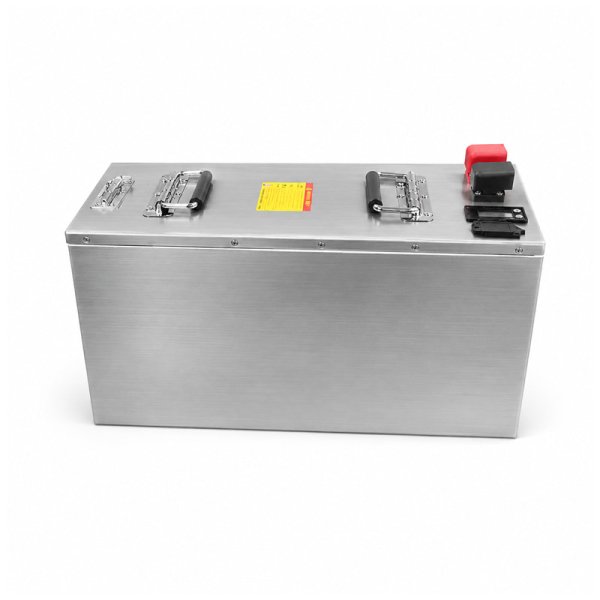
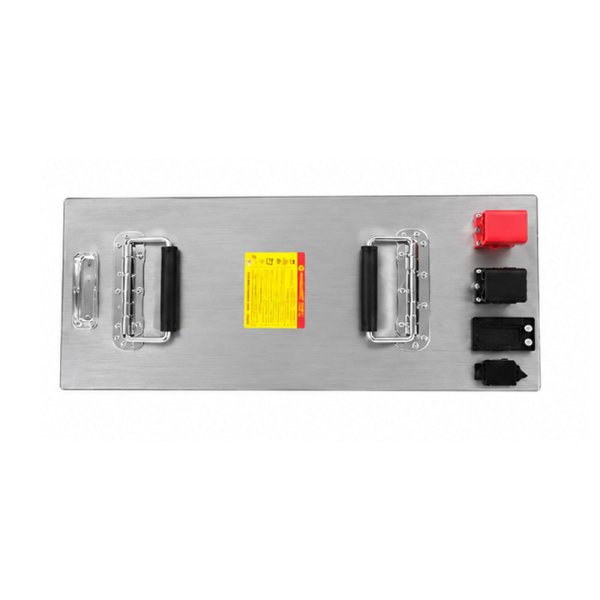
As a published product example, FEBATT’s 96V 210Ah marine lithium battery lists 20.16 kWh, integrated BMS protection, and an approximate 3,000-cycle rating. These are model-specific figures, not universal fleet-life guarantees. FEBATT’s power battery solutions also cover application matching, BMS integration, and OEM customization.
What Should OEMs Verify Before Fleet Deployment?
Before approving a marine battery management system, request evidence rather than generic “smart BMS” claims. The key deliverables are a protection-limit matrix, sensor map, communication protocol, fault-event records, and test results for the proposed battery configuration.
Validate moisture exposure, vibration, cable integrity, communication loss, charger conflicts, and controlled fault isolation. Assign responsibility for vessel alarms, emergency controls, and software updates. Assess the marine battery management system as part of the installed architecture.
Frequently Asked Questions About Marine Battery Management System
Q: What does a marine battery management system do?
A: A marine battery management system monitors critical battery conditions, calculates operating information, communicates permissible limits, and supports protective actions. It works alongside electrical protection and ship safety equipment; it does not replace them.
Q: Is a BMS necessary for a lithium marine battery?
A: Yes, a suitable battery management system is fundamental to protecting rechargeable lithium packs. Required functions and approvals depend on vessel type, installation, system energy, and applicable rules. A marine battery management system must match the actual cells and protection devices.
Q: Can a marine BMS prevent battery fires?
A: A marine battery management system can reduce electrical-abuse risks through monitoring and protective responses, but cannot guarantee that a defective cell will never fail. Fire detection, ventilation, propagation control, and emergency response remain separate safeguards.
Q: How does a marine BMS manage several battery packs?
A: The marine battery management system needs reliable pack-level measurements, coordinated current limits, and a verified method of disconnecting affected branches. Parallel packs also need compatible hardware and supervisory control; local BMS units alone are insufficient.
Q: What should fleet buyers check before choosing a marine BMS?
A: Ask whether the marine battery management system has validated alarms, fault thresholds, event logs, communication behavior, and environmental-test evidence for the intended installation. Request a responsibility matrix covering pack supplier, integrator, and shipyard.