A low marine battery price can become an expensive procurement mistake when the quotation excludes vessel integration, validation, or usable-energy limits. For ferry operators, harbor service fleets, and boat OEMs, the relevant figure is not simply the price of a battery pack. It is the cost of delivering dependable power throughout the vessel’s working life.
The practical answer: compare quotations against one vessel duty profile, one defined scope of supply, and the same acceptance criteria. Normalize marine battery price by verified usable kWh, then add installation, logistics, service exposure, and replacement costs before choosing a supplier.
What Determines Marine Battery Price in B2B Procurement?
Marine battery price begins with the work a vessel must perform. Rated capacity alone cannot explain marine battery price. Buyers must determine how continuously energy is drawn, how much peak power the propulsion system requires, and whether the battery can remain serviceable in a salt-laden, vibrating environment.
| Vessel application | Operational priority | Potential pricing implication |
|---|---|---|
| Passenger sightseeing or shuttle boat | Complete scheduled trips with sufficient return-to-dock reserve | Validated usable energy, turnaround reliability, and passenger-vessel approval needs |
| Harbor workboat or utility craft | Repeated thrust changes, auxiliary equipment, long working shifts | Power capability, thermal margin, rugged mounting, and diagnostic access |
| Patrol or inspection fleet | Unpredictable missions, standby periods, rapid changes in demand | Reserve capacity, fault visibility, service readiness, and replacement lead time |
A sheltered-water tour boat and a continuously operated harbor craft may require different battery architectures even when their nominal energy ratings match. Their marine battery price should therefore reflect validated operating conditions, not an assumed universal cost per kilowatt-hour.
Start with the vessel’s route, load profile, operating temperature, space constraints, and maintenance access. This power battery solutions provide an application-based starting point for discussing pack configuration, BMS integration, and OEM customization rather than selecting by voltage alone.
Why Do Marine Battery Quotes Vary Between Manufacturers?
Two manufacturers can offer the same rated capacity at different marine battery price points, yet deliver materially different systems. Marine battery price changes with the quality of cells, enclosure construction, protection strategy, testing evidence, production controls, and the services included in the offer.
A lower marine battery price might exclude items that another supplier has already engineered into the package:
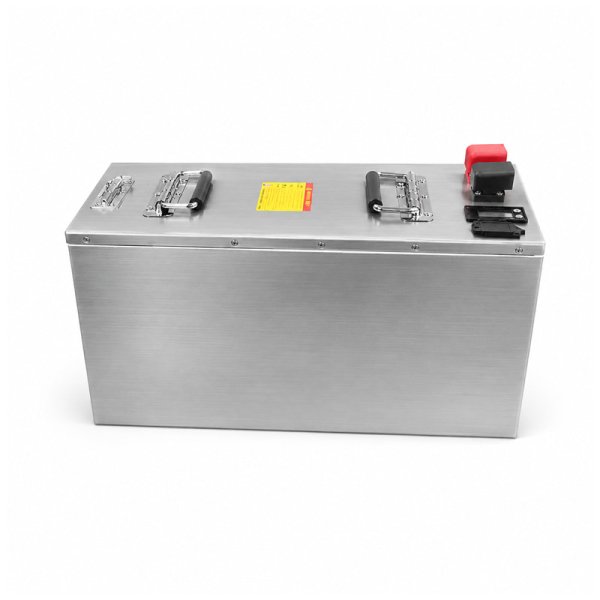
- Marine exposure protection: corrosion-sensitive connectors, sealing design, cable routing, mounting retention, and maintainability under spray or vibration.
- BMS and system interface: alarms, contactor control, CAN communication, fault logs, and compatibility with the vessel’s propulsion controller.
- Quality evidence: finished-pack testing, traceable component batches, firmware revision control, and agreed inspection records.
- Commercial scope: prototype development, tooling, pilot-batch checks, spare parts, and support during commissioning.

These differences are not automatically evidence that the highest quote is best. A premium marine battery price is justified only when the added scope reduces identifiable technical or operational risk.
Suppliers should identify what is included, excluded, or to be provided by the shipyard. Before comparing volume prices, align engineering deliverables and production acceptance gates. FEBATT’s OEM battery sourcing guide from RFQ to mass production explains why sample approval, traceability, and change control are commercial commitments, not paperwork added after ordering.
How Can Buyers Compare Marine Battery Price per Usable kWh?
Marine battery price per rated kWh often conceals an unequal comparison. Some packs permit a wider operational state-of-charge window; others reserve more capacity for cell protection, thermal limitations, or power availability at low charge. Marine battery price per usable kWh exposes part of that difference.
Marine battery price per usable kWh = battery-system quote ÷ warranted or validated usable energy (kWh).
Both sides of the equation need boundaries. Ask whether usable energy is measured at the pack’s DC output, at a specified temperature and discharge rate, and at beginning of life. Specify the minimum reserve required for the vessel’s return-to-port or contingency procedures. Do not confuse pack-output energy with propulsion energy after inverter and drivetrain losses.
Illustrative comparison only — not current market pricing:
| Quotation measure | Supplier A | Supplier B |
|---|---|---|
| Rated battery energy | 80 kWh | 80 kWh |
| Validated usable energy | 56 kWh | 68 kWh |
| Battery-system quote | $12,000 | $14,000 |
| Marine battery price / usable kWh | $214 | $206 |
| Additional required project costs | $6,000 | $3,000 |
| Total scoped project cost / usable kWh | $321 | $250 |
Supplier B’s unit quote is higher, yet it delivers more verified energy and lower normalized project cost. Supplier A may still be appropriate if another requirement favors it; the table simply shows why headline marine battery price is inadequate.

Compare the same operating conditions and verify each supplier’s discharge limits, temperature derating, and test method. Ask for performance at the fleet’s agreed end-of-life threshold as well. A large capacity figure has limited commercial value if the vessel cannot meet its required route reserve after several seasons.
What Additional Costs Should Buyers Include in a Marine Battery Project?
Marine battery price quotations rarely cover the entire installed system. To assess marine battery price fairly, build a landed, integrated, and accepted project budget. Assign responsibility for every interface before placing a purchase order.
| Cost category | Procurement question |
|---|---|
| Engineering and prototypes | Are design reviews, CAD changes, sample packs, and non-recurring engineering charged separately? |
| Vessel integration | Who supplies fuses, disconnects, cabling, mounting hardware, controller integration, and commissioning labor? |
| Validation and documentation | Are pack tests, agreed inspection records, and any required third-party assessments included? |
| Freight and import | Which Incoterm applies, and who covers compliant battery transport, insurance, customs, and duties? |
| Service preparation | Are diagnostic tools, operator training, spare packs, replacement connectors, and repair procedures included? |
| Change management | What happens financially if the shipyard revises interfaces after design approval? |
For retrofits, marine battery price can be overshadowed by access modifications, old-battery removal, and a vessel being unavailable during installation. For newbuilds, schedule alignment with hull construction and sea trials is often more important than a marginal unit discount.
A quotation should distinguish factory acceptance testing (FAT) of the supplied battery from site or vessel acceptance testing (SAT) after installation. Passing pack-level tests does not establish that propulsion controls, alarms, ventilation, and emergency shutdown work together onboard. Make the shipyard, integrator, and battery supplier’s responsibilities explicit.
How Should Fleet Operators Evaluate Marine Battery Lifecycle Cost?
Lifecycle analysis asks whether today’s marine battery price will still look economical after years of voyages, repairs, charging, and replacements. Use a common evaluation period based on the fleet’s asset plan; do not convert a cell-level cycle-life claim directly into guaranteed vessel service years.
Fleet battery total cost of ownership = acquisition + integration + energy + scheduled service + repairs + downtime + replacement − residual value.

Calculate these costs per vessel and, where operating data permit, per completed route or operating hour. A sightseeing operator with fixed departure times may face lost ticket revenue when one boat is grounded. A harbor contractor might incur substitute-vessel expenses or penalties for a missed service window. Those outcomes give downtime a real, vessel-specific value.
Consider a hypothetical fleet losing six scheduled operating days because a replacement pack is unavailable. At an assumed $800 daily contribution margin, that creates $4,800 in lost contribution before emergency logistics. This is an illustration, not an industry average. A modest marine battery price saving can disappear after a single extended interruption.
Evaluate expected cycle and calendar aging under the actual charge schedule, temperature, and load. Monitor retained usable capacity, fault history, and power capability, not only age. This battery state-of-health guide for commercial fleets describes how degradation indicators can inform maintenance and replacement decisions.
A defensible marine battery price comparison therefore includes warranty exclusions, claim turnaround, local service capability, spare availability, and the supplier’s obligation to support the approved pack configuration. Where programs span several years, discount future cash flows consistently and run scenarios for early replacement and vessel downtime.
What Should Buyers Confirm Before Accepting a Marine Battery Quotation?
Before approving a purchase order, turn the marine battery price quotation into a technically enforceable agreement. An attractive offer is not procurement-ready until both parties agree on what must be delivered and how success will be demonstrated.
- Duty profile: document vessel type, propulsion and auxiliary loads, continuous and peak demand, operating hours, route reserve, temperature, and marine exposure.
- Usable performance: confirm rated and usable kWh, measurement conditions, allowable discharge limits, power at low charge, and end-of-life acceptance criteria.
- Scope and interfaces: freeze pack dimensions, mounting, connectors, BMS messages, fault responses, charger compatibility, and items supplied by others.
- Safety and approvals: request evidence relevant to the actual pack configuration and vessel. IEC 62619:2022addresses safety requirements for industrial lithium batteries, including marine motive applications; it is not a substitute for applicable flag-state, class, or vessel-installation approval.
- Quality and acceptance: agree FAT/SAT responsibilities, serial traceability, production-change notification, pilot quantities, and procedures for nonconforming goods.
- Commercial risk: record MOQ, volume-price tiers, quote validity, Incoterms, lead times, payment milestones, warranty terms, spares, and dispute resolution.
Ask each manufacturer for a written deviation and exclusions schedule against the same RFQ. This prevents an apparently competitive marine battery price from relying on unspecified engineering changes, untested interfaces, or commissioning services that nobody has budgeted.
The best marine battery price proposal is not necessarily the lowest number. It is the one whose energy delivery, safety evidence, service obligations, and total deployment cost can be verified before the first vessel enters service.
Frequently Asked Questions About Marine Battery Price
Q: What affects marine battery price the most?
A: Vessel duty cycle, validated usable energy, power demand, enclosure requirements, BMS interfaces, testing, and order volume are major drivers. Marine battery price also depends on what the supplier includes in its scope.
Q: Why can two marine batteries with the same capacity have different prices?
A: Identical rated kWh does not mean identical usable output or reliability. Suppliers may differ in cell selection, thermal design, protection, integration support, verification, warranty, and production traceability.
Q: How should OEMs compare marine battery price per kWh?
A: Divide each comparable battery-system quote by validated usable kWh under the same test conditions. Then add installation and other required project costs; rated capacity alone is an unreliable basis.
Q: Does a custom marine lithium battery cost more than a standard pack?
A: Often at prototype stage, because tooling, engineering, and validation may be added. At production scale, customization can lower vessel integration costs if interfaces are standardized and changes controlled.
Q: What should a commercial marine battery quotation include?
A: It should specify performance, usable energy, battery and BMS scope, tests, drawings, quantities, delivery terms, warranty, spare support, exclusions, acceptance criteria, and responsibilities for vessel integration.
Request a Quote Built Around Your Fleet's Operating Costs
To compare marine battery price without costly omissions, send FEBATT your vessel application, duty cycle, usable-energy target, power peaks, installation envelope, operating environment, interface requirements, estimated quantity, destination market, and commissioning schedule. Request an itemized quotation with assumptions, exclusions, test deliverables, and support terms—so your team can assess cost per dependable voyage, not merely cost per pack.