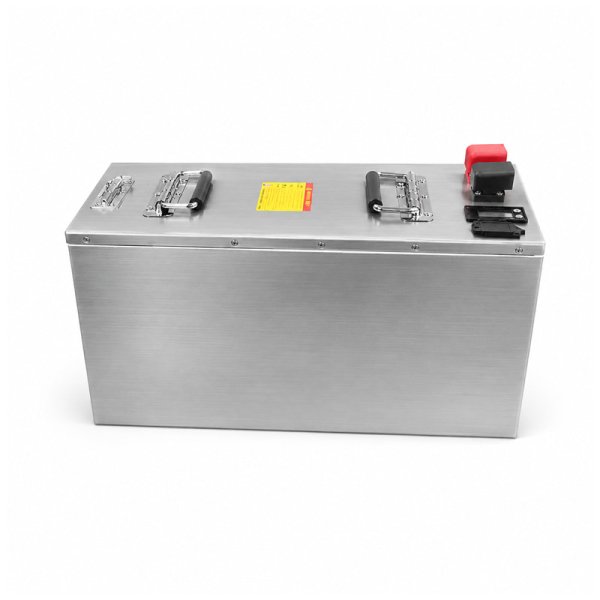
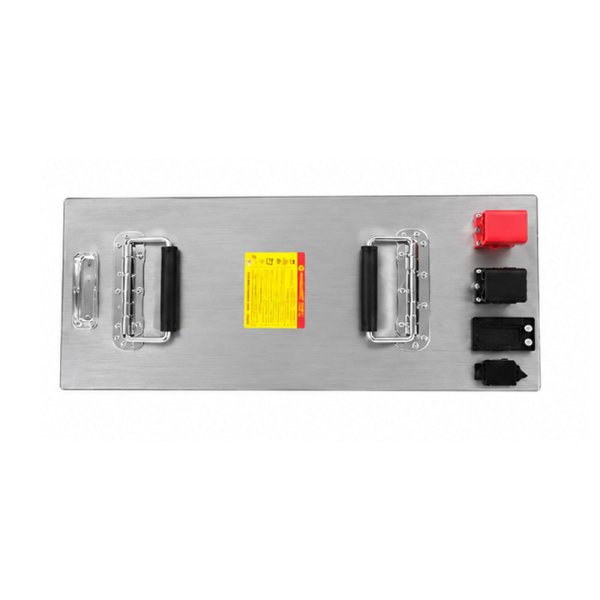
When an aging lead-acid pack starts shortening routes, slowing equipment under load, or demanding more maintenance, fleet managers eventually face the same question: is it worth replacing the old system with lithium? For B2B operators, the lead acid vs lithium battery decision is not about following a consumer trend. It is about uptime, usable energy, payload, charging workflow, service labor, and total cost across the equipment life cycle.
As lead-acid capacity fades, fleets can face shorter routes, more replacement pressure, and growing maintenance demands. Lithium can address several of those pain points by reducing mass, providing a flatter discharge profile, supporting flexible charging, and offering longer cycle-life potential when the pack is correctly matched to the application.
For FEBATT customers, the practical lead acid vs lithium question is therefore: under what operating conditions does a lithium system create enough value to justify the conversion? The answer is strongest when the fleet has high utilization, repeated replacements, expensive maintenance labor, limited charging windows, payload sensitivity, or a need for more consistent power delivery.
Why Does the Lead Acid vs Lithium Battery Decision Matter More in B2B Fleets?
Commercial vehicles consume batteries very differently from occasional-use personal equipment. A warehouse truck may complete multiple work cycles per day. An electric tricycle may carry payload on long urban routes. Golf carts can operate continuously through a rental shift. RV auxiliary systems may sit idle for weeks and then support concentrated loads. These duty cycles change the lead acid vs lithium economics because degradation, charging time, maintenance, and downtime all have a direct business cost.
Lead-acid remains mature and serviceable, especially where utilization is low and suitable charging infrastructure already exists. Its limitations become more visible with repeated deep cycling, chronic undercharging, high temperatures, or heavy current demand. Prolonged partial charge can contribute to sulfation; this is not a battery “memory effect.”
Lithium iron phosphate (LiFePO4/LFP) is attractive for many commercial applications because it can combine long cycle-life potential, lower mass, a relatively flat discharge-voltage profile, no electrolyte watering, and flexible charge scheduling when the pack and charger are designed for it. These advantages do not make every lithium pack automatically superior, but they create a strong commercial fleet power upgrade case in demanding operations.
How Do Usable Energy and Vehicle Weight Change in Lead Acid vs Lithium?
Nominal amp-hours are not enough to predict vehicle range or shift duration. Two batteries can both be labeled 48V 100Ah yet deliver different usable energy because discharge rate, voltage sag, cutoff settings, temperature, age, and permitted depth of discharge are different. In a professional lead acid vs lithium evaluation, fleet engineers should compare usable watt-hours at the required load rather than assuming that equal Ah means equal practical runtime.
Lead-acid voltage typically declines more noticeably under heavy current and as state of charge falls. Its available capacity also depends strongly on discharge rate. A correctly sized LFP pack generally maintains a flatter voltage profile through much of its usable SOC range, which can help vehicles maintain more consistent electrical performance during a shift. The motor controller and drivetrain still determine the actual torque and speed, so lithium should not be marketed as a guaranteed power increase.
Mass is another major difference. Lead plates make lead-acid systems heavy for the energy stored. Lithium can substantially reduce pack mass for a comparable usable-energy target, although the exact reduction depends on enclosure, cells, BMS, protection hardware, and current capability. This can help tricycle payload and golf-cart vehicle mass. For forklifts, battery weight may be part of counterbalance, so an industrial motive power replacement must verify minimum battery-weight and stability requirements.

Is Lithium Really More Durable in a Lead Acid vs Lithium Battery Comparison?
Cycle-life potential is one of lithium’s strongest B2B advantages, but the numbers must be interpreted correctly. Conventional deep-cycle lead-acid products are commonly specified in the hundreds of cycles under defined conditions, while commercial LFP cells and packs can reach several thousand cycles in suitable test conditions. Neither figure should be treated as a universal guarantee.
Cycle life changes with depth of discharge, charge/discharge rate, temperature, storage, charge quality, and the remaining-capacity threshold used for end of life. A pack rated for several thousand cycles in controlled testing may perform differently in a hot or overloaded vehicle. A credible lead acid vs lithium comparison therefore asks for test conditions, not just the largest cycle number.
For a high-frequency fleet, the business value is reduced replacement frequency rather than a promised number of calendar years. A warehouse or delivery operation that consumes large energy throughput every day can use more of the cycle-life advantage than equipment that is operated only occasionally. Seasonal equipment may instead be dominated by calendar aging and storage practices.
How Should B2B Buyers Calculate Total Cost Instead of Purchase Price?
Lithium is often more expensive to buy upfront, but purchase price alone does not show the business result. Consumer retail prices are not a credible basis for a global B2B decision. A fleet management ROI analysis should be built from the actual project quotation and operating data.
A useful model includes battery acquisition cost, charger replacement or reconfiguration, installation, vehicle modifications, routine maintenance labor, battery replacement events, downtime, spare-battery inventory, electricity consumption, disposal or recycling logistics, and the analysis period. Lead-acid can still be economical for lightly used equipment when existing infrastructure is already paid for. Lithium becomes more attractive as utilization, labor cost, downtime value, and replacement frequency rise.
For fleets evaluating a lithium conversion, FEBATT Power Battery Solutions provides a practical starting point for voltage, capacity, BMS, charger, communication, and packaging discussions. The page should support the engineering conversation; the final battery specification still needs to be matched to the vehicle and duty cycle.
How Does Charging Workflow Affect Lead Acid vs Lithium Fleet Uptime?
Charging strategy often determines whether a battery fits a commercial operation. Conventional flooded lead-acid systems may require structured charging, charge completion, and sometimes cooling or equalization procedures depending on the application. Repeated chronic undercharging can accelerate sulfation. Specialized lead-acid technologies can support other charging strategies, so the correct approach must follow the specific battery design rather than a universal rule.
Lithium systems can often accept higher charge rates and partial or opportunity charging when the cells, BMS, connectors, charger, and thermal design have been validated for that duty. This is especially valuable for warehouse logistics power solutions where equipment can charge during breaks instead of being removed from service for a long charging window.
The lead acid vs lithium advantage is therefore not simply “lithium charges in one hour.” Actual charge time depends on battery capacity, charger power, allowed C-rate, temperature, SOC, and BMS settings. The B2B question is whether the battery and charger combination can meet the site’s required turnaround time without exceeding validated electrical or thermal limits.
What Maintenance Differences Matter Most to Commercial Operators?
Flooded lead-acid batteries can require electrolyte-level checks, distilled-water additions, terminal cleaning, equalization procedures, and corrosion control. Charging can also generate hydrogen, so the facility may need suitable charging-area controls and ventilation. AGM or gel lead-acid batteries reduce some of these maintenance tasks but still require appropriate charging and inspection.
LFP eliminates watering and acid-related service. That is a meaningful labor advantage, but “maintenance-free” is too absolute for a commercial pack. Fleet technicians should still inspect cables, connectors, mounting hardware, enclosure condition, charger behavior, BMS alarms, and evidence of unusual heating, impact, or moisture ingress.
For fleets operating dozens of vehicles, reducing recurring battery service can free maintenance capacity for higher-value work. This is one reason the lead acid vs lithium business case becomes stronger as fleet size grows: the benefit is not only battery life, but also fewer repetitive maintenance tasks and less equipment handling.
How Does Lithium Support Warehouse Logistics and Industrial Motive Power?
Warehouse fleets place unusual demands on batteries: repetitive acceleration, lifting current, predictable shift schedules, and high consequences for downtime. In a lead acid vs lithium comparison for material handling, the most important specifications are continuous current, peak current, connector and cable ratings, charger strategy, thermal rise, BMS protection, and truck compatibility.

A lithium forklift battery can support opportunity-charging workflows and remove lead-acid watering routines. However, a forklift conversion must also preserve truck stability. If the original battery contributes to counterbalance, a lighter lithium pack may need engineered ballast or OEM approval. This is why industrial motive power replacement should be handled as a vehicle-integration project, not merely a battery swap.
For warehouse logistics power solutions, document daily energy throughput, available charging breaks, maximum lifting/travel current, ambient temperature, and required shifts. These inputs are more useful than choosing a pack by nominal Ah alone.
How Should a Battery Pack for Commercial Tricycles Be Selected?
A battery pack for commercial tricycles should be sized around route energy, payload, grade, speed, stop-start frequency, peak controller current, and available charging time. A lighter lithium pack can create useful payload margin, which is commercially valuable for delivery and utility fleets, but the pack must still be mechanically secured and electrically matched to the vehicle.
For road vehicles, estimate energy from measured or validated Wh/km rather than relying only on Ah. Required usable energy equals expected energy consumption per kilometer multiplied by target route distance, with reserve allowance for temperature, aging, detours, and operational variability. Then verify that the selected pack can deliver the controller’s continuous and peak current without excessive voltage drop or BMS intervention.
The lead acid vs lithium benefit is strongest when the old system is limiting payload, route completion, or charging flexibility. If the vehicle already completes its duty cycle comfortably and operates only a few hours per week, the financial case for conversion may be weaker even though lithium remains lighter and lower-maintenance.
What Changes for Golf Carts, RV Systems, and Electric Motorcycles?
A golf cart lithium upgrade can reduce routine battery service and provide more consistent voltage through the usable SOC range. For resort or rental fleets, evaluate hills, passenger load, daily rounds, storage season, charger availability, and BMS standby consumption. Lower battery mass can be beneficial, but handling and chassis requirements should still be checked.
RV auxiliary systems are not sized by driving distance. Buyers should compare inverter load, shore charging, solar controllers, alternator or DC-DC charging, storage duration, low-temperature protection, and required usable energy. Lead acid vs lithium selection for RV power is therefore a system-integration decision rather than a simple replacement of equal Ah.
Electric motorcycles are highly sensitive to mass, packaging, peak current, thermal conditions, and controller voltage limits. Lithium is generally the practical traction choice because of energy density and power-to-weight requirements. Any replacement or conversion should verify charger profile, connector design, mechanical retention, environmental protection, communication, and BMS current limits.
What Must Be Verified Before a Commercial Fleet Power Upgrade?
A commercial fleet power upgrade should never be approved because the new battery has the same nominal voltage label and fits inside the tray. The complete electrical and mechanical operating envelope must be checked.

First, verify the vehicle’s maximum and minimum DC voltage, not just nominal voltage. A “48V” lead-acid system and a “48V” LFP system can have different fully charged and discharged voltages. Second, verify continuous current, peak current, regenerative current where applicable, fuse and cable ratings, connector temperature rise, and BMS protection thresholds.
Third, confirm charger compatibility. Do not reuse the old charger unless the battery or charger supplier verifies that its voltage limits, current, charge profile, float behavior, and control logic are compatible with the lithium pack. Fourth, verify mounting, vibration, enclosure rating, cable routing, polarity, and vehicle weight requirements. Finally, confirm any CAN or other communication required for SOC display, alarms, charger coordination, or power limits.
These checks are where a professional lead acid vs lithium battery project differs from a consumer-style drop-in swap. The battery must be engineered as part of the vehicle system.
When Is Lithium the Stronger Business Case for a B2B Fleet?
Lithium is usually most compelling when a fleet has high daily utilization, repeated lead-acid replacement, costly battery maintenance, short charging windows, payload sensitivity, or significant downtime cost. In these conditions, longer cycle-life potential, lower routine service, lower mass, and flexible charging can produce measurable operational value.
Lead-acid can still remain rational for low-utilization equipment, sites with established infrastructure, applications where battery weight is useful, or projects where minimum upfront investment is the overriding constraint. A credible lead acid vs lithium recommendation should acknowledge these cases rather than claim that one chemistry wins every category.
FEBATT is a lithium-battery supplier, so the commercial objective is to identify projects where lithium solves a real operating problem. The strongest sales case is evidence-based: define the lead-acid pain points, quantify downtime and maintenance, establish lithium requirements, and calculate whether the conversion improves the customer’s operating result.
What Should B2B Buyers Ask a Lithium Battery Supplier?
Before approving a fleet conversion, request the cell chemistry and model, cycle-life test conditions, usable energy, continuous and peak current ratings, low- and high-temperature limits, BMS protection logic, communication protocol, charger specification, enclosure protection, mechanical drawings, transport documentation, and applicable product certifications for the destination market.
Also ask how the supplier handles traceability, cell inspection, pack end-of-line testing, diagnostics, field support, and replacement planning. These details often matter more than a headline cycle-count or weight claim.
A second useful starting point is FEBATT’s commercial power battery category, where buyers can review application-oriented pack formats after the technical requirements are defined.
Lead Acid vs Lithium Battery: B2B Decision Matrix
| B2B Factor | Lead-Acid | LiFePO4 / Lithium |
|---|---|---|
| Upfront investment | Usually lower | Usually higher |
| System mass | Higher for comparable usable energy | Usually lower |
| Usable energy under load | More affected by rate and voltage sag | Often higher usable fraction when correctly sized |
| Cycle-life potential | Typically lower; strongly affected by DoD and charge quality | Several thousand cycles possible under defined conditions |
| Routine service | Flooded types may need watering and corrosion control | No watering; electrical/mechanical inspection still required |
| Charging flexibility | Depends on lead-acid technology and charge protocol | Partial/opportunity charging possible when validated |
| Power consistency | More noticeable voltage sag | Flatter discharge profile |
| Best business fit | Low utilization, budget-sensitive projects | High utilization, payload-sensitive, uptime-focused fleets |
Technical Relevant FAQ
1.Is lithium always more cost-effective in a lead acid vs lithium battery comparison?
No. Lithium often offers a stronger TCO case in high-utilization fleets because it can reduce routine battery service, replacement frequency, and charging-related downtime. But ROI depends on battery price, charger changes, installation, utilization, labor cost, replacement history, and ownership period. Low-use equipment can still favor lead-acid on upfront economics.
2.Does the same Ah rating mean the same usable energy?
No. Ah is only one part of the comparison. Usable energy depends on voltage, permitted SOC window, discharge rate, voltage sag, temperature, cutoff settings, and aging. For commercial vehicles, compare usable watt-hours at the required load rather than assuming two equal-Ah batteries will deliver the same shift duration.
3.Can an existing lead-acid charger be used after a lithium conversion?
Only if its voltage limits, current, charge profile, and control behavior have been verified as compatible with the lithium pack. Many lead-acid chargers are unsuitable because their float or equalization behavior differs from LFP requirements. A matched or properly configured charger is usually the safer B2B approach.
4.Will switching to lithium automatically increase vehicle torque?
No. Lithium can reduce voltage sag and help maintain more consistent electrical performance, but motor torque is limited by the controller, motor, battery current capability, BMS settings, SOC, and temperature. A conversion should not be sold as a way to exceed the drivetrain’s designed performance limits.
5.What is the most important forklift consideration in a lead acid vs lithium conversion?
Verify battery weight and truck stability in addition to electrical compatibility. In counterbalanced forklifts, the battery may contribute to the required counterweight. A substantially lighter lithium pack may require engineered ballast or OEM approval before the truck can be operated safely.
6.How should a battery pack for commercial tricycles be sized?
Start with measured or validated Wh/km, target route distance, payload, grade, temperature, and reserve margin. Then verify continuous and peak current, controller voltage window, physical size, mounting, charger profile, connector ratings, and BMS limits. Do not choose capacity from a generic Ah-to-kilometer table.
Conclusion
The lead acid vs lithium battery decision is worth revisiting when aging lead-acid packs begin limiting uptime, payload, maintenance efficiency, or route completion. Lithium does not create value simply because it is newer technology; it creates value when its lower mass, long-cycle potential, flatter voltage behavior, lower routine service, and flexible charging directly solve an operating problem.
For many high-utilization B2B fleets, that makes lithium the stronger long-term choice. The most credible commercial recommendation is still conditional: compare usable energy, duty cycle, charger strategy, current demand, temperature, maintenance, replacement frequency, and full integration requirements before approving the upgrade.
A well-engineered lithium conversion can turn battery replacement from a recurring maintenance event into a broader fleet-efficiency project. For electric tricycles, forklifts, golf carts, RV auxiliary systems, electric motorcycles, and other power-driven commercial vehicles, the best result comes from matching the battery system to the real application rather than selecting by price, Ah, or chemistry name alone.