A cheaper battery is no bargain if a fleet loses its state-of-charge display, develops unexpected power limits, or cannot finish its scheduled route. For boatbuilders and fleet procurement teams, an electric boat motor battery should be sourced by approved motor–battery pairing, not by nominal capacity alone. Start with each propulsion model’s permission for third-party power, map operational loads and control-system dependencies, and release production orders only after vessel-level validation.
The real challenge is proving each electric boat motor battery pairing will remain permissible and serviceable across hulls, motor generations, and routes.
Which Electric Boat Motor Configurations Permit Third-Party Batteries?
Before selecting an electric boat motor battery, distinguish open power inputs from integrated propulsion ecosystems. An electric boat motor battery that works with one brand’s outboard may be incompatible with another model from that same brand. Model year and firmware matter.
| Propulsion configuration | Sourcing implication | OEM decision before quoting |
|---|---|---|
| Portable outboard with integrated or proprietary pack | Often tied to a specified battery ecosystem | Ask the motor OEM whether independent power is officially supported |
| Separate-battery outboard with documented third-party option | Conditional pathway, sometimes with special harnesses | Obtain model-specific electrical limits and interface instructions |
| Pod drive or inboard with external controller | Possible on an engineered, system-by-system basis | Validate controller, protection, and vessel-level architecture |
| Twin-motor or mixed-model installation | Shared packs are not automatically interchangeable | Approve power distribution and fault behavior for each pairing |
For example, Torqeedo’s Cruise 6.0 R documentation permits third-party batteries with an additional cable set, while identifying the manufacturer-matched system as the preferred option for accurate range functions. That accessory does not imply cross-generation approval.
Conversely, Mercury describes Avator as a coordinated motor, controls, display, and battery system. Do not assume independent-pack approval without written confirmation. Suppliers should never infer permission from voltage alone.
Maintain a motor compatibility register: mark each electric boat motor battery pairing approved, conditional, or not confirmed. Do not order against unconfirmed pairings.
What Motor and Fleet Data Should Buyers Collect Before an RFQ?
An electric boat motor battery quote requires the exact propulsion identity and operating mission; otherwise pricing is speculative.
Record the propulsion configuration: manufacturer; precise motor and controller model; serial/model year; firmware; single or twin drive; permitted battery type; required connectors; approved wiring diagram; charger arrangement; and any manufacturer conditions for third-party operation. Request the continuous input demand, transient peaks, permitted operating window, and shutdown behavior directly from the applicable documentation.
Record the working fleet: hull and payload bands, operating waters, daily duty cycle, stop frequency, docking maneuvers, sustained cruising duration, adverse-current exposure, turnaround window, and target energy reserve. A harbor patrol boat with intermittent sprints has a different load signature from a sightseeing launch making fixed passenger runs. Tender fleets need repeatable handling.
Record the installation: battery-compartment geometry, installed mass and trim constraints, cable route, splash or condensation exposure, service access, vibration, and available fault-indication pathways. An electric boat motor battery must fit the vessel as an installed assembly, including protection devices and cable clearances—not merely as a box in a drawing.

For an electric boat motor battery, measured duty cycles outrank brochure range. The electric workboat duty-cycle guide addresses route reserves; here, retain a narrower focus on motor-specific compatibility. When records are missing, arrange a representative instrumented route before asking suppliers to size an electric boat motor battery.
Which Battery Functions Must Remain Available After Integration?
An electric boat motor battery may supply propulsion current without preserving every feature. Agree a functional contract between its BMS, motor controller, and helm.
Verify five integration outcomes in writing:
- Power availability: continuous output, acceleration peaks, reverse thrust, and low-charge derating remain within the motor’s declared requirements.
- Operator information: state of charge (SOC), credible remaining-range estimates, alarms, and usable-power indications are available through a validated display or an agreed alternative.
- Protective coordination: current limits, thermal warnings, contactor sequencing, pre-charge where required, and loss-of-communication responses do not create avoidable maneuvering hazards.
- Special features: hydrogeneration or regenerative operation, remote monitoring, and proprietary energy optimization work only where explicitly supported and tested.
- Service ownership: the motor supplier, battery supplier, and boatbuilder agree who diagnoses faults, authorizes updates, and handles warranty disputes.
These integration limitations can affect actual vessel operations. In its third-party battery FAQ, ePropulsion says Navy Evo motors can operate with eligible third-party packs, but real-time battery-status communication and optimized operating strategy are unavailable in that arrangement. The same guidance ties hydrogeneration to specified manufacturer equipment and makes warranty treatment conditional on the fault’s cause. An electric boat motor battery may therefore power the propeller while failing the fleet’s digital-operating requirements.

For passenger services, unreliable range data threatens dispatch; for survey crews, derating can interrupt positioning. Specify acceptable fallback indications before approving an electric boat motor battery. For the underlying protection and alarm design, consult the existing marine BMS safety and communication guide.
How Should OEMs Compare Battery Quotes Across Motor Models?
Compare each electric boat motor battery quote per approved motor group, not merely per kilowatt-hour. Include adapters, commissioning, and feature exclusions.
| Compare for each motor group | Evidence to request | Fleet risk if omitted |
|---|---|---|
| Compatibility scope | Exact motor revisions, exceptions, signed interface matrix | One purchase order conceals incompatible hulls |
| Delivered package | Pack, harness, fusing, mounting, controls, documentation | Apparent savings disappear during installation |
| Functional coverage | SOC/display behavior, derating, alarm and recovery test | Crews lose critical operational visibility |
| Validation responsibility | Sample quantity, test protocol, sign-off owner | Disputes delay commissioning |
| Lifecycle support | Spares, firmware policy, replacement interchangeability | Longer vessel downtime after failures |
| Commercial terms | Lead time, batch traceability, warranty exclusions, acceptance | Repeat orders diverge from approved samples |
Suppose a builder manages 18 boats across three propulsion revisions. A single electric boat motor battery design might cover two revisions, yet require a different controller integration on the third. A fleetwide lowest-price award could conceal engineering changes. Instead, compare the fully installed, tested, and documented cost for each approved group.
A fleet battery program requires practical standardization, not forced uniformity. Common enclosure footprints, service connectors, spare-stock procedures, and diagnostic records can reduce fleet complexity where technically justified. Every approved configuration should remain under formal revision control so the next production lot matches the validated sample.
How Should Boatbuilders Qualify Batteries Before Fleet Orders?
Treat qualification as a series of evidence gates. A dockside start alone cannot approve an electric boat motor battery for dispatch.
Gate 1 — Documentation. Confirm permission to use a third-party battery, motor/controller identifiers, wiring and protection drawings, BMS signal mapping, charger compatibility, environmental assumptions, and a clear battery–motor responsibility matrix. Review relevant requirements for the destination market and vessel; for US recreational-sector guidance, ABYC lists E-11, E-13, and E-30 among its electrical standards. Applicability and any commercial or class approvals require separate determination.
Gate 2 — Bench integration. Test motor initialization, full and restricted current requests, communication interruption, controlled derating, fault acknowledgment, emergency isolation, and restart behavior. Capture the motor and electric boat motor battery event logs with synchronized timestamps. Unexplained trips obstruct fleet maintenance.
Gate 3 — Representative vessel trials. Fit a production-representative electric boat motor battery to the least forgiving vessel in each motor group. Run loaded departures, sustained cruising, repeated docking or reversal, low-SOC return, and the planned turnaround regimen. Evaluate available power and alarm behavior under realistic thermal and water-exposure conditions, with a defined safety plan.
Gate 4 — Pilot release. Require pass/fail thresholds, signed test records, corrective-action closure, service instructions, traceable pack identification, and change-control triggers. Maintain an electric boat motor battery fault-code register accessible to fleet technicians. A firmware update, connector substitution, or BMS recalibration can invalidate an earlier approval; revalidate the affected electric boat motor battery pairing before scaling.
Bulk orders should be supported by documented test evidence, not generic marine-chemistry claims.
What Must an Electric Boat Motor Battery RFQ Include?
An electric boat motor battery RFQ should reveal unsuitable applications early. Send an electric boat motor battery specification organized by motor family and vessel duty, with the following fields:
- Fleet scope: vessel type, operating region, propulsion model and revision, boat count per group, and planned production sequence.
- Mission envelope: representative power logs, route/shift duration, payload, maneuvering pattern, service reserve, and ambient conditions.
- Integration rules: OEM permission or restrictions, controller/firmware details, signal and connector definitions, and special-feature expectations.
- Installed constraints: compartment drawing, mass and trim limits, mounting, access, environmental exposure, protective equipment, and charger interface.
- Acceptance criteria: required vessel trials, minimum displayed functions, event-log access, fault recovery, and documentation standards.
- Commercial deliverables: engineering sample, pilot quantity, annual forecast, packing and shipping destination, traceability, spares, lead times, and warranty allocation.

Ask for two explicit responses: the electric boat motor battery configurations the supplier can substantiate and the configurations it cannot yet approve. Exclude vague claims of “universal marine compatibility.”
Request separate compatibility matrices and price schedules for each motor family. The custom power battery solution process can start the engineering review. Keep award decisions contingent on integration and vessel tests.
Frequently Asked Questions About Electric Boat Motor Batteries
Q: Can an electric boat motor use a third-party lithium battery?
A: Sometimes. An electric boat motor battery is acceptable only where the specific motor model permits third-party power and its output, connector, protection, and onboard features pass documented checks.
Q: Can one electric boat motor battery support different outboard models?
A: Possibly, but approval is model-specific. One electric boat motor battery may suit several outboards only after checking power demands, control interfaces, mounting, and operating trials for each pairing.
Q: Will third-party batteries affect electric outboard motor features?
A: Yes. A third-party electric boat motor battery may limit SOC accuracy, range displays, energy controls, or hydrogeneration. Check manufacturer guidance and test the exact motor, battery, and firmware combination.
Q: What should boat OEMs test before ordering electric motor batteries in bulk?
A: Test start-up, peak and sustained propulsion, low-charge derating, alarms, communication loss, emergency shutdown, charger interaction, and fully loaded routes. Approve results against written criteria.
Q: What information is required for an OEM electric boat motor battery quote?
A: For an electric boat motor battery quote, provide motor revisions, fleet duty cycles, OEM permissions, mounting drawings, functions, validation scope, quantities, and delivery markets.
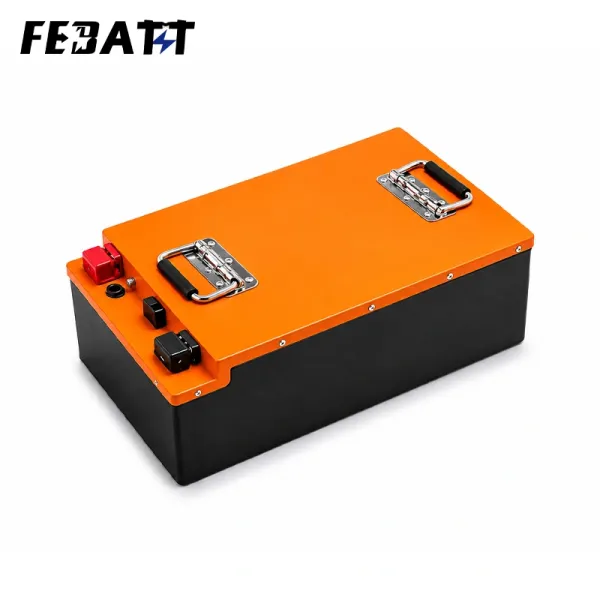
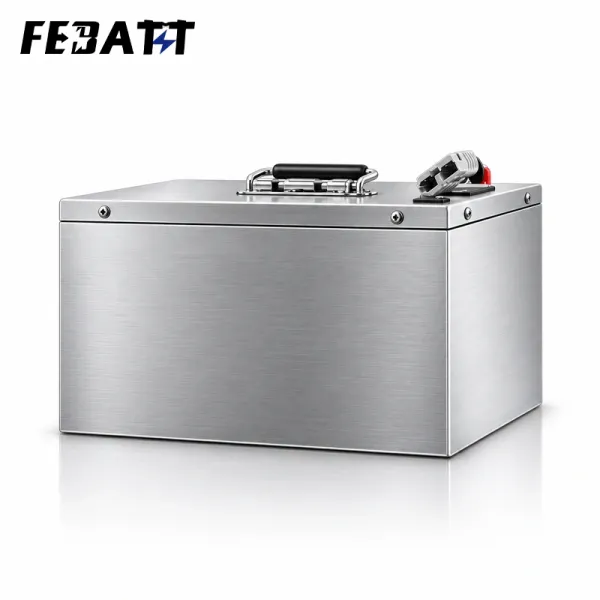
Planning a commercial electric boat fleet or developing a new propulsion platform? FEBATT supports custom lithium battery engineering and OEM/ODM supply projects based on vessel requirements, electrical integration and production needs.
Share your motor manufacturer and model, controller specifications, approved battery interfaces, operating conditions, required capacity, pilot quantity and annual production forecast.
FEBATT can review the proposed battery requirements and discuss an engineering validation plan. Compatibility with third-party propulsion systems must be confirmed against the motor manufacturer’s requirements and documented system-level testing before production approval.