Urban electric motorcycles and tricycles need a battery system that balances usable energy, current capability, installation space, mass, charging time, and lifecycle cost. A 48V 30Ah battery is often considered for short- and medium-route platforms because it can provide a practical energy reserve without automatically forcing a larger battery compartment or a higher vehicle price.
A 48V 30Ah battery label does not describe every technical detail. Some 48V-class products use a true 48V nominal value, while many LiFePO4 designs use 16 cells in series and operate at 51.2V nominal. Chemistry, maximum charge voltage, controller settings, BMS current, connectors, and enclosure construction must be confirmed before approval.
For B2B buyers, the goal is not to decide whether the 48V 30Ah battery is a universal industry standard. The goal is to determine whether it matches the route, payload, motor controller, environmental conditions, production plan, and after-sales obligations of a specific project. This guide uses transparent calculations and procurement checkpoints rather than fixed range or savings promises.
Buyers evaluating a 48V 30Ah battery can review FEBATT’s 48V 30Ah LFP battery power pack and the 48V 45Ah versus 48V 30Ah comparison when more route reserve is needed. These resources support, rather than replace, vehicle-level validation.
Why Is This Configuration Common in Urban Electric Mobility?
A 48V 30Ah battery uses a platform that can deliver useful motor power at lower current than a lower-voltage system producing the same output. Because resistive loss rises with the square of current, this can limit cable heating and voltage drop when conductors, connectors, fuses, and controller settings are correctly selected.
The 30Ah capacity is also a practical middle point. It offers more energy than compact entry-level packs while remaining easier to integrate than a much larger capacity. For an electric motorcycle used on predictable urban routes or an electric tricycle with moderate payload, a 48V 30Ah battery can support a balanced design when the duty cycle is measured rather than guessed.
The configuration is not automatically suitable for every vehicle. Heavy cargo, steep gradients, sustained high speed, high controller current, or limited charging access may justify a larger capacity or a higher-voltage platform. Conversely, a short-route vehicle with frequent charging opportunities may not benefit from carrying unused energy. A 48v 30ah lithium battery should therefore be selected through whole-system engineering, not by voltage and amp-hours alone.

How Much Energy Does a 48V 30Ah Battery Actually Store?
Nominal energy is calculated by multiplying nominal voltage by amp-hour capacity:
Nominal energy (Wh) = nominal voltage (V) × capacity (Ah)
Using a strict 48V rating, a 48V 30Ah battery provides 1,440Wh, or 1.44kWh, of nominal energy. A 16-series LiFePO4 design rated at 51.2V and 30Ah provides 1,536Wh, or 1.536kWh. The difference is important because ’48V class’ is a market category, not a substitute for the product datasheet.
For a 48V 30Ah battery, nominal energy is not the same as energy available at the motor. The BMS preserves voltage margins, while the controller, wiring, motor, tires, and drivetrain introduce losses. Procurement documents should state nominal energy, usable energy under defined conditions, and required route reserve.
A 48 volt 30ah battery pack should also be evaluated by its actual series configuration and maximum charge voltage. Two packs with the same marketing label can require different chargers and controller cutoffs if their chemistries or cell counts differ.
How Should Buyers Estimate Range Instead of Relying on a Fixed Claim?
Range should be calculated from measured vehicle consumption, not from battery capacity alone. A useful planning formula is:
Estimated range (km) = usable battery energy (Wh) ÷ measured consumption (Wh/km)
Assume a 48V 30Ah battery has 1,440Wh nominal energy and the project allows 90% of that energy to be used. The planning value is 1,296Wh before drivetrain losses. At 30Wh/km, the arithmetic result is about 43km; at 40Wh/km, about 32km; at 50Wh/km, about 26km; and at 60Wh/km, about 22km. These figures are calculation examples, not product guarantees.

Measure consumption on the intended vehicle with representative payload, tire pressure, gradient, speed, stops, temperature, and controller calibration. Define a route reserve so the vehicle does not finish near low-voltage protection.
A 48V 30Ah battery may be sufficient for a predictable urban motorcycle route but undersized for a cargo tricycle working on steep roads. The correct answer comes from Wh/km data and service requirements, not a universal mileage statement.
How Do Lithium and Lead-Acid Designs Differ in Weight and Packaging?
Lithium systems generally provide more usable energy for a given mass and volume than lead-acid systems. They also maintain voltage more consistently under load and do not require routine water replenishment. These differences can reduce vehicle mass, free installation space, and simplify scheduled maintenance, but the magnitude depends on the exact products being compared.
For a 48V 30Ah battery comparison, use complete systems at the same nominal voltage and required usable energy. Include the enclosure, BMS, connectors, mounting hardware, cables, and protection devices. Comparing bare cells with assembled lead-acid blocks is misleading.
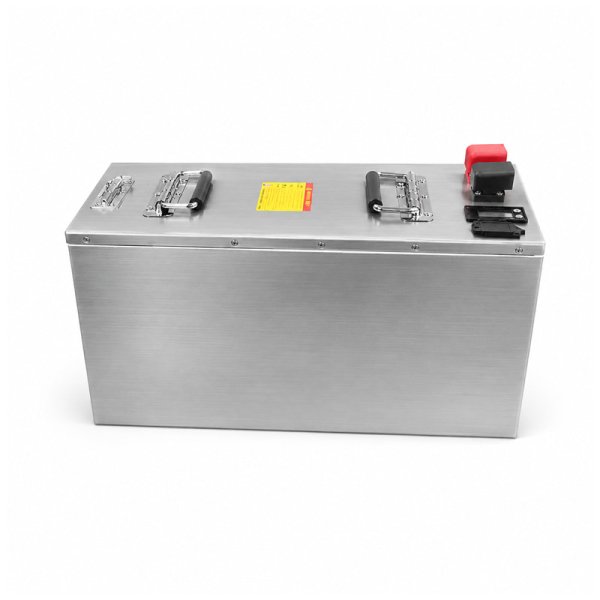
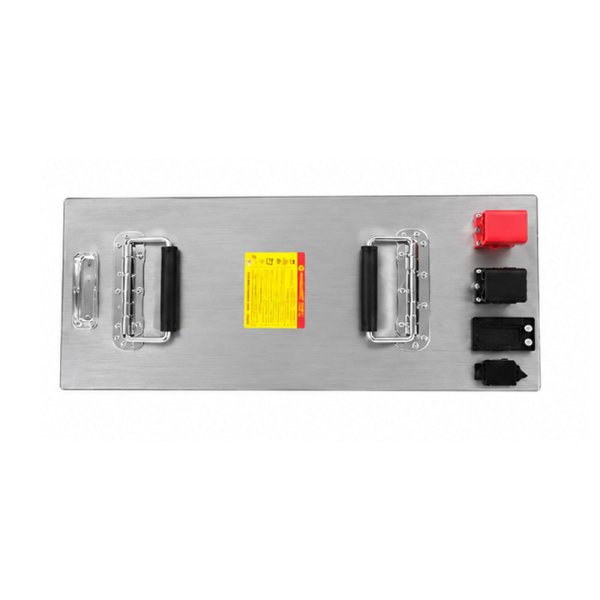
As a first-party product example, FEBATT’s linked 48V 30Ah LFP pack is currently presented with published dimensions of 184 × 156 × 251mm and a listed mass of 11.5kg. Buyers should confirm the current drawing, tolerance, connector clearance, center of gravity, and mounting points before freezing the vehicle design because production specifications may be revised.
A 48V 30Ah battery upgrade also affects structure and balance. A new enclosure may require revised brackets, vibration isolation, splash protection, and service access.
Which Motor, Controller, and BMS Ratings Must Be Matched?
For a 48V 30Ah battery, motor nameplate power is only a starting point. The controller determines current during acceleration, hill climbing, launch, and temporary overload. A simple nominal-current estimate is:
Current (A) = electrical power (W) ÷ battery voltage (V)
At 48V, 1,000W corresponds to about 20.8A and 1,500W corresponds to about 31.3A. Real controller current can be higher than these figures, particularly at low speed or under heavy load. A 48V 30Ah battery must therefore be sized from the controller’s continuous current, peak current, peak duration, regenerative-current limit, and low-voltage cutoff.
The BMS continuous rating should exceed the verified continuous demand with appropriate thermal margin. Its peak rating and allowed duration must cover acceleration events without nuisance shutdown. Cables, terminals, fuses, contactors, PCB traces, cell tabs, and connectors must support the same current path; a high BMS number does not compensate for undersized hardware.
For a 48v 30ah lithium battery, buyers should request both pack-level discharge data and controller-current settings. They should also confirm how the BMS behaves after overcurrent, short-circuit, high-temperature, or low-voltage protection, including whether recovery is automatic or requires service action.

How Should Charging Time and Charger Compatibility Be Calculated?
For a 48V 30Ah battery, basic charging time is capacity divided by charger current. A 5A charger needs about six hours in the constant-current stage; a 10A charger needs about three. Actual time is longer because current tapers and the BMS may balance cells.
A faster charger is suitable only when the cells, BMS, connector, wiring, thermal design, and warranty conditions permit the requested current. For example, 5A is approximately 0.17C for a 30Ah pack, while 10A is approximately 0.33C. The approved C-rate must come from the battery specification rather than a generic online recommendation.
Charger voltage must match chemistry and series count. A common 16-series LiFePO4 design uses 58.4V maximum, while a 13-series NMC design commonly uses 54.6V. They are not interchangeable. Connector, polarity, interlock, communication, and charge-enable logic must also match.
A 48V 30Ah battery used in a fleet needs an approved charger, charging procedure, inspection interval, and abnormal-temperature response. A 48v 30ah lifepo4 battery accepts partial charging without a traditional memory effect, but still needs sensible state-of-charge limits and balancing opportunities.
How Does a 48V 30Ah Battery Behave in Cold and Hot Conditions?
Temperature limits for charging and discharging are not identical. Low temperature increases internal resistance and can temporarily reduce available power and energy. Charging is more restrictive because lithium plating may occur when cells are charged too cold or at excessive current.
A 48V 30Ah battery for a cold-climate project should specify the allowed discharge range, the minimum charging temperature, current derating rules, sensor locations, BMS lockout behavior, and whether self-heating is available. The BMS should not rely on a single poorly positioned sensor when cells can experience different temperatures within the enclosure.
High ambient temperature also requires engineering attention. Heat accelerates aging, and sealed enclosures can trap heat from the cells, BMS, connectors, and controller environment. Buyers should review solar exposure, airflow, mounting location, surface temperature, current profile, and thermal paths during worst-case operation.
A 48v 30ah lifepo4 battery offers comparatively stable chemistry, but chemistry alone does not guarantee pack safety or long life. Cell quality, current limits, mechanical protection, sensing, software thresholds, and validation under the intended duty cycle remain essential.
How Should Cycle Life Be Interpreted for Procurement?
Cycle-life numbers are meaningful only when test conditions are stated. A specification should define depth of discharge, charge and discharge rate, test temperature, rest periods, voltage window, and the end-of-life threshold, such as the percentage of initial capacity remaining.
The FEBATT product page linked near the beginning of this guide currently lists a 1,500-cycle specification for its 48V 30Ah LFP power pack. Procurement teams should request the corresponding test conditions and confirm whether the value applies to the cell, a laboratory pack, or the finished production battery.
Calendar aging matters even when cycle count is low, especially at high state of charge or high temperature. Shallow daily use differs from repeated deep discharge, high-current climbing, or hot-vehicle storage.
A 48v 30ah lifepo4 battery should therefore be compared using a defined warranty framework: warranted years, warranted energy throughput or cycles, end-of-life capacity, operating limits, excluded misuse, and the process for reviewing BMS logs. This approach is more credible than converting a cycle number directly into a guaranteed number of years.
How Can B2B Buyers Build a Credible TCO and ROI Model?
A return-on-investment claim should be based on the buyer’s operating data. The total cost of ownership can be expressed as:
TCO = purchase price + replacement batteries + electricity + maintenance + service labor + downtime – residual value
The incremental ROI of a lithium upgrade can then be calculated as the financial benefit produced by the upgrade divided by the additional initial investment. The analysis period, discount rate, fleet size, daily operating hours, electricity tariff, maintenance labor, replacement assumptions, and downtime value must be stated.
For a 48V 30Ah battery, the strongest financial benefits may come from reduced replacement frequency, lower routine maintenance, more consistent voltage, lower system mass, or improved vehicle availability. None of these benefits should be expressed as a guaranteed percentage without measured evidence.
Compare cost per usable kWh, warranted cycle, kilometer, and operating hour. A 48 volt 30ah battery pack may justify a higher price when validated life, warranty, efficiency, and support reduce fleet cost.
When Should Buyers Select 45Ah or Another Capacity Instead?
Capacity should follow the duty cycle. At the same nominal voltage, a 45Ah pack stores 50% more nominal energy than a 30Ah pack: approximately 2.16kWh at 48V compared with 1.44kWh. That additional energy can increase route reserve and reduce charging frequency, but it also normally adds cost, volume, mass, and charging time with the same charger.
A 48V 30Ah battery is often the more efficient choice when daily routes are short, installation space is limited, vehicle price is sensitive, and charging is available between shifts. A larger pack may be justified for higher payload, long routes, limited charging access, cold-weather reserve, or a requirement to avoid deep daily discharge.
The decision should be based on measured Wh/km, required reserve, available compartment volume, axle loading, and target service life. Buyers should avoid using extra capacity to compensate for an inefficient vehicle, excessive controller current, poor tire selection, or an unsuitable route plan.
The internal 48V 45Ah versus 48V 30Ah comparison provides a useful starting framework, but final selection still requires the same vehicle-level validation described in this guide.
What Should Be Included in a Supplier Specification Sheet?
A 48V 30Ah battery supplier specification should make the project auditable. It should identify nominal voltage, operating window, maximum charge voltage, rated capacity, nominal and usable energy, cell chemistry and series count, continuous and peak current, charge limits, and protection thresholds.
Mechanical data should include dimensions, tolerances, mass, mounting points, center of gravity, connector type, cable length, polarity, ingress protection target, venting or pressure-relief design, and service clearance. Communication requirements should define CAN, RS485, Bluetooth, or other interfaces, including protocol ownership and diagnostic access.
Quality documents should define incoming cell inspection, cell matching, end-of-line tests, traceability, serialization, change control, sample approval, transport documentation, warranty terms, and failure-analysis procedures. A 48V 30Ah battery without these records is difficult to integrate consistently at OEM scale.
For a 48 volt 30ah battery pack, ask the supplier to separate standard product data from project-specific options. Custom connectors, BMS settings, labels, mounting brackets, heaters, communication, and enclosure changes should be controlled through an approved specification and revision history.
How Does FEBATT Support 48V 30Ah Battery Projects?
FEBATT positions its power-battery business around electric motorcycles, electric tricycles, forklifts, golf carts, RV auxiliary systems, and other powered vehicles. For a 48V 30Ah battery project, the first step should be a requirements sheet covering vehicle type, payload, motor and controller, route, installation envelope, charger, communication, environment, production volume, and target market.
The review can determine whether a standard 48v 30ah lithium battery is suitable or needs changes to current rating, BMS logic, connectors, enclosure, mounting, communication, thermal control, labels, or documents. Validate changes through approved drawings, a controlled sample, and agreed tests.
A practical OEM process moves from requirements and quotation to specification approval, samples, vehicle tests, corrections, pilot order, and production. Define ownership of software parameters, reports, labels, tooling, and future changes.
A 48V 30Ah battery can be a strong commercial platform when FEBATT and the customer evaluate the complete system rather than treating the pack as an isolated component. Clear requirements and traceable validation reduce integration risk and make later after-sales analysis more efficient.
FAQ About 48V 30Ah Battery
1.How many kilowatt-hours are in a 48V 30Ah battery?
A strict 48V × 30Ah calculation gives 1.44kWh of nominal energy. A 51.2V, 30Ah LiFePO4 configuration gives 1.536kWh. Confirm the actual nominal voltage, series count, and usable-energy window on the datasheet.
2.How long can a 48V 30Ah battery run a 1,000W load?
The theoretical result is 1.44 hours at a constant 1,000W load. Real runtime is lower because usable energy is less than nominal energy and the controller, wiring, and motor introduce losses. Vehicle duty is not constant.
3.What charger should be used with a 48V 30Ah battery?
Use the charger approved for the exact chemistry, cell count, maximum charge voltage, current, connector, polarity, and communication requirements. A 16-series 48v 30ah lifepo4 battery commonly uses a 58.4V maximum charger, but the product specification must confirm this before use.
4.Is 30Ah enough for daily electric motorcycle or tricycle operation?
It is sufficient only when usable energy divided by measured Wh/km covers the route and reserve. Include payload, gradient, speed, temperature, stops, and charging access. No universal distance applies.
5.How should the cost of LiFePO4 and lead-acid systems be compared?
Compare complete installed systems over the same period, including purchase, usable energy, replacements, electricity, maintenance, labor, downtime, warranty, and residual value. An upfront price ratio is insufficient.
6.Can the same 48V 30Ah battery be installed in different vehicles?
A 48V 30Ah battery should not be transferred between vehicle platforms without validation. Controller current, connectors, mounting, communication, environmental protection, charge logic, and BMS settings may differ. Approve each platform through a controlled specification and vehicle test.
Conclusion
A 48V 30Ah battery is best understood as a versatile engineering starting point, not a universal standard or a guaranteed range figure. Its nominal energy, compactness, and compatibility with many light electric powertrains can make it practical for urban electric motorcycles and tricycles, but only when current, charging, thermal, mechanical, and communication requirements align.
B2B buyers should base selection on measured energy consumption, controller current, usable-energy limits, approved charging, defined cycle-life conditions, environmental validation, and a transparent TCO model. They should also require drawings, revision control, traceability, test records, and clear warranty boundaries.
When these requirements are managed correctly, a 48V 30Ah battery can support reliable product development and predictable fleet operation. The most valuable outcome is not the lowest headline price; it is a validated battery system that meets the vehicle’s duty cycle and remains supportable throughout its commercial life.