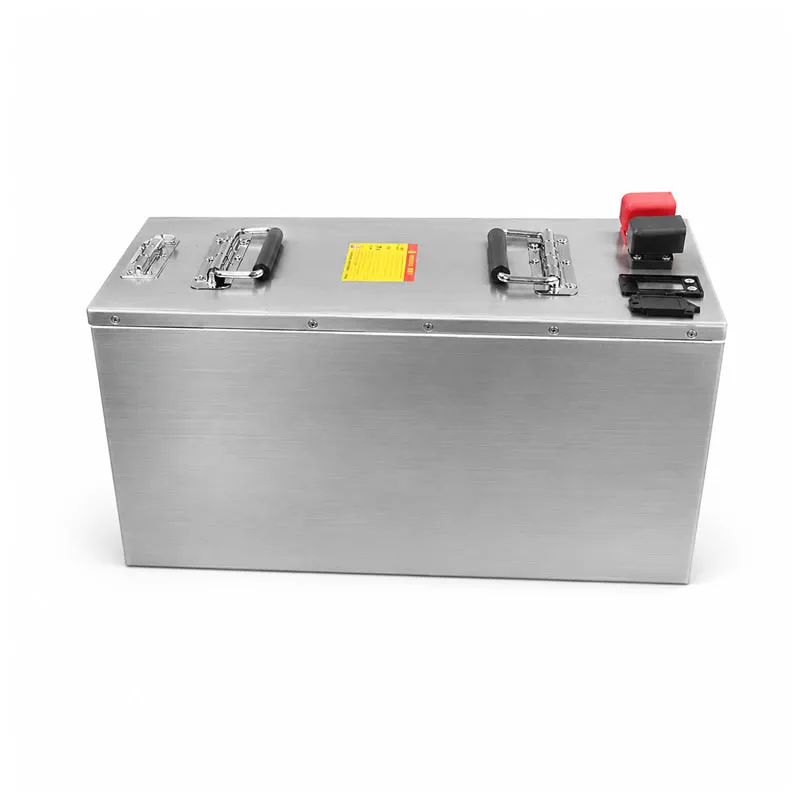
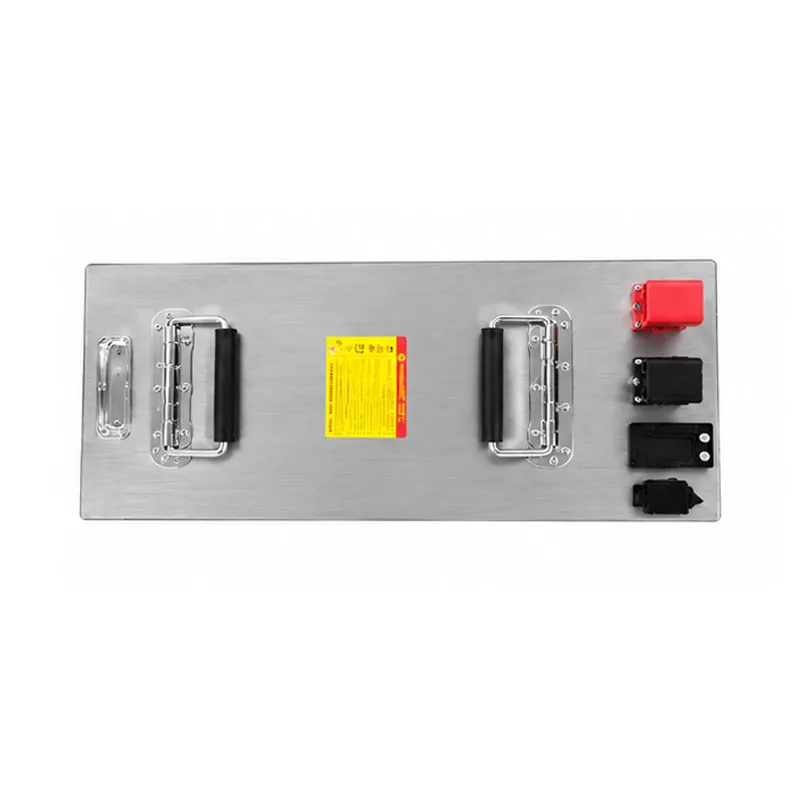
A deep-cycle RV battery is one of the most important components in an RV power system. For RV manufacturers, distributors, fleet operators, and battery importers, the right battery affects runtime, safety, user experience, maintenance cost, and long-term replacement frequency. A poor battery choice can lead to unstable power, short service life, customer complaints, and higher after-sales pressure.
This guide explains how a deep-cycle RV battery works, how different battery chemistries compare, and what B2B buyers should check before placing bulk orders. It is designed for buyers who need practical selection logic instead of general battery descriptions.
What Is a Deep Cycle RV Battery?
A deep-cycle RV battery is designed to provide steady power over a long period. Unlike a starting battery, which delivers a short burst of current to start an engine, a deep-cycle battery supports continuous loads such as lighting, refrigerators, water pumps, fans, inverters, control systems, and other onboard equipment.
In an RV, the deep-cycle RV battery usually works as the “house battery.” It stores energy and supplies power when the vehicle is parked, off-grid, or not connected to shore power. This makes the battery essential for camping, long-distance travel, mobile living, rental RV operations, and off-grid power systems.
For B2B buyers, the most important point when sourcing a deep-cycle RV battery is not only nominal capacity. A 100Ah battery from one chemistry may not deliver the same usable energy as a 100Ah battery from another chemistry. Usable capacity, cycle life, discharge depth, charging compatibility, safety protection, and battery consistency all matter.
How Does an RV Electrical System Work?
A typical RV electrical system includes a battery bank, charger or converter, inverter, solar charge controller, alternator charging input, shore power connection, and DC distribution system. The deep-cycle RV battery sits at the center of this system because it stores power from different charging sources and supplies energy to the RV when external power is unavailable.
When the RV is connected to shore power, the charger can power onboard loads and recharge the battery. When the RV is off-grid, the battery becomes the main energy source. If the RV uses AC appliances, the inverter converts DC battery power into AC power.
This system requires a stable deep-cycle RV battery, correct charging parameters, and reliable protection. If the battery is not matched with the charger, inverter, or solar controller, the system may charge slowly, shut down unexpectedly, or reduce battery life. For OEM projects and bulk procurement, this is why technical matching is just as important as price.
What Are the Main Types of Deep-Cycle RV Battery?
RV applications commonly use four battery types: flooded lead-acid, AGM, gel, and LiFePO4. Each type has different cost, maintenance, lifespan, and performance characteristics.

Flooded Lead-Acid Battery
Flooded lead-acid batteries are traditional and widely available. Their main advantage is low upfront cost. They are easy to source and suitable for cost-sensitive projects where advanced performance is not required.
However, they require regular maintenance, proper ventilation, and careful charging. They are also heavy and usually offer lower usable capacity. For example, many lead-acid batteries should not be discharged too deeply if buyers want to preserve service life. This means the real usable energy may be much lower than the nameplate capacity.
AGM Battery
AGM batteries are sealed lead-acid batteries using absorbent glass mat technology. They are maintenance-free, cleaner to install, and more vibration-resistant than flooded lead-acid batteries. For RV buyers who want a simple upgrade without moving to lithium, AGM can be a practical option.
The limitation is that AGM batteries are still heavy and have moderate cycle life. Their usable capacity is also lower than LiFePO4 in most RV applications. AGM may work well for occasional users, but it may not be the best long-term choice for high-frequency travel, rental fleets, or premium RV builds.
Gel Battery
Gel batteries use a silica-based gel electrolyte. They are sealed, maintenance-free, and can perform well in controlled deep-cycle applications. However, they are more sensitive to charging voltage and are less common in modern RV programs.
For B2B buyers, gel batteries may be suitable for specific legacy systems, but they are not usually the first choice for new RV power projects that require fast charging, high usable capacity, and flexible system integration.
LiFePO4 Battery
LiFePO4, or lithium iron phosphate, has become the preferred chemistry for many modern RV battery systems. A LiFePO4 deep-cycle RV battery is lighter, more efficient, and able to support deeper discharge than traditional lead-acid options. It also offers longer cycle life and faster charging when paired with compatible charging equipment.
The higher upfront cost is the main concern, but the total cost of ownership is often lower because of longer lifespan, less maintenance, and better usable capacity. For distributors, OEMs, and RV fleet operators, LiFePO4 is often the most competitive option when long-term reliability matters.
How Do Different RV Battery Types Compare?
The best deep-cycle RV battery depends on the customer profile, budget, runtime expectations, and system design. Below is a practical comparison for B2B decision-making.
Flooded lead-acid batteries are usually selected for low-cost projects. They are affordable but heavy, maintenance-intensive, and limited in usable energy.
AGM deep-cycle RV battery models are better for buyers who want sealed construction, cleaner installation, and less maintenance. They are still relatively heavy and do not match lithium batteries in cycle life or usable capacity.
Gel batteries offer low maintenance and stable deep-cycle characteristics, but their charging sensitivity makes them less flexible for many RV applications.
LiFePO4 batteries provide the strongest balance of usable energy, cycle life, charging efficiency, weight reduction, and safety when supported by a reliable BMS. For most modern RV applications, LiFePO4 is the best deep-cycle RV battery choice for performance-focused buyers.
What Key Factors Should B2B Buyers Consider?
When selecting a deep-cycle RV battery, B2B buyers should avoid judging by price and amp-hours alone. A better procurement decision should include capacity, chemistry, cycle life, safety, compatibility, certifications, customization ability, and supplier support.

Capacity and Usable Energy
Deep-cycle RV battery capacity is usually shown in amp-hours, such as 100Ah, 200Ah, or 300Ah. However, usable energy is more important than nameplate capacity. A 100Ah LiFePO4 battery can often deliver more practical usable power than a 100Ah lead-acid battery because it supports deeper discharge more efficiently.
For RV applications, buyers should calculate the daily power demand first. Common RV loads include refrigerators, lights, water pumps, fans, routers, laptops, televisions, and inverter-powered appliances. After estimating daily consumption, the buyer can select a battery size that provides enough reserve capacity.
For light RV use, 100Ah may be enough. For longer off-grid travel, 200Ah to 300Ah is more practical. For heavy inverter loads or fleet-level applications, larger battery banks may be needed.
Cycle Life
Cycle life determines how many charge and discharge cycles a battery can complete before its capacity drops significantly. This is a major cost factor for B2B buyers. A cheaper battery with low cycle life may look attractive at purchase, but frequent replacement increases long-term cost.
LiFePO4 batteries usually offer much longer cycle life than lead-acid batteries. This makes them suitable for rental RV fleets, frequent travelers, and premium RV systems where replacement cost and downtime need to be reduced.
Weight and Space Efficiency
Deep-cycle RV battery weight matters in RV design. A lighter deep-cycle RV battery helps reduce vehicle load and leaves more flexibility for equipment, storage, and layout. LiFePO4 batteries are usually much lighter than lead-acid batteries with similar usable energy.
Space efficiency is also important. RV battery compartments are limited, and B2B buyers may need custom dimensions, terminal positions, case designs, or mounting solutions. For OEM projects, a supplier’s customization ability can directly affect installation efficiency.
Charging Compatibility
A deep-cycle RV battery must be compatible with the RV charging system. Buyers should check the charger, converter, solar controller, alternator charging method, and inverter settings. Lithium batteries often require different charging profiles from lead-acid batteries.
Before purchasing in bulk, buyers should confirm recommended charge voltage, maximum charging current, low-temperature charging protection, communication options, and system integration requirements. This step can prevent after-sales problems and improve customer satisfaction.
Temperature Performance
RV users travel across different climates. Batteries may face hot summers, cold winters, and outdoor storage conditions. Temperature performance affects charging, discharging, lifespan, and safety.
For lithium batteries, low-temperature charging protection is especially important. Charging a lithium battery below its safe temperature range without protection can damage the battery. A high-quality BMS should include temperature monitoring and protection logic.
Safety and BMS Quality
For a LiFePO4 deep-cycle RV battery, the BMS is one of the most important components. It protects the battery from overcharge, overdischarge, overcurrent, short circuit, overheating, and cell imbalance. A weak BMS can create unstable performance and increase safety risk.
B2B buyers should ask suppliers for BMS specifications, protection functions, balancing method, communication options, and test information. A reliable BMS can improve battery consistency, extend service life, and reduce after-sales issues.
Certifications and Test Reports
For international deep-cycle RV battery procurement, buyers should check whether the supplier can provide relevant certifications and testing documents. Depending on the target market and shipping method, buyers may need documents such as UN38.3, MSDS, CE, IEC-related test reports, or other compliance materials.
Documentation does not replace product quality, but it helps reduce import, logistics, and market access risks. A professional deep-cycle RV battery supplier should be able to provide clear technical files instead of vague promises.
Warranty and After-Sales Support
Warranty terms should be reviewed carefully. B2B buyers should check what the warranty covers, what conditions are excluded, how claims are handled, and whether the supplier can provide technical support for installation, troubleshooting, and bulk orders.
For distributors and OEM buyers, after-sales response speed is critical. A battery problem is not only a product issue; it can affect the buyer’s brand reputation and customer retention.
How Many Amp Hours Does an RV Need?
The required battery capacity depends on the daily power load and the number of off-grid days. A simple selection method is to list all devices, estimate daily energy consumption, and add a reserve margin.
For basic RV use with lights, phone charging, a small fan, and occasional water pump use, a 100Ah deep-cycle RV battery may be enough. For a refrigerator, lights, fans, laptop charging, and moderate inverter use, 200Ah is usually more comfortable. For extended off-grid camping, larger RVs, or heavier AC loads, 300Ah or more may be needed.
B2B buyers should not only sell battery capacity. They should help customers match the battery to real usage scenarios. This improves customer satisfaction and reduces returns caused by incorrect sizing.
Why Is LiFePO4 Becoming the Preferred RV Battery Choice?
LiFePO4 batteries are becoming more popular because they solve many limitations of lead-acid technology. A LiFePO4 deep-cycle RV battery provides high usable capacity, stable voltage, long cycle life, lighter weight, and low maintenance.
For RV users, this means longer runtime, fewer replacements, easier installation, and more reliable off-grid power. For B2B buyers, it means stronger product competitiveness and better long-term value.
LiFePO4 is especially suitable for modern RV systems that use solar charging, inverters, high-capacity appliances, and frequent cycling. It is also a strong choice for RV rental businesses and distributors who need stable quality across repeated use.
The main requirement is system compatibility. Buyers should confirm that the charger, inverter, and solar controller are suitable for lithium batteries. When the system is properly matched, LiFePO4 usually delivers the best overall performance.
How Should Buyers Choose a Deep-Cycle RV Battery Supplier?
Choosing the right supplier is as important as choosing the right battery chemistry. A good supplier should provide stable manufacturing, clear technical support, reliable quality control, and flexible customization.
Evaluate Manufacturing Capability
Buyers should confirm whether the supplier has stable production capacity, quality control processes, battery assembly experience, and the ability to handle repeat orders. For B2B buyers, batch consistency is more important than a single good sample.
Request Technical Documentation
A professional supplier should provide datasheets, charge and discharge parameters, BMS protection details, battery dimensions, terminal information, cycle life data, and warranty terms. Clear documentation makes it easier for buyers to evaluate whether the deep-cycle RV battery fits their market.
Check Customization Ability
Many RV projects require custom voltage, capacity, case size, terminal layout, Bluetooth monitoring, display screens, branding, or communication protocols. OEM and ODM capability is valuable for distributors and vehicle manufacturers that want differentiated products.
Review Sample and Batch Consistency
Deep-cycle RV battery sample testing is necessary before bulk purchasing. Buyers should test capacity, charging behavior, discharge stability, BMS protection, communication function, and physical workmanship. After sample approval, batch consistency should still be monitored through inspection reports and quality control records.
Assess Communication and Lead Time
Slow communication creates risk in B2B procurement. Buyers should evaluate whether the supplier responds clearly, provides practical technical answers, and can support production schedules. In battery sourcing, reliable communication often reflects reliable operation.
What Is the Best Deep-Cycle RV Battery for Modern RV Applications?
For most modern RV applications, LiFePO4 is the best overall choice. It provides the strongest balance of usable capacity, lifespan, weight reduction, charging efficiency, and maintenance convenience. A LiFePO4 deep-cycle RV battery is especially suitable for off-grid travel, solar-powered RVs, premium RV builds, and rental fleets.
AGM can still be useful for buyers who need a sealed battery at a lower upfront cost. Flooded lead-acid can work for simple, cost-sensitive applications. Gel batteries may serve specific legacy use cases. But when buyers compare long-term value, customer experience, and system performance, LiFePO4 usually has the strongest advantage.
Frequently Asked Questions on Deep Cycle RV Battery
1.What is the best deep cycle battery for an RV?
The best deep-cycle RV battery for most modern RV applications is a LiFePO4 battery. It offers high usable capacity, long cycle life, lighter weight, fast charging, and low maintenance. AGM batteries can still be a practical alternative for buyers with lower budgets or older charging systems.
2.How long does a deep-cycle RV battery last?
Battery lifespan depends on chemistry, usage, discharge depth, temperature, and charging quality. Lead-acid batteries may last a few years under normal use, while LiFePO4 batteries can last much longer because they support more charge and discharge cycles. For B2B buyers, cycle life should always be reviewed together with warranty terms and real usage conditions.
3.How many deep-cycle RV batteries do I need?
The number of batteries depends on daily power demand, battery capacity, voltage system, and off-grid time. A small RV may use one 100Ah battery, while a larger RV or off-grid setup may require 200Ah, 300Ah, or a larger battery bank. Buyers should calculate expected loads before selecting a battery configuration.
4.Can I replace a lead-acid RV battery with LiFePO4?
Yes, many RV users replace lead-acid batteries with LiFePO4 batteries, but system compatibility must be checked first. The charger, solar controller, inverter, alternator charging method, and battery compartment should be reviewed. A proper lithium-compatible charging profile helps protect the battery and improve performance.
5.What should B2B buyers ask before purchasing RV batteries in bulk?
B2B buyers should ask for datasheets, BMS specifications, cycle life data, certification documents, warranty terms, sample testing options, customization capability, production lead time, and after-sales support details. These checks help reduce procurement risk and improve long-term cooperation.
Conclusion
A deep-cycle RV battery should not be treated as a simple commodity. It is a core part of the RV power system and directly affects runtime, safety, customer satisfaction, and total cost of ownership.
For buyers focused on the lowest upfront cost, flooded lead-acid or AGM may still have a place. For buyers focused on long-term value, stable performance, and modern RV power needs, LiFePO4 is usually the strongest choice.
For B2B procurement, the best decision comes from matching the battery chemistry, capacity, BMS design, charging system, certification documents, and supplier capability. A reliable deep-cycle RV battery supplier should offer more than a product price. It should provide technical clarity, quality consistency, and long-term support for the buyer’s market.