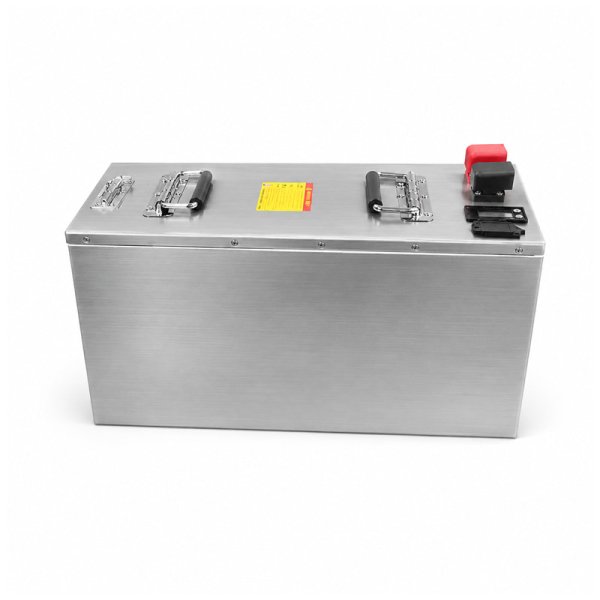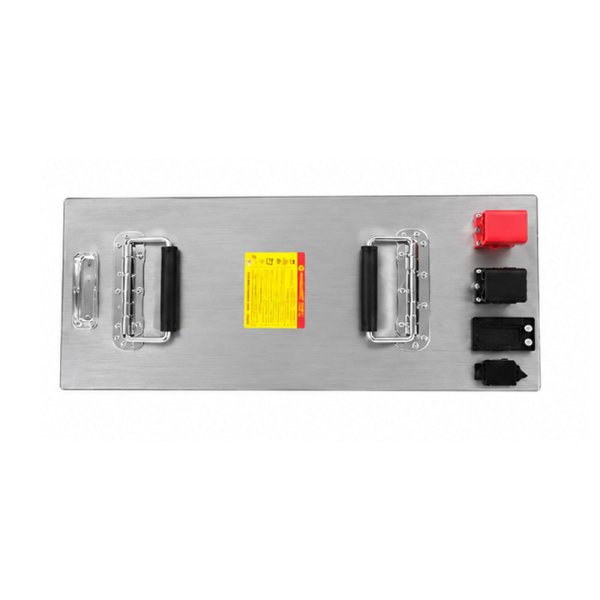
For a commercial electric-tricycle fleet, moving from lead-acid to lithium is not simply a battery swap. A lithium battery replacement can affect route completion, payload, charging downtime, vehicle availability, replacement frequency, and total cost of ownership. These effects matter to delivery fleets, passenger transport, municipal vehicles, dealers, and OEM projects that depend on reliable daily operation.
Lead-acid remains attractive because the initial purchase price is usually lower. But B2B buyers also need to count battery weight, charging hours, replacement labor, maintenance, and the cost of taking a working vehicle out of service. When these costs are included, lithium battery replacement can become the stronger long-term option for high-utilization fleets.
The following four changes explain why commercial operators increasingly evaluate lithium battery replacement instead of simply buying another lead-acid pack.
How Can Lithium Battery Replacement Improve Range and Payload Efficiency?
The first change is lower battery mass for a given amount of stored energy. Battery University lists typical specific energy at about 30–50 Wh/kg for lead-acid and roughly 100–250 Wh/kg for lithium-ion batteries. Actual pack-level figures vary because housings, BMS hardware, connectors, and thermal design add weight, but the difference is still important for commercial vehicles.

In an electric tricycle, heavy battery mass is weight the motor must move on every trip. A well-designed lithium battery replacement can reduce battery mass while maintaining the energy required for the route. For cargo fleets, that can create more payload margin. For passenger and utility fleets, it can reduce the energy spent moving the battery itself.
This does not mean lithium battery replacement guarantees a fixed percentage increase in range. Real-world range still depends on usable energy, payload, speed, gradients, stop-and-go frequency, tire condition, motor efficiency, temperature, and driver behavior. Fleet buyers should compare complete pack weight and usable energy, not only amp-hour ratings.
How Does Lithium Battery Replacement Change Daily Fleet Performance?
The second change is more predictable operation under commercial loads. Electric tricycles repeatedly accelerate, climb ramps or hills, stop in traffic, and carry changing payloads. The battery must support both continuous power and short peak-current demands without avoidable low-voltage cutoffs or excessive voltage sag.
A correctly specified lithium battery replacement can reduce the burden of a heavy lead-acid pack while providing stable power within the controller and motor requirements. For a fleet, the key question is not whether the vehicle can reach a slightly higher top speed. It is whether it can finish routes, maintain acceptable performance under load, and return to service consistently.

Before lithium battery replacement, buyers should provide payload, motor and controller data, continuous and peak current, route distance, gradients, daily operating hours, and battery-compartment dimensions. This Power Battery Solution is relevant here because it focuses on application matching, BMS integration, installation requirements, and operating conditions rather than choosing a battery by voltage alone.
Can Lithium Battery Replacement Lower Lifecycle Cost?
The third change is replacement frequency and total cost of ownership. Lead-acid batteries cost less initially, but high-frequency fleets should not evaluate batteries only by purchase price. Frequent cycling, depth of discharge, temperature, charging practice, and maintenance all affect how often a battery must be replaced.
Lithium battery replacement becomes more attractive when the fleet operates every day and battery-related downtime has a real cost. As one model-specific example, FEBATT lists a 1,500-cycle lifespan for its 48V 45Ah LFP Power Battery Pack, which provides 2,160Wh of nominal energy and is positioned for electric motorcycles, scooters, and three-wheel tricycles. Other models should be evaluated using their own specifications and test data.

Procurement teams should compare cost per productive operating cycle. A lithium battery replacement calculation should include battery price, expected cycles, labor, charger changes, maintenance, warranty handling, and lost operating hours. For large fleets, a higher upfront lithium battery replacement cost can still be the better business choice if replacement frequency and downtime are reduced.
Can Lithium Battery Replacement Reduce Charging Downtime?
The fourth change is charging flexibility. Lithium batteries can generally accept higher charge rates than conventional lead-acid batteries, but there is no universal “2–3 hour” charging time. Charging duration depends on capacity, charger output, allowable charge current, BMS limits, connector and cable ratings, temperature, and target state of charge.
For commercial fleets, the benefit of lithium battery replacement is that a correctly designed battery-and-charger system can fit more effectively into overnight charging, shift changes, or scheduled downtime. Shorter charging windows can improve vehicle availability.
The existing lead-acid charger should not automatically be reused after lithium battery replacement. Lithium batteries require a compatible charging profile, and the charger must match the pack’s voltage and current limits.
Cold-weather charging also matters. Battery University advises that conventional lithium-ion batteries should not be charged below 0°C without appropriate controls because lithium plating can cause permanent degradation and safety risks. Cold-climate fleets should specify temperature protection, current derating, heating, or controlled charging conditions.
What Should B2B Buyers Check Before Lithium Battery Replacement?
A commercial lithium battery replacement is a system-integration project. Matching nominal voltage and capacity is not enough. Buyers should verify:
- battery voltage range and controller compatibility;
- continuous and peak discharge current;
- charger voltage, current, and charging profile;
- compartment dimensions, mounting points, and service access;
- connector type, cable size, fuse rating, and wiring;
- BMS protections and CAN or RS485 communication requirements where needed;
- payload, route distance, gradients, working hours, and charging windows;
- vibration, water exposure, ambient temperature, and storage conditions.
A BMS is essential, but a BMS alone cannot make an incompatible lithium battery replacement safe. Battery, charger, controller, wiring, mounting, and operating conditions should be reviewed as one system.
For larger fleets, a controlled pilot is usually the practical approach. Test a small number of vehicles under real payload, route, and charging conditions before fleet-wide lithium battery replacement. This gives engineering and procurement teams evidence on range, charging time, thermal behavior, connector durability, and vehicle availability.
Is Lithium Battery Replacement Right for Every Electric Tricycle Fleet?
Not always. Lead-acid can still make sense for low-utilization vehicles, short routes, long available charging windows, or projects where the lowest upfront price is the main constraint.
The business case for lithium battery replacement becomes stronger when vehicles operate frequently, payload matters, charging downtime limits productivity, or repeated lead-acid replacement is creating service pressure. For these applications, LiFePO4 is often a strong choice because it combines useful energy density, long cycle-life potential, low routine maintenance, and strong thermal stability.
The final lithium battery replacement should still be selected from the duty cycle. A supplier should size the pack from route, load, current demand, installation space, temperature, and charging schedule backward.
Conclusion
Replacing lead-acid with lithium changes four important parts of electric-tricycle fleet operation: weight and payload efficiency, route performance, lifecycle cost, and charging downtime. The largest benefit is not a single range number. It is the possibility of keeping more vehicles productive for more hours with fewer battery-related interruptions.
For high-use B2B fleets, a properly engineered lithium battery replacement can be the stronger long-term choice. The key is to validate the complete vehicle system, test the battery under real operating conditions, and compare total cost per operating cycle rather than purchase price alone.
Frequently Asked Questions About Lithium Battery Replacement
Q: Can lead-acid batteries be replaced with lithium batteries in electric tricycles?
A: Yes. Many electric tricycles can use lithium battery replacement, but the pack must be compatible with the controller, charger, current demand, compartment dimensions, connectors, wiring, and operating environment. Matching nominal voltage alone does not guarantee a successful conversion.
Q: Do I need a new charger when replacing lead-acid with lithium?
A: In most projects, a lithium-compatible charger is recommended. The charging profile must match the battery’s voltage, current limit, BMS requirements, and temperature conditions. The existing lead-acid charger should not be assumed suitable for lithium battery replacement.
Q: Will lithium battery replacement increase electric-tricycle range?
A: It can improve practical range or payload efficiency because lithium stores more energy per unit of mass than lead-acid. However, there is no universal percentage. Actual results depend on usable energy, payload, route, speed, terrain, temperature, and vehicle efficiency.
Q: How long can a lithium battery last in an electric tricycle fleet?
A: There is no universal service-life figure. Cycle life depends on chemistry, cell quality, depth of discharge, charge rate, current loading, temperature, and BMS settings. FEBATT lists 1,500 cycles for its 48V 45Ah LFP Power Battery Pack; other lithium battery replacement models should follow their own specifications.
Q: Is LiFePO4 suitable for commercial electric tricycles?
A: For many high-use fleets, yes. LiFePO4 can offer lower weight than lead-acid, long cycle-life potential, low routine maintenance, and strong thermal stability. A LiFePO4 lithium battery replacement should still be configured for the vehicle’s payload, route, current demand, installation space, and charging schedule.