Choosing the right electric motorcycle battery is one of the most important decisions for fleet operators, OEM buyers, distributors, and B2B mobility projects. A vehicle may have a strong motor, reliable frame, and good route plan, but if the battery cannot support daily operation, the whole fleet becomes unstable. Weak range, slow charging, early capacity loss, and poor safety protection all turn into real business costs.
For commercial use, an electric motorcycle battery must do more than power the vehicle. It must support predictable range, safe charging, long cycle life, stable discharge, and easy integration with the vehicle system. A battery that looks good on paper may still fail in real delivery, rental, or utility fleet conditions if it is not matched to the actual duty cycle.
This guide explains how to evaluate an electric motorcycle battery from a B2B perspective. It covers battery chemistry, voltage, capacity, range, charging, cycle life, durability, customization, maintenance, and total cost of ownership. For buyers comparing different options, FEBATT provides dedicated electric motorcycle battery solutions for fleet, OEM, and project-based applications.
What Should You Consider Before Choosing an Electric Motorcycle Battery?
Before selecting an electric motorcycle battery, the first step is to understand how the fleet actually operates. Route distance, payload, terrain, stop frequency, temperature, riding speed, and charging schedule all affect battery performance. A battery that works well for a light daily route may not be suitable for a high-frequency delivery fleet.
A practical B2B evaluation should begin with route data. How far does each vehicle travel per day? How much reserve capacity is required? How often can the battery be charged? Is the vehicle used in hot, cold, wet, or dusty environments? These questions help define the correct electric motorcycle battery specification.
The best electric motorcycle battery is not always the largest one. Oversized batteries increase cost, weight, and space requirements. Undersized batteries create downtime, range anxiety, and early replacement. The right choice is the battery that matches the real working pattern of the fleet.

Which Battery Chemistry Is Best for Electric Motorcycle Fleets?
Battery chemistry determines safety, cycle life, weight, charging behavior, thermal stability, and long-term cost. For fleet buyers, chemistry is not just a technical detail. It directly affects operating reliability and replacement planning.
Lead-acid batteries are familiar and low-cost, but they are heavy, slower to charge, and less suitable for frequent deep cycling. NMC lithium batteries can offer high energy density, but they usually require stronger thermal management. LiFePO4, also known as lithium iron phosphate, is often preferred for commercial electric motorcycle battery applications because it balances safety, durability, and cost stability.
A LiFePO4 electric motorcycle battery provides strong thermal stability, long cycle life, and low maintenance requirements. It is especially useful for fleets that charge and discharge vehicles every day. For B2B buyers who care about safety, uptime, and predictable lifecycle cost, LiFePO4 is often the most practical battery chemistry.
| Battery Type | Main Advantage | Main Limitation | Suitable Use |
|---|---|---|---|
| Lead-acid | Low upfront cost | Heavy, shorter cycle life | Light use or budget-sensitive projects |
| NMC lithium | Higher energy density | Requires stronger thermal control | Compact high-performance designs |
| LiFePO4 | Safety, cycle life, stability | Lower energy density than NMC | Commercial fleet and daily operation |
How Much Battery Capacity Does Your Fleet Need?
Battery capacity determines how much energy the vehicle can store. For fleet use, electric motorcycle battery capacity should be selected based on actual route demand, not only on advertised range. Capacity that is too low can interrupt daily operation. Capacity that is too high can increase cost without improving practical efficiency.
To calculate the right electric motorcycle battery capacity, estimate the average energy consumption per kilometer and multiply it by the longest required daily route. Then add a reserve margin for traffic, weather, battery aging, detours, and payload variation. A 20% to 30% buffer is often useful in fleet planning.
For example, if a vehicle requires 45Wh per kilometer and the longest daily route is 60 kilometers, the daily energy demand is about 2,700Wh. With a 25% reserve, the fleet should consider a battery system with at least 3,375Wh of usable energy. This type of calculation helps buyers select an electric motorcycle battery that supports real operation instead of relying only on rough estimates.
What Voltage Configuration Is Right for Your Fleet?
Voltage affects acceleration, motor compatibility, controller performance, current demand, and overall efficiency. A proper electric motorcycle battery voltage configuration should match the motor and controller design. Common platforms may include 48V, 60V, 72V, or higher systems depending on the vehicle model and power requirement.
Lower-voltage systems can work for lighter-duty vehicles with modest speed and load requirements. Higher-voltage systems usually provide stronger power delivery and better efficiency under heavier loads. However, voltage should never be selected randomly. It must be matched to the complete electrical system.
For fleet operations, standardization is also important. If a fleet uses many different voltage systems, it becomes harder to manage chargers, spare parts, maintenance, and training. A standardized electric motorcycle battery platform can simplify operations and reduce service complexity.
How Important Is Battery Range for Fleet Operations?
Range is one of the most visible performance indicators, but fleet buyers should treat it carefully. Laboratory range is often different from real road performance. Payload, acceleration, wind, road condition, temperature, and rider behavior can all reduce actual range.
A dependable electric motorcycle battery should provide stable and predictable range over time. For commercial fleets, consistency is more important than a one-time maximum range figure. Dispatchers need to know whether the vehicle can complete the route every day without unexpected charging stops.
The correct electric motorcycle battery range should be based on the longest daily route plus a safety margin. Fleet managers should also track battery state of health over time because range gradually declines as the battery ages. A good battery selection plan accounts for both initial range and long-term degradation.

How Can Battery Cycle Life Affect Fleet Costs?
Cycle life has a direct impact on total cost of ownership. Every electric motorcycle battery has a limited number of charge and discharge cycles before its usable capacity begins to decline. A battery with longer cycle life can reduce replacement frequency and lower long-term operating costs.
A cheap battery may appear attractive at first, but if it requires replacement too soon, the total cost can become higher. Replacement cost includes not only the battery price, but also labor, downtime, inventory, logistics, and disposal. For B2B buyers, the lowest purchase price is not always the lowest cost.
LiFePO4 can be a strong choice because a well-designed LiFePO4 electric motorcycle battery can support long cycle life under daily use. This makes it suitable for courier fleets, rental fleets, delivery platforms, utility fleets, and OEM projects that require repeated charging.
What Charging Features Should You Look For?
Charging affects fleet productivity. If a vehicle spends too much time charging, it produces less value. A good electric motorcycle battery should support a charging strategy that fits the fleet schedule, charger infrastructure, and operating rhythm.
Fast charging can be useful, but it must be managed safely. The battery, charger, BMS, wiring, and thermal design must all support the charging current. Charging too aggressively without proper protection can increase heat and shorten battery life.
Important charging features include overcharge protection, temperature monitoring, cell balancing, charger compatibility, and communication with smart charging systems. For large fleets, charging management should be planned as part of the electric motorcycle battery selection process, not treated as an afterthought.
How Important Is Battery Durability?
Durability is critical for commercial vehicles. An electric motorcycle battery may face vibration, road shock, rain, dust, humidity, and temperature changes. If the enclosure is weak or the internal structure is poorly designed, failures can appear quickly in daily use.
A durable electric motorcycle battery should have strong mechanical protection, reliable sealing, vibration resistance, corrosion-resistant materials, and safe internal wiring. The enclosure should match the application environment. Delivery fleets and utility operations often expose vehicles to harsher conditions than private use.
Battery durability protects uptime. It also reduces warranty pressure and service complaints. For B2B buyers, a rugged electric motorcycle battery is not a luxury feature. It is a necessary part of reliable fleet operation.

How Can Battery Customization Benefit Your Fleet?
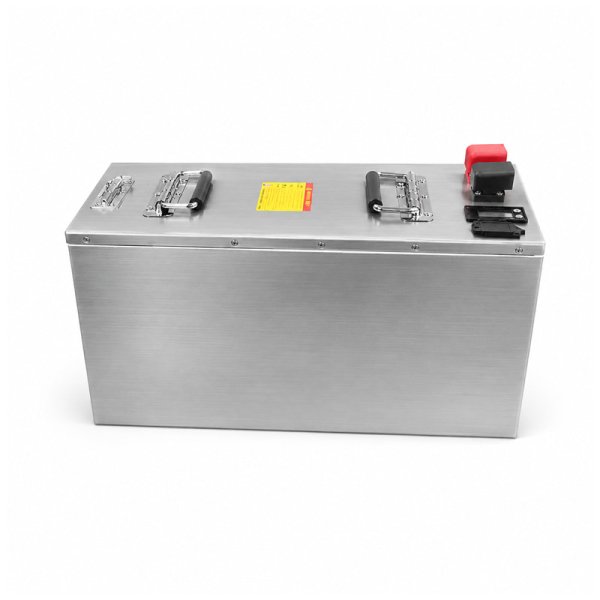
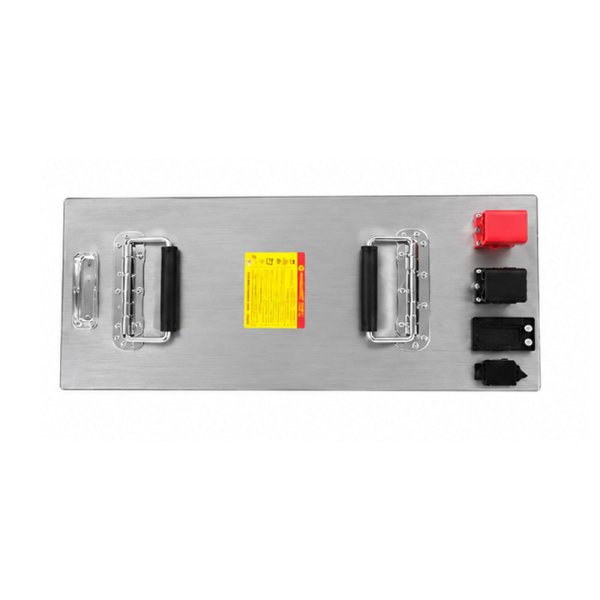
Standard batteries do not always fit fleet requirements. A custom electric motorcycle battery can be designed around voltage, capacity, dimensions, mounting position, connector type, cable length, communication protocol, waterproofing level, and BMS parameters.
Customization is valuable for OEMs, distributors, and large fleet operators because it improves integration. A battery that fits the vehicle correctly is easier to install, safer to operate, and simpler to maintain. It also reduces the need for adapters or unstable modifications.
For buyers managing multiple vehicle models, customization can also support brand consistency and product differentiation. A custom electric motorcycle battery can help match the vehicle’s working profile more closely, which improves performance and reduces operational friction.
What Maintenance Requirements Should Be Considered?
Maintenance requirements vary by battery chemistry. Lead-acid batteries may require more inspection, cleaning, and maintenance. A lithium electric motorcycle battery usually requires less routine maintenance, especially when it includes a reliable BMS.
However, low maintenance does not mean no management. Fleet operators should still inspect connectors, monitor charging behavior, check battery state of health, and avoid unsuitable chargers. Battery data can help identify problems before they become failures.
For B2B operations, a low-maintenance electric motorcycle battery helps reduce labor cost and downtime. It also makes fleet management easier because technicians can focus on preventive checks rather than frequent corrective maintenance.
What Should a B2B Buyer Check Before Purchasing?
Before purchasing an electric motorcycle battery, buyers should review both product specifications and supplier capability. A good battery is not only about cells. It also depends on BMS quality, pack design, testing process, customization ability, and after-sales support.
| Selection Factor | What to Check |
|---|---|
| Chemistry | LiFePO4, NMC, or other lithium type |
| Voltage | Match motor and controller |
| Capacity | Match route distance and payload |
| BMS | Protection, balancing, temperature monitoring |
| Charging | Charger compatibility and charging speed |
| Structure | Waterproofing, vibration resistance, enclosure strength |
| Customization | Size, connector, cable, communication, mounting |
| Supplier Support | Testing, documentation, warranty, OEM/ODM ability |
A professional electric motorcycle battery supplier should ask about vehicle type, motor power, controller current, target range, installation space, charger type, and operating environment before recommending a solution. If the supplier only quotes a battery without understanding the application, the risk of mismatch is higher.
For more guidance on lithium battery selection, you can also read FEBATT’s article on the best lithium battery for electric motorcycle.
FAQ About Electric Motorcycle Fleet
1.What Is the Best Battery Type for an Electric Motorcycle Fleet?
For many fleet applications, LiFePO4 is one of the most practical choices. A LiFePO4 electric motorcycle battery offers strong safety, long cycle life, stable discharge, and low maintenance. It is especially suitable for delivery, rental, utility, and daily commercial use.
2.How Long Does a LiFePO4 Electric Motorcycle Battery Last?
The lifespan depends on cell quality, BMS design, depth of discharge, charging method, temperature, and riding conditions. A high-quality LiFePO4 electric motorcycle battery can often support thousands of cycles when used correctly, but actual performance should be evaluated based on product specifications and operating data.
3.How Often Should Fleet Batteries Be Replaced?
Replacement should be based on state of health, remaining capacity, range stability, and safety condition. Some fleets may replace an electric motorcycle battery after several years, while intensive operations may need a more data-driven replacement plan. Regular monitoring helps avoid unexpected downtime.
4.How Do I Calculate the Correct Battery Capacity for My Fleet?
Estimate energy consumption per kilometer, multiply it by the longest daily route, and add a reserve margin for route changes, climate, payload, and battery aging. This method helps select an electric motorcycle battery capacity that supports real fleet operation.
5.Are custom battery solutions worth it for large fleets?
Yes, custom solutions can be valuable when the vehicle has unique voltage, size, mounting, communication, or range requirements. A custom electric motorcycle battery can improve integration, reduce installation issues, and support better long-term fleet performance.
6.What safety features should an electric motorcycle battery include?
A commercial electric motorcycle battery should include overcharge protection, over-discharge protection, overcurrent protection, short-circuit protection, temperature monitoring, cell balancing, and a reliable enclosure. These features help protect both the battery and the fleet.
Conclusion
Choosing an electric motorcycle battery is a strategic procurement decision. It affects range, charging efficiency, lifecycle cost, safety, maintenance, and fleet reliability. For B2B buyers, the goal is not simply to buy the cheapest battery. The goal is to choose a battery that supports stable operation over time.
A strong electric motorcycle battery should match the vehicle’s real duty cycle, support the required voltage and capacity, include a reliable BMS, and withstand the operating environment. LiFePO4 is often a strong option for fleet use because it balances safety, durability, and long cycle life.
The best electric motorcycle battery for a fleet is the one that reduces downtime, simplifies maintenance, supports predictable range, and lowers total cost of ownership. When the battery is selected correctly, it becomes more than a power source. It becomes a foundation for reliable fleet performance.