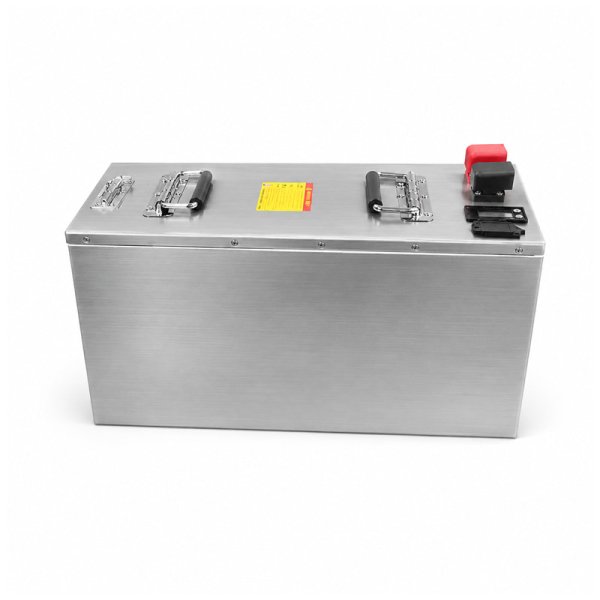
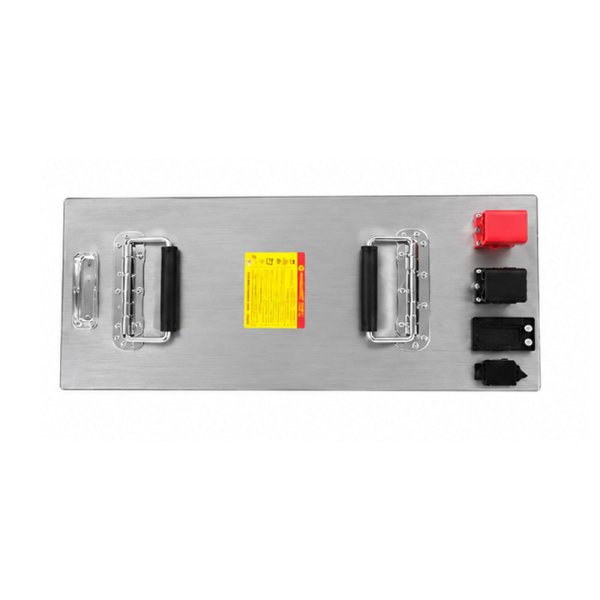
For a commercial motorcycle fleet, battery procurement is not simply a comparison of nominal capacity, purchase price, or laboratory range. The real question is whether the battery can keep vehicles productive through repeated routes, payload changes, traffic, heat, rain, shift changes, charging queues, maintenance events, and eventual replacement. A lithium ion motorcycle battery that works well for occasional private use may not be suitable for high-utilization delivery or fleet operations.
B2B buyers therefore need to specify the battery around the operating system of the fleet. Route length, stop frequency, payload, acceleration demand, charging windows, spare-pack policy, technician capability, vehicle-controller compatibility, and replacement availability all affect total cost. A well-specified lithium ion motorcycle battery should help reduce missed routes, unplanned battery swaps, charging congestion, diagnostic time, and premature replacement rather than merely meet a voltage-and-capacity target.
Which Commercial Duty Cycles Should a Lithium Ion Motorcycle Battery Support?
Commercial motorcycles do not share one universal duty cycle. Food delivery, parcel distribution, rental fleets, security patrols, municipal operations, and other professional applications create different combinations of distance, idle time, payload, speed, road grade, weather exposure, and charging opportunity. The lithium ion motorcycle battery should be designed around those patterns rather than a single advertised range figure.
A lithium motorcycle battery for delivery fleet use may face dozens or hundreds of acceleration events each day, irregular routes, repeated stops, heavy annual energy throughput, and limited downtime between shifts. These differences change the required energy reserve, peak-current capability, thermal margin, enclosure durability, and service strategy.
Before requesting quotations, buyers should convert operating conditions into measurable inputs: daily and peak route distance, average and maximum payload, stop frequency, cruising speed, maximum grade, working hours, expected annual operating days, ambient temperature, storage conditions, and available charging windows. This broader commercial power battery solution framework can help procurement teams connect these operating requirements with battery engineering, charging, vehicle integration, and lifecycle support.

The fleet should also separate normal operation from stress operation. A lithium ion motorcycle battery should not be sized only for an average weekday. Peak-season routes, heavier cargo, detours, congestion, hot afternoons, aging-related capacity loss, and temporary charger shortages should be represented in the operating margin.
How Should Route Distance, Payload, and Stop-Start Operation Shape Battery Sizing?
Nameplate energy alone does not predict commercial range. Payload increases the work required during acceleration and climbing. Higher sustained speed raises aerodynamic demand. Stop-start traffic creates repeated transient-current events. Poor road surfaces, steep gradients, headwinds, and aggressive rider behavior can increase consumption further. The correct lithium ion motorcycle battery therefore needs to be sized from representative route-energy data, not a theoretical range claim.
During a pilot, fleets should measure energy consumption per kilometer across typical and demanding routes, then segment the results by payload, traffic density, terrain, temperature, and rider behavior. The electric motorcycle battery guide for OEM and fleet buyers provides a useful framework for connecting route demand, pack architecture, charging, and sourcing decisions.

A practical range calculation also needs an end-of-life margin. A new lithium ion motorcycle battery may complete a route comfortably, but the purchasing team should ask whether it can still complete the required route after normal capacity decline. The acceptance target should therefore include a minimum usable-energy threshold at the intended replacement point rather than treating beginning-of-life performance as the only criterion.
For a lithium ion motorcycle battery, this approach reduces two common B2B problems: oversizing every vehicle and paying for unused battery capacity, or undersizing the pack and creating route interruptions as the fleet ages. The goal is not the largest battery; it is the most appropriate energy margin for the operational profile.
Which Cell Chemistry and Cell Grade Best Balance Fleet Life, Safety, and Cost?
Cell chemistry is both an engineering and commercial decision. LiFePO4 is often attractive where long cycle life, thermal stability, and predictable aging are higher priorities than maximum energy density. NMC-based systems can be useful where weight and packaging constraints are more demanding. A lithium ion motorcycle battery should not be selected by chemistry label alone, because cell grade, internal resistance, manufacturing consistency, traceability, and quality control can be just as important to fleet reliability.

For high-utilization fleets, small differences in cell consistency can become large maintenance problems when hundreds of packs age at different rates. A low-cost cell may increase total fleet cost if resistance rises early, capacity dispersion grows, or later production lots behave differently. Buyers evaluating a lithium motorcycle battery supplier should ask how cells are sourced, matched, recorded by batch, and controlled when upstream components change.
Cycle-life claims also need test conditions. A statement such as “3,000 cycles” is not meaningful without depth of discharge, charge and discharge rate, temperature, rest conditions, and the capacity threshold used to define end of life. Cell selection also interacts with the BMS, charger, controller, and thermal design. Before freezing an OEM lithium ion motorcycle battery specification, buyers can review the BMS selection guide for electric motorcycle battery packs and confirm that current limits, protection logic, diagnostics, and communication match the real vehicle platform.
How Should the BMS, Enclosure, Connectors, and Communication Interface Be Specified?
For fleet use, the BMS must do more than provide basic overcharge, over-discharge, overcurrent, and short-circuit protection. It should be configured around real acceleration demand, grade climbing, charger behavior, temperature exposure, fault handling, service diagnostics, and any required vehicle communication. A lithium ion motorcycle battery that trips unnecessarily under legitimate load can create the same operational disruption as a battery with insufficient energy.
Continuous and peak-current limits should therefore be validated with the actual motor and controller. Temperature sensing should reflect the cell arrangement rather than one convenient measurement point. Where diagnostics are required, technicians should be able to access useful information such as SOC, SOH, temperature, current, cycle history, and fault records through an agreed interface.
The enclosure is equally important. Delivery motorcycles may expose batteries to rain, dust, vibration, curb impacts, repeated removal, rough handling, and prolonged heat. Mechanical fixation, sealing, insulation, service access, pressure management, and thermal pathways should be engineered as one system. An electric motorcycle traction battery that performs well electrically but develops connector, mounting, or sealing failures can still create unacceptable fleet downtime.
Connectors deserve special attention in removable or swappable systems. Locking design, contact resistance, mating-cycle durability, strain relief, polarity protection, and field replacement all influence service life. For a lithium ion motorcycle battery that is removed several times per day, connector durability should be validated under the intended handling process rather than assumed from a component datasheet.
An OEM lithium ion motorcycle battery should provide documented communication requirements so the customer is not locked into unclear service procedures or unsupported proprietary tools.
What Charging, Swapping, and Spare-Pack Strategy Minimizes Fleet Downtime?
Lithium ion motorcycle battery purchasing and charging infrastructure should be planned together. A lithium ion motorcycle battery can perform well on the road and still deliver poor fleet economics if too many vehicles wait for chargers, return at the same time, or require an oversized spare-pack pool.
Multi-shift delivery fleets may need scheduled opportunity charging, battery swapping, or a mixed strategy. The appropriate model depends on route duration, depot dwell time, electrical capacity, charger concurrency, labor, and the number of packs temporarily unavailable while charging or being inspected.
For fixed-battery motorcycles, the charging plan should be designed around peak return periods, not only average daily energy demand. If many vehicles return together, charger availability can become the bottleneck. For a lithium motorcycle battery for delivery fleet operation, charging rate should meet turnaround needs without relying on unnecessarily aggressive charging that could increase thermal stress or accelerate degradation under unfavorable conditions.
Swappable systems move the bottleneck from vehicle charging time to battery inventory. The fleet needs enough charged lithium ion motorcycle battery units to cover operating vehicles plus packs that are charging, cooling, under inspection, or temporarily quarantined. There is no universal spare-battery ratio. The correct reserve depends on actual shift overlap, charging time, route variability, service incidents, and the reliability target.
A disciplined swapping program also requires standardized mechanical interfaces, durable connectors, reliable SOC tracking, controlled charging, and a clear process for isolating abnormal packs. These operational controls matter as much as the nominal performance of the lithium ion motorcycle battery itself.
How Can Pack Standardization Simplify Maintenance and Battery Replacement for Fleets?
Fleet complexity rises quickly when vehicle batches use different dimensions, connectors, chargers, communication protocols, firmware, and service procedures. Even if every battery works individually, mixed specifications can make motorcycle battery replacement for fleets slow and inventory-intensive.
A standardized lithium ion motorcycle battery platform can reduce the number of charger types, spare parts, diagnostic tools, and technician procedures needed across the fleet. Standardization does not require one identical pack for every motorcycle. Controlled commonality is usually more practical: the fleet can standardize connector families, communication protocol, mounting logic, charger interface, diagnostic data, and service procedures while allowing several energy configurations for different route classes.
Lithium ion motorcycle battery replacement planning should begin before the first bulk order. Procurement teams should define whether future packs must remain mechanically and electrically interchangeable, how firmware revisions will be controlled, and how component substitutions will be communicated. A battery that becomes unavailable or incompatible after two years can strand otherwise serviceable vehicles.
Batch traceability is another B2B requirement. Each lithium ion motorcycle battery should be identifiable by production lot, major component configuration, firmware version, and quality record. When a field issue appears, this allows technicians to isolate the affected population rather than checking an entire fleet.
What Should B2B Buyers Require from a Lithium Motorcycle Battery Supplier?
Lithium ion motorcycle battery supplier evaluation should go beyond a quotation and a certification list. A lithium motorcycle battery supplier should be able to translate the customer’s duty cycle into a defined pack specification, explain design assumptions, document key interfaces, and control changes between pilot and mass production.
For an OEM lithium ion motorcycle battery project, customization may include enclosure geometry, mounting points, connector position, cable length, BMS parameters, communication protocol, thermal management, labeling, branding, and service access. Before custom hardware is approved, buyers should freeze the interfaces that affect vehicle compatibility. Late changes after tooling or pilot validation can create cost, delays, and retesting. Formal change control should therefore cover cells, BMS hardware, connectors, firmware, insulation, and structural materials.
Validation should reproduce the stresses expected in service. Electrical checks should verify usable energy, output capability, protective functions, charging compatibility, SOC behavior, and abnormal-condition response. Mechanical validation should consider vibration, shock, mounting loads, connector durability, and enclosure integrity. Environmental testing should reflect the intended deployment conditions, including heat, moisture, dust, storage, and transport where relevant.
Certification and compliance requirements depend on destination market, transport route, vehicle program, and customer requirements. Buyers should distinguish transport testing from product or vehicle certification and verify that reports apply to the actual production configuration. Documentation for a materially different cell, BMS, enclosure, or battery variant may not adequately support the intended project.
Production consistency is equally important. Incoming cell inspection, welding quality, BMS programming, insulation checks, end-of-line testing, serialization, and failure analysis all affect whether the first 20 samples perform like the next 2,000 packs. For B2B buyers, this repeatability is a core part of supplier quality.
How Should a Fleet Pilot Measure Runtime, Reliability, Warranty Risk, and ROI?
A pilot should determine whether the battery system is ready to scale, not merely prove that several motorcycles can move. The lithium ion motorcycle battery should be tested across representative routes, payloads, riders, weather conditions, and shifts for long enough to reveal meaningful operational variation.
The lithium ion motorcycle battery pilot should start with a baseline, such as the existing battery system or an agreed reference configuration. Useful pilot metrics include route completion, residual SOC, energy per kilometer, charging time, queue time, charger utilization, BMS trips, connector failures, roadside removals, capacity trend, SOH trend, diagnostic time, maintenance interventions, downtime, spare-pack demand, and cost per completed kilometer. For a lithium motorcycle battery for delivery fleet, route completion and productive vehicle-hours are often more meaningful than purchase price per pack.
Failure severity should be measured alongside failure frequency. A temporary communication warning is not equivalent to a pack that stops a vehicle mid-route. Warranty risk should therefore combine incident rate, operational consequence, diagnostic burden, replacement cost, and logistics.
ROI analysis should include more than battery price. Relevant costs can include chargers, electrical upgrades, spare packs, installation, training, maintenance labor, downtime, warranty processing, logistics, and replacement inventory. Benefits may come from longer service life, higher vehicle availability, fewer roadside interruptions, lower maintenance burden, or a smaller reserve-battery pool.
Before scaling, the fleet should define explicit acceptance gates for route completion, thermal behavior, charging turnaround, fault rate, capacity retention, diagnostic performance, and economic performance. If the lithium ion motorcycle battery fails a gate, the cause should be resolved before mass deployment rather than absorbed as a future service problem.
Conclusion
For commercial fleets, selecting a lithium ion motorcycle battery is an operational engineering decision. The lithium ion motorcycle battery must fit the route, shift schedule, charging strategy, maintenance organization, vehicle interface, and replacement plan at the same time.
A strong B2B specification starts with real duty-cycle data and converts it into cell, BMS, enclosure, connector, charging, communication, and service requirements. It also defines how the lithium ion motorcycle battery will be standardized, diagnosed, traced, replaced, and supported across future production batches.
The most resilient programs validate the complete system through a representative pilot before scaling. When route completion, charging congestion, failure severity, degradation, replacement logistics, warranty exposure, and cost per productive kilometer are measured together, buyers can judge whether a lithium ion motorcycle battery will reduce total operating cost and support fleet availability rather than simply satisfy an electrical specification.
Frequently Asked Questions About Lithium Ion Motorcycle Battery
Q: How long should a lithium ion motorcycle battery last in commercial use?
A: Commercial life cannot be defined by one fixed year or cycle number. It depends on chemistry, depth of discharge, temperature, charge rate, duty cycle, maintenance, and the end-of-life capacity threshold agreed for the fleet.
Q: How should fleet range be estimated before selecting the pack?
A: Use measured energy per kilometer from representative routes, then account for payload, traffic, grades, temperature, rider behavior, charging windows, and an end-of-life capacity margin before fixing the pack size.
Q: Can a lithium ion motorcycle battery be customized to an existing vehicle platform?
A: Yes. Compatibility should cover dimensions, mounting, current demand, controller and charger behavior, connectors, BMS settings, communication, thermal limits, and service access—not only voltage and physical fit.
Q: How many spare batteries does a high-utilization fleet need?
A: There is no universal ratio. Size the reserve pool from shift overlap, route duration, charging time, charger capacity, swapping frequency, inspection downtime, and the service level required during peak operating periods.
Q: What operating data should buyers include in an RFQ?
A: Include route distance, payload, speed profile, stop frequency, grades, working hours, temperature, charging windows, installation space, controller data, connector requirements, communication needs, and annual volume.
Q: How should a battery manufacturer be validated before a bulk order?
A: Review engineering capability, traceability, quality controls, sample and pilot performance, BMS and charger compatibility, change-control procedures, production tests, and project-specific compliance documents before scale-up.