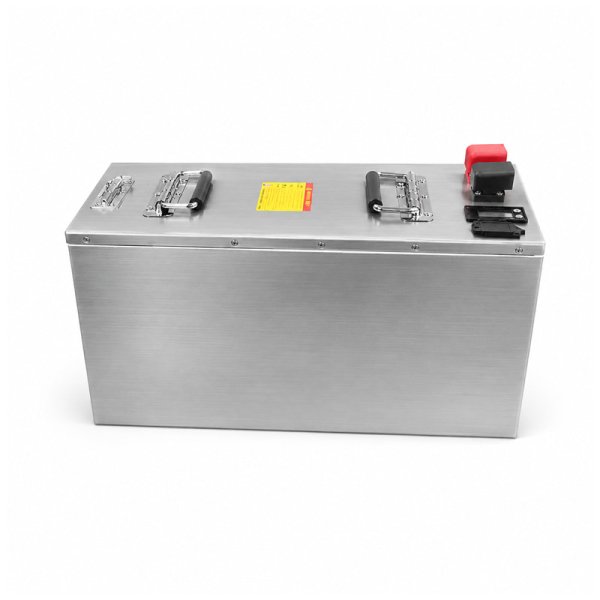
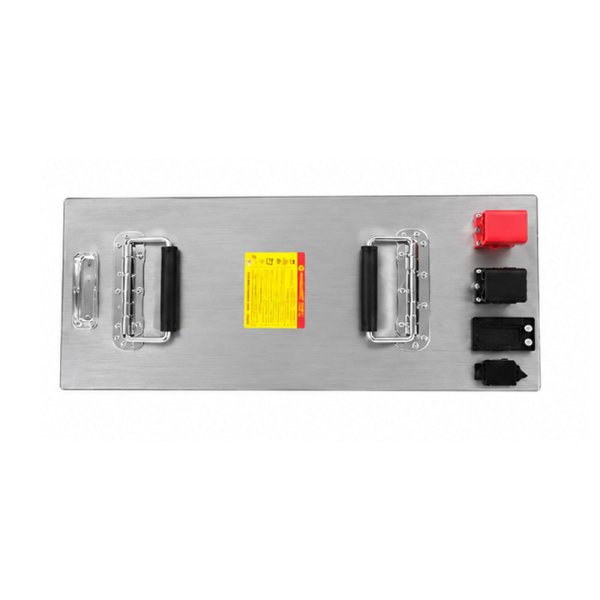
Electric motorcycle development increasingly depends on how well the battery is integrated with the vehicle. Motor power, frame geometry, target range, payload, operating temperature, charging strategy, and software architecture all influence the final battery specification. A pack selected only by nominal voltage and amp-hour rating may fit on paper yet fail to deliver the required current, thermal stability, serviceability, or communication behavior in the finished motorcycle.
For OEMs, fleet operators, and system integrators, a custom lithium battery provides a structured way to align the energy system with the complete vehicle. The goal is not simply to create a different enclosure. It is to coordinate cell chemistry, series and parallel configuration, usable energy, BMS limits, connectors, mounting points, sealing, thermal paths, and vehicle communication so the pack performs predictably in the intended duty cycle.
This guide explains how to define a custom lithium battery project, what can be customized, how prototypes should be validated, and what a qualified lithium battery pack manufacturer should document before mass production. It also addresses volume purchasing, transport documentation, and common B2B questions.
Why Do Electric Motorcycle OEMs Need a Custom Lithium Battery?
Electric motorcycles vary widely in power level, frame layout, speed target, route profile, and daily operating hours. A compact urban scooter may prioritize low mass and easy battery removal, while a delivery motorcycle may need higher usable energy, stronger peak-current capability, and dependable operation through repeated stop-and-go cycles. A performance-oriented platform may place greater emphasis on sustained discharge power, thermal control, and precise communication with the vehicle controller.
A standard pack can be appropriate when the vehicle was designed around that exact format. Problems arise when an OEM attempts to force a generic battery into a frame that has different electrical or mechanical constraints. Unused space, awkward cable routing, poor weight distribution, limited service access, or excessive current stress may appear later in development. A custom lithium battery lets the engineering team define the pack around the motorcycle instead of redesigning the motorcycle around an unsuitable pack.
The strongest business case is integration quality. A well-specified custom lithium battery can simplify assembly, reduce unnecessary adapters, support consistent vehicle calibration, and create a repeatable production platform. It may also help an OEM differentiate its motorcycles through range, packaging, connected functions, or fleet diagnostics. These benefits still require disciplined requirements and validation.
What Specifications Can Be Customized in a Battery Pack?
A project begins with electrical requirements: nominal voltage, maximum charged voltage, minimum operating voltage, usable energy, continuous and peak current, charge current, and duty cycle. Energy should be compared in watt-hours, not only amp-hours, because Wh = V × Ah. The custom lithium battery must remain within the limits of the motor controller, charger, DC-DC converter, and other connected equipment.
Cell chemistry and format are selected according to project priorities. LiFePO4 may suit applications that value thermal stability and cycle durability, while other lithium-ion chemistries may offer higher energy density where space and mass dominate. Cylindrical, prismatic, and pouch cells require different support, spacing, compression, and heat-transfer strategies. A responsible lithium battery pack manufacturer should explain these trade-offs.
Mechanical options include dimensions, mounting interfaces, removal features, connector location, cable direction, enclosure material, service access, and sealing. Software options may include BMS thresholds, state-of-charge estimation, data reporting, fault logic, wake and sleep behavior, and interfaces such as CAN, RS485, or UART. The final custom lithium battery specification should place all approved requirements under one revision-controlled document.

How Can a Custom Battery Be Designed to Fit a Motorcycle Frame?
Accurate packaging starts with verified vehicle data. The battery supplier needs a three-dimensional installation envelope, restricted zones, mounting surfaces, connector-clearance requirements, allowable mass, target center of gravity, and information about adjacent heat sources or moving components. CAD files are preferable to rough measurements because small errors can create interference during installation or maintenance.
The enclosure should be designed around installation and service. Engineers must consider how the pack is inserted, fixed, removed, and inspected. Cable routing should avoid sharp bends, abrasion, and conflict with steering or suspension movement. The custom lithium battery should allow safe connector access and secure retention.
Internal layout affects busbar length, current distribution, insulation distance, sensor placement, thermal paths, and structural support. A compact arrangement that traps heat or concentrates stress is not automatically a good design. The lithium battery pack manufacturer should review operating current, ambient temperature, enclosure conductivity, and airflow before approval.
Weight placement matters as well. A lower, central location may support predictable handling, but the optimum depends on rider position, suspension geometry, cargo, and other components. The custom lithium battery must therefore be evaluated in the complete motorcycle, not only on a workbench.
Why Is Custom BMS Programming Important for Vehicle Integration?
The BMS protects the cells and controls how the battery interacts with the motorcycle. Core functions normally include cell-voltage monitoring, pack-current measurement, temperature monitoring, charge and discharge protection, balancing, fault recording, and state estimation. Protection values must match the selected cell chemistry, series configuration, current capability, and thermal limits. Reusing generic settings without verification can cause nuisance shutdowns, inadequate protection, or poor usable-energy performance.
Vehicle communication may be as important as protection. The custom lithium battery can transmit voltage, current, state of charge, temperature, available power, charging status, and faults. CAN integration requires agreement on baud rate, message identifiers, scaling, update frequency, timeout behavior, and fault handling. The OEM should provide a communication specification or DBC file when available.

State-of-charge accuracy should be validated in the intended duty cycle. A simple voltage estimate may be unreliable under changing load, temperature, and aging. The BMS algorithm should be tuned with cell and pack data, then checked in the vehicle. A capable lithium battery pack manufacturer should control firmware versions so production packs match approved prototypes.
Cybersecurity and remote functions should be considered only when required by the project. Bluetooth, telematics, or remote diagnostics can add value for fleets, but they also introduce software, privacy, maintenance, and update responsibilities. A custom lithium battery should include only the functions that can be supported throughout the product lifecycle.
What Is a Credible Prototyping and Validation Process?
Development begins with a written requirements review covering vehicle voltage, controller demand, energy target, charging, installation space, connectors, environment, communication, production volume, destination markets, and acceptance criteria. Unresolved assumptions should be recorded before the custom lithium battery is built.
Concept design follows. The supplier proposes cell chemistry, electrical architecture, BMS approach, enclosure concept, thermal strategy, estimated mass, and preliminary drawings. Design reviews should identify risks such as insufficient current margin, inaccessible connectors, weak mounting points, or unclear fault behavior. Once the concept is approved, the custom lithium battery prototype can be assembled for engineering verification.
Bench testing should confirm energy, charge and discharge behavior, voltage limits, protection functions, temperature sensing, communication, insulation, and connectors. Mechanical and environmental tests are selected under an agreed plan. Vehicle validation then checks fit, mounting, controller interaction, range, peak-power events, charging, thermal behavior, and fault response under representative routes and loads.
Design changes after testing must be controlled. A revised enclosure, connector, cell, busbar, or firmware can affect previous results, so the team should identify which tests need repeating. A pilot build then verifies manufacturability, work instructions, end-of-line testing, traceability, and consistency before the custom lithium battery enters full production.
Prototype timing cannot be stated responsibly as one universal number. It depends on design complexity, tooling, cell and component availability, BMS development, communication debugging, testing scope, and the number of revision cycles. A professional lithium battery pack manufacturer should provide a project schedule after reviewing the actual requirements rather than promising a fixed lead time before technical assessment.
How Should Vibration, Shock, and Environmental Durability Be Validated?
Motorcycle batteries experience continuous road vibration, occasional shocks, water and dust exposure, temperature changes, and repeated acceleration and braking loads. Durability is achieved through coordinated design and testing, not by adding a generic label such as “vibration resistant.” The test plan should reflect the mounting position, vehicle class, route severity, expected life, and destination-market requirements.
Mechanical design may use cell holders, insulation, controlled spacing or compression, busbar support, connector retention, and enclosure reinforcement suited to the selected cell format. Mounting interfaces must secure the pack without creating damaging local loads. After testing, the custom lithium battery should be inspected for movement, loose fasteners, damaged insulation, weld cracks, connector wear, deformation, and abnormal electrical behavior.
Ingress protection is project-specific. A sealed enclosure may block water and dust but can reduce heat dissipation and complicate pressure equalization. Engineers must balance sealing, thermal performance, and service needs. Any claimed protection level should be supported by testing of the final enclosure and connector configuration.
For international shipment, the final lithium cell or battery type may need to satisfy the applicable requirements in subsection 38.3 of the UN Manual of Tests and Criteria. UN 38.3 is a transport testing framework, not a blanket product certification. The supplier should confirm which test summary, safety data, packaging, marking, and transport documents apply to the final custom lithium battery and route.
What Quality Controls Should a B2B Battery Supplier Provide?
Quality control begins before assembly. Incoming cells should be checked against approved specifications for voltage, capacity, internal resistance, appearance, and traceability where relevant. Matching methods must suit the cell type and pack design. Critical components such as the BMS, protection devices, connectors, insulation, and enclosure parts also require controlled suppliers and inspection criteria.
During production, the lithium battery pack manufacturer should control welding or fastening parameters, polarity, insulation placement, sensor location, harness routing, torque, sealing, firmware version, and serial-number traceability. Work instructions and inspection records help prevent variation between operators and production batches. Changes to cells, BMS hardware, firmware, connectors, or materials should follow an approval process rather than being substituted without notice.
End-of-line testing should be linked to the approved specification. Depending on the design, checks may include open-circuit voltage, capacity or energy verification, charge and discharge response, communication, protection functions, insulation, leakage or sealing checks, and visual inspection. Not every unit requires a full lifecycle test, but the sampling and validation plan should be defined.
B2B buyers should request evidence that the supplier can reproduce the approved custom lithium battery, not merely build one successful sample. Useful evidence includes drawings, bills of materials, firmware control, inspection plans, test reports, traceability, change-control procedures, and pilot-build results. These records demonstrate real engineering and manufacturing practice.

How Can Wholesale Batteries Reduce Total Production Cost?
Volume purchasing can reduce unit cost by improving material planning, production scheduling, tooling utilization, and assembly efficiency. However, the lowest quoted price does not necessarily produce the lowest vehicle cost. An OEM should evaluate usable energy, failure risk, integration work, production interruptions, field service, spare parts, and supplier response alongside the initial pack price.
Ordering wholesale batteries also creates an opportunity to stabilize specifications. Once the design is validated, a controlled production agreement can define approved cells and components, forecast volumes, batch acceptance, engineering-change procedures, packaging, delivery schedules, and service responsibilities. This reduces repeated requalification and helps the motorcycle factory maintain consistent controller calibration and assembly processes.
MOQ should be discussed by development stage. Prototype, pilot, and mass-production quantities serve different purposes and may use different pricing or tooling assumptions. A custom lithium battery with a new enclosure or specialized BMS may require a different commercial structure from a design based on existing validated components.
Wholesale batteries provide the greatest value when volume planning is paired with demand forecasts and change control. Large orders placed before validation can amplify design problems. A better approach is to approve the custom lithium battery through prototype and pilot stages, then scale purchasing according to verified production readiness.
Why Work With FEBATT on an Electric Motorcycle Battery Project?
Electric motorcycle OEMs need a supplier that can connect battery design with vehicle requirements, prototype validation, and repeatable production. FEBATT supports customized power-battery projects by reviewing electrical specifications, installation constraints, BMS functions, communication needs, and commercial volume before defining a solution.
For projects that require tailored dimensions, voltage and capacity options, enclosure development, or intelligent BMS integration, FEBATT can evaluate the application and recommend a project path. Buyers can explore FEBATT’s custom power battery solutions to understand the available engineering and manufacturing scope. Final performance, testing, documentation, MOQ, and delivery terms should be confirmed in the project specification and quotation.
FEBATT also serves other power-driven applications, but this guide is intentionally focused on electric motorcycles. Keeping the custom lithium battery design tied to one vehicle platform helps engineering teams avoid generic claims and produce clearer requirements, test plans, and acceptance criteria.
FAQ About Custom Lithium Battery
1.What is the minimum order quantity for a custom lithium battery?
There is no responsible universal MOQ for every project. Prototype, pilot, and mass-production quantities depend on whether the design uses existing cells, BMS hardware, connectors, and enclosures or requires new tooling and software development. FEBATT should confirm the MOQ after reviewing the specification, validation scope, and forecast volume. Buyers should request separate commercial terms for samples, pilot production, and wholesale batteries.
2.How long does it take to develop a custom battery prototype?
Development time depends on requirement completeness, mechanical design, tooling, cell and component availability, BMS programming, communication integration, test scope, and revision cycles. A simple project based on validated components may progress faster than a new enclosure and protocol design. The lithium battery pack manufacturer should issue a milestone schedule after technical review rather than promise the same number of days for every custom lithium battery.
3.Can the CAN bus communication protocol be customized?
Yes, CAN communication can often be customized when the project requirements are clearly defined and supported by the selected BMS. The OEM should provide the baud rate, message map or DBC file, data scaling, update rates, diagnostic behavior, and timeout requirements. The custom lithium battery interface must then be verified on the bench and in the motorcycle. Other interfaces, including RS485 or UART, may be considered when appropriate.
4.Does every custom battery automatically include UN 38.3, CE, UL, and an MSDS?
No. These items are not interchangeable, and they do not automatically apply to every design. UN 38.3 concerns transport testing for a specific cell or battery type; an SDS provides safety information; CE-related obligations depend on the product and destination market; and UL certification requires a defined scope and evaluation. The required documents and approvals must be confirmed for the final custom lithium battery before production and shipment.
5.Can the custom lithium battery casing material be customized?
Yes, enclosure material can be selected according to structural strength, mass, heat transfer, sealing, flame-performance, appearance, tooling, and production-volume requirements. Options may include aluminum, steel, engineering plastics, or combined structures, but no material is automatically best for every motorcycle. The final choice should be validated with the mounting system, connector design, thermal behavior, and environmental test plan.
6.What information should an OEM provide before requesting a quotation?
The supplier should receive the nominal and maximum voltage, target usable energy, continuous and peak current, charge requirements, motor and controller details, installation envelope, mass target, connectors, mounting points, communication specification, operating temperatures, ingress requirements, destination markets, validation expectations, annual volume, and project timeline. Better input data produces a more accurate custom lithium battery proposal.
7.Can a custom lithium battery be ordered before vehicle testing is complete?
A sample can be built for integration work, but mass production should not begin until fit, electrical compatibility, charging, communication, thermal behavior, mechanical durability, fault response, and representative vehicle performance have been validated. A pilot build should also confirm production controls. Scaling wholesale batteries before these stages are complete can increase technical and financial risk.
Conclusion
A successful electric motorcycle battery project begins with complete requirements and ends with controlled, repeatable production. Voltage and capacity matter, but so do current capability, cell selection, enclosure design, BMS calibration, communication, mounting, thermal behavior, durability, documentation, and vehicle-level validation.
For OEMs, the right custom lithium battery is not simply the lightest pack or the lowest quotation. It is the battery that meets the motorcycle’s defined duty cycle, integrates safely with the controller and charger, fits the frame, can be manufactured consistently, and is supported by appropriate testing and change control.
Working with a qualified lithium battery pack manufacturer allows the vehicle team to move from concept to prototype, pilot production, and scalable supply with fewer avoidable assumptions. By validating the design before ordering wholesale batteries, manufacturers can reduce integration risk and build electric motorcycles with more dependable performance and a clearer total cost of ownership.