Cold climates change how traction batteries deliver power, accept charge, and recover energy between shifts. For fleet managers, OEMs, and equipment integrators, this matters in refrigerated warehouses, winter delivery routes, mountain resorts, outdoor industrial sites, and RV systems that remain exposed overnight. A LiFePO4 battery in cold weather can continue to support useful work, but its available power, charge acceptance, and heating needs must be evaluated against the actual cell temperature rather than the weather forecast alone.
LiFePO4 chemistry is valued for thermal stability, predictable voltage behavior, and long service potential when operated within approved limits. Cold exposure does not remove those strengths, but it slows electrochemical processes and increases internal resistance. The practical result may be lower available capacity, stronger voltage drop under load, longer charging time, or a BMS that blocks charging until the cells are warm enough. These are engineering constraints, not proof that the pack is defective.
A dependable winter strategy combines suitable cells, accurate temperature sensing, controlled heating, compatible charging, and duty-cycle validation. This guide separates temporary cold-weather losses from permanent damage and shows how to specify winter energy storage for forklifts, electric tricycles, golf carts, RVs, and other powered equipment.
Instead of assuming that every LiFePO4 battery in cold weather behaves the same way, buyers should compare datasheets, BMS logic, heating design, enclosure construction, and application-level evidence. Final limits must follow the approved battery specification.
Why Does LiFePO4 Performance Decline as Temperature Falls?
A LiFePO4 battery in cold weather experiences slower ion transport through the electrolyte and slower charge-transfer reactions at the electrode surfaces. The electrolyte becomes more viscous as temperature falls, reducing ionic conductivity. At the same time, lithium diffusion within the active materials becomes less efficient. These effects raise internal resistance, so more voltage is lost inside the battery when current demand increases.
For operators, the first symptom is often voltage sag. A forklift may reduce lifting speed, a tricycle may feel less responsive on a slope, or an RV inverter may reach its low-voltage threshold earlier. A LiFePO4 battery in cold weather may appear to have less capacity because the voltage limit is reached before all stored energy can be used; part of this loss can recover after warming.
Severity depends on cell design, state of charge, current, thermal mass, enclosure, airflow, and exposure time. Ambient and cell temperature are not identical: a working pack may remain warm, while a vehicle parked overnight can approach ambient conditions.
Sub-zero battery performance should therefore be described with a temperature-and-current map, not a single marketing number. A useful supplier document shows permitted charge current, permitted discharge current, available energy, and protection thresholds across the expected temperature range.
How Are Cold-Weather Charging and Discharging Different?
Discharging a LiFePO4 battery in cold weather usually causes higher resistance, lower power capability, and reduced usable energy. Provided the current remains within the approved limit and the cells are not driven into undervoltage, much of the short-term loss may be reversible after warming. Repeated high-current operation outside the datasheet, however, can still accelerate wear and create unbalanced cells.
Charging requires more caution. In a graphite-anode lithium-ion cell, low temperature slows the insertion of lithium into graphite. If charge current is too high for the cell temperature, metallic lithium can deposit on the anode surface instead of being stored normally. This lithium plating consumes active lithium, raises resistance, and can reduce capacity. Research on commercial LiFePO4/graphite batteries confirms that irreversible plating increases as low-temperature charging becomes more severe, although the exact result depends on cell design and test conditions.
Many standard packs therefore restrict charging around or below freezing, while purpose-built systems may use preheating or reduced current. The threshold is product-specific and must come from approved datasheets. A LiFePO4 battery in cold weather should use cell-temperature sensing to block or derate charging before unsafe conditions develop.
A LiFePO4 battery in cold weather may still discharge when charging is prohibited. Fleet procedures must distinguish these two operating states. A vehicle that can finish a route in the cold may still need time to warm before regenerative input, opportunity charging, solar charging, or shore-power charging is permitted.
Which Cell and Pack Design Choices Support Winter Operation?
A LiFePO4 battery in cold weather begins with suitable cell selection. Cell suppliers may optimize electrode structure, separator behavior, and electrolyte formulation for lower temperatures. A cold temperature electrolyte may use solvents, salts, or additives chosen to preserve conductivity and interfacial stability, but these formulations are proprietary and product-specific. Pack suppliers should not claim experimental chemistry unless it is documented for the production cell being offered.
Cell format affects support and heat transfer. Cylindrical, prismatic, and pouch cells require different fixation, spacing, compression, insulation, and sensor strategies. The layout should limit cell-to-cell temperature differences because the coldest cell can control charging permission.
Enclosure design influences how quickly a LiFePO4 battery in cold weather loses heat. Insulation slows cooling but may trap heat in summer. The design must balance heat retention, heat rejection, moisture control, service access, and heater and sensor placement across the full environmental range.
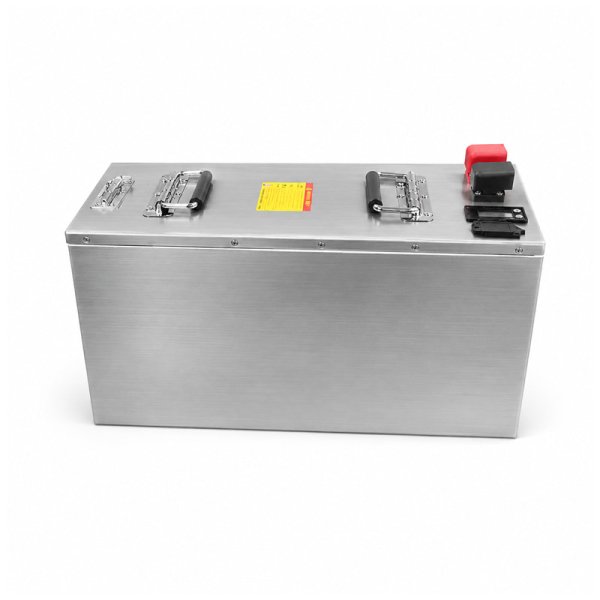
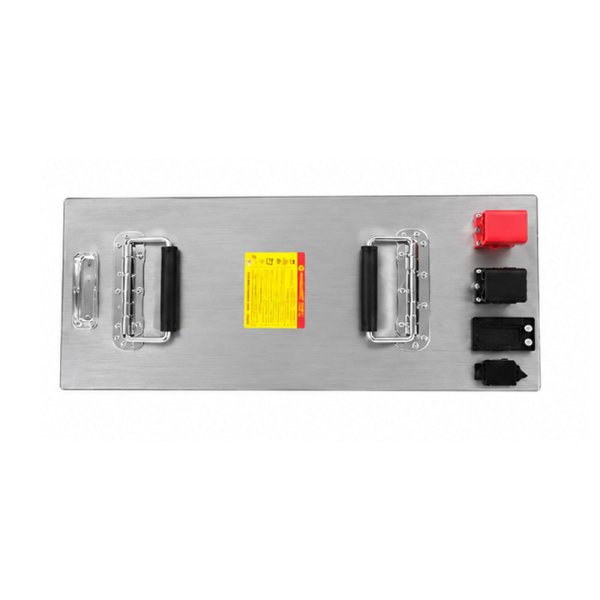
Removable-pack handles, connectors, and seals must remain usable during winter handling. Fixed packs need mounting that tolerates vibration and thermal cycling, while RV and golf-cart compartments require controlled water entry, cable routing, and heat-source clearance.
How Do Battery Heating Systems Improve Reliability?
Heating allows a LiFePO4 battery in cold weather to reach a permitted charging temperature before significant current enters the cells. Common approaches include external heating pads, PTC elements, heated air, liquid circuits, or pack-level self-heating strategies. No single method is best for every application; the design must match available power, packaging, warm-up time, temperature uniformity, and safety controls.
PTC heaters can help limit temperature rise as their resistance changes, but they still require sensing and control. A heater should not rely only on ambient temperature because the coldest cell may differ from the enclosure surface. Large or irregular packs may need multiple sensors.
Heating energy belongs in route and charging calculations. A 100 W heater running for 30 minutes uses about 50 Wh before losses. The effect may be small in a forklift pack but meaningful in a compact tricycle or RV system. Warm-up time depends on pack mass, insulation, starting temperature, and airflow.
For a LiFePO4 battery in cold weather, temperature uniformity matters as much as speed. Aggressive local heating can create hot and cold zones, allowing some cells to charge before others are ready. A well-designed system warms the battery within a controlled range, confirms sensor plausibility, and only then enables the charger. Heating should stop or reduce once the target temperature is reached.

Internal pulse heating requires compatible cells, power electronics, algorithms, and validation; it is not a generic BMS feature. Buyers should ask whether the complete LiFePO4 battery in cold weather has documented warm-up behavior and charging logic under intended conditions.
What Should the BMS and Charger Control in Freezing Conditions?
The BMS is the gatekeeper for a LiFePO4 battery in cold weather. It should measure cell voltage, pack current, and temperatures representing the coldest and warmest areas. Controls may include charge lockout, current derating, heater activation, contactor control, fault logging, and recovery rules.
Temperature thresholds need hysteresis to prevent rapid charger cycling. The BMS should detect sensor faults, implausible readings, and air-to-cell temperature differences. High-power systems may use gradual current derating instead of a single on/off boundary.
The charger for a LiFePO4 battery in cold weather must follow the battery’s voltage and current requests. In connected systems, CAN or another approved interface can communicate charge permission, current limit, pack temperature, state of charge, and faults. A simple charger without communication may still be used when the battery specification supports it, but the BMS must be able to interrupt charging safely.
Regenerative energy is also charging current. If a vehicle uses regenerative braking or lowering-energy recovery, the controller must respect the battery’s cold-temperature charge limit. A LiFePO4 battery in cold weather should not receive uncontrolled regenerative current merely because the vehicle is moving rather than connected to a charger.
For unattended winter energy storage, auxiliary loads matter. Telematics, displays, heaters, contactors, and monitors can reduce state of charge, so the BMS and operator need coordinated deep-discharge protection, inspection, and recharge schedules.
How Should Fleets Validate Sub-Zero Battery Performance?
Laboratory data is useful, but it does not replace application testing. A fleet should define the lowest expected cell temperature, route length, payload, gradients, peak current, shift duration, charging windows, charger power, parking time, and required reserve. These inputs determine whether a LiFePO4 battery in cold weather needs passive insulation, active heating, current derating, additional capacity, or a different operational schedule.
Test instrumented samples and record cell temperatures, voltage spread, current, minimum voltage, delivered energy, heater consumption, warm-up time, charger behavior, and faults. Repeat at representative states of charge because a cold, nearly empty LiFePO4 battery in cold weather can behave differently from a full pack.
For forklifts, validate lifting and travel power inside the cold store, transitions to warmer areas, and opportunity charging. For tricycles, test payload, stop-and-go routes, gradients, and outdoor parking. Winter golf carts need range checks across terrain, passenger load, and overnight storage.
RVs may supply low loads for hours, then face high inverter demand or solar input after a cold night. Because heating energy comes from the battery or incoming source, the control sequence matters. Freezing environment power solutions must be evaluated as complete systems.
The acceptance report should state test temperature, initial state of charge, current profile, duration, vehicle configuration, heater settings, and pass/fail criteria. This is more useful than an unsupported claim such as “works at -20°C.”
What Should B2B Buyers Ask a Low-Temperature Battery Supplier?
Buyers evaluating a LiFePO4 battery in cold weather should request separate charge and discharge temperature ranges, not one combined operating range. They should also ask for current limits across temperature, heater power, warm-up time under defined conditions, sensor quantity and location, BMS thresholds, charger communication, enclosure rating, storage limits, and the test method used to support each claim.
A supplier should identify the production cell model and chemistry where commercially possible. If an offer refers to a cold temperature electrolyte, low-temperature cells, or self-heating technology, the buyer should confirm that the quoted LiFePO4 battery in cold weather contains that feature and request product-specific evidence.
Mechanical and environmental validation should match the application. Depending on the project, this may include vibration, mechanical shock, ingress protection, thermal cycling, insulation resistance, electrical protection, and vehicle-level testing. Transport compliance is separate: lithium battery types intended for shipment are evaluated under the applicable UN Manual of Tests and Criteria, subsection 38.3, and the relevant test summary should be available when required.
Quality records should cover cell inspection and matching, joining, insulation, BMS programming, end-of-line testing, traceability, and controlled changes. A LiFePO4 battery in cold weather is only as reliable as the production consistency behind its prototype.
Use sample and pilot stages before volume purchasing. Compare heating energy, downtime, replacement risk, charger compatibility, engineering support, and evidence—not only nominal Ah and unit price.
How Can FEBATT Support Cold-Weather Power Projects?
FEBATT supports B2B battery projects for electric tricycles, forklifts, golf carts, RVs, electric motorcycles, and other powered equipment. Development should begin with voltage, usable energy, current, installation space, temperature, charging, communication, market, and volume requirements.

Customers evaluating specialized winter operation can review FEBATT low-temperature battery solutions as a starting point for requirement discussions. The final LiFePO4 battery in cold weather specification should still be confirmed through a project-specific datasheet, drawings, BMS logic, charging limits, and validation plan.
For OEMs needing a different enclosure, voltage, CAN protocol, heater, or mounting method, FEBATT custom power battery solutions can support requirements review, samples, and pilot production. Each LiFePO4 battery in cold weather feature must be confirmed for the quoted design.
A proposal for freezing environment power solutions should state what is standard, optional, subject to validation, and included in the documentation. This gives buyers a clear path from prototype to repeatable production.
B2B Cold-Weather Validation Checklist
| Item | What to Confirm |
|---|---|
| Temperature limits | Separate charge, discharge, storage, and heater operating ranges |
| Current map | Permitted charge and discharge current versus cell temperature |
| Thermal design | Sensor locations, heater power, warm-up logic, insulation, and temperature uniformity |
| Vehicle integration | Charger control, regenerative-current limits, CAN messages, fault handling, and wake/sleep behavior |
| Validation evidence | Test temperature, state of charge, current profile, payload, route, duration, and acceptance criteria |
| Production control | Cell matching, assembly checks, firmware version, end-of-line test, traceability, and change control |

Technical Relevant FAQ
1.Can I fast-charge a LiFePO4 battery below freezing?
Do not assume that fast charging is permitted. Many standard LiFePO4 packs restrict charging around or below 0°C, while some low-temperature designs use preheating or a reduced current. The approved cell and pack datasheets are the controlling documents. A LiFePO4 battery in cold weather should only accept charge after the BMS confirms that cell temperatures and current limits are within specification.
2.Does cold weather permanently reduce battery capacity?
Not necessarily. Higher resistance and slower reaction rates can temporarily reduce usable energy and power during cold discharge, and much of that apparent loss may recover after warming. Permanent damage can occur if the pack is charged outside approved limits, repeatedly driven into undervoltage, or subjected to excessive current. A LiFePO4 battery in cold weather should be operated within the supplier’s temperature, current, and state-of-charge limits.
3.How should an RV battery be kept warm in winter?
Where practical, install the battery in a dry, protected compartment that stays within the approved temperature range. If the pack needs active heating, use a system controlled by cell-temperature sensors and coordinated with the charger. Insulation can slow heat loss, but it must not create overheating in warmer conditions. A LiFePO4 battery in cold weather should not rely on an uncontrolled heating pad or ambient-air measurement alone.
4.What is the best winter storage practice?
Follow the battery datasheet because storage limits and recommended state of charge vary by product. In general, isolate unnecessary loads, keep the pack dry, avoid deep discharge, inspect voltage or state of charge at planned intervals, and allow the cells to reach an approved temperature before charging. Winter energy storage plans should also account for BMS, telematics, heater, and inverter standby consumption.
5.Is LiFePO4 always better than lead-acid in refrigerated forklifts?
No chemistry is automatically best in every operation. LiFePO4 may offer high usable energy, opportunity-charging capability, and reduced routine maintenance, but cold-store heating demand, charger infrastructure, shift pattern, payload, and acquisition cost must be considered. Compare validated sub-zero battery performance, total energy use, downtime, service support, and lifecycle cost for the actual forklift fleet.
6.Does a self-heating battery allow unrestricted charging?
No. Self-heating does not remove cell limits. The pack must complete its approved warm-up sequence, confirm temperature uniformity, and communicate or enforce the permitted charge current. Heater power, available input power, state of charge, and starting temperature affect warm-up time. A LiFePO4 battery in cold weather may still block charging if a sensor fault or abnormal temperature difference is detected.
7.How can a fleet estimate the energy used for preheating?
Multiply heater power by operating time, then allow for control cycling and conversion losses. A 100 W heater operating continuously for 30 minutes uses approximately 50 Wh. Actual consumption depends on pack temperature, insulation, wind, compartment design, and target temperature. Include this energy in route, charging, and reserve calculations rather than treating heating as free.
Conclusion
Cold-weather reliability depends on more than chemistry. A LiFePO4 battery in cold weather faces higher resistance, slower ion transport, reduced charge acceptance, and possible lithium-plating risk if charging current exceeds what the cells can safely accept. These effects must be managed through suitable cells, verified pack construction, accurate temperature sensing, controlled heating, BMS protection, charger coordination, and application testing.
For B2B fleets, the right question is not whether LiFePO4 can operate in winter, but which design can meet the specified temperature, current, duty cycle, and charging window with documented evidence. Electric forklifts, tricycles, golf carts, and RVs require different operating profiles, so the same pack and heating strategy should not be applied without validation.
A well-specified LiFePO4 battery in cold weather can support dependable winter operation when its limits are understood and enforced. Buyers should use verified datasheets, transparent test conditions, pilot installations, and total-cost analysis to select freezing environment power solutions that are safe, maintainable, and suitable for repeatable production.