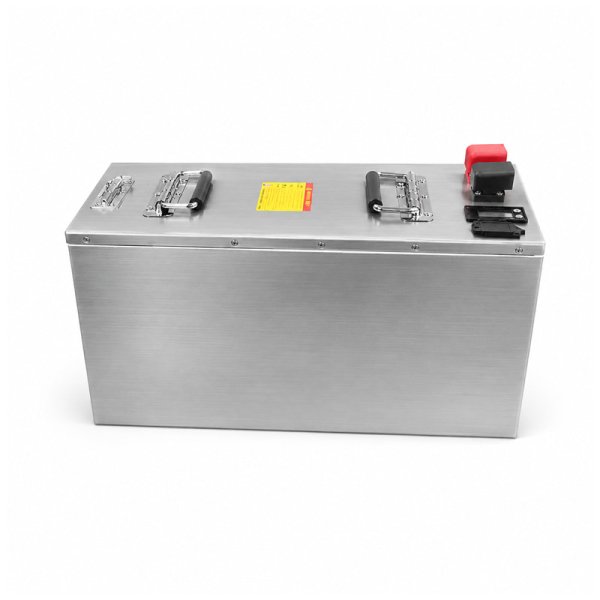
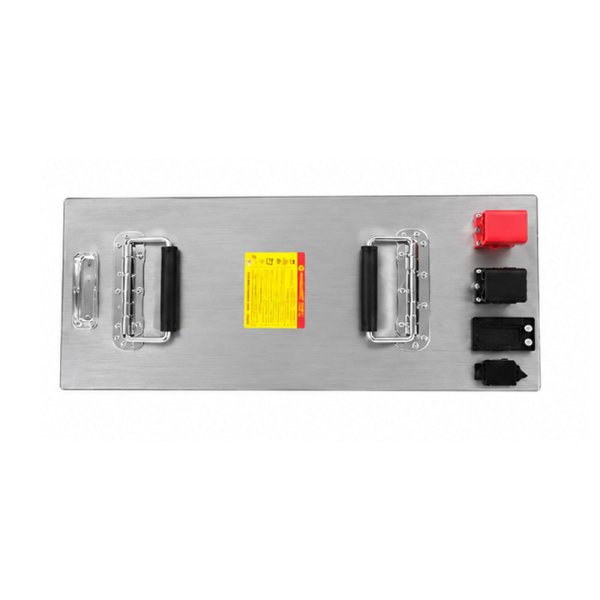
A harbor service boat that misses its final assignment can delay an entire shift. For patrol fleets, survey vessels, and port-maintenance crews, selecting an electric workboat battery is therefore an operational decision, not a simple capacity purchase.
The right specification starts with measured duty cycles, dependable power under load, seaworthy installation, and a credible route to fleet-wide service. Before requesting quotations, define the vessel’s busiest day, its safe return-to-base margin, and the evidence a supplier must provide.
What Makes an Electric Workboat Battery Different from a Leisure Boat Battery?

Recreational craft often operate intermittently and can change plans when conditions deteriorate. Commercial vessels cannot always do that. A pilot-support launch may complete repeated short passages; a survey craft can spend hours running instrumentation; a harbor utility boat may maneuver continuously around docks and floating structures. Each profile places a different demand on an electric workboat battery.
| Procurement consideration | Leisure-boat emphasis | Commercial workboat priority |
|---|---|---|
| Operating pattern | Variable, discretionary outings | Scheduled shifts and repeatable missions |
| Power profile | Occasional propulsion peaks | Sustained output plus repeated maneuvering |
| Downtime | Inconvenience | Lost assignments, crew time, and revenue |
| Maintenance | Owner-managed inspection | Documented fleet diagnostics and spares |
For fleet operators, an electric workboat battery must support dispatch reliability, not just a favorable brochure runtime. In a mixed fleet, a common electric workboat battery interface—connectors, service procedures, and diagnostics—may be worth more than marginal gains in headline energy density.
This power battery solutions for commercial applications illustrate an application-led approach to pack specification. Whatever the supplier, buyers should also assess fault containment and documented battery thermal-runaway prevention: a battery-management system cannot, by itself, eliminate every internal cell fault.
How Much Battery Energy Does a Commercial Workboat Need?
An electric workboat battery should be sized from the mission, rather than by copying another vessel’s amp-hour rating. Record battery-side power throughout representative shifts, including departure, transit, station-keeping, equipment operation, and return. Capture unfavorable conditions: opposing currents, additional payload, hull fouling, and repeated acceleration.
Consider an illustrative harbor-maintenance duty cycle:
| Work phase | Average battery-side load | Duration | Energy |
|---|---|---|---|
| Transit | 18 kW | 2 hours | 36 kWh |
| Low-speed positioning | 5 kW | 3 hours | 15 kWh |
| Onboard equipment | 2 kW | 5 hours | 10 kWh |
| Total | 61 kWh |
Adding a hypothetical 20% operating allowance gives 73.2 kWh. If the operator plans to use 80% of the nameplate energy window and requires that mission at 80% retained capacity near end of life, the calculation is:
73.2 ÷ (0.80 × 0.80) ≈ 114 kWh nominal
These are planning assumptions, not a universal safety reserve or a recommended product size. Avoid double-counting auxiliaries when loads overlap; account separately for motor and inverter losses if the measurements are shaft-side.
Before freezing the RFQ, audit electric workboat battery sizing assumptions against route logs rather than relying on averages alone. This method exposes the actual purchase question: can the proposed electric workboat battery complete the worst credible shift after years of service, without forcing unscheduled dockside charging?
A smaller pack might suit a predictable short-route fleet with a reliable turnaround window, while a remote inspection vessel may justify greater reserve.
For an initial equipment comparison, a marine battery model for electric vessels offers an example of published pack-level specifications, not proof of suitability for a particular vessel. Buyers moving toward prototypes can use an OEM battery RFQ and production-readiness framework to align the energy model with quality and delivery expectations.
Which Battery Specifications Matter Most for Workboat Operations?
An electric workboat battery specification should define what the vessel can continuously deliver, what happens at peak demand, and how the pack communicates impending limitations. Nominal voltage still matters for compatibility, but it should not dominate fleet procurement discussions.
| Specify | Why a workboat operator needs it |
|---|---|
| Usable energy and end-of-life criterion | Predictable mission completion throughout service life |
| Continuous power at operating temperature | Propulsion and auxiliary loads without sustained derating |
| Peak power and permissible duration | Berthing, reversing, acceleration, and load transients |
| Thermal-management approach | Reproducible output in hot compartments and cold weather |
| BMS communication and fault history | Fleet diagnostics, alarms, and quicker root-cause analysis |
| Charging envelope and turnaround time | Compatibility with available shore infrastructure |
For every electric workboat battery proposal, ask for performance curves, not a single current figure. A supplier should show how the proposed pack behaves at low state of charge, elevated cell temperature, and the end of its stated service life.
Include charge acceptance after a demanding shift and any reduction in regenerative or charging current when the cells are cold or nearly full.
For multiple vessels, standardizing electric workboat battery BMS alarms, firmware control, spare modules, and crew-facing state-of-charge displays can shorten fault diagnosis.
Crucially, the propulsion controller should respond to communicated power limits before the electric workboat battery reaches a protective shutdown. Sudden loss of propulsion during docking is not an acceptable routine control strategy.
How Should Workboat Batteries Handle Saltwater, Vibration and Changing Weather?
Salt spray, condensation, bilge humidity, and repeated hull impacts challenge an electric workboat battery differently from an onshore pack. The weakest point may be a connector, cable gland, mount, or exposed fastener rather than the cells themselves. Request corrosion-resistant materials, protected terminals, strain relief, and installation-specific inspection access.
An IP rating is useful but incomplete. An IP67 enclosure test, for instance, does not establish long-term resistance to salt corrosion, pressure changes, thermal cycling, or every immersion scenario.
The complete electric workboat battery installation needs assessed ingress paths, drainage or condensation control where appropriate, compatible materials, and correctly protected high-current connections.

Electric workboat battery mounting deserves equal scrutiny. Slamming loads, propeller-induced vibration, and hard maneuvering can fatigue terminals and loosen unsupported cables. Specify mechanical retention, vibration evidence, electrical isolation, and a maintainable cable route. Battery mass and placement must also be approved within the vessel’s stability and structural design.
In cold climates, the electric workboat battery may discharge within its qualified range while charging requires a warmer cell temperature. In warmer ports, restricted airflow can trigger thermal derating.
A shared electric workboat battery design still needs separate qualification for materially different saltwater and freshwater deployments. Ask the manufacturer to document those boundaries for the proposed enclosure, not merely for the bare cells.
Emergency isolation, ventilation, gas management, and fire-protection arrangements must be assessed at vessel level with the designer and relevant authorities.
What Should Operators Validate Before Installing Workboat Batteries?
A datasheet is a starting point, not acceptance evidence. Before installing an electric workboat battery, establish the vessel’s applicable flag-state, class, port, and electrical requirements.
IEC 62619:2022 addresses safety testing of industrial lithium batteries, including marine motive applications; IEC 60092-507:2014 covers electrical installations in certain small vessels. Neither standard alone constitutes approval of a finished workboat installation.
A disciplined approval sequence moves from documentation to physical integration and then to a supervised sea trial:
- Review design evidence: cell traceability, pack drawings, BMS limits, fault responses, protection coordination, and relevant test reports.
- Witness factory acceptance tests: verify usable energy, continuous and transient loads, temperature monitoring, communications, and controlled isolation.
- Conduct onboard checks: inspect mounting, cabling, insulation, ventilation, service access, emergency arrangements, and charger interoperability.
- Run representative sea trials: repeat the heaviest route, maneuver at low charge, and check alarm visibility, reserve prediction, and dockside turnaround.
Before testing the electric workboat battery, agree on measurable acceptance limits with the manufacturer and vessel integrator. After commissioning, retain baseline performance records to investigate future changes in energy delivery and temperature behavior.
The aim is to prove that the electric workboat battery and propulsion system behave safely as an integrated whole. DNV’s marine battery guidance also emphasizes vessel-specific battery safety and classification considerations.
Where required, involve the surveyor or authority before purchase, not after the equipment reaches the yard.
What Should OEMs Include in an Electric Workboat Battery RFQ?
A useful electric workboat battery RFQ allows engineering teams to quote the same operating requirement. Without that baseline, a lower price may simply reflect less usable energy, weaker protection, or missing validation work.
Include the following information in one controlled specification:
- Vessel and mission: hull type, propulsion arrangement, service area, working hours, routes, payload, and adverse-condition cases.
- Load and charging data: time-stamped energy demand, continuous and transient power, energy reserve policy, charger type, and available turnaround windows.
- Installation envelope: allowed weight, compartment drawings, attachment points, cables, corrosion exposure, and maintenance clearances.
- Controls and safety: BMS communication protocol, vessel alarms, emergency isolation, thermal limits, fire and ventilation interfaces, and required approvals.
- Commercial terms: prototype and annual quantities, destination market, delivery schedule, warranty basis, spares, documentation, and change-control obligations.

Ask each electric workboat battery supplier to state exclusions and assumptions explicitly. An electric workboat battery quotation should separate pack price from integration engineering, testing, documentation, spares, and lifecycle support.
Request a sample-validation plan and define which results permit the transition to fleet deployment.
Across a growing fleet, the best electric workboat battery is not necessarily the lightest or the cheapest. It is the system whose limitations are known, whose performance is repeatable, and whose manufacturer can support successive production batches without uncontrolled component substitutions.
Frequently Asked Questions About Electric Workboat Batteries
Q: How many kWh does an electric workboat battery need?
A: There is no fixed figure. Calculate measured propulsion and auxiliary energy for the hardest shift, then allow for operating reserve, usable state-of-charge range, and end-of-life capacity before choosing pack size.
Q: Can an electric workboat battery handle continuous high-power operation?
A: Yes, if its continuous discharge rating, cooling design, and electrical connections are validated at expected ambient temperatures and low charge levels. A short peak-current rating does not prove sustained capability.
Q: What BMS features should commercial workboats require?
A: Require cell-voltage and temperature monitoring, current limits, event logs, state-of-charge reporting, and communication with propulsion controls. Define alarms and safe responses before approving the installation.
Q: How should workboat batteries be protected from saltwater exposure?
A: Use corrosion-resistant housings and hardware, sealed and supported connectors, protected cable entries, and an installation-specific moisture plan. Verify the complete assembly; an IP rating alone is insufficient.
Q: What information does a manufacturer need to quote a workboat battery?
A: Provide the vessel duty cycle, energy and power demand, installation space, environmental exposure, charging plan, BMS interfaces, certification scope, production volume, and commissioning requirements.
Specify for the mission—not just the nameplate.
Share your operating profile, compartment drawings, charging schedule, and target fleet volume with FEBATT to discuss a custom electric workboat battery configuration and an engineering-led quotation.
A practical specification today can prevent avoidable downtime after launch.