96V 210Ah Marine Lithium Battery for Electric Boats
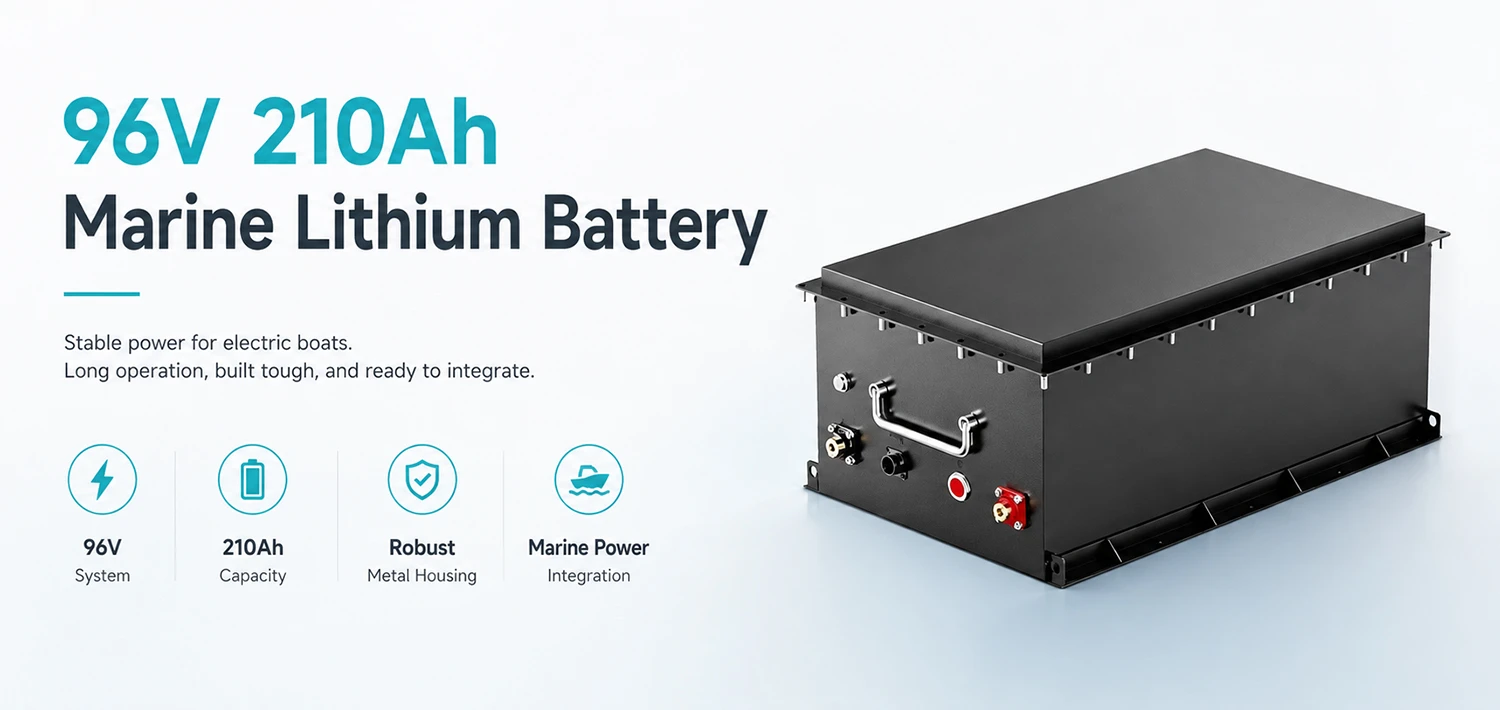
- High-Voltage Marine Power: The 96V 210Ah marine lithium battery provides 20.16 kWh of energy for electric vessel power systems.
- Long-Term Operating Value: Rated for approximately 3,000 cycles, the LiFePO4 battery helps commercial vessel operators reduce replacement frequency and control lifecycle costs.
- Protected Daily Operation: Integrated BMS protection and a 30S1P configuration support reliable system management, while the 96V marine lithium battery operates from −20°C to 60°C during discharge.
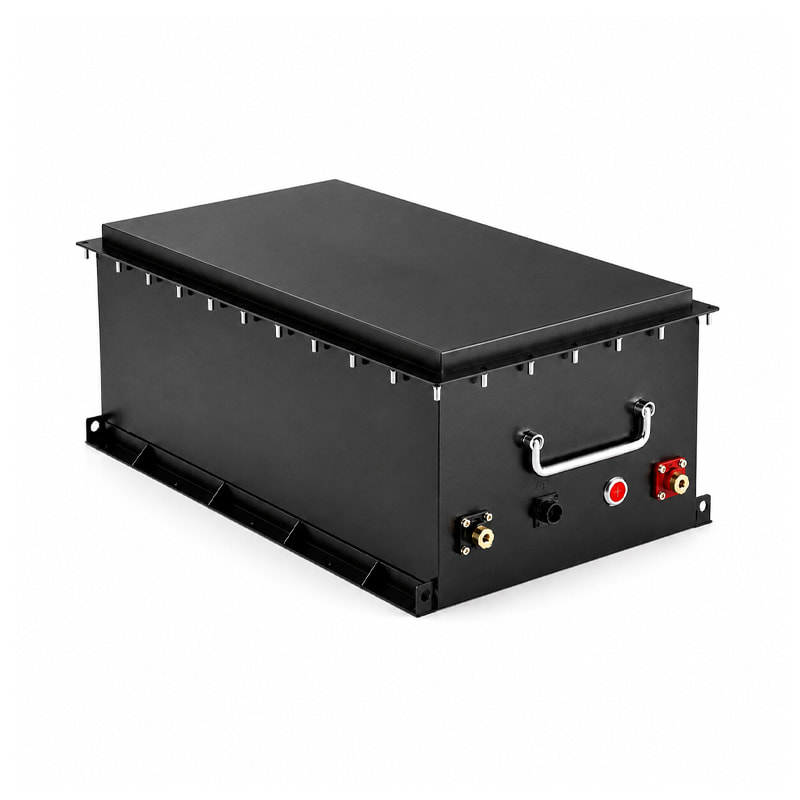
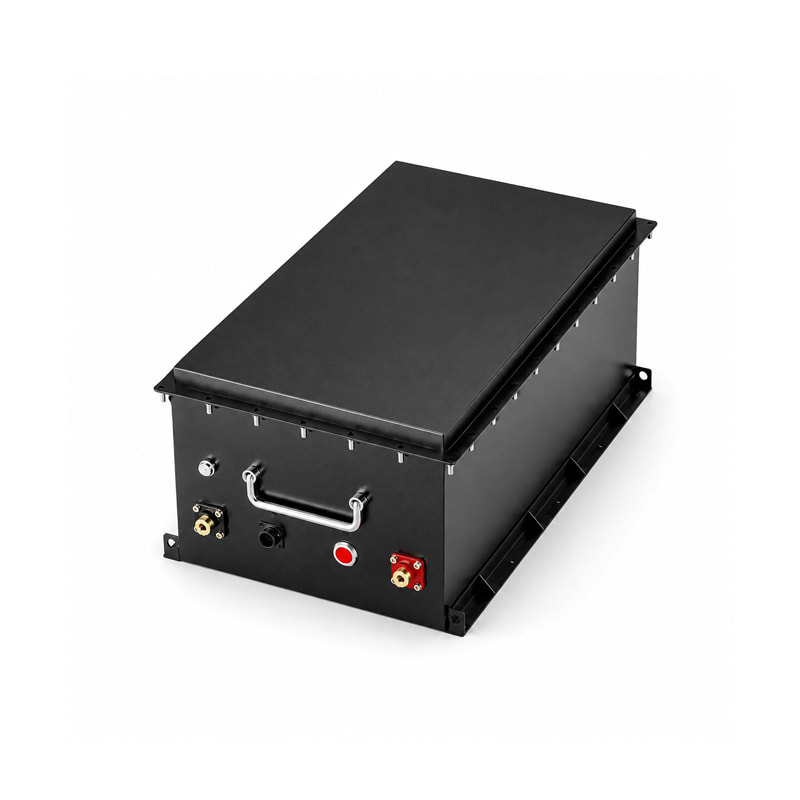
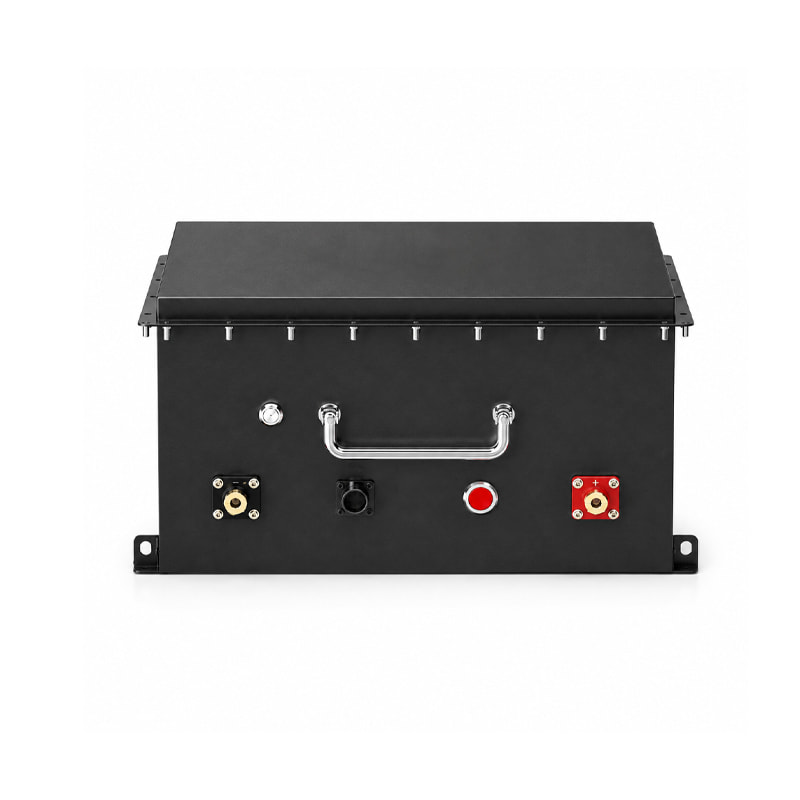
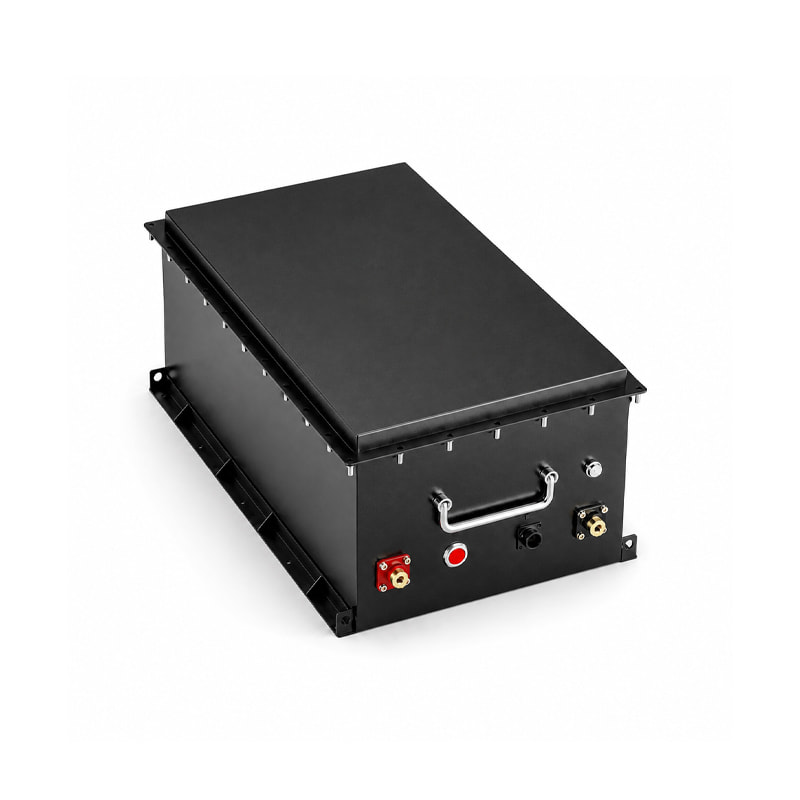
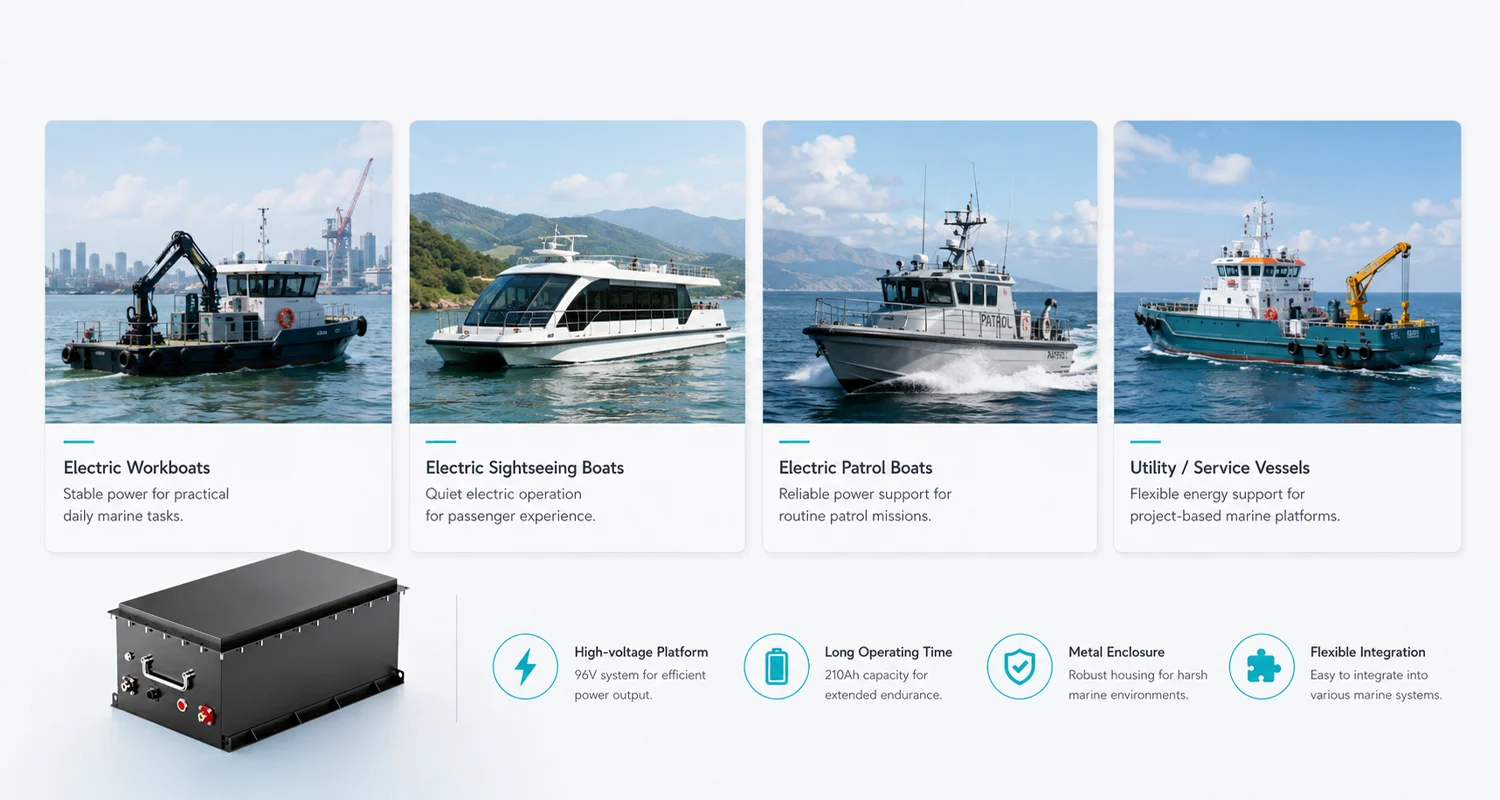
- Project-Ready Integration: The 96V 210Ah marine lithium battery measures approximately 870 × 650 × 300 mm and weighs about 190 kg, supporting installation planning for workboats, sightseeing boats, patrol boats, and service vessels.
96V 210Ah Power for Electric Vessels
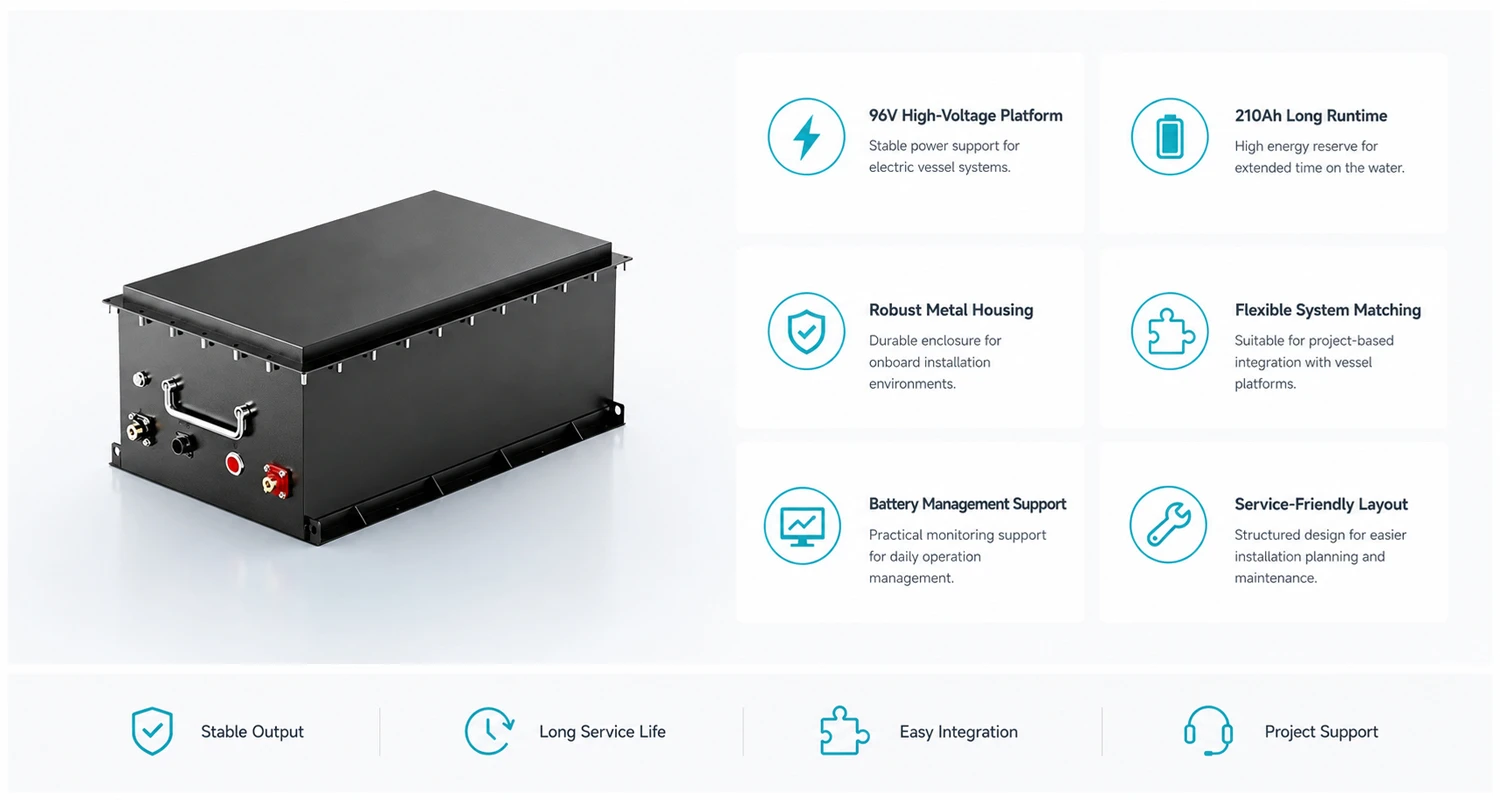
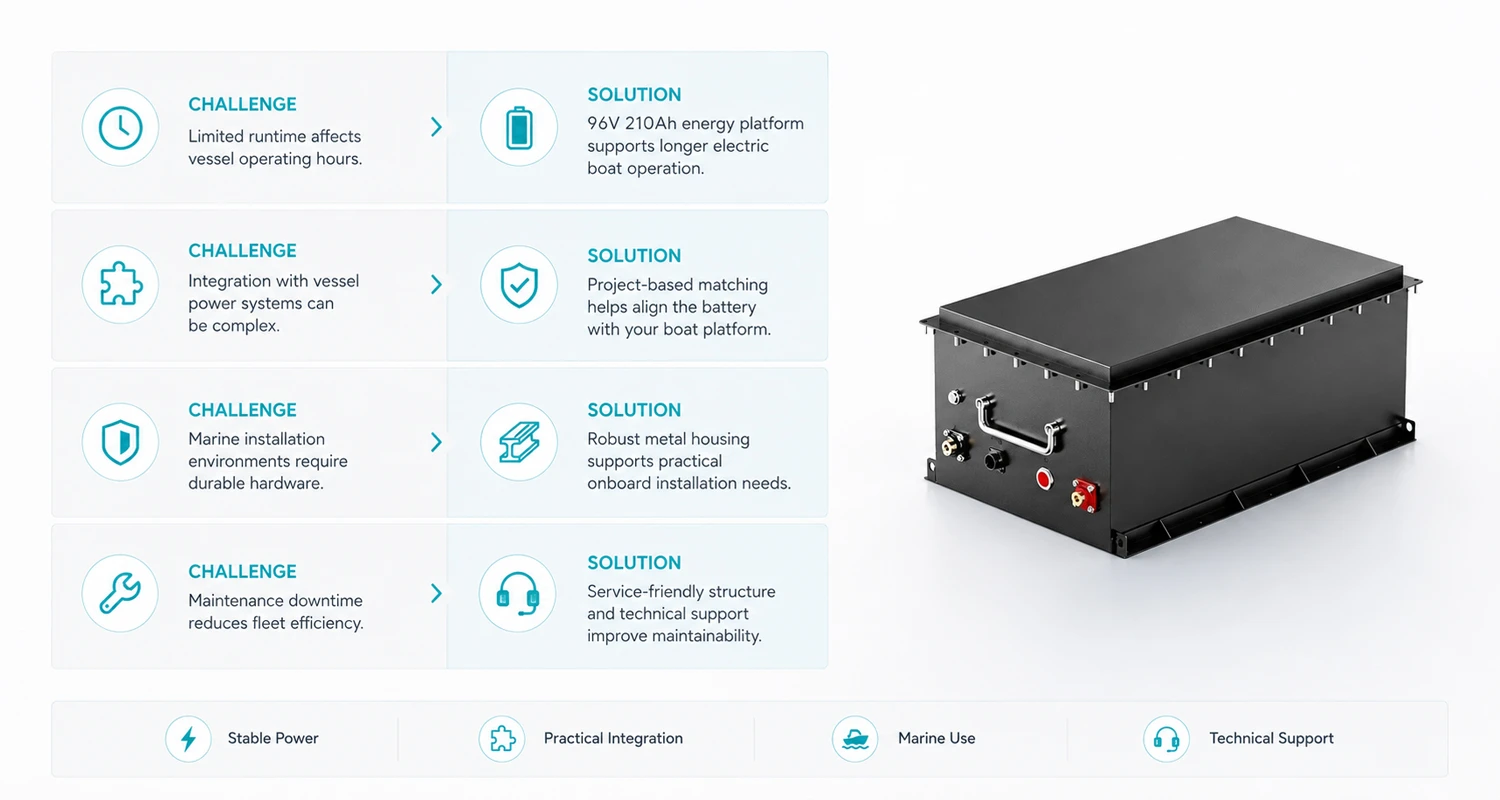
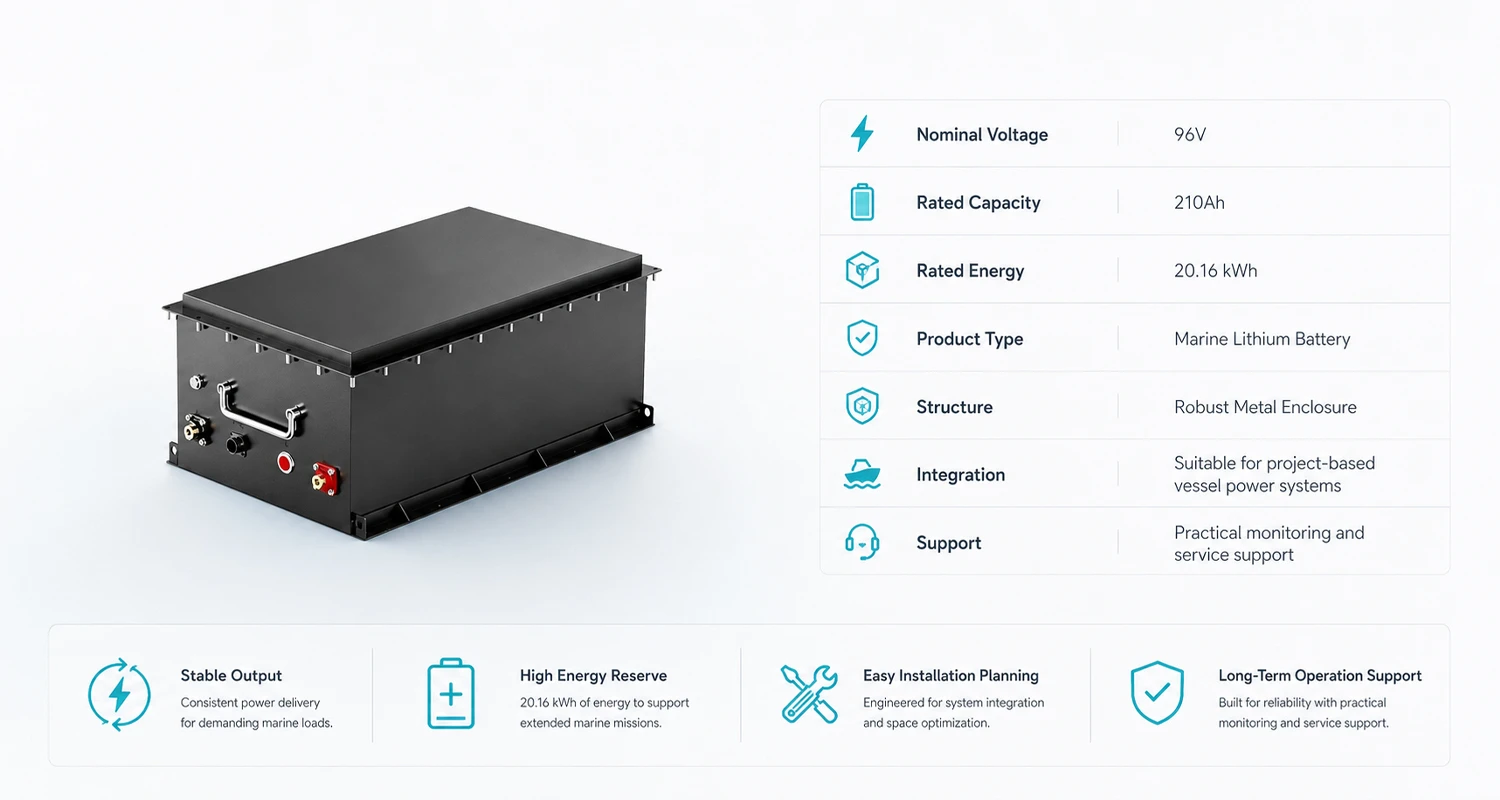
The 96V marine lithium battery combines a 96V platform with 210Ah capacity and 20.16 kWh energy. This 96V 210Ah lithium marine battery supports B2B electric vessel projects requiring stable onboard power and longer operating time.
Longer Runtime for Commercial Vessels
For commercial vessels where downtime affects productivity, the 96V marine lithium battery provides a high-capacity energy platform for extended operation. As a 96V electric boat battery, it helps buyers plan runtime around daily work, patrol, or passenger-service schedules.
LiFePO4 Design with BMS Protection
The 96V marine lithium battery uses LiFePO4 chemistry, BMS protection, a 30S1P configuration, and an approximately 3,000-cycle rating. This 96V LiFePO4 marine battery helps address B2B concerns around replacement frequency, system protection, and predictable lifecycle planning.
Core Specifications
| Parameter | Specification |
|---|---|
| Product Type | 96V 210Ah Marine Lithium Battery |
| Nominal Voltage | 96V |
| Rated Capacity | 210Ah |
| Rated Energy | 20.16 kWh |
| Battery Chemistry | LiFePO4 |
| Cell Configuration | 30S1P |
| Cycle Life | Approx. 3,000 cycles |
| BMS Protection | Integrated BMS protection board |
| Charging Temperature | 0°C to 45°C |
| Discharging Temperature | -20°C to 60°C |
| Dimensions | Approx. 870 × 650 × 300 mm |
| Weight | Approx. 190 kg |
| Applications | Electric workboats, sightseeing boats, patrol boats, utility/service vessels |
Wider Operating Range for Marine Use
Marine projects need clear environmental and installation limits. The 96V marine lithium battery supports charging from 0–45°C and discharge from −20–60°C, with a robust metal enclosure. Its approximately 870 × 650 × 300 mm size should be checked against vessel space before integration.
Flexible Electric Vessel Applications
The 96V marine lithium battery is positioned for electric workboats, sightseeing boats, patrol boats, and utility or service vessels. For buyers sourcing a lithium battery for electric boat systems, the platform can also be evaluated as an electric boat propulsion battery for project-specific requirements.
Project Support from Sample to Supply
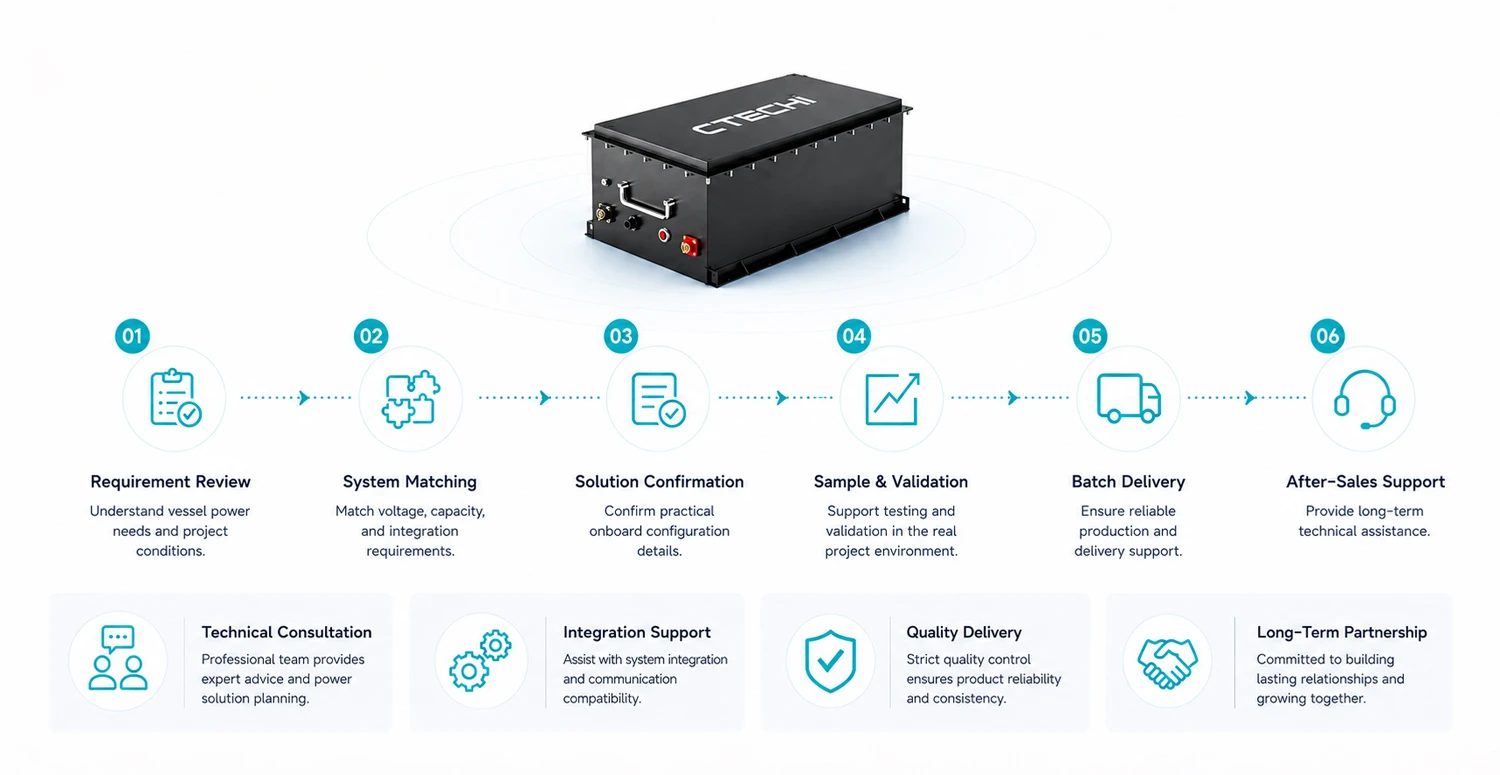
B2B integration involves more than selecting voltage and capacity. The 96V marine lithium battery supports a project workflow covering requirement review, system matching, solution confirmation, sample validation, batch delivery, and after-sales support, helping reduce integration uncertainty before fleet or project deployment.
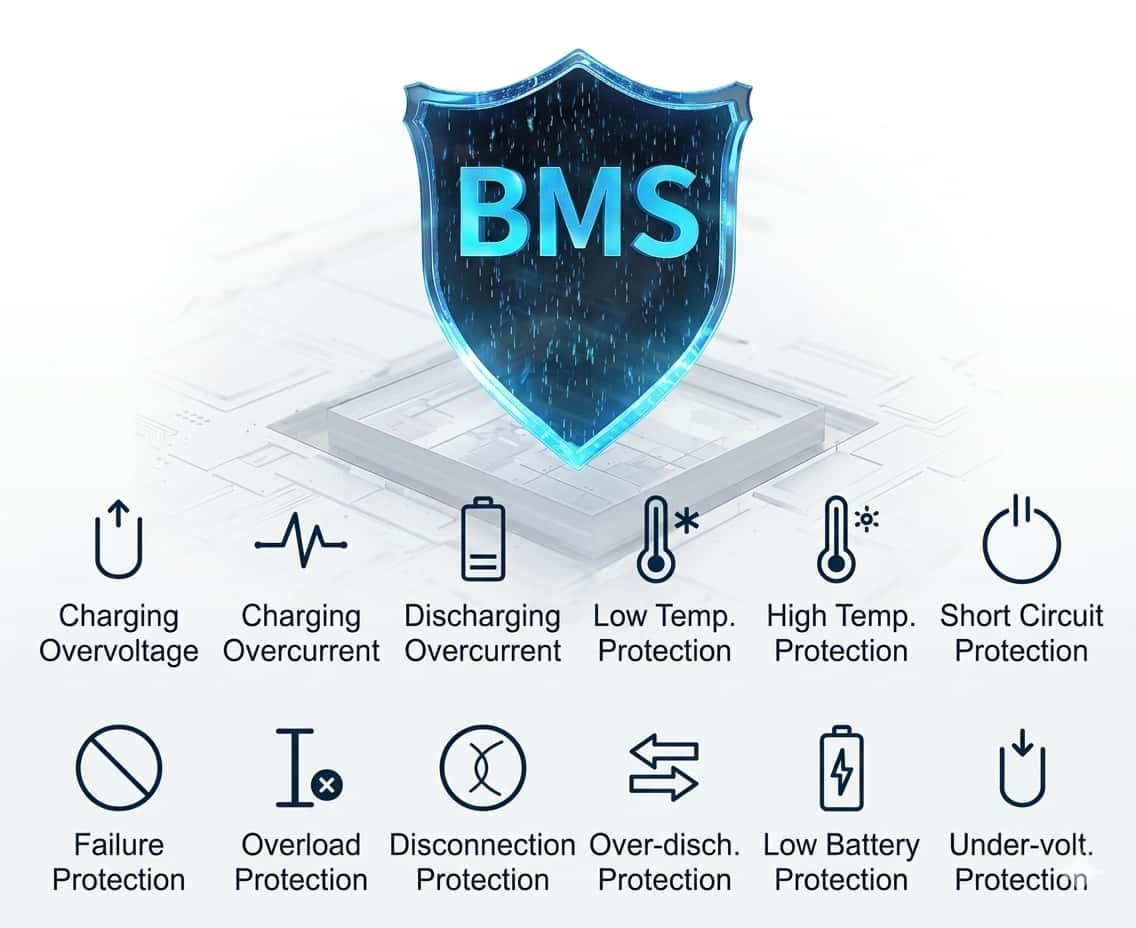
360° Safety: The "Sentinel" BMS
Advanced Smart BMS Protection
- Over-current protection
- Over-discharge protection
- Low-power protection
- High & low temperature protection
- Overload protection
- Short-circuit protection
- Automatic disconnection protection
Core Advantages
Deep OEM & ODM Customization


Certificate
Pre-integrated UN38.3, GPSR, CE, MSDS, ISO9001,and other certifications to shorten market access cycles
Wholesale Process
01.
02.
03.
04.
05.
06.
07.
08.
Quality Control
FAQ
Q1: Are lithium batteries suitable for marine use?
A: Yes. LiFePO4 batteries are well suited to marine house-power and deep-cycle applications because they provide stable performance, long cycle life, and strong thermal stability. Compared with some other lithium chemistries, LiFePO4 is less prone to overheating or thermal runaway. A reliable BMS, proper charging system, secure installation, and suitable enclosure protection are still essential for safe marine operation.
Q2: What battery types are commonly used in marine applications?
A: Common marine battery types include flooded lead-acid, AGM, gel, and lithium batteries. LiFePO4 batteries are increasingly used because they provide stable voltage, lower maintenance, high usable capacity, and longer cycle-life potential.
Q3: Can lithium marine batteries replace lead-acid marine batteries?
A: Yes. A lithium marine battery can replace many lead-acid batteries when the voltage, capacity, installation space, discharge current, cables, connectors, charger, alternator, and vessel electrical system are properly matched.
Q4: What are the main benefits of lithium marine batteries?
A: Lithium marine batteries offer lower weight, more usable energy, faster charging, stable voltage output, longer cycle-life potential, and less routine maintenance than conventional lead-acid batteries. These advantages can reduce downtime and long-term battery replacement costs.
Q5: How long does a lithium marine battery last?
A: A well-designed lithium marine battery may last 8–10 years or longer under suitable operating conditions. Actual service life depends on charging practices, temperature, depth of discharge, operating current, battery quality, and maintenance.
Q6: Do lithium marine batteries require a special charger?
A: A lithium marine battery should use a charger with charging parameters compatible with its LiFePO4 cells and BMS. An existing marine charger may be used only when its voltage settings and charging profile match the battery manufacturer’s requirements.
Q7: Are FEBATT lithium marine batteries suitable for trolling motors?
A: Yes. FEBATT lithium marine batteries can provide stable voltage and continuous power for trolling motors. The battery voltage, capacity, continuous discharge current, peak current, wiring, fuse, and charger must be matched to the trolling motor’s specifications.
Q8: Can lithium marine batteries be charged below 0°C?
A: Standard LiFePO4 batteries should not be charged below 0°C unless they include low-temperature charging protection or a suitable heating system. FEBATT can configure low-temperature cutoff and self-heating functions for marine projects operating in cold climates.
Q9: Can FEBATT customize lithium marine batteries for OEM or ODM projects?
A: Yes. FEBATT can customize lithium marine battery voltage, capacity, dimensions, discharge current, enclosure, connectors, cable direction, mounting points, communication protocols, BMS functions, labeling, and other specifications for OEM and ODM marine projects.
Q10: What information is required for a custom lithium marine battery quotation?
A: FEBATT normally requires the system voltage, capacity, continuous and peak current, installation dimensions, load type, charger or alternator specifications, communication requirements, operating temperature, order quantity, and destination market.
Related Products
IGNITE YOUR COUNTRY'S LITHIUM BATTERY & ENERGY STORAGE MARKET WITH FEBATT


We have already successfully supported partners across multiple regions in achieving brand growth and increasing profitability. Whether you are a systems integrator, electrical distributor, or entrepreneur looking to build your own brand, FEBATT is your reliable partner, offering stable products and flexible cooperation mechanisms.

Partner with us to deliver reliable energy solutions for businesses and build a sustainable green energy future together.

Ready to Partner with FEBATT?
Join hundreds of B2B partners worldwide who trust us for reliable lithium battery solutions.