Fleet operators do not choose batteries for appearance. They choose them for uptime, runtime, charging efficiency, safety, and predictable operating cost. In that context, the 51.2V Golf Cart Battery has become a practical choice for commercial carts because it combines stable voltage output with LiFePO4 chemistry and low maintenance requirements.
However, choosing the right capacity still matters. A 51.2V Golf Cart Battery with 100Ah capacity and a 51.2V Golf Cart Battery with 120Ah capacity may look similar, but they can perform differently in real fleet operation. The 120Ah option stores more energy and gives more reserve, while the 100Ah option can reduce upfront cost and may charge faster.
In this comprehensive guide, the 100Ah and 120Ah options are compared from a fleet-management perspective so procurement decisions can be grounded in operating reality rather than nominal capacity alone. The best 51.2V Golf Cart Battery is not always the largest one. The best option is the battery that matches the route length, passenger load, charging schedule, terrain, and daily working rhythm of the fleet. For buyers comparing available options, FEBATT provides dedicated golf cart battery solutions for commercial and B2B fleet applications.
What Should Fleet Operators Know About a 51.2V Golf Cart Battery?
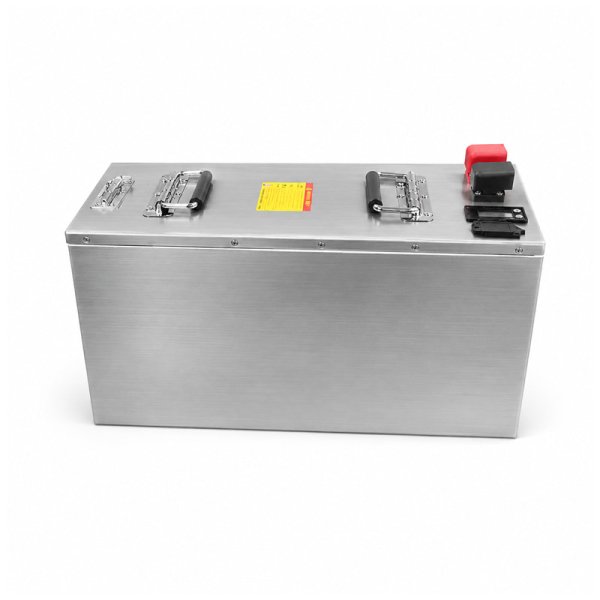
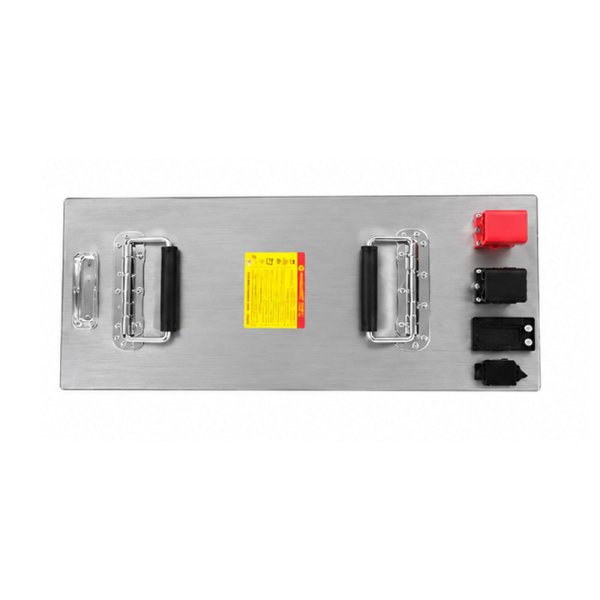
A 51.2V Golf Cart Battery is usually a 16-cell LiFePO4 battery pack with a nominal voltage of 51.2 volts. This voltage platform is commonly used as a lithium replacement for 48V golf cart systems because it supports stable discharge, high usable capacity, and efficient energy delivery.
For fleet use, the main advantage of a 51.2V Golf Cart Battery is consistency. Compared with lead-acid batteries, LiFePO4 packs usually maintain a flatter voltage curve during discharge. That means the cart does not feel weak as quickly when the state of charge drops. For resort shuttles, campus carts, maintenance carts, and commercial transport units, that consistency helps keep service predictable.
Fleet managers should also understand that voltage alone is not enough. Capacity, BMS design, charging profile, weight, enclosure quality, and discharge capability all affect performance. A well-selected 51.2V Golf Cart Battery should match the actual duty cycle, not just the vehicle voltage.

How Does 100Ah vs 120Ah Affect Fleet Performance?
The difference between 100Ah and 120Ah is a 20% increase in nominal capacity. That extra capacity can create a meaningful improvement in runtime and reserve power. A 51.2V Golf Cart Battery rated at 120Ah stores more energy than a 100Ah version at the same voltage.
A 100Ah 51.2V Golf Cart Battery is often suitable for moderate routes, predictable schedules, lighter loads, and operations with convenient charging windows. It can be the more economical option when carts return to base frequently and do not need long continuous runtime.
A 120Ah 51.2V Golf Cart Battery is better suited for longer routes, heavier passenger loads, frequent starts and stops, larger service areas, or limited charging access. It offers more operating buffer, which is valuable when real-world conditions are not perfectly predictable.
| Factor | 51.2V 100Ah Golf Cart Battery | 51.2V 120Ah Golf Cart Battery |
|---|---|---|
| Energy capacity | Lower | Higher |
| Driving range | Suitable for moderate routes | Better for longer routes |
| Charging time | Usually shorter | Usually longer |
| Upfront cost | Lower | Higher |
| Load tolerance | Moderate | Stronger reserve |
| Best use | Controlled fleet routes | High-use commercial fleets |
Which 51.2V Golf Cart Battery Delivers Longer Driving Range?
A 120Ah 51.2V Golf Cart Battery will generally deliver longer driving range because it stores more energy. At the same voltage, higher amp-hours mean higher watt-hours, and higher watt-hours usually support more travel per full charge.
That said, range is not determined by battery capacity alone. Terrain, passenger count, cargo weight, tire pressure, driving speed, acceleration habits, accessory loads, and temperature all affect consumption. A 51.2V Golf Cart Battery may perform very differently on flat resort paths than on hilly property roads or heavy-duty service routes.
For flat and predictable routes, a 100Ah pack may be enough. For wider properties, heavier use, or longer shifts, the 120Ah option gives better range confidence. Fleet managers should choose the 51.2V Golf Cart Battery that can complete the longest realistic working day with reserve capacity remaining.

How Does Energy Capacity Affect Total Cost of Ownership?
Total cost of ownership is not only about purchase price. It also includes downtime, charging frequency, replacement timing, maintenance labor, fleet availability, and service continuity. A lower-cost battery can become expensive if it limits vehicle usage.
A 100Ah 51.2V Golf Cart Battery may provide better upfront economics for smaller fleets or predictable short routes. If the cart can complete its daily work and recharge during idle periods, the 100Ah option can be cost-effective and easy to scale.
A 120Ah 51.2V Golf Cart Battery costs more initially but may reduce operational interruptions. If the higher capacity prevents mid-shift charging or allows one cart to complete more assignments per day, the 120Ah option can create better long-term value.
In commercial operations, the most expensive 51.2V Golf Cart Battery is not always the one with the higher price. It is the one that creates downtime, scheduling pressure, or early replacement.
What Is the Difference in Real-World Runtime?
Real-world runtime depends on actual work conditions. A 120Ah 51.2V Golf Cart Battery should run longer per charge than a 100Ah battery under the same conditions, but the practical difference depends on how the cart is used.
For light-duty routes, the runtime gain may be moderate. For intensive routes with repeated stops, passenger movement, accessory loads, or longer working hours, the difference becomes more important. The 120Ah battery gives more operating margin when the fleet cannot afford unexpected charging interruptions.
A 100Ah 51.2V Golf Cart Battery works well when carts run short loops, return to charging stations regularly, or operate under controlled duty cycles. A 120Ah pack works better when carts must stay active longer between charging windows.
Which Option Is Better for Heavy-Duty Fleet Usage?
For heavy-duty service, the 120Ah option is usually the stronger choice. More capacity gives more reserve, and reserve is important when carts carry heavier loads, climb slopes, tow light equipment, or operate for extended periods.
A 120Ah 51.2V Golf Cart Battery is less likely to operate near its lower capacity limit during demanding use. That can help preserve performance consistency and reduce range anxiety for fleet managers.
However, heavy-duty should be defined by real operating data. If a cart carries heavy loads only for short distances, a 100Ah battery may still be suitable. If the cart runs long shifts with limited recharge access, a 120Ah 51.2V Golf Cart Battery is usually the better match.
How Does Charging Time Differ Between 100Ah and 120Ah?
Charging time depends on battery capacity, charger output, BMS limits, temperature, and charge strategy. All else being equal, a 120Ah battery takes longer to charge because it stores more energy. A 100Ah 51.2V Golf Cart Battery generally requires less time to refill from the same state of charge.
For fleets with tight turnaround windows, shorter charging time can matter. If carts return to base often and chargers are available, the 100Ah option can rotate efficiently.
The 120Ah 51.2V Golf Cart Battery may take longer per charge, but it can also reduce how often charging is needed. Fleet managers should decide whether the main bottleneck is charging time or charging frequency.
Which Option Reduces Fleet Downtime More Effectively?
Downtime is affected by both charging duration and charging frequency. A 100Ah 51.2V Golf Cart Battery may charge faster, but it may need charging more often. A 120Ah battery may charge longer, but it can stay in service for more time between charging sessions.
For fleets with limited charging points, long routes, or unpredictable daily usage, the 120Ah option can reduce downtime more effectively. It offers more operating buffer and lowers the risk of mid-shift depletion.
For fleets with frequent return-to-base schedules and enough charging infrastructure, a 100Ah 51.2V Golf Cart Battery may be sufficient and more economical. The right decision depends on how the fleet is scheduled.

How Do Weight and Efficiency Compare?
The 120Ah battery is usually heavier than the 100Ah version because it contains more energy storage capacity. The added weight may slightly affect acceleration, handling, and efficiency, especially in lighter-duty carts or soft terrain.
The 100Ah 51.2V Golf Cart Battery may be more efficient in very light-duty use because it carries less mass. It is also easier to justify when the fleet does not need extended runtime.
The 120Ah 51.2V Golf Cart Battery can still be more efficient at the system level if it reduces charging interruptions, prevents unnecessary downtime, and allows carts to complete more work per shift. Efficiency should be judged by the fleet’s real operating outcome, not only by battery weight.
Which 51.2V Golf Cart Battery Is More Cost-Effective for Scaling Fleets?
For scaling fleets, the 100Ah option can lower the entry cost. A 100Ah 51.2V Golf Cart Battery is often a practical choice when the fleet has many carts, predictable short routes, and strong charging access.
The 120Ah option can become more cost-effective when each vehicle must do more work per charge. A 120Ah 51.2V Golf Cart Battery may reduce the need for backup carts, extra charging sessions, or service interruptions.
At scale, small runtime differences can become large operational differences. If dozens of carts lose time to charging, the cost adds up. If a higher-capacity 51.2V Golf Cart Battery helps avoid that friction, the long-term economics can justify the higher upfront price.
How Should Fleet Managers Choose Between 100Ah and 120Ah?
Fleet managers should begin with duty cycle analysis. Review daily route length, number of passengers, cargo load, terrain, charging access, shift length, and downtime tolerance. These factors determine whether a 100Ah or 120Ah 51.2V Golf Cart Battery is the better fit.
Choose the 100Ah option when the fleet operates short-to-medium routes, returns to base frequently, and needs lower upfront cost. The 51.2V 100Ah LFP golf cart battery is a good option for controlled routes and moderate commercial use.
Choose the 120Ah option when the fleet needs longer range, more reserve, higher utilization, or fewer charging interruptions. The 51.2V 120Ah LFP golf cart battery is better suited for heavier schedules and longer service windows.
FAQ About 51.2V Golf Cart Battery Options
1.How long do 51.2V LFP batteries last in fleets?
A high-quality 51.2V Golf Cart Battery can often support thousands of cycles, depending on cell quality, BMS design, depth of discharge, charging habits, temperature, and fleet workload. Actual lifespan should be evaluated based on product specifications and operating conditions.
2.Can 100Ah and 120Ah batteries be mixed in one fleet?
Yes, 100Ah and 120Ah batteries can be used in different carts within the same fleet if the fleet manages charging and runtime expectations clearly. However, mixing different capacities in the same battery system is generally not recommended without professional engineering review.
3.Is 120Ah always better for commercial golf cart operations?
No. A 120Ah battery provides more capacity and reserve, but it also costs more and may take longer to charge. A 100Ah 51.2V Golf Cart Battery can be the better option for lighter-duty fleets with predictable routes.
4.What is the main difference between 100Ah and 120Ah in fleets?
The main difference is energy capacity. A 120Ah 51.2V Golf Cart Battery stores about 20% more nominal capacity than a 100Ah version, which usually means longer runtime and more range reserve.
5.What charging system is recommended for both capacities?
Both capacities should use a compatible LiFePO4 charger with the correct voltage profile and suitable output current. A smart charger with CC/CV charging and BMS compatibility is recommended for safe and efficient operation.
Conclusion
The choice between a 100Ah and 120Ah 51.2V Golf Cart Battery depends on fleet workload. The 100Ah option favors lower upfront cost, lighter weight, faster charging, and predictable short-to-medium routes. The 120Ah option favors longer range, stronger reserve capacity, and fewer charging interruptions.
Neither option is universally better. The right 51.2V Golf Cart Battery is the one that fits the fleet’s route length, passenger load, charging schedule, terrain, and downtime tolerance.
For controlled operations, a 100Ah 51.2V Golf Cart Battery can be the most efficient investment. For demanding commercial use, a 120Ah 51.2V Golf Cart Battery can offer better uptime and long-term operating value.