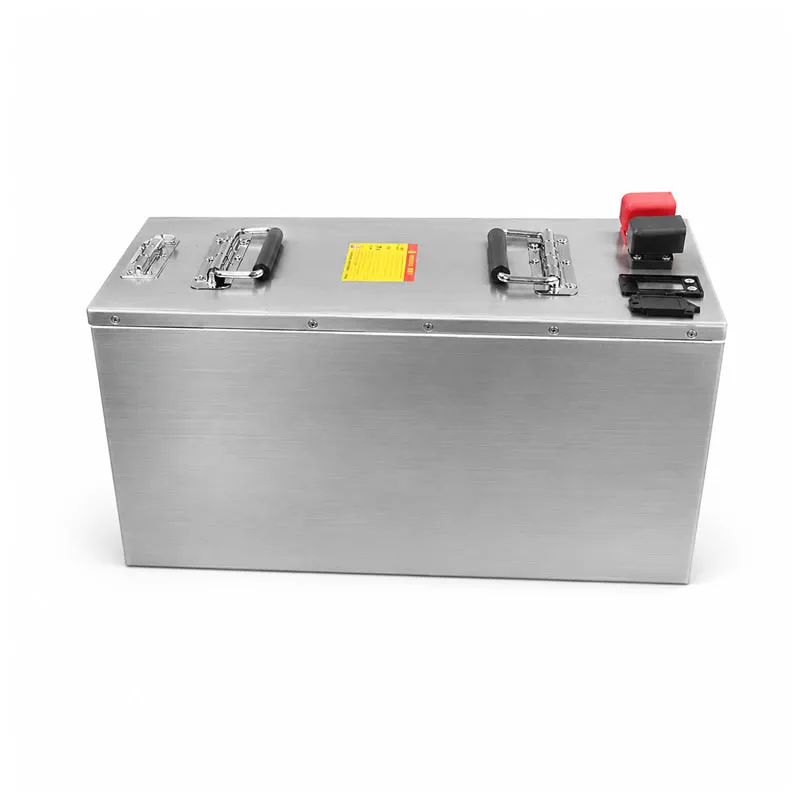
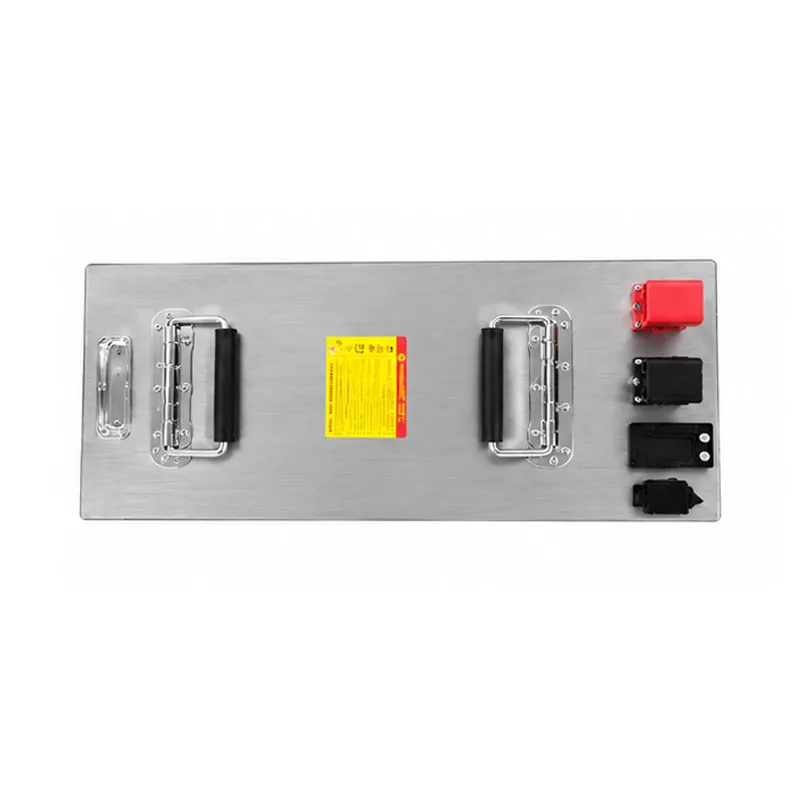
Choosing the right lithium battery for electric motorcycle projects starts with the vehicle platform and real operating duty cycle—not simply voltage or Ah capacity. For OEMs, fleet operators, and vehicle assemblers, the battery must match route distance, payload, gradients, motor and controller demand, continuous and peak current, installation space, operating temperature, BMS communication, and required cycle life.
A well-specified pack should deliver enough usable energy without unnecessary weight, while maintaining stable current output and reliable protection under daily operation. Chemistry, enclosure design, thermal behavior, BMS settings, and mechanical integration should therefore be evaluated together before volume procurement.
If you need the broader framework before comparing individual battery options, see our complete electric motorcycle battery guide covering voltage, chemistry, BMS, lifecycle, charging, and OEM sourcing.

What Must a Lithium Battery for Electric Motorcycle Fleets Match?
An electric motorcycle battery fleets must match the vehicle platform, daily route, payload, gradients, motor power, controller limits, available battery space, charging windows, and expected operating life. Fleet buyers should define these conditions before comparing voltage, Ah capacity, chemistry, or price.
For delivery and commercial fleets, battery sizing should be based on the hardest repeatable route rather than an unloaded laboratory range figure. A pack that performs well on flat roads may still suffer voltage sag, BMS shutdown, or accelerated aging under payload and hill-climbing conditions for E-Motorcycles.
The motor, controller, battery, wiring, display, and communication must also work together. A pack with sufficient energy can still create downtime if the controller demands more current than the BMS permits or regenerative braking pushes pack voltage beyond its limit.
How Does a Lithium Battery Work with the Motorcycle System?
During discharge, lithium ions move internally between the battery electrodes while electrons flow through the external circuit. The motor controller draws current from the pack and regulates torque and speed according to throttle input, vehicle settings, and protection limits.
During charging, the charger applies a controlled voltage and current profile. The BMS monitors cell voltages, pack current, and temperature. Depending on the system, it may communicate allowable charge limits, balance cells, open protective switches, log faults, and estimate state of charge.
The lithium battery, charger, controller, motor, display, and wiring must function as one system. A more powerful motor may require higher continuous and peak current, heavier cable, stronger connectors, better heat dissipation, and different BMS settings.
Regenerative braking is another compatibility point. Returned energy can raise pack voltage, so the lithium battery and BMS must accept the current without exceeding voltage or temperature limits.
Main Types of Electric Motorcycle Batteries

Lead-acid batteries
Lead-acid batteries are the oldest mainstream rechargeable battery type. They are inexpensive and can deliver high surge current, but they are also heavy for modern E-Motorcycles.
In general, lithium-based systems are favored in newer mobility applications because they deliver better energy density and longer service life, while lead-acid remains a low-cost legacy solution. It usually means more weight, less range, and slower charging.
Lithium-ion batteries
Lithium-ion batteries are the dominant choice for modern electric vehicycles because they offer high energy density with better mobility performance than lead-acid. What’s more, it has a practical balance between range and weight. Their lifespan is usually described in charge-discharge cycles, and that lifespan is sensitive to charging behavior, temperature, and storage state.
LiFePO4 batteries
Lithium iron phosphate batteries, often called LiFePO4 or LFP, are a lithium-ion subtype known for thermal stability, long cycle life, and lower cobalt dependence. Public technical literature and industry reporting consistently describe it as a chemistry with strong safety characteristics and long cycle-life potential, though it generally gives up some energy density compared with nickel-based lithium-ion chemistries such as NMC. That trade-off is exactly why the best lithium battery for electric motorcycles depends on the use case: delivery fleets, commuter platforms, and OEM replacement programs often value stability and lifespan more than maximum energy density.
How Should Buyers Compare LiFePO4 and NMC?
The best chemistry for a lithium battery for electric motorcycle project depends on operating priorities. NMC can suit projects where high energy density and limited battery space dominate. LiFePO4 can be attractive where fleets prioritize thermal stability, frequent cycling, predictable service life, and long-term operating cost.
Buyers should compare pack-level energy density, continuous and peak current, charge rate, temperature limits, dimensions, mass, cell traceability, BMS strategy, warranty, and validated cycle-test conditions. Chemistry alone does not determine pack quality.
For a lithium battery for electric motorcycle fleet, the practical question is which chemistry fits the route, packaging, utilization rate, climate, and lifecycle target.
| Option | Main Strength | Main Constraint | Typical Fit |
|---|---|---|---|
| Lead-acid | Low upfront price | Heavy and lower usable energy | Entry-level, short-route platforms |
| NMC lithium-ion | High energy density | Requires careful thermal and charge control | Compact, premium, long-range motorcycles |
| LiFePO4 | Thermal stability and long-cycle potential | Larger pack for the same energy | Fleets, delivery, utility, safety-focused projects |
Why Do Fleets Choose a Lithium Battery for Electric Motorcycle Operations?
More usable energy without excessive vehicle mass
For E-Motorcycles, energy density is one of the most important buying criteria. Lithium battery deliver a better energy-to-weight ratio than lead-acid, which directly improves handling, acceleration, and range efficiency. That is one reason lightweight and long range electric motorcycle battery are high-value keywords for overseas buyers.
Longer service life under repeatable duty cycles
Lifecycle is equally important. For fleets running multiple routes per day, replacement frequency and service interruption can matter more than the lowest purchase price. A lithium battery for electric motorcycle fleet should be evaluated by usable cycles under the actual depth of discharge, temperature, charge rate, and utilization pattern.
Faster charging can improve fleet availability
Fast charging is a major commercial advantage, but aggressive charging can increase degradation if thermal and electrochemical limits are not controlled. Research on lithium-ion fast charging shows that higher charge rates can accelerate aging through mechanisms such as lithium plating and heat-related stress.
Smart BMS supports fleet diagnostics
Smart BMS functions add another fleet advantage. Reliable SOC reporting, fault logging, temperature monitoring, and CAN or RS485 communication can help maintenance teams identify repeated shutdowns and separate battery faults from vehicle issues.
What Specifications Should Buyers Confirm Before Ordering?
Before requesting a quotation for a lithium battery for electric motorcycle project, buyers should provide more than nominal voltage and Ah capacity.
The motorcycle voltage platform
Selecting the right lithium battery for an electric motorcycle involves much more than comparing prices or specifications on a datasheet. The battery directly affects vehicle performance, range, safety, reliability, and long-term operating costs. Whether you are an OEM manufacturer, vehicle assembler, distributor, or fleet operator, evaluating the following factors can help ensure the battery aligns with your project requirements and market expectations.
Capacity
Capacity, usually measured in amp-hours, affects range. A higher Ah value can extend riding distance, but it also increases size, weight, and cost. For commuting scooters, a moderate pack may be enough. For delivery fleets or premium road models, larger capacity may be justified because downtime is more expensive than battery cost. That is exactly why high capacity battery for delivery riders are strong buyer-intent phrases.
Thermal Behavior & Storage Conditions
Battery performance and lifespan are influenced by temperature. Lithium-ion batteries age faster under heat stress, and cold temperatures can also reduce practical performance. Good product design should therefore include thermal margins, enclosure design, and pack-level protection that fits the target market climate.
BMS and Pack Protection
A reliable battery partner should provide overcharge, over-discharge, overcurrent, short-circuit, and temperature protections as part of the pack architecture. For export projects, this is especially important because a custom electric motorcycle battery pack is only commercially viable when it also satisfies safety and consistency requirements.
OEM and Customization Support
For branded projects, the battery should be designed around the vehicle platform, not the other way around. Buyers should evaluate whether the supplier can customize dimensions, connectors, voltage, capacity, casing, BMS parameters, and labeling. That is the real commercial value behind searches like OEM electric motorcycle battery, private label electric motorcycle battery, and custom lithium battery pack for electric vehicycle.
How Do You Match Voltage Correctly?
Start with the controller’s full input-voltage range, not only the vehicle’s marketed voltage. Confirm:
- Nominal battery voltage
- Maximum charging voltage
- Recommended discharge cutoff
- Controller maximum voltage
- Controller low-voltage cutoff
- Charger output voltage and profile
- Regenerative-braking voltage limit
- Display and communication requirements
A 60V vehicle label does not identify one universal lithium battery architecture. A pack using one chemistry may have a different full-charge voltage from a pack using another chemistry. Connecting the wrong pack can trigger controller protection or damage electrical components.
The same rule applies to 48V and 72V projects. FEBATT’s electric motorcycle battery range includes multiple voltage and capacity options, but every battery must be confirmed against the final vehicle specification.
For additional voltage-platform guidance, review the 72V E-Motorcycle Battery Guide.
How Do You Calculate the Required Battery Capacity?
Capacity in amp-hours is useful, but energy in watt-hours gives a clearer basis for comparison.
Nominal energy (Wh) = nominal voltage (V) x capacity (Ah)
Range planning should use measured vehicle energy consumption:
Required route energy = route distance x expected consumption per kilometer
Then add reserve for payload, hills, wind, temperature, accessories, route variation, and aging.
For example, assume a delivery motorcycle consumes 45Wh/km on a loaded route and must travel 80km between charging opportunities. The route requires about 3,600Wh. Adding a 20% operating reserve produces a planning target of about 4,320Wh. At a verified 72V nominal voltage, this corresponds to approximately 60Ah.
This is a sizing illustration, not a range promise. A lithium battery for electric motorcycle fleet should be validated on the actual vehicle with representative cargo, speed, gradients, tire pressure, climate, and route conditions.
Oversizing is not always better. A larger lithium battery for electric motorcycle application increases mass, volume, purchase cost, and charging time. Target enough usable energy and reserve without carrying unnecessary capacity.
Why Do Continuous and Peak Current Matter?
Energy determines runtime; current capability determines whether the vehicle can meet power demand. A lithium battery for electric motorcycle fleet must satisfy both.
Continuous current supports sustained riding, while peak current supports launch, loaded acceleration, steep gradients, and temporary overloads. A pack can have enough Wh for the route and still shut down if its BMS, cells, busbars, connectors, or cables cannot support the required current.
Buyers should request:
- Continuous discharge current
- Peak current and permitted duration
- Continuous charging current
- Peak regenerative current
- Current limits at high and low temperature
- Cable, connector, fuse, and contactor ratings
For a lithium battery for electric motorcycle fleet, repeatable power under the actual enclosure temperature matters more than an isolated peak-current claim measured under ideal conditions. Lithium battery for electric motorcycle current validation should therefore use representative load and temperature.
What Should the BMS in a Lithium Battery for Electric Motorcycle Fleets Manage?
The BMS is the protection and control layer of a lithium battery for electric motorcycle system. Core functions may include voltage protection, overcurrent protection, short-circuit protection, temperature protection, cell balancing, SOC estimation, contactor or MOSFET control, sleep and wake logic, event logging, and communication.
For fleet projects, protection alone is not enough. A lithium battery for electric motorcycle fleet may also require accurate SOC reporting, fault traceability, temperature history, diagnostic access, and CAN or RS485 communication.
The BMS is the control and protection layer of the lithium battery. Core functions may include:
- Cell overvoltage and undervoltage protection
- Charge and discharge overcurrent protection
- Short-circuit protection
- High- and low-temperature protection
- Cell balancing under defined conditions
- State-of-charge estimation
- Contactor or MOSFET control
- Sleep and wake management
- Event and fault logging
- CAN, RS485, or UART communication
Not every BMS performs these functions in the same way. BMS thresholds must match the chemistry, controller, charging strategy, and environment. Generic settings can cause nuisance shutdowns, incomplete charging, inaccurate SOC display, or reduced life. OEM projects should control BMS software versions and communication definitions alongside mechanical drawings.
How Should Charging Compatibility Be Verified?
Charging compatibility for a lithium battery for electric motorcycle fleet should be checked against pack voltage, maximum charging current, BMS limits, temperature, connector and polarity, communication, and the available charging window.
Charging time cannot be estimated from Ah divided by current alone. Starting SOC, current taper, balancing, battery temperature, BMS limits, and system losses affect the real charging window.
Fast charging can improve fleet availability, but it should follow validated cell and pack limits. For a lithium battery for electric motorcycle operation, the key question is whether the required charging schedule can be repeated without excessive temperature rise or accelerated degradation.
How Do Temperature and Thermal Design Affect Performance?
High temperature accelerates many battery-aging reactions. Low temperature increases internal resistance and can restrict safe charging. A lithium battery may be allowed to discharge below the minimum charging temperature, but that does not mean it can be charged safely under the same conditions.
The pack specification should list separate charge, discharge, and storage temperature ranges. Depending on the application, thermal design may include conductive heat paths, ventilation, temperature sensors, insulation, heaters, or active cooling.
For motorcycles exposed to rain, dust, sunlight, and vibration, enclosure location matters. Avoid positions where motor heat or trapped air causes sustained high temperature.
Which Mechanical and Environmental Details Must Be Verified?
Electrical compatibility is only half of the project. Review:
- External dimensions and service clearances
- Mounting points and restraint method
- Vehicle center of gravity and axle loading
- Connector access and cable bend radius
- Water and dust protection
- Drainage and condensation control
- Vibration and shock resistance
- Corrosion protection
- Pressure equalization where required
- Emergency isolation and fuse access
A lightweight lithium battery can change vehicle balance, especially when replacing a heavy lead-acid bank. The chassis, suspension, and mounting structure should be reviewed rather than assuming lower weight is always beneficial.
How Should OEM and Fleet Buyers Evaluate a Battery Manufacturer?
Engineering Capability
A qualified supplier should ask for motor power, controller voltage and current, charger, route, payload, battery space, connector, communication, temperature, and certification needs. A quote based only on voltage and amp-hours is not a complete review.
Cell, Material, and Process Control
Request the cell model, incoming inspection, matching criteria, approved components, and change-control procedure. Review welding, insulation, BMS programming, traceability, capacity testing, aging tests, final inspection, and batch consistency.
Customization Support
OEM projects may require custom dimensions, connectors, cables, mounting, enclosure, labels, communication, heating, or current limits. Control these items through approved drawings, electrical specifications, software versions, and sample sign-off.
Certification and Shipping Documents
For international transport, buyers should confirm that the lithium battery type has the required UN 38.3 test documentation and test summary. UN 38.3 addresses transport testing; it is not a substitute for every product, vehicle, or market approval.
Additional standards depend on application and destination. IEC 62619 covers industrial secondary lithium cells and batteries, while road vehicles may require other standards or national regulations. Certificates must apply to the exact model.
How Should Samples Be Validated Before Mass Production?
A lithium battery for electric motorcycle fleet should be validated under the real duty cycle before a volume order is approved. Testing should cover usable energy, continuous and peak current, loaded acceleration, steep gradients, route reserve, charging behavior, temperature, regenerative braking, communication, enclosure performance, vibration, mounting, and target climate.
Use representative vehicles and define acceptance criteria first. Record Wh/km, peak current, minimum pack voltage, maximum temperature, SOC accuracy, fault events, remaining route reserve, and charging time.
For a lithium battery for electric motorcycle OEM program, freeze the cell model, mechanical drawing, BMS software version, connector, cable specification, and key electrical limits after sample approval.
What Mistakes Should Buyers Avoid?
Choosing by Price Alone
A low-priced lithium battery can become expensive if it creates downtime, warranty claims, short range, or repeated replacement.
Choosing by Amp-Hours Alone
Capacity does not confirm voltage compatibility, current capability, BMS quality, or usable energy.
Assuming Every 60V or 72V Pack Is Equivalent
Market voltage labels can hide different full-charge voltages and cell configurations.
Using an Unmatched Charger
The wrong charger can prevent complete charging, trigger protection, or expose cells to unsuitable voltage.
Ignoring Peak Current
A pack can meet the route-energy requirement but shut down during acceleration or hill climbing.
Skipping Loaded Vehicle Testing
Bench data cannot reproduce the full combination of payload, vibration, temperature, controller demand, and regenerative braking.
How Should Fleets Compare Total Cost of Ownership?
The purchase price of a lithium battery for electric motorcycle fleet is only one part of total cost. Include engineering, installation, energy losses, inspection, downtime, spare inventory, warranty handling, service logistics, replacement frequency, and end-of-life management.
For commercial fleets, compare cost per kilometer, route, operating hour, or year rather than battery price alone. A higher initial cost may be justified when a lithium battery for electric motorcycle fleet provides longer service life, fewer failures, predictable route completion, and less maintenance disruption.
TCO comparisons should use the same depth of discharge, temperature, load, and charging assumptions. Cycle-life figures from different test conditions are not directly comparable. A lithium battery for electric motorcycle purchase should therefore be compared on common operating assumptions.
Common Questions on Motorcycle Battery
1.How long does an electric motorcycle lithium battery last?
The motorcycle lithium-ion battery usually lasts 3 to 10 years, or around 500 to 1,500 full charge cycles. This is equal to about 20,000 to 50,000+ miles before the battery drops to 80% of its original capacity and is considered worn out. In real use, lifespan depends on temperature, charging rate, depth of discharge, and how often the pack sits at a high state of charge. It depends more on how you use it than just years.
2.Can I replace lead-acid batteries with lithium batteries?
Yes, lithium battery (typically LiFePO4) can replace lead-acid battery, particularly in RVs, solar energy systems, and golf carts. However, they are rarely a direct “drop-in” replacement. In most cases, you’ll need to upgrade your charging system to maintain proper voltage and ensure the battery’s long-term performance.
3.What is the best way to charge lithium batteries?
The best way to charge a lithium motorcycle battery is with a dedicated lithium smart charger. Never use a regular lead-acid charger on a lithium battery, especially one with a desulfation or repair mode, as the high-voltage spikes will permanently damage the lithium cells.
Conclusion
Choosing a lithium battery for electric motorcycle fleets requires more than comparing voltage, Ah capacity, or purchase price. Buyers should match chemistry, usable energy, continuous and peak current, BMS strategy, thermal behavior, enclosure design, communication, and lifecycle targets to the real duty cycle.
For OEM and commercial projects, a lithium battery for electric motorcycle platform should be tested on representative vehicles before mass production. Proper route validation can reduce range shortfalls, nuisance shutdowns, warranty claims, unnecessary oversizing, and fleet downtime.
If you are planning an OEM or fleet project, provide your vehicle voltage, motor and controller data, route, payload, battery compartment size, operating temperature, communication requirements, and expected annual quantity for a battery specification review.