Electric motorcycle manufacturers and commercial fleet operators need more than a voltage label when selecting a 72V lithium ion battery. Acceleration, sustained road speed, payload, route profile, ambient temperature, installation space, communication requirements, and expected service life all affect whether a battery system is suitable. A well-engineered 72V lithium ion battery can support demanding motorcycles, but only when the cells, battery management system, enclosure, conductors, connectors, charger, controller, and motor are designed as one coordinated powertrain.
This guide explains the engineering and procurement questions that matter when evaluating a 72V lithium ion battery for an electric motorcycle program. It is written for OEM teams, distributors, fleet operators, and technical buyers rather than for casual consumer modification. The discussion covers electrical performance, mechanical integration, thermal management, BMS functions, cycle-life validation, storage, shipping, and customization. It also distinguishes verified design requirements from marketing claims so that buyers can compare suppliers using measurable criteria.
Why Do High-Performance Electric Motorcycles Use 72V Battery Systems?
High-performance electric motorcycles often require more propulsion power than lightweight urban models. They may need rapid acceleration, stable cruising at higher speeds, repeated hill climbing, passenger or cargo capability, and long operating hours. These demands increase the current, heat, and mechanical stress placed on a 72V lithium ion battery. A 72V lithium ion battery provides a useful electrical platform because raising system voltage can reduce the current required to deliver a given power level.
The relationship is P = V x I. In a simplified comparison, delivering 10 kW at 72V requires about 139 A, while delivering the same power at 48V requires about 208 A. Real systems experience voltage variation and conversion losses, but the principle remains valid. Because conductor losses rise approximately with I²R, lower current can reduce heat generation in cables, busbars, connectors, contactors, and other current-carrying components.

How Can a 72V System Support Higher Speed and Torque?
Motorcycle speed and torque are system outcomes. Maximum speed depends on motor back electromotive force, controller capability, available voltage under load, gearing, wheel diameter, aerodynamic drag, and software calibration. Low-speed torque is strongly influenced by motor phase current. A 72V lithium ion battery cannot create torque independently, but it can provide the electrical headroom needed for a controller and motor that are designed for higher power.
During acceleration, a poorly specified 72V lithium ion battery may experience excessive voltage sag. The controller then receives less usable voltage, current limits may be triggered, and performance becomes inconsistent as state of charge falls. A properly matched 72V lithium ion battery should maintain acceptable voltage under the required peak current without exceeding cell, connector, fuse, contactor, or BMS limits. This helps the powertrain deliver repeatable acceleration rather than a strong initial response followed by rapid derating.
Continuous performance is equally important. A motorcycle that produces high peak power for a few seconds may still overheat during a long incline or repeated delivery route. Buyers should request continuous and peak discharge ratings, the duration allowed for peak current, voltage-sag data, temperature limits, and the conditions used for testing. A 72v lithium battery should be assessed together with the motor and controller efficiency maps, not as an isolated component.
How Is a 72V Lithium-Ion Motorcycle Battery Structured?
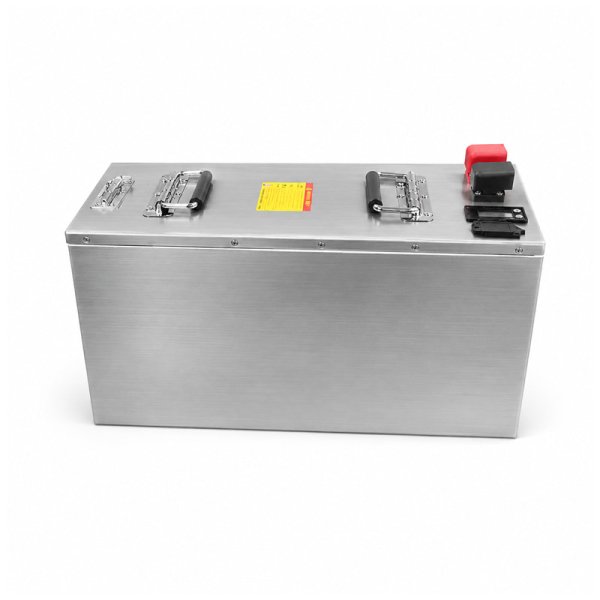
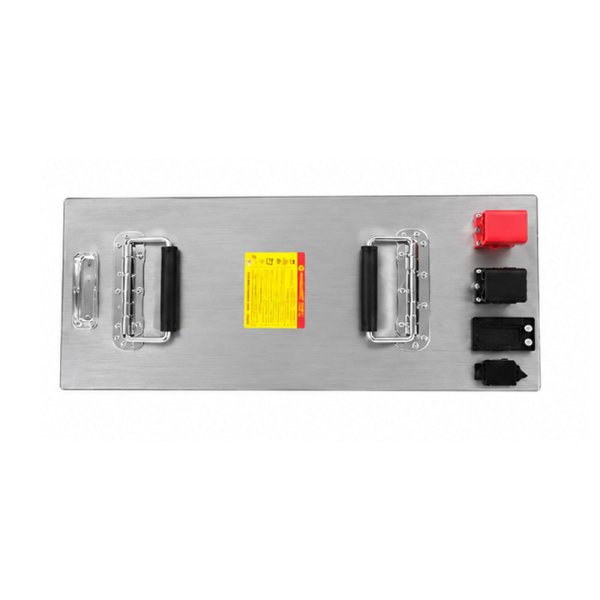
A production-ready 72V lithium ion battery is an integrated assembly rather than a group of cells placed in a box. It includes series and parallel cell groups, busbars, electrical insulation, fusing, current interruption devices, temperature sensors, a BMS, connectors, communication wiring, structural supports, sealing features, and an enclosure. Each part affects safety, manufacturability, serviceability, and long-term reliability.
The series configuration establishes the nominal voltage range, while the parallel configuration determines amp-hour capacity and helps define current capability. The required series count varies with cell chemistry and the voltage limits selected by the vehicle designer. For this reason, two products marketed as a 72V lithium ion battery may have different nominal voltages, full-charge voltages, discharge limits, and charger requirements. Buyers must compare the complete operating-voltage window rather than the label alone.
Mechanical integration is critical on motorcycles because space is limited and vibration can be severe. A 72V lithium ion battery enclosure must support the cell assembly, control movement, protect high-voltage connections, and resist the moisture and contamination expected in the application. Mounting points, center of gravity, service access, connector orientation, cable bend radius, and clearance from heat sources must be reviewed during vehicle design. A high capacity lithium battery may improve range, but extra capacity can also increase mass and package volume, which can affect handling and frame loading.

For a practical product reference, buyers can review FEBATT’s 72V 50Ah battery for electric motorcycles when comparing capacity, application fit, and customization requirements. Final compatibility must be confirmed through drawings, electrical specifications, communication mapping, and vehicle-level testing.
How Should Heat From a High-Capacity Lithium Battery Be Managed?
Every 72V lithium ion battery generates heat during charging and discharging because cells and conductive components have internal resistance. The heat produced depends on current, resistance, state of charge, cell temperature, cell aging, and the efficiency of the complete electrical path. A high capacity lithium battery does not necessarily run hotter simply because it stores more energy; current density and thermal design are more important than capacity alone.
The first objective is to limit heat generation. Suitable cells should be selected for the required continuous and peak currents. Busbars, cables, connectors, fuses, and contactors must have appropriate resistance and temperature ratings. Assembly quality matters because loose or inconsistent joints can create local resistance and hotspots. A 72V lithium ion battery should be tested at the expected vehicle current, not only at a gentle laboratory rate.
The second objective is to move heat away from cells and sensitive components. Depending on the application, a 72V lithium ion battery may use controlled spacing, heat spreaders, thermally conductive materials, enclosure conduction, ventilation, or active cooling. Temperature sensors should be placed where they can detect representative cell temperatures and credible hotspots. A single sensor located far from the warmest area may provide false confidence.
Thermal limits should be linked to BMS actions such as warning, current derating, charging restriction, or system shutdown. For fleets operating in hot climates, validation should include realistic ambient temperature, payload, road speed, stops, hills, and charging intervals. Thermal management is not a decorative feature; it is a core requirement for consistent performance and service life.

Which BMS Features Are Essential for 72V Battery Safety?
The battery management system. supervises the electrical and thermal conditions of the pack. At a minimum, it should monitor cell-group voltage, pack current, and temperature, and it should respond to overcharge, over-discharge, overcurrent, short-circuit, and over-temperature conditions. Low-temperature charging protection may also be required because charging some lithium-ion chemistries at low temperature can increase degradation risk.
Cell balancing helps reduce state-of-charge divergence between series groups. Balance strategy, balance current, activation thresholds, and the operating window should be selected for the cell system and duty cycle. State-of-charge estimation should be validated across temperature, aging, and different current profiles rather than treated as a simple voltage lookup. A 72V lithium ion battery used in commercial service benefits from fault logging and diagnostic data that allow technicians to distinguish a vehicle problem from a battery problem.
For OEM integration, CAN or another agreed communication interface may be needed. The communication specification should define message identifiers, update rates, scaling, fault codes, wake and sleep behavior, charger interaction, and controller responses. Contactor control and pre-charge management are important where the system uses contactors and a controller with substantial input capacitance. The BMS current rating must also match both the continuous load and the defined peak-current duration.
How Should 72V Battery Cycle Life Be Evaluated Under Heavy Loads?
Cycle life is meaningful only when the test conditions are disclosed. An advertised cycle count should state the charge rate, discharge rate, depth of discharge, temperature, rest periods, voltage limits, and end-of-life threshold. Without those details, buyers cannot compare two products fairly. A 72V lithium ion battery tested at moderate temperature and low current may age differently in a delivery motorcycle that experiences repeated acceleration, high ambient heat, and frequent charging.
The most useful approach is to convert the vehicle duty cycle into a 72V lithium ion battery test profile. Record daily energy use, peak and average current, time spent at high state of charge, lowest operating state of charge, route gradients, payload, ambient conditions, and charging schedule. Laboratory cycling can then reproduce the most important stresses. Where possible, cell-level data should be supplemented with pack-level testing because pack temperature variation, BMS limits, interconnect resistance, and mechanical conditions affect real performance.
Depth of discharge and temperature often have a strong influence on service life. Repeated operation near voltage limits can place greater stress on the cells, while sustained high temperature can accelerate side reactions. Fast charging may be appropriate when the cell system and thermal design support it, but the allowable current can change with temperature and state of charge. Lithium plating prevention depends on conservative low-temperature charging logic, suitable cell selection, and validated charging profiles rather than on a universal current rule.
For a commercial fleet, useful economic metrics include energy delivered over life, capacity retention, downtime, failure rate, and replacement cost. A more expensive 72V lithium ion battery may provide better total cost of ownership if it delivers greater usable energy, predictable degradation, and lower maintenance burden. Buyers should request traceable test reports and confirm that the tested configuration matches the proposed production pack.
Why Do Delivery and Courier Fleets Choose 72V Electric Motorcycles?
Delivery motorcycles experience frequent starts, variable payloads, congested traffic, heat exposure, and long daily operating hours. These conditions reward a power system that can deliver repeatable acceleration without excessive voltage sag or thermal derating. A 72V lithium ion battery can be a suitable foundation for this duty cycle when the powertrain is designed to use the higher voltage efficiently.
Range should be evaluated in watt-hours and route energy consumption, not voltage alone. A 72V system does not automatically travel farther than a lower-voltage system. Real range depends on usable battery energy, motor and controller efficiency, speed, payload, gradients, tire pressure, weather, and rider behavior. A high capacity lithium battery can extend operating time, but adding capacity should not compromise vehicle weight distribution, braking performance, or structural limits.
For B2B projects, the strongest business case comes from matching the battery to a measured route profile. Peak speed is less important than reliable completion of daily routes, manageable charging windows, and predictable service life.
How Should a 72V Battery Be Stored During Off-Seasons?
Long-term storage should follow the specific battery manufacturer’s instructions because the preferred state of charge and inspection interval vary by chemistry and BMS design. In general, prolonged storage at full charge or at an extremely low state of charge can accelerate aging or increase the risk of deep discharge. The 72V lithium ion battery should be stored at a moderate state of charge in a cool, dry, ventilated location away from direct sunlight, water, combustible materials, and uncontrolled heat sources.
The pack should be electrically isolated from unnecessary vehicle loads. Some motorcycles continue to draw small currents for telematics, alarms, or control modules even when parked. Over several months, these loads can reduce the battery below its intended storage range. A 72V lithium ion battery with a service disconnect or defined sleep mode should be handled according to the supplier’s procedure.
Fleet records should include battery identification, storage date, state of charge, physical condition, and scheduled inspections. Before returning a pack to service, technicians should check the enclosure, mounting hardware, connectors, cables, and signs of impact, swelling, corrosion, liquid ingress, or unusual odor. Charging should then follow the approved process before the motorcycle is subjected to high load.
How Should B2B Buyers Compare Custom 72V Battery Suppliers?
A custom project should begin with a written requirement specification. The document should define the nominal and operating voltage range, energy and capacity targets, continuous and peak current, peak duration, charging method, expected range, daily operating hours, ambient temperature, ingress exposure, vibration conditions, installation envelope, mounting points, communication protocol, target service life, and applicable compliance requirements.
The supplier should then explain how cell selection, series-parallel architecture, BMS design, thermal path, conductors, connectors, enclosure, and manufacturing controls address those requirements. A 72V lithium ion battery proposal should include a clear specification and controlled drawings rather than only a nominal voltage and amp-hour value. Changes between prototype and production should be documented because seemingly small substitutions can affect resistance, temperature, fit, and durability.
FEBATT can support OEM and ODM discussions for electric motorcycle battery packs, including electrical matching, mechanical customization, BMS communication, and production planning. A 72V lithium ion battery should not move to mass production until sample validation, vehicle integration testing, and acceptance criteria have been completed by the customer and supplier.
FAQ About 72V Lithium Ion Battery
1.Is a 72V battery too powerful for a standard commuter motorcycle?
Not necessarily, but it is unsuitable unless the motorcycle’s controller, motor, charger, DC-DC converter, wiring, connectors, insulation, and protection system are designed for the battery’s full operating-voltage range. Installing a 72V lithium ion battery in a vehicle engineered for a lower voltage can damage components and create safety risks. Compatibility must be confirmed through the vehicle specification and system testing, not by the motorcycle’s commuter or performance label.
2.How heavy is a typical 72V lithium motorcycle battery?
There is no standard weight. The mass of a 72V lithium ion battery depends on watt-hour capacity, cell chemistry, cell format, enclosure material, structural reinforcement, cooling features, protection level, connectors, and BMS hardware. Buyers should compare complete pack weight and usable energy rather than voltage alone. A high capacity lithium battery will usually weigh more than a lower-capacity pack built with the same technology, but design efficiency can vary substantially between suppliers.
3.Can a 72V battery be fast-charged?
It can support faster charging only when the cells, BMS, wiring, connectors, thermal design, and charger have been validated for the intended current. The approved charging rate may change with temperature and state of charge. Charging above the specified limit can increase heat, accelerate degradation, or trigger protection. The charging profile for a 72V lithium ion battery should always follow the pack supplier’s documented limits and the vehicle’s operating strategy.
4.What is the continuous discharge current of a 72V battery?
There is no universal value. Continuous current for a 72V lithium ion battery depends on cell capability, parallel configuration, busbars, cables, connectors, fuses, contactors, BMS limits, thermal design, and the permitted temperature rise. Buyers should request both continuous and peak current ratings, peak duration, test temperature, voltage-sag data, and derating logic. A current figure without these conditions is not sufficient for motor-controller matching.
5.Do 72V lithium-ion batteries require special shipping procedures?
Yes. A 72V lithium ion battery is regulated during transport, and the required UN number, packaging, marks, labels, documentation, state-of-charge controls, and handling procedures depend on whether the battery is shipped alone, packed with equipment, installed in equipment, or transported by air, sea, road, or rail. The battery type should meet applicable UN Manual of Tests and Criteria, Part III, subsection 38.3 requirements, and the shipper must confirm current carrier and destination rules before dispatch.
6.What does the search phrase “72 vlot lithium ion battery” mean?
The phrase “72 vlot lithium ion battery” is a misspelling of “72 volt lithium ion battery.” Technical documents should use 72V or 72 volt. Some buyers also search for “72v lithium battery,” but a professional specification should state nominal voltage, full-charge voltage, minimum operating voltage, chemistry, capacity, current limits, and charger requirements rather than relying on an informal search phrase.
Conclusion
Selecting a 72V lithium ion battery is a system-engineering decision. The motor, controller, charger, wiring, connectors, communication, thermal design, mechanical installation, and duty cycle must be evaluated together. For OEMs and fleets, procurement should focus on usable energy, current capability, temperature behavior, BMS logic, cycle-test conditions, traceability, and verified vehicle compatibility. A 72V lithium ion battery should be selected for repeatable performance and total cost of ownership, not only for the largest capacity or highest advertised current. FEBATT can support customized electrical, mechanical, communication, and production requirements after sample and vehicle-level validation.