The LiFePO4 battery price became a major procurement concern in the first half of 2026 as lithium iron phosphate cathode material moved sharply above its 2025 lows. For manufacturers, distributors, and fleet operators, the key question is how that upstream movement may affect finished packs for electric tricycles, golf carts, forklifts, RVs, electric motorcycles, and other power-driven equipment.
This article extracts the useful market framework from the original Chinese review, checks it against a limited number of 2026 reports, and converts it into B2B purchasing guidance. It also makes an essential distinction: figures quoted in CNY per metric ton normally describe LFP cathode material, not the complete LiFePO4 battery price paid for a cell or pack. A finished quotation also reflects cell grade, voltage, usable capacity, discharge requirements, BMS functions, enclosure, validation, order volume, and delivery terms.
B2B buyers should therefore use upstream data as a market-risk indicator, not as a direct pack-price formula. This keeps LiFePO4 battery price analysis aligned with the buyer’s actual application.
What Does the 2026 Price Data Actually Measure?
The original review described material prices rising from about CNY 51,800 per metric ton at the beginning of 2026 to a mid-May peak of roughly CNY 66,000-67,000, before easing toward CNY 61,000 in June. These are indicative LFP cathode material prices, not a universal LiFePO4 battery price per kWh.
Cell production adds anode material, electrolyte, separator, current collectors, formation, grading, yield loss, and overhead. Pack production adds cell matching, busbars, wiring, fuses, contactors, the BMS, enclosure, connectors, testing, packaging, and logistics. The LFP cell cost 2026 influences a quotation, but it does not move one-for-one with cathode material.
Buyers should also confirm whether a quotation uses nominal or usable energy and whether taxes, freight, engineering, tooling, or certification are included. Otherwise, two similar LiFePO4 battery price offers may describe different scopes. A credible LiFePO4 battery price comparison must use the same technical and commercial boundaries.

How Did LFP Cathode Material Prices Change in the First Half of 2026?
| Phase | Indicative Material Movement | B2B Interpretation |
|---|---|---|
| Jan-Feb | About CNY 51,800 to CNY 54,500/metric ton | Early recovery; refresh older quotations |
| Mar-May | Peak near CNY 66,000-67,000/metric ton | Supply and cost risk became more visible |
| June | About CNY 61,000; reported monthly average CNY 61,113.33 | Partial correction, still above early-2026 level |
Data note: The January-May figures come from the supplied Chinese market review; the June average is from July 2026 reporting citing Longzhong Information.
The first-half trend can be divided into three phases. The original article used this structure, and July reporting broadly supported the view that LFP material had moved into a higher range. One report citing Longzhong Information placed the June monthly average at CNY 61,113.33 per metric ton, compared with CNY 51,209.52 at the beginning of the year. Reported growth rates differ because some compare monthly averages while others compare the January level with the May peak.
Phase 1: Mild Recovery from January to February
Demand improved while several upstream inputs stopped falling. The original review placed the market near CNY 54,500 per metric ton by late February. The rise was gradual, but it warned buyers that quotations based on continuously declining cell costs could become outdated.
Phase 2: Accelerated Increase from March to May
From March through mid-May, sulfur-related phosphate costs, stronger storage demand, manufacturer restocking, and tight qualified high-compaction supply pushed the indicated price toward CNY 66,000-67,000 per metric ton. At this point, the LiFePO4 battery price became a supply-planning issue. Buyers needed to compare cell grade, approval status, lead time, and change-control procedures rather than choose the lowest spot offer.
Phase 3: High-Level Consolidation in June
The market eased from the May peak but remained well above its starting level. The move toward CNY 61,000 represented a partial correction, not a return to the 2025 low-price environment. B2B projects should therefore budget the LiFePO4 battery price as a range and define quotation validity, cell approval, volume schedules, and raw-material adjustment rules before ordering.
Why Did LFP Material Costs Rise So Quickly?
The 2026 increase reflected cost, demand, and supply acting together. This framework from the original article is useful, provided its data are attributed and its outlook is treated as a scenario rather than a certainty.
How Did Sulfur and Phosphate-Chain Costs Affect the Market?
Sulfur became an important upstream variable because it affects sulfuric acid and phosphate-related production. The original review linked tighter imports to Middle Eastern shipping disruption and refinery maintenance. Separate June reporting documented sulfur moving from around CNY 3,850 per metric ton toward CNY 10,000.
Higher sulfur costs do not translate directly into the same percentage increase in the LiFePO4 battery price, but they can raise the processing-cost floor for iron phosphate. Phosphate rock, acids, and ferrous inputs add pressure when they rise together. Buyers should therefore monitor both lithium and non-lithium cathode inputs.

How Did Lithium Carbonate Support the Price Floor?
Lithium carbonate remains a major LFP cost driver. The original review described a strong rebound from the 2025 low, while broader 2026 reporting linked the firmer outlook to storage growth, mine-supply decisions, and capacity discipline. A higher lithium baseline reduces the room for repeated price cuts unless suppliers improve design, yield, scale, or sourcing. Buyers should separate genuine engineering savings from reductions achieved by changing cell grade or specification.
Why Did Demand Remain Strong?
The original review identified energy storage as the main incremental engine and cited a 139% year-on-year increase in first-quarter storage lithium battery shipments. It also reported January-May LFP installations of 208.2 GWh, or 80.4% of domestic power-battery installations. These figures should be attributed to the market review or its underlying provider, not presented as FEBATT’s own data. The same source also reported storage orders extending into the first half of 2027 and delivery cycles exceeding 30 days, which should be treated as source-reported market observations.
Large adjacent markets can tighten suitable cell supply for the RV lithium storage market, golf carts, electric tricycles, forklifts, and electric motorcycles. When large orders absorb qualified output, smaller OEMs may face longer lead times even when their own segment is stable. The LiFePO4 battery price can therefore rise through both raw-material pressure and limited manufacturing capacity. This explains why LiFePO4 battery price pressure can reach niche vehicle programs even when their own demand is stable.

Why Did Structural Supply Shortages Matter?
The market remained divided between broadly available lower-end capacity and tighter qualified high-compaction output. July reporting noted that advanced lines may need 12-18 months for construction, commissioning, and customer validation. Nominal capacity is not the same as stable, approved supply. The source also described leading integrated producers operating at 95%-100%, although utilization varies by producer, product grade, and reporting period.
Heavy-duty LFP cells must deliver consistent resistance, voltage under load, controlled temperature rise, and repeatable cycle performance. Forklifts, electric motorcycles, and commercial tricycles also have different current and durability requirements. The LiFePO4 battery price for an approved industrial pack can therefore remain firm even when cheaper unvalidated capacity exists.
How Does the LFP Cell Cost 2026 Translate Into a Battery-Pack Quotation?
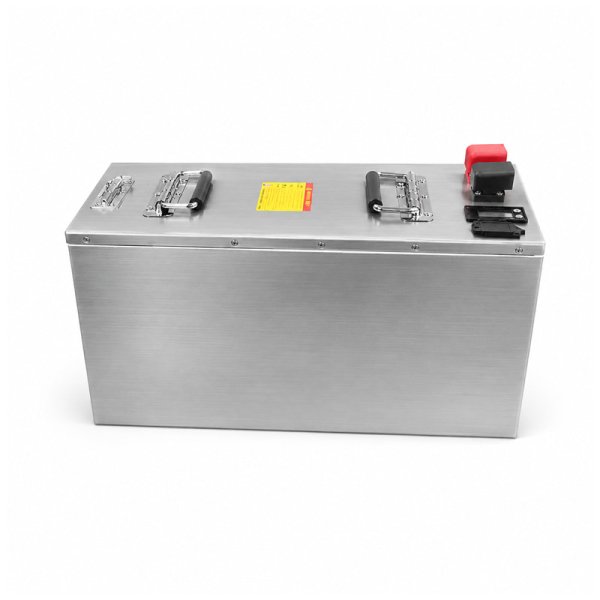
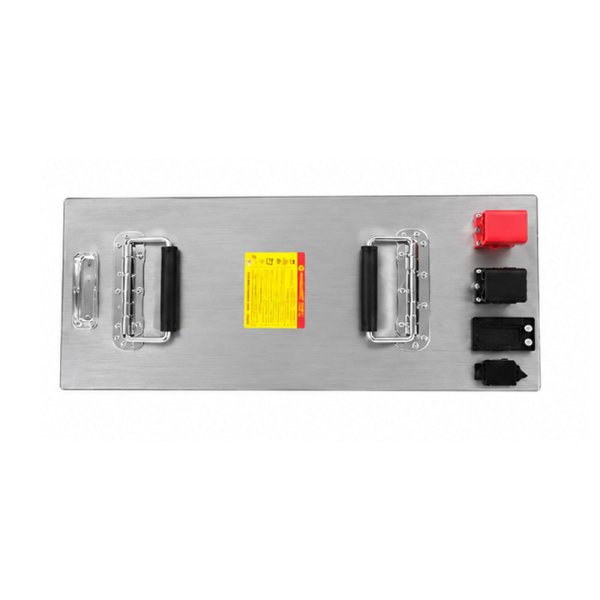
The LFP cell cost 2026 is one of several components in a B2B quotation. The effect varies by application and pack architecture. A simple 12V or 24V RV battery may have a different cost structure from a high-voltage traction pack with contactors, communication, current sensing, thermal controls, and application-specific testing.
The following elements commonly influence the final LiFePO4 battery price:
- Cell specification and approval: cell format, grade, capacity tolerance, internal-resistance consistency, cycle requirements, discharge capability, and supplier approval status.
- Electrical architecture: nominal voltage, usable capacity, series-parallel configuration, continuous current, peak current, and charge acceptance.
- BMS and communication: protection thresholds, balancing strategy, data logging, CAN or RS485 communication, remote diagnostics, and fleet integration.
- Mechanical design:enclosure material, mounting points, vibration requirements, ingress protection, connector selection, and service access.
- Validation and compliance:electrical safety tests, vibration tests, temperature tests, transport documentation, and market-specific certification.
- Commercial conditions: annual volume, batch size, forecast stability, customization, tooling, payment terms, Incoterms, and delivery schedule.
Because these factors differ, a cathode-material increase of a certain percentage does not mean every pack quotation rises by the same percentage. Buyers should ask suppliers to identify the main cost drivers and provide a validity period. This creates a more useful basis for negotiation than attempting to calculate the LiFePO4 battery price directly from a CNY-per-ton chart.
What Does the Market Mean for Electric Tricycles and Electric Motorcycles?
The electric tricycle power cost is sensitive to battery size because the pack can represent a significant share of the vehicle bill of materials. Commercial tricycles also face frequent cycling, vibration, variable payloads, and demanding climates. Reducing cell quality to offset a higher LiFePO4 battery price may create more downtime and warranty risk than it saves.
OEMs can control electric tricycle power cost by standardizing voltage, capacity, connectors, and current requirements. A complete RFQ should state range, payload, motor power, controller limits, charging strategy, temperature, installation space, and expected daily cycles. These inputs prevent unnecessary oversizing.
Electric motorcycles may need higher continuous and peak current, tighter packaging, and communication with the vehicle controller. A low headline LiFePO4 battery price is not useful if voltage drops excessively during acceleration. For available configurations, review FEBATT’s electric motorcycle battery solutions. Buyers should validate samples under the real duty cycle before volume production.
How Is the RV Lithium Storage Market Affected?
The RV lithium storage market is driven by usable energy, inverter current, charge-source compatibility, installation space, and temperature range. Because RV batteries support house loads rather than traction, the same upstream material trend can affect their quotations differently from forklift or motorcycle packs.
When the LiFePO4 battery price rises, RV manufacturers can reduce avoidable customization by using modular 12V or 24V platforms, defined parallel limits, and standardized communication where needed. They should verify usable capacity and inverter current instead of comparing ampere-hours alone.
For voltage and capacity options, review FEBATT’s RV battery range. The link connects the market discussion with relevant products; it does not imply that every pack shares the same price or design.
How Does the Market Affect Golf Cart Programs?
Golf cart and utility fleets value predictable range, daily cycling, reduced maintenance, and availability. The LiFePO4 battery price affects the initial conversion budget, but buyers should also compare usable energy, duty cycle, charge time, weight, installation compatibility, and maintenance.
Standard voltage and capacity ranges can improve purchasing scale. Replacement projects must also verify charger compatibility, tray dimensions, mounting, cable routing, and controller behavior. Review FEBATT’s golf cart battery solutions as a relevant internal reference. A project-specific quotation is still required because the LiFePO4 battery price depends on specification, volume, and validation.
Why Is Forklift Battery Procurement More Sensitive to Cell Quality?
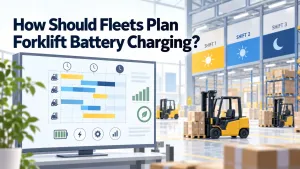
Forklift battery procurement is sensitive because industrial equipment may run multiple shifts, carry heavy loads, and depend on predictable uptime. Packs may need high current, industrial connectors, communication with the truck and charger, robust contactors and fusing, strong enclosures, and detailed fault protection.
This is where heavy-duty LFP cells matter. A cell selected for light-duty storage is not automatically suitable for repeated traction loads. Buyers should review discharge curves, temperature rise, cycle conditions, and consistency at the expected current. A higher-quality cell may raise the initial LiFePO4 battery price, but an unsuitable cell can cause greater losses through downtime or early replacement.
A forklift RFQ should include truck voltage, compartment dimensions, capacity, operating hours, shift pattern, maximum current, charger, connector, weight constraints, and communication requirements. Use FEBATT’s forklift battery solutions as an internal reference.
What Procurement Strategies Should B2B Buyers Use in H2 2026?
First, separate market indices from finished quotations. Track cathode material, lithium carbonate, sulfur, and cell lead times, but do not assume that one index equals the final LiFePO4 battery price.
Second, lock the technical specification before negotiating volume. Current, communication, temperature, enclosure, and certification requirements can materially change the design.
Third, provide a rolling three- to six-month forecast. Stable schedules help suppliers plan cell purchasing, especially when heavy-duty LFP cells are tight.
Fourth, define quotation validity and adjustment rules for major raw-material, exchange-rate, or specification changes. This is more sustainable than demanding an unlimited fixed LiFePO4 battery price.
Fifth, validate samples under real current, temperature, vibration, charging, communication, and installation conditions. Finally, compare total project cost, including tooling, certification, spares, support, packaging, freight, and replacement logistics.
What Is the LiFePO4 Battery Price Outlook for the Second Half of 2026?
The original review argued that LFP material was unlikely to return quickly to its 2025 low and suggested a floor near CNY 55,000 per metric ton. A July industry report gave a broader H2 reference range of approximately CNY 55,000-68,000 for power-grade material, with a premium for qualified high-compaction products. These are expectations, not guarantees.
Upside risks include high sulfur and phosphate-chain costs, firm lithium, strong storage demand, seasonal restocking, and slow qualification of new capacity. Downside risks include weaker demand, faster production ramp-up, lower raw-material prices, or improved yields.
The defensible conclusion is that the LiFePO4 battery price may remain firm and volatile, particularly for demanding packs. Buyers should use range-based budgets, updated quotations, qualified alternatives, and phased orders instead of waiting for one predicted low point.
Relevant Technical FAQ
1.Is the CNY-per-ton figure the price of a complete LiFePO4 battery?
No. The CNY 51,800-67,000 figures refer to indicative LFP cathode material. A finished LiFePO4 battery price also includes cell manufacturing, grading, BMS, enclosure, wiring, protection, testing, certification, packaging, and logistics.
2.Why did the LiFePO4 battery price increase in H1 2026?
The main drivers were firmer lithium carbonate, sharply higher sulfur-related costs, strong storage and power demand, restocking, and limited qualified high-compaction capacity. The contribution of each factor cannot be expressed as a fixed percentage without a documented model.
3.Will the LiFePO4 battery price return to the 2025 low in H2 2026?
It could, but available July reporting did not treat that as the base case. The cited H2 range for power-grade material was CNY 55,000-68,000 per metric ton. Treat it as a scenario, not a guaranteed floor.
4.How should an OEM control electric tricycle power cost?
Define range, payload, motor power, current limits, cycles, temperature, charging, and installation space before quoting. Standard platforms, realistic forecasts, and sample validation reduce waste without lowering cell quality.
5.What should buyers monitor in the RV lithium storage market?
Monitor cell availability and upstream costs, but also usable energy, inverter current, charging compatibility, parallel limits, enclosure design, and temperature requirements. These choices can materially affect the quotation.
6.Why is forklift battery procurement different from buying a general-purpose pack?
Forklifts require traction performance, long operating hours, industrial connectors, communication, mechanical fit, and uptime. Heavy-duty LFP cells should be validated at the expected current and temperature.
7.What information is needed for an accurate B2B quotation?
Provide application, voltage, usable capacity, continuous and peak current, charge method, communication, dimensions, weight limits, IP target, temperature, certification market, annual volume, destination, and schedule.
8.What is the best way to track the LFP cell cost 2026?
Track lithium carbonate, sulfur and phosphate-chain prices, cathode material by grade, qualified cell lead times, supplier utilization, and capacity changes. Confirm the impact through updated quotations because indices do not capture every specification.
Conclusion
The first half of 2026 changed the purchasing environment for LFP power systems. Cathode material rose from roughly CNY 51,800 per metric ton to a May peak near CNY 66,000-67,000 before consolidating around CNY 61,000 in June. Higher sulfur and lithium costs, strong demand, restocking, and limited qualified supply contributed to the movement.
For FEBATT’s B2B markets, the key lesson is not that every pack must rise by the same percentage. The LiFePO4 battery price must be evaluated through both market conditions and application engineering. Electric tricycle power cost, the RV lithium storage market, golf cart budgets, electric motorcycle performance, and forklift battery procurement respond differently to cell grade, pack architecture, current requirements, validation, and volume.
Buyers that define specifications early, forecast realistically, validate samples, monitor several upstream indicators, and compare lifetime project cost will be better prepared to manage the LFP cell cost 2026. The LiFePO4 battery price outlook should therefore be reviewed together with the project specification. A technically correct and transparent quotation is more valuable than the lowest unsupported number.