A 60V lithium ion battery is a practical platform for many mid-power electric motorcycles, delivery vehicles, and commercial mobility projects because it can provide useful power without forcing every vehicle into a heavier, more complex high-voltage architecture. For B2B buyers, however, “60V” is not a complete specification. Chemistry, actual nominal voltage, usable energy, controller current, BMS limits, charger profile, enclosure, and duty cycle all matter.
A well-engineered 60V lithium ion battery can support daily stop-and-go operation, moderate payloads, frequent acceleration, and route variability when the complete powertrain is matched correctly. That does not mean 60V is automatically the best choice for every vehicle. Lower- or higher-voltage platforms may be more appropriate when power, packaging, range, or cost requirements change.
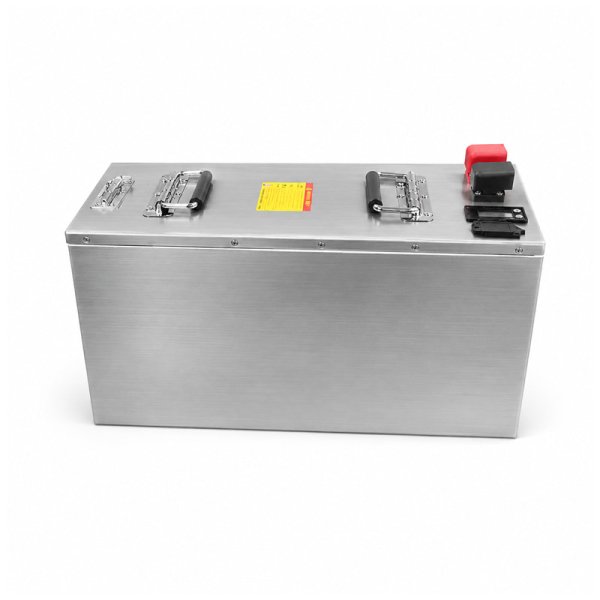
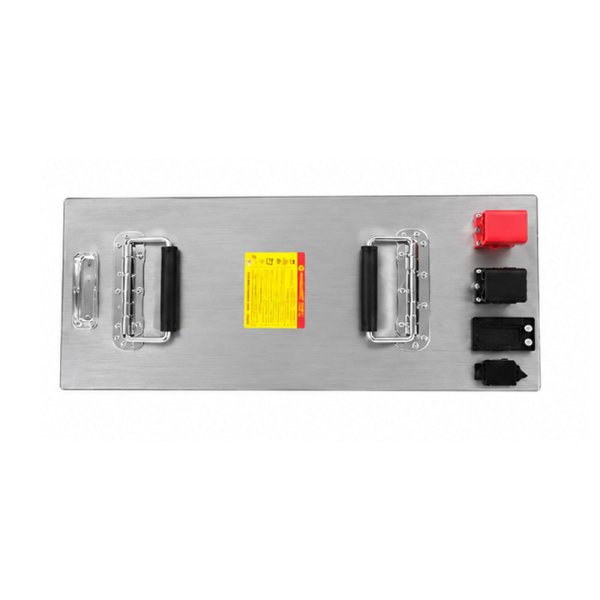
For buyers comparing commercial solutions, FEBATT’s 60V 80Ah power lithium battery can be reviewed as one example of a higher-capacity 60V-class product for electric mobility. The purchasing question is not simply whether a battery is labeled 60V; it is whether the battery, controller, motor, charger, connectors, mounting system, and operating environment have been engineered as one system.
This guide explains how to evaluate a 60V lithium ion battery from a B2B engineering and total-cost perspective. It focuses on electric motorcycles, electric tricycles, delivery fleets, and other powered commercial vehicles.
Why Is a 60V Lithium Ion Battery Platform Practical for Mid-Power Electric Motorcycles?
The appeal of a 60V lithium ion battery comes from its position between lower-voltage urban mobility systems and higher-voltage performance platforms. For many commercial motorcycles, the system can provide useful electrical headroom while keeping current, cable size, controller design, packaging, and service requirements manageable.
Electrical power is approximately:
Power (W) = Voltage (V) × Current (A)
For the same electrical power, a higher operating voltage can reduce the current required. Lower current can reduce resistive losses in cables, connectors, and switching devices when those components are properly sized. This is one reason a 60 volt lithium ion battery can be attractive when an OEM wants more power without pushing current excessively high.
The benefit is not voltage alone. A 60V lithium ion battery must still be matched to controller current limits, motor characteristics, gearing, tire diameter, payload, gradeability target, and thermal limits. A pack that is undersized for repeated hill starts may run hot even if its nominal voltage looks suitable.
For commercial fleets, a 60v battery for electric motorcycle project is often selected to balance packaging, power, route range, and replacement cost. Buyers should confirm that balance with current limits and validation data rather than voltage labels alone.

How Should Buyers Balance Torque, Speed, Current, and Vehicle Weight?
A 60V lithium ion battery can help a powertrain deliver higher system power or reduce current for a given power level, but it does not directly guarantee stronger torque or higher speed. Motor torque depends heavily on phase current, motor design, controller strategy, gearing, wheel diameter, and thermal capability. Top speed also depends on motor rpm, gearing, tire size, controller limits, aerodynamic drag, and load.
For example, a controller limited to 40A can theoretically draw about 2.4kW from a 60V bus before losses. Acceleration may demand higher peak current, so the battery needs both a continuous discharge rating and a peak-current rating with a defined duration.
Weight also matters. A larger pack may increase available energy but reduce payload and affect handling. A smaller pack may improve packaging but operate at a higher depth of discharge every day. B2B selection is therefore a trade-off between energy reserve, current capability, mass, size, and expected service life.
When comparing a 60v lithium battery pack for delivery use, ask for net weight, dimensions, mounting points, and continuous and peak discharge limits. These details are more useful than a generic statement that one voltage platform “improves torque.”
What Nominal, Full-Charge, and Cutoff Voltages Should Buyers Verify?
A 60V lithium ion battery does not have one universal full-charge or cutoff voltage. “60V” is often a system-class or market designation. Actual limits depend on chemistry, cell series count, cell manufacturer limits, and BMS settings.
For LiFePO4, 19 cells in series are one possible 60V-class architecture. Using about 3.2V nominal per cell gives approximately 60.8V nominal; charging to 3.65V per cell gives about 69.35V at pack level. Other series counts produce different values.
For NMC, a 16-series architecture may be around 57.6–59.2V nominal depending on cell specification, with 67.2V at 4.2V per cell. A 17-series design may be around 61.2–62.9V nominal and can reach 71.4V at 4.2V per cell. These examples show why buyers must not select a charger or controller from the “60V” label alone.
Before approving a 60V lithium ion battery, verify:
- chemistry and cell model;
- series and parallel configuration;
- nominal and maximum charge voltage;
- BMS charge and discharge cutoff logic;
- controller maximum input voltage;
- charger output voltage and current;
- connector polarity and pin assignment.
Low-voltage cutoff should come from the battery and vehicle design, not a universal internet value. Cell limits, load sag, BMS thresholds, controller cutoff, reserve strategy, and cycle-life targets all influence the setting.
How Should OEMs Estimate Energy and Route Range?
A 60V lithium ion battery should be evaluated by usable energy, not amp-hours alone:
Nominal energy (Wh) = nominal pack voltage (V) × rated capacity (Ah)
If a pack is truly rated at 60V nominal and 55Ah, nominal energy is about 3,300Wh, or 3.3kWh. If actual nominal voltage differs, use the datasheet value rather than the market-class label.
Estimated range can then be modeled as:
Estimated range (km) = usable battery energy (Wh) ÷ measured vehicle consumption (Wh/km)
If a commercial motorcycle consumes 45Wh/km on a representative loaded route and the usable energy budget is 3,000Wh after reserve, the planning estimate is about 67km. It is not a guaranteed range. Consumption changes with payload, speed, hill grade, stop frequency, tire pressure, temperature, wind, and controller tuning.
A 60V lithium ion battery for a delivery fleet should be validated on the intended vehicle. Measure Wh/km on representative routes, include reserve for route variation and aging, and repeat testing at relevant temperatures and payloads. For longer routes, a higher-capacity 60v lithium battery pack can extend the energy budget if the chassis, controller, charger, and mounting system support the larger pack.

How Should LiFePO4 and NMC Be Compared in a 60V Platform?
A 60V lithium ion battery may use LiFePO4 or NMC chemistry, and neither is universally superior.
| Evaluation factor | LiFePO4 | NMC |
|---|---|---|
| Energy density | Generally lower | Generally higher |
| Cycle-life potential | Generally higher under suitable conditions | Application- and cell-dependent |
| Thermal stability | Generally stronger | More dependent on formulation and pack design |
| Pack mass for equal energy | Usually higher | Usually lower |
| Typical design priority | Durability and lifecycle value | Compactness and energy density |
A LiFePO4-based 60V lithium ion battery can suit fleets that prioritize repeated daily cycling, thermal robustness, and lifecycle planning. NMC can suit vehicles with strict space or mass limits.
Complete-pack safety is not determined by chemistry alone. Cell quality, manufacturing consistency, BMS protection, fuse coordination, connector design, enclosure, thermal path, charging control, and validation all matter. Buyers should ask for the actual cell specification and pack-level evidence relevant to the intended vehicle.
How Do Continuous High-Current Discharge and Thermal Design Affect Reliability?
A 60V lithium ion battery produces heat whenever current flows through cell and pack resistance. Resistive heating is proportional to I²R, so increasing current can raise heat generation rapidly if resistance is unchanged.
Delivery motorcycles can stress a battery through hill starts, acceleration, payload, high ambient temperature, and limited cooling airflow. A pack that works for a short bench test may still age quickly if it spends hours near its thermal or current limits.
A commercial pack should use temperature sensing at representative locations. The BMS should have defined responses to abnormal conditions, such as current reduction, charge inhibition, discharge cutoff, fault logging, or controlled recovery. Cable joints, busbars, fuses, connectors, and contactors also need evaluation because local resistance can create hot spots.
When comparing suppliers, ask for continuous-current capability at defined temperatures, peak-current duration, thermal test conditions, and BMS overtemperature behavior. For a 60 volt lithium ion battery used in a fleet, this evidence is more meaningful than a single maximum-current number.
What Charger Output Should Be Specified?
The charger for a 60V lithium ion battery must match the actual chemistry and series configuration. A generic “60V charger” is not enough. Maximum charger voltage must match the approved pack charge voltage, and current must remain within the battery’s recommended limit.
Charging time can be approximated as:
Charging time (h) ≈ capacity (Ah) ÷ charger current (A)
For a 55Ah battery charged at 10A, the ideal calculation is 5.5 hours. Actual charging usually takes longer because of charger efficiency, current taper, balancing, and temperature.
A higher-current charger is appropriate only when the cells, BMS, connectors, wiring, and thermal design are validated for it. Before approval, confirm output voltage, charge-current limits, charging temperature range, connector and polarity, protection requirements, and any managed communication interface.
For a custom 60v lithium battery pack, the charger should be treated as part of the battery system specification, not an accessory selected at the end.
How Does a 60V Platform Support Hill-Climbing and Loaded Routes?
A 60V lithium ion battery can support demanding routes by giving the controller enough voltage headroom to deliver required electrical power without relying on extremely high battery current. Hill-climbing performance, however, comes from the complete powertrain.
Important variables include controller battery current, motor phase current, motor torque characteristics, gear ratio, wheel diameter, vehicle mass, cargo load, target grade speed, grade duration, and thermal limits. Battery voltage also falls under load, so the controller must maintain acceptable performance across the expected state-of-charge range.
For a 60v battery for electric motorcycle delivery fleet, the correct validation is a loaded grade test under representative conditions. Record battery current, minimum pack voltage, controller temperature, motor temperature, battery temperature, and fault behavior.
A correctly specified 60V lithium ion battery can contribute to stable route performance when it has adequate current capability and reserve energy, but voltage alone does not guarantee faster acceleration or stronger torque.
What Physical Protection Should a Commercial Battery Case Provide?
The enclosure of a 60V lithium ion battery is part of the safety and durability system. Electric motorcycles and tricycles expose packs to vibration, road shock, dust, water splash, temperature changes, repeated connector use, and mechanical loading.
Depending on the product, commercial cases may use aluminum, steel, engineered polymer, or composite structures. The design should secure cells, protect the BMS and high-current connections, prevent cable abrasion, and maintain safe electrical clearances.
Useful features can include:
- reinforced cell retention where required;
- vibration-resistant mounting points;
- insulated busbars and protected terminals;
- strain relief for external cables;
- controlled venting or pressure management where required;
- sealing designed for the target dust and water exposure;
- serviceable connectors protected against accidental short circuits.
Do not assume an IP rating or vibration standard from appearance alone. For a fleet 60V lithium ion battery, request the actual environmental specification, test method, mounting orientation, connector rating, and inspection requirements.

Which OEM Custom Options Matter Most to B2B Buyers?
OEM customization should begin with the vehicle duty cycle rather than cosmetic options. A 60V lithium ion battery can be customized in meaningful electrical, mechanical, and software areas when the supplier controls pack engineering.
Electrical options may include capacity, continuous and peak current, fuse strategy, connectors, pre-charge behavior, communication, charge limits, and BMS parameters. Mechanical options may include dimensions, brackets, handle design, connector position, cable exit, sealing, and service access.
A 60 volt lithium ion battery may also require CAN communication with the vehicle controller, state-of-charge reporting, fault codes, temperature data, or usage records. These functions should be defined in an interface document before tooling or production approval.
For a 60v battery for electric motorcycle OEM program, a useful sequence is:
- define voltage, power, current, route, payload, and environment;
- confirm chemistry and energy target;
- review dimensions and mounting;
- agree on BMS protections and communication;
- approve charger and connector interfaces;
- build and validate prototypes;
- complete vehicle-level testing before production release.
FEBATT’s 60V-class product portfolio can serve as a starting point, but final selection should be based on real platform requirements rather than nominal voltage alone.
What Should B2B Buyers Request Before Approving a Supplier?
A 60V lithium ion battery purchase should be supported by evidence that the supplier can control design, production, validation, and after-sales handling. Before approval, request a technical package appropriate for the project.
Review:
- battery datasheet with actual nominal and maximum voltages;
- cell chemistry and specification;
- continuous and peak current limits with duration;
- charger requirements;
- BMS thresholds and communication details;
- dimensions, weight, mounting, connectors, and cables;
- environmental and vibration requirements;
- production traceability;
- relevant transport and compliance documents for the target market;
- warranty scope and fault-analysis process.
A technically transparent 60V lithium ion battery is easier to integrate, validate, service, and scale. The final 60V lithium ion battery specification should be frozen only after electrical, mechanical, charging, and vehicle-level validation. This reduces the risk of controller faults, charger mismatches, thermal problems, or late redesign.
FAQ About 60v Lithium Ion Battery
1.What is the full-charge voltage of a 60V lithium ion battery?
There is no universal full-charge voltage for every 60V lithium ion battery. It depends on chemistry and series count. As examples, 19S LiFePO4 is about 60.8V nominal and about 69.35V at 3.65V per cell, while 16S NMC can charge to 67.2V and 17S NMC can charge to 71.4V at 4.2V per cell. Always use the exact maximum charge voltage on the battery datasheet and approved charger specification.
2.How fast will a motorcycle with a 60V battery go?
A 60V lithium ion battery does not determine top speed by itself. Speed depends on motor winding and maximum rpm, controller limits, gearing, wheel diameter, load, aerodynamics, and available power. Use the vehicle manufacturer’s validated speed data rather than assuming speed from battery voltage.
3.How long does it take to charge a 60V 55Ah lithium battery?
For a 55Ah pack, a 10A charger gives an ideal calculation of about 5.5 hours before charger efficiency, current taper, balancing, and temperature control are considered. Actual time may be longer. Charger current must be approved for the cells, BMS, connectors, and thermal design.
4.What does a 60V lithium battery weigh?
There is no reliable universal weight. It depends on capacity, chemistry, cell format, enclosure, BMS, connectors, and mechanical protection. A 60V lithium ion battery for a lightweight motorcycle can be very different from a high-capacity commercial pack. Request verified net and gross weight from the exact datasheet.
5.Can five 12V lead-acid batteries be replaced directly with a 60V lithium battery?
Not automatically. Five nominal 12V lead-acid batteries create a 60V-class system, but a lithium replacement may have different nominal voltage, full-charge voltage, discharge curve, charger requirements, current capability, and protection behavior. Verify controller limits, charger compatibility, peak current, connectors, polarity, mounting, and BMS functions. A 60v lithium battery pack should be treated as a system integration change unless the manufacturer specifically validates it as a drop-in replacement.
Conclusion
A 60V lithium ion battery can be a strong fit for electric motorcycles, electric tricycles, delivery fleets, and other mid-power commercial vehicles when the entire system is engineered around the real battery specification. The useful advantage of the 60V class is not a guaranteed speed or torque increase; it is the ability to balance voltage, current, packaging, energy reserve, and component sizing.
B2B buyers should verify chemistry, series count, voltage limits, continuous and peak current, charger compatibility, BMS logic, thermal behavior, enclosure protection, mounting, and route energy demand before approval. They should also validate the battery on the intended vehicle under representative load and environmental conditions.
For OEM projects, select a supplier that can support electrical integration, mechanical design, BMS communication, prototype testing, production traceability, and fault analysis. A correctly matched 60v battery for electric motorcycle fleet can then deliver the predictable performance and lifecycle value commercial operations require.