For robot manufacturers and fleet operators, battery standardization can simplify procurement—but only when every machine operates reliably. A 48V 60Ah robot battery may suit several mobile platforms, from indoor delivery robots to selected warehouse transport units. Yet buying identical-looking packs without checking duty cycles, interfaces and service procedures can create expensive downtime.
Treat the 48V 60Ah robot battery as a fleet component, not merely a capacity rating. The objective is fewer variants without compromising lithium iron phosphate (LiFePO4) performance.
Which Robot Fleets Could Share a Common Battery Platform?
A 48V 60Ah robot battery is worth evaluating when an OEM operates several robots with broadly similar energy demands. Examples include hotel delivery robots, restaurant service robots and certain industrial mobile robots. Warehouse AGVs and AMRs must be assessed separately: lifting loads, repeated acceleration and prolonged operation can change their electrical requirements substantially.
Group models by duty profile:
| Fleet application | Operating concern | Standardization decision |
|---|---|---|
| Hotel delivery robots | Route length and passenger-area safety | Compare shift energy and approved safety limits |
| Restaurant service robots | Frequent short trips and stop-start movement | Verify peak loads and operating hours |
| Warehouse transport robots | Payload variation and intensive dispatch | Validate power demand under loaded cycles |
| Mixed-model fleets | Spare-part proliferation | Standardize only after interface testing |
A common battery platform is worthwhile only when it passes the most demanding approved duty cycle.
Why Choose LiFePO4 for Repeat Fleet Operations?

LiFePO4 is often a practical choice for commercial robotics because its thermal stability and cycle-life potential suit repeated daily use. A well-engineered lithium system pairs BMS protection with monitoring and documented servicing. No chemistry eliminates battery hazards; system validation is essential.
For OEMs, the business case for a 48V 60Ah robot battery is less about a headline cycle-life claim and more about reducing replacement interruptions, controlling spare inventory and maintaining traceable specifications between production batches. If the 48V 60Ah robot battery chemistry is under review, the existing comparison of LiFePO4 and NMC for industrial robots explains the wider trade-offs.
How Much Fleet Runtime Can a 48V 60Ah Battery Support?
The nominal calculation is straightforward: 48 V × 60 Ah = 2,880 Wh, or approximately 2.88 kWh. Actual usable energy depends on load, temperature, battery condition and reserve limits.

As an illustration, a robot drawing an average of 240 W would have a theoretical 12-hour result from 2,880 Wh ÷ 240 W. Using an illustrative 80% energy allowance gives about 9.6 hours, before accounting for other application-specific losses. These are illustrative calculations, not tested fleet results.
A 48V 60Ah robot battery should be selected against actual route telemetry and peak-current records rather than a theoretical hours-per-charge target. Request a loaded-duty test using representative payloads, stops and auxiliary equipment.
What Must OEMs Keep Consistent Across Robot Models?
Capacity is only one variable. A 48V 60Ah robot battery must cooperate with the host controller and protection logic.

Electrical and communication acceptance
Check the complete operating-voltage range, continuous current, timed peak current, connector rating and pin assignment. CAN or RS485 availability is not proof of protocol compatibility: message definitions, alarms and state-of-charge reporting must also match. Different LiFePO4 series configurations can have different voltage limits even when marketed within the 48V class.
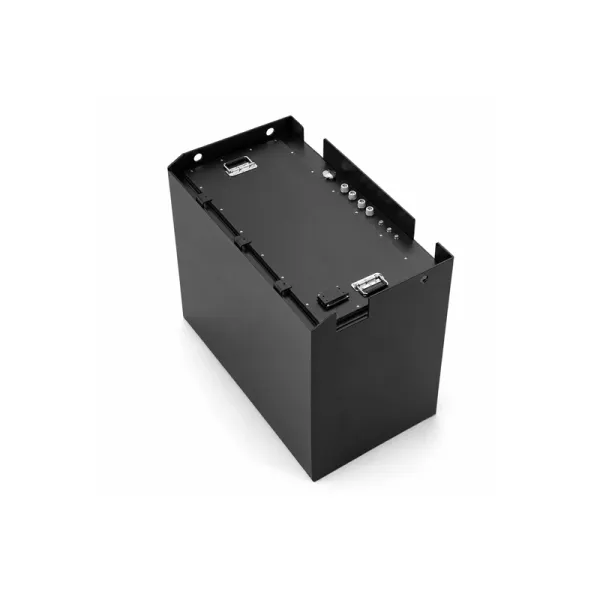
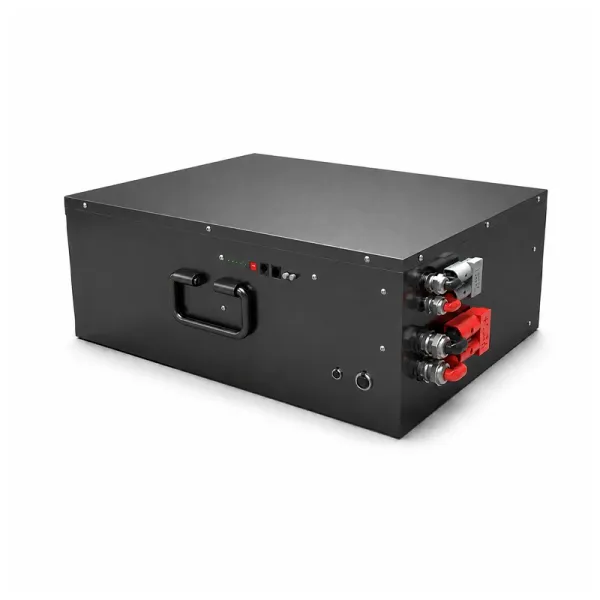
For a practical product reference, the 48V 60Ah C40 LiFePO4 robotics battery lists a 15S3P configuration, 54.75V charging voltage and 40A continuous discharge. Those are specifications for that particular service-robot product, not universal ratings for all 48V 60Ah robot battery designs.
Service and purchasing consistency
For each approved battery configuration, agree on part numbers, connector orientation, firmware, substitutions and acceptance tests. Record whether a changed BMS firmware version requires renewed robot-controller testing. These controls keep a shared 48V 60Ah robot battery from spreading faults across models.
How Should Fleet Buyers Validate the Battery Before Bulk Orders?
A single successful startup is insufficient. Qualify each 48V 60Ah robot battery with representative cycles and documented pass-or-fail criteria.
- Baseline: Record actual route energy, sustained loads, peak currents and fault events for each intended robot.
- Compatibility: Test controller messages, warning thresholds, connectors and installation clearances.
- Duty-cycle trial: Run loaded routes through the expected daily schedule, including realistic temperature exposure.
- Service trial: Confirm replacement steps, diagnostic access and spare-pack identification.
- Production control: Approve the datasheet, inspection criteria, batch traceability and change-notification process.
These gates matter when the 48V 60Ah robot battery serves several production lines. For a 48V 60Ah robot battery, the broader LiFePO4 battery guidance for mobile robots can support engineering discussions, while the purchase decision should rest on model-specific test evidence.
How Can Suppliers Support Standardized Fleet Procurement?
Standardization still permits controlled customization of connectors, enclosures and reporting functions. An OEM battery program may require separate connector variants, but those variants should share controlled documentation and clearly identifiable part numbers.
The custom power battery solutions for commercial fleets provide a starting point for discussing pack engineering and OEM supply. Buyers should request written confirmation of the proposed 48V 60Ah robot battery configuration, sample scope, validation responsibilities and repeat-order controls before committing to volume purchasing.
Frequently Asked Questions About 48V 60Ah Robot Batteries
Q: Can a 48V 60Ah robot battery work in different robot models?
A: Potentially, yes. Each robot must independently pass voltage-range, peak-power, BMS communication, mechanical and duty-cycle checks. Matching nominal ratings alone is insufficient.
Q: How long does a 48V 60Ah robot battery last per shift?
A: Nominal energy is about 2.88 kWh at 48V. Runtime depends on average power draw, usable energy limits, load and operating conditions; test with representative routes rather than relying on a fixed-hour claim.
Q: Is a LiFePO4 robot battery better for commercial fleets?
A: LiFePO4 can offer attractive thermal stability and cycle life for repetitive operations. Evaluate total service cost, operating temperature, protection design and actual testing instead of assuming one chemistry fits every platform.
Q: Can a 48V 60Ah robot battery support CAN or RS485?
A: Some designs support CAN, RS485 or both. The OEM must verify the exact protocol, signals and firmware behaviour—not merely the presence of a connector.
Q: What should OEM buyers request before a bulk battery order?
A: Request the approved datasheet, current limits, communication specification, sample-test report, safety documentation, warranty terms, traceability method and engineering change procedure.
For OEMs planning to standardize a 48V 60Ah robot battery across multiple platforms, FEBATT can discuss application-specific LiFePO4 configurations and engineering requirements. Share your robot models, operating loads, battery compartment dimensions, charging requirements, communication interfaces, and expected order quantities to begin a compatibility and sample-validation assessment.