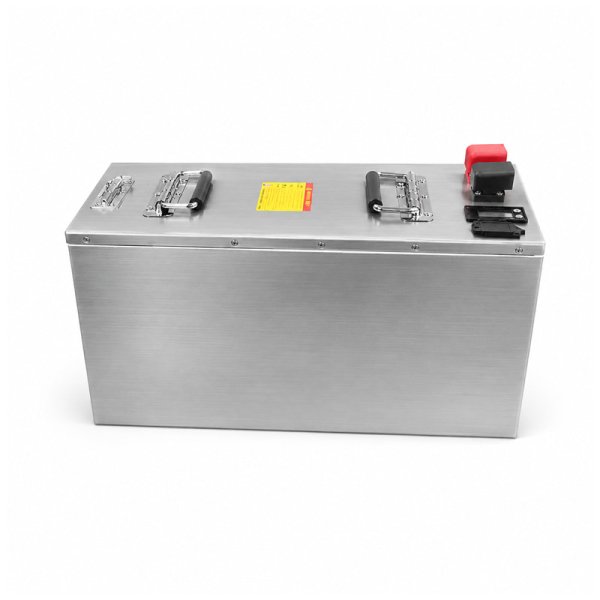
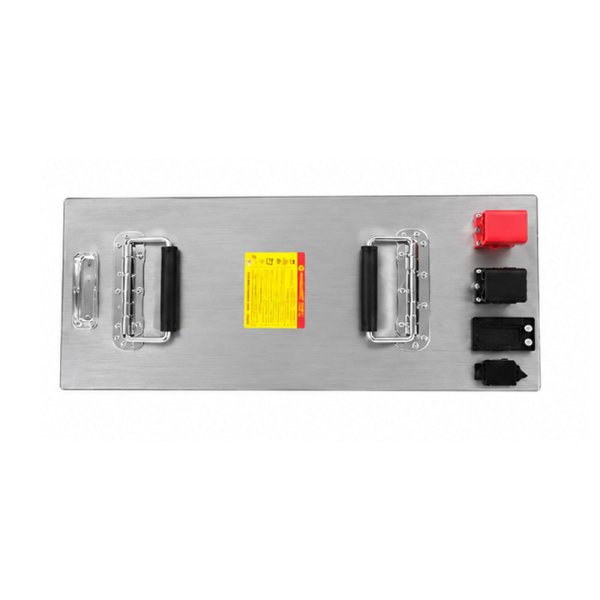
For many commercial vehicle buyers, the attraction of a traction lead acid battery begins with one fact: the purchase price is usually lower than that of a comparable lithium system. That matters when an OEM, distributor, or fleet operator is controlling the upfront cost of electric motorcycles, electric three-wheelers, and other low-voltage power-driven vehicles. But initial price is only the first line in the buying decision.
A battery that is inexpensive on day one can become costly if it adds vehicle weight, reduces practical range, requires frequent service, takes a long time to recharge, or needs replacement more often under intensive use. B2B buyers should therefore compare a traction lead acid battery with a lithium battery through the complete operating cycle: weight, usable energy, maintenance, charging windows, cycle durability, multi-shift availability, and total cost of ownership.
Lead acid can still be practical for low-utilization fleets with predictable routes and long charging windows. A LiFePO4 battery can create more value when uptime, lower mass, deeper usable energy, simpler maintenance, and longer service intervals are important. This guide shows when the operating economics begin to favor lithium and how buyers can make that transition without treating chemistry as a drop-in substitution.
What Is a Traction Lead Acid Battery, and Why Is It Still Used?
A traction lead acid battery is designed for repeated discharge and recharge in propulsion or motive-power applications. Unlike a starter battery, which is optimized for a short high-current burst, a traction design is intended to deliver energy over a longer operating period. Depending on the vehicle architecture, several 12V units may be connected in series to create a higher-voltage pack.
Lead acid remains familiar because its supply chain is mature. Chargers, replacement units, service knowledge, and recycling channels are widely established. Older vehicle platforms may also have battery boxes, wiring, controller settings, and weight distribution designed around a traction lead acid battery. For a low-mileage fleet that already meets its range and charging targets, retaining the existing system can avoid unnecessary conversion work.
Maintenance depends on battery type. Flooded lead acid battery systems may require electrolyte-level checks, watering, cleaning, and corrosion control. Sealed or valve-regulated designs reduce some of that routine work, but they still require correct charging and condition inspection. Buyers should evaluate the actual product rather than apply one maintenance assumption to every lead acid battery.
Why Does Initial Price Still Favor Lead Acid in Some Projects?
The strongest argument for a traction lead acid battery is usually acquisition cost. A vehicle program aimed at a price-sensitive market may prioritize the lowest possible bill of materials, especially when daily mileage is modest and customers already understand lead acid service. In these cases, a higher-cost lithium battery may not recover its price difference within the expected ownership period.
Upfront price becomes less decisive as utilization rises. A commercial fleet also pays for charging time, maintenance labor, downtime, spare battery inventory, declining runtime, and replacement logistics. The same lead acid system can therefore be reasonable in a lightly used vehicle and uneconomical in a high-mileage delivery fleet.
B2B buyers should ask how much the vehicle costs to keep productive per day or per operating hour. FEBATT’s Power Battery Solution can help frame lithium voltage, capacity, BMS, dimensions, current capability, and vehicle integration as a complete system rather than a chemistry-only purchase.
How Does a Traction Lead Acid Battery Compare With a LiFePO4 Battery?
A useful comparison starts with usable energy rather than nominal amp-hours. A traction lead acid battery can deliver less practical energy when discharge current is high, state of charge is low, or deep discharge is avoided to protect service life. Voltage also falls more noticeably under load as the battery discharges, which can reduce acceleration, climbing performance, or usable runtime near the end of a route.
A LiFePO4 battery typically maintains a flatter discharge-voltage profile and can provide a larger usable share of its rated energy when the pack is designed correctly. It also offers lower mass for similar usable energy, no routine electrolyte watering, and BMS-based protection. The BMS should monitor voltage, current, temperature, state of charge, balancing, and fault conditions within validated limits.
The lithium advantage is not automatic. A poorly matched lithium battery can create charger faults, controller incompatibility, insufficient peak current, or mechanical-fit problems. An existing traction lead acid battery may remain the safer commercial decision until the replacement has been validated at system level.
How Do Battery Weight and Usable Energy Affect Range and Payload?
Weight is one of the clearest differences between a traction lead acid battery and a lithium system. In light commercial vehicles, every kilogram of battery mass must be accelerated, carried up gradients, and stopped repeatedly. In stop-and-go routes, unnecessary mass can increase energy demand across the shift.
For an electric two-wheeler battery used in an electric motorcycle or other powered two-wheeler, lower battery mass can improve handling and leave more weight allowance for rider, cargo, frame strength, or usable energy. The practical benefit still depends on motor efficiency, speed, aerodynamics, gradient, payload, tire condition, and temperature, so weight reduction should not be converted into a guaranteed range percentage.
The same logic applies to an electric three-wheeler battery. Cargo and passenger three-wheelers often operate close to practical payload limits. Replacing a heavy lead acid system with a correctly engineered LiFePO4 battery can free mass for cargo or reduce the energy needed to move the vehicle.
A better procurement metric is usable watt-hours at the vehicle level. Compare pack weight, usable energy, expected route energy, and remaining reserve under the same duty cycle rather than nominal Ah alone.
When Does Lead Acid Start to Limit Multi-Shift Operation?
A traction lead acid battery becomes harder to justify when the vehicle must remain available for long daily operating windows. Traditional charging strategies are often built around a long recharge period, and some flooded systems also need service checks. If the vehicle must return to work quickly, charging time becomes an operational constraint.
Lithium systems can support more flexible charging when the cells, BMS, charger, connectors, wiring, and thermal design are validated together. Short sessions during scheduled pauses can recover useful energy without waiting for a full overnight cycle. The allowed charge current must come from the actual battery specification rather than a generic fast-charging claim.
For one short route per day, this advantage may have limited economic value. For two-shift or three-shift operation, however, the difference can change the business case. Once a traction lead acid battery requires extra vehicles or battery swaps simply to cover charging downtime, initial purchase price is no longer the most useful comparison.

Which Battery Fits Commercial Electric Motorcycles and Powered Two-Wheelers?
An electric motorcycle battery has to balance range, weight, peak current, packaging, vibration resistance, sealing, temperature, and charging time. A traction lead acid battery can still serve low-speed or cost-sensitive applications with short daily mileage and generous charging windows, particularly where a mature replacement network is already in place. The electric motorcycle battery should also be checked against the vehicle’s actual controller and charger limits.
The disadvantages become more visible as performance demand rises. Higher battery mass can affect acceleration and handling, while voltage sag can reduce available power later in the discharge cycle. For commercial delivery motorcycles, a lithium battery may provide more consistent performance and a better payload-to-range balance. For a fleet buyer, the electric motorcycle battery is therefore a vehicle-performance component, not just a replaceable box.
A LiFePO4 battery is attractive when the buyer values cycle durability, thermal stability, predictable maintenance, and repeated daily use. It is not automatically the best chemistry for every high-performance motorcycle because packaging and energy-density priorities can vary.
When specifying an electric two-wheeler battery, define the controller voltage range, continuous and peak current, daily energy demand, installation dimensions, connector type, charging profile, environmental exposure, and communication requirements.
Which Battery Fits Commercial Electric Three-Wheelers?
Electric three-wheelers cover duty cycles from last-mile cargo delivery to passenger transport and industrial utility work. A traction lead acid battery may remain adequate when routes are short, speeds are moderate, charging occurs overnight, and keeping vehicle purchase price low is the dominant goal.
High-utilization vehicles create a different calculation. A loaded electric three-wheeler battery may experience repeated deep cycling, gradients, frequent acceleration, and long operating hours. Under these conditions, reduced mass, stable voltage, flexible charging, and lower routine maintenance can have direct commercial value.
A LiFePO4 battery can be well suited to this use when the pack is designed for the required current and environment. Buyers should compare route energy, payload, cycle frequency, charger availability, operating temperature, sealing, vibration, and service support.
How Should B2B Buyers Compare Lifecycle Cost and TCO?
The purchase price of a traction lead acid battery is easy to see; the operating costs around it are easier to miss. A practical TCO model should include battery acquisition, charger cost, electricity, maintenance labor, cleaning or watering where applicable, spare batteries, replacement frequency, downtime, service visits, and end-of-life handling.
For lithium, include the higher initial pack cost, BMS, compatible charger, integration work, and any required changes to mounting or communication. Normalize the comparison to the same vehicle operating period and duty cycle. A useful decision metric is cost per productive operating hour rather than cost per battery.

Cycle-life claims also need context. Neither a lead acid battery nor a LiFePO4 battery has one universal cycle-life number. Results depend on depth of discharge, charge rate, discharge rate, temperature, average state of charge, maintenance, and the end-of-life threshold. Buyers should compare test conditions with expected fleet use.
Once maintenance and downtime are monetized, the business case can change quickly. A traction lead acid battery may remain the lowest-cost option in a lightly used fleet, while a lithium battery can produce a lower lifetime cost when vehicles are heavily cycled and every hour of availability matters.
When Does Switching From Lead Acid to Lithium Make Business Sense?
A fleet should consider replacing a traction lead acid battery when the existing system creates measurable operating constraints. Typical warning signs include routes ending with very little reserve, performance dropping late in the shift, charging time limiting availability, maintenance consuming significant labor, battery swaps interrupting operations, or battery mass restricting payload and range.
Conversion is less compelling when annual mileage is low, the current range is sufficient, overnight charging is easy, maintenance is inexpensive, replacement lead acid batteries are readily available, or the vehicle is close to retirement.
If the cost of lost availability, maintenance, extra battery inventory, and repeated replacement exceeds the added cost of a properly engineered lithium system, the upgrade has a measurable rationale. If those costs are small, the traction lead acid battery may still be the sensible choice.
What Must Buyers Verify Before Replacing Lead Acid With LiFePO4?
Replacing a traction lead acid battery is not a matter of choosing the same nominal voltage and amp-hour number. Lead acid and lithium use different voltage curves, charging profiles, protection strategies, and often different physical packaging. The replacement should be treated as a vehicle-system integration project.
First, verify the controller’s full allowable voltage range. Next, calculate route energy in watt-hours and define the continuous and peak current required by acceleration, hill climbing, and payload. The LiFePO4 battery cells, BMS, busbars, cables, connectors, and terminals must all support those currents within validated limits.
Mechanical integration is equally important. Confirm pack dimensions, mounting points, enclosure strength, vibration resistance, cable routing, water and dust exposure, service access, and vehicle center of gravity. A lithium battery may be smaller and lighter than the traction lead acid battery it replaces, but that does not make every smaller pack acceptable.
Charger compatibility must be checked separately. An existing lead acid charger should not be assumed suitable for a LiFePO4 battery. Verify maximum charge voltage, current, charging algorithm, connector, polarity, temperature limits, and any CAN or RS485 communication required between the battery, charger, display, or controller.

Finally, confirm the transport, electrical, safety, and market documentation required for the destination country and application. For mass-production projects, ask how the supplier controls cell matching, BMS configuration, traceability, end-of-line testing, firmware versions, and warranty handling.
How Can B2B Buyers Choose a Lithium Solution for New or Converted Vehicles?
For a new vehicle, define the battery early enough that voltage, motor power, controller limits, frame packaging, charging strategy, and thermal design can be developed together. For a conversion, begin with the existing vehicle data and identify which constraints are created by the traction lead acid battery and which parts of the vehicle must remain unchanged. This prevents a traction lead acid battery replacement from becoming a mismatched electrical or mechanical package.
A useful supplier brief should include vehicle type, system voltage, daily mileage, payload, route gradient, operating hours, required charging window, continuous and peak current, battery-compartment dimensions, connector requirements, communication protocol, ambient temperature, water or dust exposure, and expected order volume.
For FEBATT’s target commercial applications, the goal is not to replace every lead acid battery. It is to identify cases where a LiFePO4 battery or another suitable lithium system can improve usable energy, weight, maintenance workload, uptime, and lifetime cost while remaining compatible with the vehicle.
Relevant Technical FAQs
1.Is a traction lead acid battery cheaper than a lithium battery?
A traction lead acid battery usually has a lower initial purchase cost. Whether it is cheaper over the full ownership period depends on utilization, maintenance, charging efficiency, downtime, replacement frequency, and integration cost. Compare TCO under the same duty cycle rather than assume either chemistry is always cheaper.
2.Can lead acid be replaced directly with LiFePO4?
Not automatically. A replacement requires verification of the full voltage range, charger profile, continuous and peak current, BMS settings, dimensions, mounting, connector, polarity, communication, and environmental requirements. A lithium conversion should be validated as a complete vehicle system.
3.Which battery is better for a commercial electric motorcycle?
The answer depends on the duty cycle. Lead acid can remain practical for low-mileage, price-sensitive vehicles with long charging windows. A LiFePO4 battery can be more attractive when lower weight, stable voltage, repeated cycling, lower routine maintenance, and higher vehicle availability are priorities.
4.Is LiFePO4 suitable for commercial electric three-wheelers?
Yes, when the pack is engineered for the vehicle. A LiFePO4 battery can suit cargo, passenger, and utility three-wheelers that need frequent cycling and predictable availability. Verify voltage, current, payload, route energy, charging, dimensions, sealing, vibration, and thermal limits.
5.Does a traction lead acid battery lose range as it ages?
Yes. Aging can reduce usable capacity and increase internal resistance, so a traction lead acid battery may provide shorter runtime and greater voltage drop under load as it approaches end of life. The rate of decline depends on discharge depth, charging quality, temperature, maintenance, and usage history.
6.Does a LiFePO4 battery always last longer than lead acid?
No universal lifespan should be assumed. LiFePO4 generally offers strong cycle-life potential under frequent cycling, but actual service life depends on cell design, depth of discharge, C-rate, temperature, SOC window, BMS control, and the end-of-life threshold.
7.When should a fleet switch from lead acid to lithium?
A switch makes the most sense when the current battery is limiting range, payload, charging flexibility, uptime, or maintenance efficiency and those constraints have a measurable operating cost. If the existing system already meets the business requirement at low utilization, conversion may not provide an adequate return.
Conclusion
A traction lead acid battery remains a valid commercial choice when low upfront cost, mature service support, low annual mileage, and long charging windows matter most. The mistake is not choosing lead acid; it is assuming that purchase price alone determines battery economics.
As utilization rises, the buying decision changes. Battery mass affects range and payload. Voltage sag affects late-shift performance. Maintenance consumes labor. Charging time affects availability. Repeated cycling affects replacement frequency. Once these factors are measured, a lithium battery or LiFePO4 battery can become the stronger business case even when its initial price is higher.
For electric motorcycles, commercial powered two-wheelers, and electric three-wheelers, define the route, payload, current, charging window, installation space, environment, and lifetime target first. Then compare the traction lead acid battery and lithium options under the same conditions. A battery system that matches the vehicle and duty cycle will create more value than a chemistry chosen only because it is familiar, inexpensive, or newer.
FEBATT provides lithium battery solutions for commercial power-driven vehicles, including electric two-wheelers, electric motorcycles, electric three-wheelers, forklifts, golf carts, and other low-speed and industrial vehicle applications.
OEMs, distributors, fleet operators, and project buyers can provide their required voltage, capacity, current, dimensions, communication interface, operating environment, and expected order volume to evaluate a suitable lithium battery configuration.