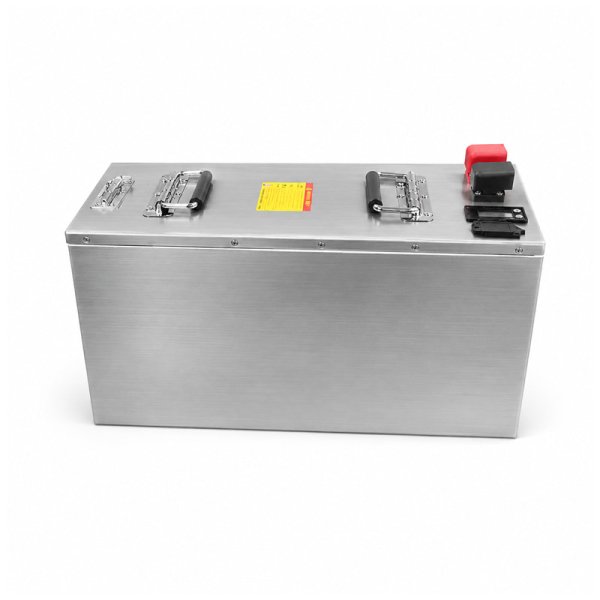
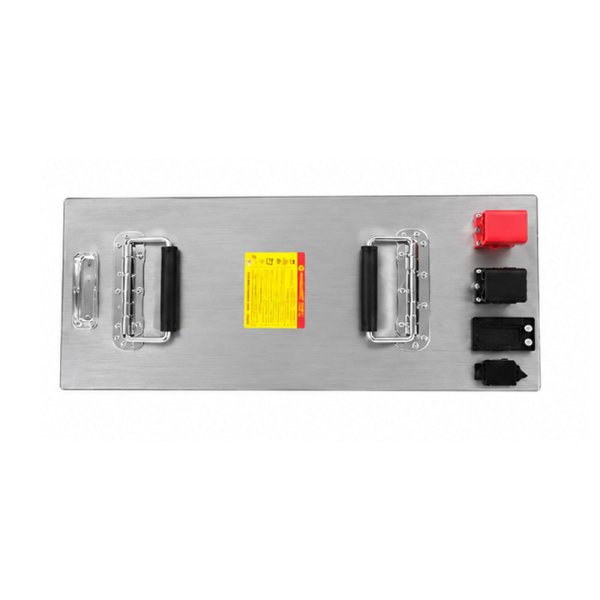
A swappable battery project succeeds only when the battery fits the vehicle, swap cabinet, communication logic, and operator duty cycle at the same time. For a swapping operator or two-wheeler OEM, the purchasing question is not simply, “Which battery has more capacity?” It is, “Can this supplier reproduce an approved interface, maintain interchangeability at fleet scale, and prove stable operation before mass production?”
The practical answer is to qualify a swappable battery as part of a system. Buyers should freeze vehicle and cabinet constraints first, then compare usable energy, handling weight, swap frequency, connectors, locking features, BMS communication, thermal behavior, and pilot results. A supplier with a strong battery but weak system integration can create retrofit cost, cabinet downtime, field failures, and inventory fragmentation.
For application-specific development, this power battery solution is a useful reference for projects built around vehicle and operating requirements rather than catalogue voltage alone.
Which Vehicle and Cabinet Requirements Define the Battery Specification?
A swappable battery specification should begin with the system already in the field. Buyers need a controlled interface document covering the vehicle battery bay, cabinet slot, electrical connection, mechanical retention, communication protocol, operating environment, and service procedure.
For the vehicle, decisive inputs include battery-envelope dimensions, mounting orientation, center-of-gravity limits, allowable mass, connector position, cable routing, ingress exposure, shock and vibration, peak current, and route profile. The existing motorcycle architecture matters more than a nominal voltage label. A delivery fleet facing potholes, gradients, frequent stops, and high summer temperatures may impose very different stresses from a light commuter application.
The cabinet adds another layer. Each swappable battery must enter and leave the slot smoothly, reach the connector without side-loading, lock positively, and remain identifiable by the cabinet controller. Slot tolerances, guide rails, latch geometry, insertion force, terminal alignment, cooling conditions, and communication timing are therefore controlled interfaces.

Mechanical fit deserves its own drawing review. This motorcycle battery dimensions guide for OEM builders shows why dimensions are an integration parameter rather than a packaging afterthought.
Communication is equally critical. A new swappable battery may be dimensionally interchangeable yet unusable if the cabinet cannot authenticate it, read state data, or apply the expected charging strategy. Buyers evaluating BMS compatibility can also refer to this BMS selection guide for electric motorcycle battery packs.
Before requesting samples, procurement teams should freeze these inputs:
- vehicle battery-bay drawing and tolerance stack;
- cabinet slot, guide, latch, and connector drawings;
- mating connector part numbers and pin definition;
- CAN, RS485, UART, or other communication requirements;
- pack identification, SOC, alarm, and handshake logic;
- environmental range, IP target, vibration profile, and route conditions;
- maximum swappable battery weight and handling method.
Without those inputs, a swappable battery quotation is only provisional.
How Should Buyers Compare Battery Capacity, Weight, and Swap Frequency?
Capacity is not an isolated purchasing metric. For a fleet, the useful question is how much route work one swappable battery can deliver without making it too heavy, too expensive, or too slow to circulate through the cabinet network.
A larger swappable battery may reduce swaps per shift, but it can also increase handling weight and cabinet dwell time. A smaller swappable battery can improve ergonomics and asset circulation, yet it may force more frequent stops and require a larger pool of charged inventory. The optimum sits between vehicle range, rider workload, cabinet density, route predictability, energy consumption, and charging throughput.

Buyers should model the system with operational quantities rather than brochure capacity:
| Procurement question | What to evaluate |
|---|---|
| Energy per route | Real usable energy under payload, speed, grade, temperature, and aging |
| Handling | Total swappable battery mass, grip points, removal angle, insertion force |
| Swap frequency | Swaps per vehicle per shift under normal and high-demand routes |
| Cabinet utilization | Depleted-battery arrivals versus slot recovery speed |
| Battery pool size | Packs required per active vehicle, including reserve and maintenance stock |
| Aging margin | Whether route range remains acceptable near the agreed end-of-life threshold |
For a swappable motorcycle battery used in delivery operations, this comparison is particularly important because route density and stop frequency can magnify small differences in energy consumption. The best swappable battery is not necessarily the highest-capacity pack. It is the configuration that keeps route completion, cabinet turnover, and handling within the operator’s economic limits.
A swappable lithium battery supplier should be able to run this trade-off from fleet data. If the supplier recommends capacity only from nominal motor power, qualification is incomplete.
Which Mechanical and Communication Interfaces Must Match?
Interchangeability depends on repeatable interfaces. A swappable battery must not merely “fit”; it must mate correctly hundreds or thousands of times without progressive connector wear, latch deformation, misalignment, or communication faults.
Mechanically, buyers should control the outer envelope, locating surfaces, rail geometry, stop position, handle design, connector datum, anti-reverse features, locking points, and manufacturing tolerances. The cabinet should not be used to force a marginal swappable battery into position. Excessive insertion force during a pilot is a warning sign for long-term contamination, wear, and dimensional variation.
Electrically, the supplier should match connector current rating, terminal sequence, pre-charge or anti-spark requirements where applicable, polarity protection, insulation strategy, and fault isolation. For a swappable battery project, connector compatibility must be verified under repeated mating cycles, not only by checking a drawing.
Communication matching is more nuanced. The swappable battery BMS may need to exchange SOC, SOH, temperature, current limits, fault codes, serial number, cycle count, or authentication data with both vehicle and cabinet. CAN message IDs, baud rate, scaling, timeout behavior, wake-up logic, and fault response should be documented. If proprietary protocols are used, the buyer should define interface ownership and firmware-update responsibility.
A robust integration review asks three questions: Can the swappable battery be physically inserted? Can it safely energize the vehicle and cabinet? Can every system interpret its data correctly? All three must be answered before field trials.
What Pilot Results Should Qualify a Battery Supplier?
A pilot should test commercial readiness, not merely prove that a sample can power a motorcycle. The objective is to expose integration weaknesses before they spread across a fleet.
The swappable battery sample should use the intended production enclosure, connector, BMS hardware, firmware branch, cell configuration, sealing approach, and labeling logic. Prototype substitutions may be acceptable for early engineering work, but they should not be used to claim production qualification.
A useful pilot evaluates four layers:
- Vehicle operation. Confirm startup, acceleration, grade performance, peak-current behavior, thermal rise, SOC accuracy, low-SOC behavior, fault handling, and route completion under representative payload.
- Cabinet operation. Record insertion success, connector engagement, swappable battery recognition, charging initiation, communication stability, lock/unlock behavior, slot-to-slot consistency, and abnormal-event recovery.
- Repeated swapping. Track mechanical wear, terminal temperature, contamination sensitivity, latch consistency, and communication errors after repeated exchanges. A swappable battery that works for ten swaps but degrades after hundreds is not fleet-ready.
- Data consistency. Compare BMS logs, cabinet records, and fleet observations. SOC jumps, unexplained disconnects, temperature anomalies, or serial-number mismatches should be investigated before scaling.

Supplier qualification should be tied to agreed acceptance criteria: zero critical safety faults, an acceptable communication-error rate, stable connector temperature, consistent mechanical fit across samples, and route performance within the buyer’s defined margin. A swappable battery supplier should also demonstrate corrective-action discipline; fast root-cause analysis during a pilot is often a better predictor of mass-production support than a polished presentation.
What Should a Swappable Battery RFQ Include?
A strong RFQ eliminates interpretive gaps. Instead of asking for “a swappable battery for an electric motorcycle,” buyers should provide the technical baseline and request evidence against each requirement.
The RFQ should include:
- vehicle model, fleet size, duty cycle, payload, route length, gradients, and operating climate;
- cabinet manufacturer or interface drawings, slot dimensions, locking concept, and connector specification;
- required usable energy or route target, maximum swappable battery mass, and acceptable swap frequency;
- mechanical drawings with critical tolerances and datum definitions;
- electrical schematic, connector pinout, current requirements, and protection expectations;
- communication protocol, message list, diagnostic requirements, and firmware responsibility;
- environmental, ingress, vibration, UN 38.3 transport requirements, and regulatory requirements for target markets;
- sample quantity, pilot duration, acceptance criteria, data to be logged, and failure-report format;
- production forecast, ramp schedule, change control, traceability, warranty expectations, and spare-stock plan.
For a swappable lithium battery project, the RFQ should also state whether the supplier may propose controlled interface changes. In an established network, even a technically superior change can be commercially unacceptable if it forces cabinet retrofits or creates a second incompatible battery pool.
Buyers should request a compliance matrix with every quotation. Each requirement should be marked compliant, non-compliant, or requiring clarification, with deviations stated explicitly. This makes swappable battery bids comparable and prevents unresolved assumptions from migrating into tooling or production.
Price should be reviewed after compatibility risk is visible. A lower-cost swappable battery is not cheaper if it causes cabinet modification, vehicle rework, extra spare packs, repeated firmware debugging, or field downtime.
Frequently Asked Questions About Swappable Batteries
Q: Can a new battery supplier work with an existing swap cabinet?
A: Yes, if the supplier matches the cabinet’s mechanical, connector, safety, and communication interfaces. Compatibility should be proven through drawing review and pilot testing before fleet rollout.
Q: Can different capacities share an approved battery interface?
A: Often yes, provided dimensions, weight limits, connector ratings, thermal behavior, BMS logic, and cabinet charging rules remain compatible. Each capacity still needs validation in the real swap system.
Q: Should sample batteries use the final production configuration?
A: Yes. Qualification samples should closely represent final cells, enclosure, connector, BMS hardware, firmware, sealing, and labeling; otherwise pilot results may not predict mass-production behavior.
Q: What information is needed to quote a fleet swap project?
A: Provide vehicle and cabinet drawings, connector and protocol details, route duty cycle, payload, target range, pack-weight limit, fleet volume, environment, pilot criteria, and production forecast.