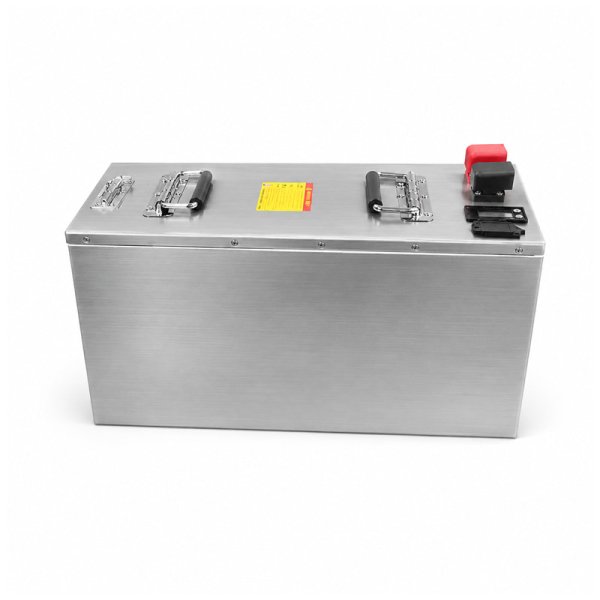
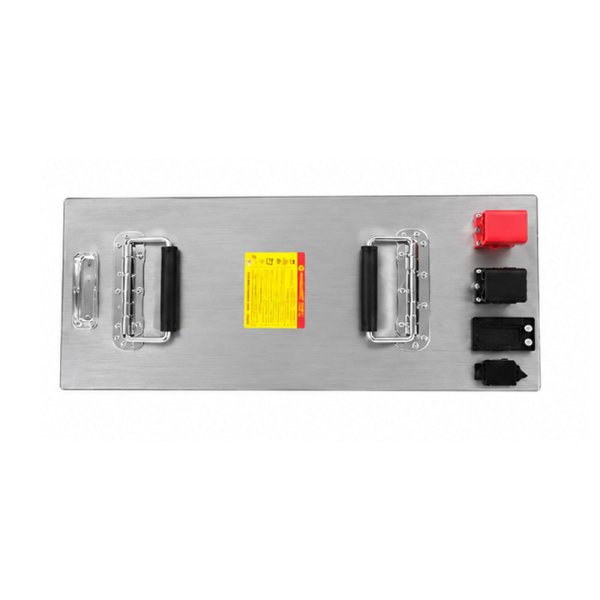
A pallet jack battery should keep loaded trucks moving through the busiest dispatch window, with enough reserve for the next operator. For warehouse buyers, the right choice depends on travel distance, repeated acceleration, available charging time, and compatibility across the fleet. A low purchase price offers little comfort when a truck stops with outbound pallets waiting.
This guide focuses on rider pallet jacks used for horizontal transport in distribution centers, cross-docking facilities, and warehouse replenishment. This application-matched lithium battery solutions provide a starting point for discussing installation constraints and BMS integration. In this comprehensive guide, fleet buyers will learn how to translate operating demands into a specification, validate performance, and prepare a practical RFQ.
What Makes a Pallet Jack Battery Suitable for Fleet Operations?
Suitability begins with the work assigned to the truck. A rider moving loaded pallets between distant staging areas faces different demands from a truck making occasional short transfers. Repeated starts, dock approaches, and loaded ramp travel can expose weaknesses that a simple runtime claim conceals.
A pallet jack battery for warehouse fleet use must support both the energy consumed over a shift and the brief current peaks during acceleration. Undersized discharge capability can trigger protective cutoffs despite remaining charge. Excess capacity, meanwhile, can raise cost and occupy space without resolving an interface problem.
Fleet suitability also includes serviceability. Supervisors need understandable charge indications, accessible fault records, and a clear process for replacing a failed pack. A commercial pallet jack battery should arrive with documented compatibility and traceable identification so maintenance teams can distinguish an approved replacement from a visually similar unit.
Judge bids against an operational outcome: completion of assigned routes within the planned charging schedule. FEBATT’s discussion of battery costs over a fleet’s working life helps buyers account for service labor and spare inventory when comparing quotations. For this application, measure those costs alongside pallet movements and battery-related delays.
How Should Warehouse Fleets Match a Pallet Jack Battery to Daily Duty Cycles?
Build the specification around a representative busy day. Record loaded and unloaded travel, pallet weights, starts per route, dock gradients, and time spent waiting. Include seasonal dispatch peaks. Shift length alone cannot describe how intensively the truck works.
Map the loaded outbound run and empty return separately. A truck serving distant staging lanes may accumulate substantial travel after unloading. At a busy cross-dock, short trips interrupted by frequent pallet positioning create a different pattern of acceleration peaks and energy consumption.
| Warehouse application | Demand that deserves attention | Evidence to collect |
|---|---|---|
| Long-distance distribution routes | Sustained travel and repeated acceleration | Energy use and current peaks on loaded routes |
| Cross-docking and trailer loading | Short, frequent runs with ramp transitions | Peak duration, temperatures, and cutoff events |
| Multi-shift replenishment | Limited recovery time between operators | Actual charging minutes and handover charge level |
| Chilled distribution areas | Reduced usable energy and temperature restrictions | Pack temperature and permitted charging conditions |
A pallet jack battery needs sufficient usable energy between dependable charging opportunities. Verify that energy restored during the available breaks covers the deficit before the next work period. This planning guide for charging across multiple shifts addresses the wider scheduling issues behind that calculation.
A practical example: two trucks may each be assigned an eight-hour shift, yet one travels continuously while the other waits for inbound deliveries. They should not automatically receive identical capacity specifications. Likewise, a scheduled break provides little charging benefit if the truck spends most of it queuing or returning from a distant dock.

For a pallet jack battery for multi shift operation, specify the minimum acceptable charge reserve at handover. Validate that reserve through the busiest sequence of shifts. Do not assume that a pack covering the morning workload will also cover afternoon dispatch and overnight replenishment.
Which Battery Specifications Should Buyers Confirm Before Ordering a Pallet Jack Battery?
Translate the route assessment into measurable requirements. Capacity belongs in the specification, but it must sit alongside installation geometry, discharge behavior, and the truck’s control interfaces.

Confirm the following before approving a pallet jack battery:
- Mechanical fit: compartment dimensions, insertion path, mounting points, restraint method, and service clearance. Verify the truck manufacturer’s permitted battery mass and its effect on truck operation.
- Power delivery: continuous current, peak current with duration, and protection thresholds under loaded acceleration. Check cable routing, connector ratings, polarity, and the truck’s required electrical operating range. For trucks with regenerative braking, confirm charge acceptance and controller behavior near full charge.
- System communication: required CAN messages or other interfaces, charge indication, interlocks, and fault behavior. A matching connector does not establish control compatibility.
- Environmental limits:operating and charging temperatures, condensation exposure, vibration, and the enclosure protection required for the site.
- Documentation:approved drawings, installation instructions, applicable test reports, warranty terms, and unit-level traceability.
A custom pallet jack battery becomes useful when an approved standard pack cannot accommodate the compartment, required current profile, or communication arrangement. Customization should resolve a documented constraint. Avoid adding features that operators cannot use or maintenance teams cannot support.
Dock-plate transitions also warrant attention to pack restraint and cable chafing. An enclosure’s ingress rating alone does not demonstrate resistance to repeated mechanical shock.
For a lithium pallet jack battery for logistics, request the usable energy available under the agreed duty cycle and temperature conditions. Ask how protective derating, when the system reduces permitted output, affects loaded travel. This reveals whether the pack can finish the assigned work as conditions change.
For bulk pallet jack battery procurement, establish an approved configuration for each truck group. Record the drawing revision, interface specification, and BMS software version. Require notification and approval of changes that could affect interchangeability before subsequent deliveries.
How Do Lithium Pallet Jack Batteries Improve Multi-Shift Warehouse Performance?
Lithium can reduce interruptions when its charging capability matches real breaks in the workflow. Short charging sessions during meal breaks or shift changes may restore enough energy to avoid a battery exchange. The gain comes from usable truck time recovered during the operating day.
A lithium pallet jack battery also removes the watering and equalization routines associated with flooded lead-acid packs. Maintenance teams still need to inspect connectors, restraints, cables, and damage. The labor requirement changes rather than disappearing.
For dispatch managers, the relevant question is whether the truck remains available when outbound loads accumulate. A well-matched pallet jack battery can reduce battery-related stops, but it cannot compensate for inaccessible charging points or an operating schedule with insufficient recovery time. Nearly continuous routes may still require greater capacity or an approved exchange arrangement.
Measure the improvement on the route
Compare the existing system and proposed pack using the same truck assignment, load profile, and observation period. Track unplanned stops, minutes spent exchanging batteries, handover charge reserve, and pallets moved per productive truck-hour. Separate battery effects from congestion, staffing changes, and equipment faults.

An illustrative fleet of ten trucks losing twelve minutes each day to avoidable battery handling would recover two truck-hours daily if that handling were eliminated. Those are planning assumptions, not measured savings. Apply the fleet’s actual handling records and labor rates before building a business case.
A pallet jack battery purchase should therefore be justified by verified operating gains and the cost of achieving them. Include installation, spares, service access, and replacement arrangements in the comparison. A pack that needs frequent intervention can erase an attractive initial quotation.
How Should Companies Validate a Pallet Jack Battery Before Fleet Deployment?
Begin with a pilot on representative trucks, including a demanding route and the relevant environmental conditions. Agree on acceptance criteria before delivery. Testing only an unloaded truck near the maintenance bay tells buyers little about dispatch performance.
Evaluate the pallet jack battery through complete work periods and shift handovers. Record energy consumption, current peaks, temperature trends, charging recovery, warnings, and any protective stops. Check that operators can understand the charge display and that maintenance staff can retrieve useful fault information.
Use a staged acceptance process:
- Installation inspection: verify fit, restraint, cable clearance, connectors, and documented truck compatibility.
- Loaded route trial: observe acceleration and ramp travel within the truck’s approved limits, including operation near the agreed minimum charge reserve.
- Shift-sequence trial: confirm recovery during actual breaks and the reserve available to the next operator.
- Delivery acceptance: compare production units with the approved sample, documentation, and configuration records.
Check modification approval before converting an existing truck. In the United States, OSHA’s powered industrial truck standard, section 1910.178(a)(4), requires prior written manufacturer approval for modifications affecting capacity or safe operation. Apply the requirements relevant to the installation country as well.
A pallet jack battery should progress to wider deployment only after the pilot demonstrates the agreed results. Keep the accepted sample and configuration records as references for later batches. Define how nonconforming deliveries will be corrected without leaving operational trucks stranded.
What Should a Pallet Jack Battery RFQ Include?
A useful RFQ allows suppliers to quote against the same operating requirement. Attach the fleet inventory, compartment drawings, interface information, and duty-cycle records. State which truck models can share an approved specification and which require separate variants.
The pallet jack battery RFQ should also define pilot quantity, rollout volumes, delivery destinations, and the acceptance procedure. Request separate pricing for engineering, samples, production packs, and agreed service support. This makes the cost of customization visible before volume commitments.
Ask each warehouse pallet jack battery supplier to explain warranty exclusions, response times, fault-diagnosis requirements, and replacement lead times. Clarify who handles installation and compatibility approval. A warranty period alone gives little indication of how quickly a disabled truck will return to work.
Include measurable delivery obligations: configuration identification, inspection records, packaging requirements, and treatment of rejected units. For repeat orders, agree on change control and replenishment availability. These details help procurement maintain an approved fleet configuration as trucks and batteries are replaced.
Frequently Asked Questions About RIder Pallet Jack Batteries
Q: How do I choose the right pallet jack battery for warehouse use?
A: Match usable energy and current capability to loaded routes, shift intensity, and real charging breaks. Then confirm mechanical fit, permitted battery mass, interfaces, and performance in a representative pilot.
Q: What information should buyers provide before requesting a pallet jack battery quote?
A: Provide truck models, compartment drawings, load and travel profiles, current records, charging windows, site temperatures, required interfaces, order volumes, and installation-country requirements.
Q: Can one pallet jack battery fit different warehouse trucks?
A: Sometimes, but sharing requires verified fit, battery mass, electrical range, connectors, interlocks, and communication. Group trucks by approved compatibility before standardizing replacement inventory.
Q: How long does a lithium pallet jack battery last in fleet applications?
A: Service life depends on energy throughput, temperature, charging practices, and the remaining capacity needed for each route. Request cycle-test conditions and warranty limits instead of a universal lifespan claim.
Q: When should a warehouse consider a custom pallet jack battery?
A: Consider customization when approved standard packs cannot meet compartment, current, interface, or environmental requirements. Confirm the constraint through drawings and route data before commissioning a sample.
Conclusion
The right pallet jack battery supports the busiest route, the available charging windows, and the fleet’s approved truck configurations. Procurement decisions become clearer when buyers connect those requirements to a pilot, documented acceptance criteria, and dependable replacement support.
Share truck models, compartment drawings, route records, and planned quantities with FEBATT to discuss a pallet jack battery specification for OEM, ODM, or fleet deployment.