Before replacing a lead-acid starting battery with lithium, marine OEMs and commercial fleet buyers must first verify that the engine manufacturer permits lithium starting batteries for the exact engine model. The proposed battery must also meet the manufacturer’s starting-current, charging and installation requirements. If lithium starting batteries are not authorized for the engine, the replacement should not proceed.
A failed restart can delay a harbor inspection, strand a fishing-support crew or cancel a scheduled passenger departure. For marine OEMs and commercial fleets, a marine cranking battery must deliver reliable engine starts—not just an impressive amp-hour rating.
A purpose-built LiFePO4 replacement may reduce battery weight, eliminate electrolyte watering and simplify routine battery care. But those benefits count only when the engine maker permits lithium and the complete pack passes starting and charging tests.
Why Consider Lithium for Commercial Engine Starting?
Lead-acid starter batteries remain familiar and widely serviceable. A correctly engineered lithium marine cranking battery, however, offers useful advantages for fleets with restricted battery space, frequent vessel inspections or difficult replacement access. LiFePO4 systems can provide high pulse output from a lighter package and avoid routine acid-level maintenance. Monitoring also supports fault diagnosis.
Lithium is not automatically the lower-cost option. Compare installed weight, documented starting performance, service procedures, spare availability and replacement frequency. For busy fleets, preventing a failed restart can outweigh modest purchase-price savings.
What Must a Marine Cranking Battery Deliver During Startup?
Engine starting creates a brief, severe load. Cold cranking amps (CCA) and marine cranking amps (MCA) refer to test conditions, not interchangeable marketing figures. Under the SAE J537 cold-cranking method, a conventional 12-volt starting battery is tested at −18°C for 30 seconds and must maintain at least 7.2 volts. Lithium vendors’ five-second peak-current claims are not automatically equivalent.

Ask for a current-versus-time trace at the engine’s required temperature, accompanied by terminal voltage, state of charge and BMS event records. Repeat starting tests; a warm start alone proves little.
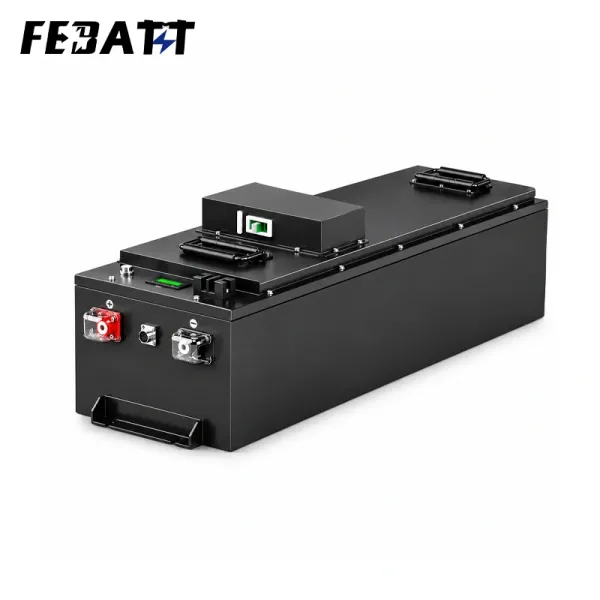
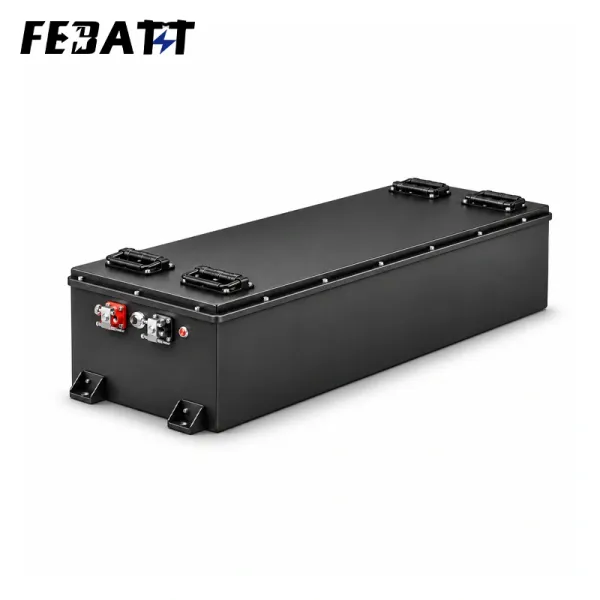
A real specification illustrates the distinction: the 12V 400Ah marine lithium battery page lists 1,500A starting current for up to five seconds. That is a published short-pulse rating, not a verified CCA value or blanket approval for any marine engine. A buyer must still request model-specific testing.
Why Can the BMS Interrupt an Otherwise Healthy Start?
Cells may tolerate a pulse while the finished marine cranking battery disconnects under its protection settings. An underspecified contactor, high-resistance connection, cold cells or an overcurrent delay can also create voltage collapse. Raising the BMS threshold without assessing short-circuit protection is not a solution.
| Fleet symptom | What engineering should investigate |
|---|---|
| First start works; second fails | Repeated-pulse limits, BMS event history and recovery delay |
| Engine turns slowly in cold weather | Cell temperature, cable losses and voltage sag |
| Displays reset during cranking | Shared supply paths, distribution protection and transient voltage |
Require protection tests that distinguish a normal starter pulse from a genuine electrical fault. The broader marine BMS safety guide explains how fault reporting and isolation should coordinate with onboard equipment.
Which Commercial Vessels Need Dedicated Starting Batteries?
A marine cranking battery is relevant wherever a combustion engine must restart reliably: harbor utility craft returning between jobs, patrol boats with irregular departures, diesel fishing-support vessels and passenger tenders with fixed schedules. These are starting duties, not electric-propulsion battery duties.
For fleets running refrigeration, communications or pumps while the engine is stopped, protect the starting reserve from auxiliary consumption. A separate lithium deep-cycle bank may serve those sustained loads; the commercial deep-cycle marine battery guide addresses that different purchase decision. Do not substitute a trolling-motor battery merely because its nominal voltage matches the engine’s starter circuit.
How Do Engine Rules and Alternators Affect a Lithium Replacement?
Check the precise engine model, serial range and current manufacturer’s instructions before specifying a marine cranking battery. Some engines permit qualified lithium starting packs; others do not. For example, Yamaha’s September 2026 guidance explicitly says lithium-ion starting batteries are not authorized for its outboards. A 2022 Mercury lithium-starting bulletin listed 800A for eight seconds at −7°C for specified outboards; it does not approve every engine.
The charging system is equally important. Review alternator regulation, maximum charge current, battery charge acceptance and the effect of an abrupt BMS disconnect. Where engineering requires it, use compatible regulation or DC-DC charging equipment. Never assume that matching battery voltage makes a lead-acid replacement electrically safe.
What Evidence Should an OEM Demand Before Fleet Orders?
Before accepting a marine cranking battery quotation, issue a controlled acceptance brief. It should ask the supplier to document:
- Engine eligibility: exact approved engine family, starting requirements and any exclusions.
- Cranking proof: complete-pack current and voltage traces, repeat starts, low-temperature limits and end-of-life assumptions.
- System safety: BMS fault behavior, cable and terminal ratings, charging integration, mounting and marine-environment evidence.
- Production readiness: prototype test report, approved components, firmware revision, serial traceability, replacement plan and warranty response.
Witness a representative vessel trial, including the most demanding restart. Use the same acceptance limits for pilot packs and repeat orders. FEBATT’s application-matched power battery engineering process supports discussing custom PACK dimensions, BMS matching, prototypes and OEM supply; any marine starting application still requires engine-specific approval.

Frequently Asked Questions
Q: Can a lithium battery start a boat engine?
A: Yes, a purpose-designed LiFePO4 marine cranking battery can start an engine when the engine manufacturer permits it and the complete system passes relevant starting and charging checks. Ordinary deep-cycle packs are not automatically suitable.
Q: What is the difference between CCA and MCA?
A: CCA assesses starting performance under colder conditions than MCA. Compare the stated test standard, temperature, duration and voltage limit before ranking a marine cranking battery against an engine maker’s minimum specification.
Q: Why does a lithium starting battery shut off while cranking?
A: The BMS may detect excessive current or low voltage, or a wiring fault may produce an unacceptable drop. Capture start-current and fault logs before changing settings or replacing the marine cranking battery.
Q: Can an alternator charge a LiFePO4 starting battery?
A: Only if the alternator, regulator, battery and BMS are compatible. Charging limits and sudden-disconnect behavior must be verified for the actual vessel, not inferred from the battery’s nominal voltage.
Q: Can a deep-cycle lithium battery replace a marine starter battery?
A: Not without documented cranking capability and engine approval. A marine cranking battery is qualified for short, demanding engine-start pulses; a deep-cycle unit is optimized for sustained auxiliary loads.
Specify Reliable Starts Before Committing to Lithium
Lithium can be a strong upgrade for commercial boat fleets—but a marine cranking battery should win approval through verified engine compatibility, repeatable cold-start output and safe charging behavior. Send the vessel application, engine model, start frequency, installation drawings and projected order volume to the battery engineering team before releasing a fleet-wide purchase order.